How to Resolve Press Brake Overbending and Underbending Problems: A Comprehensive Guide


Introduction to Bending Accuracy in Metal Fabrication
In the world of precision metal fabrication, achieving the perfect bend angle is both an art and a science. For operators and shop managers, the struggle to resolve press brake overbending and underbending problems is a daily challenge that directly impacts productivity, waste reduction, and overall product quality. Overbending occurs when the final angle of the workpiece is smaller than intended (e.g., 88 degrees instead of 90), while underbending occurs when the angle remains too wide (e.g., 92 degrees instead of 90). Both issues lead to costly rework or scrapped material.
Modern CNC press brakes, such as those manufactured by HARSLE, are designed with sophisticated compensation systems to mitigate these errors. However, understanding the root causes—ranging from material properties to machine deflection—is essential for any operator looking to master the craft. This guide provides a deep dive into the technical nuances of bending deviations and offers actionable solutions to ensure every stroke of the ram results in a perfect part.
Whether you are working with stainless steel, aluminum, or high-tensile carbon steel, the physics of bending remain constant. The interaction between the punch, the die, and the material is influenced by variables that can change from one batch of metal to the next. By implementing the strategies outlined in this article, you can significantly reduce setup times and achieve high-repeatability in your production line.
Key Considerations: Why Bending Errors Occur
Material Properties and Springback
The most common culprit behind bending inaccuracies is material springback. When a metal sheet is bent, the outer fibers are stretched while the inner fibers are compressed. Once the pressure from the press brake ram is released, the elastic nature of the metal causes it to “spring back” toward its original flat shape. To resolve press brake overbending underbending problems, one must first calculate the expected springback for the specific material grade.
Different materials exhibit different levels of elasticity. For instance, stainless steel typically has a higher springback than mild steel, requiring the operator to overbend the part during the stroke so that it settles at the correct angle after release. If the CNC controller is not programmed with the correct springback coefficient, underbending is almost inevitable.
Variations in Material Thickness
In industrial settings, sheet metal thickness is rarely perfectly uniform. A batch of 3mm steel might actually vary between 2.8mm and 3.2mm. In air bending, where the final angle is determined by how far the punch descends into the die, a variation of just 0.1mm in thickness can result in a significant deviation in the final angle. This is why high-end HARSLE machines utilize thickness detection sensors to adjust the ram depth in real-time.
Machine Deflection and the “Canoe Effect”
When a press brake applies hundreds of tons of force, the machine frame itself undergoes slight deformation. The side frames may deflect outward, and the bed and ram may bow in the center. This phenomenon, often called the “canoe effect,” results in the center of the workpiece being underbent compared to the ends. Without a proper crowning system, achieving a consistent angle across a long piece of metal is virtually impossible.
Technical Details: Resolving Bending Problems
Implementing Advanced Crowning Systems
To counteract machine deflection, modern press brakes employ crowning systems. There are two primary types: hydraulic and mechanical. Hydraulic crowning uses cylinders located in the lower bed to apply upward pressure, while mechanical crowning uses a series of wedges that can be adjusted via the CNC controller. For those looking to resolve press brake overbending underbending problems on long workpieces, a CNC-controlled mechanical crowning system is often preferred for its precision and repeatability.
HARSLE’s high-performance models feature real-time crowning compensation. The controller calculates the required deflection compensation based on the material length, thickness, and required tonnage, ensuring that the die remains perfectly parallel to the punch throughout the entire bending process.
The Role of Y1 and Y2 Axis Synchronization
Precision bending requires the ram to descend perfectly level. This is managed by the Y1 and Y2 axes, which control the left and right hydraulic cylinders independently. If these axes are out of sync, one end of the part will be overbent while the other is underbent. Modern CNC systems use linear encoders with micron-level resolution to monitor the position of the ram 500 times per second, ensuring perfect parallelism even under off-center loading conditions.
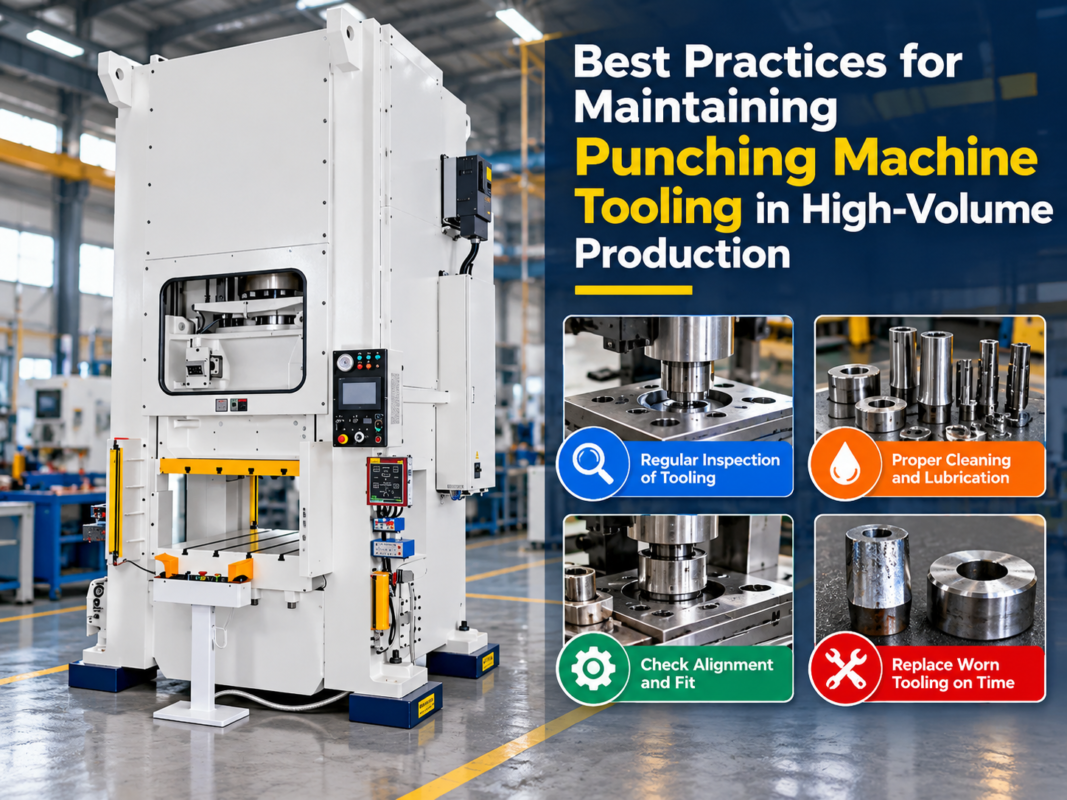
Tooling Selection and Maintenance
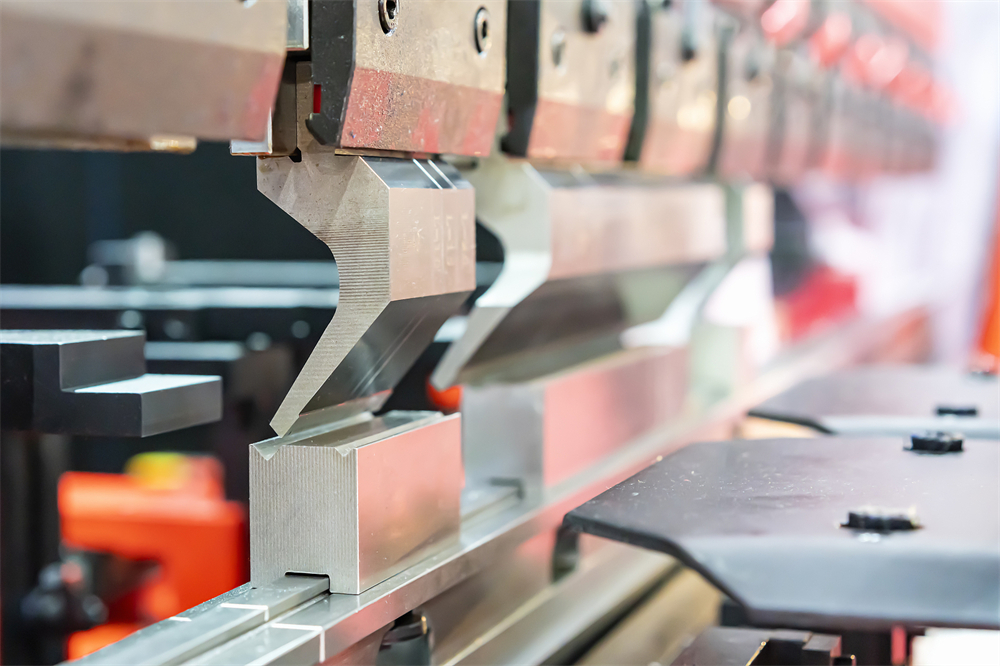
The condition of your punch and die is critical. Worn tooling loses its radius and geometry, leading to unpredictable bending results. Furthermore, using the wrong V-opening for a specific material thickness can exacerbate bending errors. As a general rule, the V-opening should be 8 times the material thickness for mild steel. Using a V-opening that is too small increases the required tonnage and the risk of overbending, while a V-opening that is too large can lead to inconsistent air bending results.
| Material Thickness (mm) | Recommended V-Opening (mm) | Bending Force (Tons/Meter) | Min. Flange Length (mm) |
|---|---|---|---|
| 1.0 | 8 | 7 | 5.5 |
| 2.0 | 16 | 14 | 11.0 |
| 3.0 | 24 | 22 | 16.5 |
| 6.0 | 50 | 45 | 35.0 |
Angle Measurement Systems
The most effective way to resolve press brake overbending underbending problems in a high-production environment is the use of integrated angle measurement systems. Technologies like laser angle sensors (e.g., the Iris system) measure the actual angle of the part during the bending process. If the sensor detects that the material is underbending due to unexpected springback, it signals the CNC controller to drive the ram deeper until the target angle is achieved. This “closed-loop” system eliminates the need for manual trial-and-error adjustments.
Selection Advice: Choosing the Right Machine for Precision
When investing in new metal fabrication equipment, selecting a machine that inherently minimizes bending errors is crucial. Here are the key features to look for in a HARSLE press brake to ensure maximum accuracy:
- High-Resolution CNC Controllers: Look for controllers like the Delem DA-66T or DA-69T, which offer 2D and 3D graphical programming and advanced algorithms for springback and crowning calculation.
- Rigid Frame Construction: A heavy-duty, heat-treated frame reduces the initial deflection, making it easier for the crowning system to manage the remaining movement.
- Servo-Hydraulic Systems: These systems provide faster response times and better positioning accuracy for the Y-axes compared to traditional hydraulic valves.
- Multi-Axis Backgauges: Precision isn’t just about the angle; it’s about the position of the bend. A 4-axis or 6-axis backgauge ensures the part is perfectly aligned before the punch makes contact.
For shops handling a wide variety of materials, a machine equipped with a laser angle measurement system is a wise investment. While the initial cost is higher, the savings in setup time and reduced scrap material provide a rapid return on investment (ROI). HARSLE offers customizable configurations that allow you to balance budget with the technical requirements of your specific applications.
Maintenance Tips to Prevent Bending Deviations
Even the best machine will begin to produce inaccurate parts if not properly maintained. To resolve press brake overbending underbending problems over the long term, follow these maintenance protocols:
- Check Hydraulic Oil Temperature: Hydraulic fluid changes viscosity as it heats up. If the oil is too hot, the valves may not respond as precisely, leading to inconsistent ram depths. Ensure your cooling system is functioning correctly.
- Calibrate the Backgauge and Ram: Periodically verify that the CNC’s reported position matches the physical reality. Use precision dial indicators to check for any drift in the Y1/Y2 or R-axis positions.
- Inspect Tooling for Wear: Check the radii of your punches and the shoulders of your dies. Even a small amount of wear can change the way the material flows into the die, causing angle variations.
- Lubricate Moving Parts: Ensure the gibs and guideways are well-lubricated to prevent friction-induced positioning errors.
Frequently Asked Questions (FAQ)
1. Why does my press brake underbend in the middle of a long sheet?
This is typically caused by machine deflection. As the ram applies pressure, the center of the bed and ram bow away from each other. To fix this, you need to adjust your crowning system (either hydraulic or mechanical) to provide more compensation in the center of the machine.
2. How does material grain direction affect bending?
Bending “with the grain” (parallel to the rolling direction of the sheet) usually results in more springback and a higher risk of cracking. Bending “across the grain” (perpendicular) is generally more stable. If your parts are inconsistent, check if the blanks are being cut in different orientations on the sheet.
3. Can I resolve overbending by just changing the CNC settings?
Yes, most CNC controllers allow you to input an “angle correction.” If the machine consistently overbends by 1 degree, you can enter a -1.0 correction factor. However, if the error is inconsistent, the problem likely lies in material thickness variation or machine deflection.
4. What is the difference between air bending and bottoming?
In air bending, the material only touches the punch tip and the two edges of the die; the angle is determined by depth. In bottoming, the punch presses the material fully into the die. Air bending is more versatile but more susceptible to springback issues, whereas bottoming is more accurate but requires much higher tonnage and specific tooling.
5. How often should I calibrate my HARSLE press brake?
For high-precision environments, a quick calibration check should be performed weekly, with a comprehensive professional calibration once or twice a year, depending on the shift volume and the complexity of the parts produced.
Conclusion
To resolve press brake overbending and underbending problems, one must take a holistic approach that considers material science, mechanical engineering, and software precision. By understanding the factors that lead to angle deviations—such as springback, thickness variation, and machine deflection—operators can take proactive steps to ensure accuracy. Utilizing advanced features like CNC crowning, laser angle measurement, and high-quality tooling from HARSLE will empower your facility to produce perfect parts every time.
Investing in the right technology and maintaining a rigorous calibration schedule are the keys to staying competitive in the modern metal fabrication industry. With the right tools and knowledge, the challenges of overbending and underbending become manageable variables rather than frustrating obstacles. Explore HARSLE’s range of CNC press brakes today to find the perfect solution for your precision bending needs.