Common Press Brake Bending Problems and How to Fix Them: A Technical Guide by HARSLE


Technical Overview of Press Brake Operations
In the realm of modern metal fabrication, the press brake stands as a cornerstone of production efficiency. Whether you are utilizing a HARSLE CNC hydraulic press brake or a manual mechanical model, the fundamental physics of bending remain the same. The process involves a punch (upper tool) pressing a metal sheet into a die (lower tool) to create a specific angle or shape. However, achieving consistent precision is often easier said than done. Operators frequently encounter common press brake bending problems that can lead to material waste, downtime, and compromised structural integrity of the finished parts.
Understanding the mechanics behind these issues requires a deep dive into the interaction between the machine’s hydraulic system, the CNC controller, and the physical properties of the material being processed. Modern machines utilize Y1 and Y2 axes to control the ram’s parallelism, while advanced crowning systems compensate for the natural deflection of the machine bed. Despite these technological advancements, variables such as material grain direction, thickness tolerances, and tooling wear can introduce errors. This guide aims to provide a comprehensive roadmap to identify these challenges and implement effective solutions to fix them.
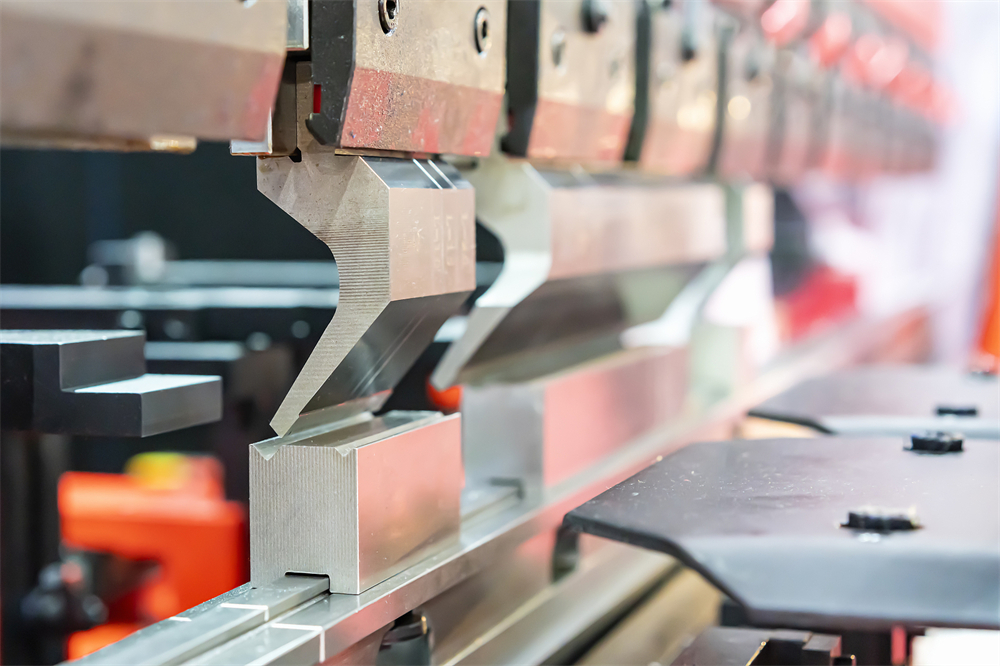
The evolution of press brake technology has moved from simple mechanical stops to sophisticated multi-axis CNC systems. These systems allow for complex bending sequences and high repeatability. However, the complexity also means that when problems arise, they require a systematic approach to diagnose. From hydraulic leaks to software calibration errors, the scope of potential issues is broad. By mastering the technical nuances of your equipment, you can ensure that your HARSLE machinery operates at peak performance, delivering high-quality components for industries ranging from automotive to aerospace.
Core Parameters of Press Brake Bending
To effectively troubleshoot bending issues, one must first understand the core parameters that govern the process. These parameters are the levers that operators and engineers pull to achieve the desired outcome. The most critical parameter is Tonnage, which is the amount of pressure the press brake can apply. If the tonnage is insufficient for the material thickness and length, the bend will be incomplete or the machine may stall. Conversely, excessive tonnage can damage the tooling or the workpiece.
Another vital parameter is the V-opening of the die. The width of the V-opening directly influences the bending force required and the resulting internal radius of the bend. A general rule of thumb is that the V-opening should be 8 times the material thickness (8T) for mild steel. If the V-opening is too small, the pressure increases exponentially, leading to potential tool breakage. If it is too large, the accuracy of the bend angle decreases. Additionally, Stroke Length and Backgauge Positioning are essential for ensuring that the bend occurs at the correct location and depth.
Finally, we must consider Crowning. When a press brake applies pressure, the bed and the ram naturally deflect or ‘bow’ in the center. Without a crowning system (either hydraulic or mechanical), the bend angle will be wider in the middle of the sheet than at the ends. HARSLE machines often feature automatic crowning compensation to counteract this phenomenon, ensuring a uniform angle across the entire length of the workpiece. Understanding how to adjust these parameters is the first step in learning how to fix common press brake bending problems.
Calculation Method for Precision Bending
Precision in metal fabrication is not a matter of guesswork; it is a matter of mathematics. To avoid common errors, operators must calculate the required bending force and the developed length of the material. The standard formula for calculating the bending force (P) in kips or tons is:
P = (650 * S^2 * L) / V
Where:
S = Material thickness (mm)
L = Length of the bend (m)
V = V-die opening width (mm)
650 = A constant for mild steel (this varies for stainless steel or aluminum)
Beyond force, calculating the Bend Allowance (BA) and Bend Deduction (BD) is crucial for determining the flat length of the part before bending. This involves the K-factor, which represents the ratio of the neutral axis’s location to the material thickness. The neutral axis is the area within the metal that neither stretches nor compresses during the bend. If the K-factor is incorrectly estimated, the final dimensions of the part will be off, leading to assembly issues downstream.
Modern CNC controllers on HARSLE press brakes often perform these calculations automatically once the material type, thickness, and desired angle are input. However, an operator’s ability to manually verify these figures is invaluable for troubleshooting. For instance, if a part is consistently coming out too long, the bend deduction may need adjustment. By refining these calculations, you can eliminate dimensional inaccuracies, which are among the most common press brake bending problems.
Parameter Table: Material Thickness vs. V-Opening
| Material Thickness (mm) | Recommended V-Opening (mm) | Min. Flange Length (mm) | Bending Force (Tons/Meter) – Mild Steel | Internal Radius (mm) |
|---|---|---|---|---|
| 1.0 | 8 | 5.5 | 7 | 1.3 |
| 1.5 | 12 | 8.5 | 11 | 2.0 |
| 2.0 | 16 | 11.5 | 15 | 2.6 |
| 3.0 | 24 | 17.0 | 23 | 4.0 |
| 4.0 | 32 | 22.0 | 30 | 5.3 |
| 6.0 | 50 | 35.0 | 45 | 8.0 |
| 8.0 | 63 | 45.0 | 75 | 10.5 |
| 10.0 | 80 | 55.0 | 95 | 13.5 |
Note: The values above are estimates for air bending mild steel with a tensile strength of approximately 450 MPa. Adjustments are required for stainless steel (increase force by ~50%) or aluminum (decrease force by ~50%).
Common Press Brake Bending Problems and How to Fix Them
1. Inconsistent Bending Angles
One of the most frequent issues is the variation in the bend angle across the length of the part or between different parts. This is often caused by material thickness variation. Even high-quality steel can have slight differences in thickness, which affects the depth the punch penetrates the die in air bending. To fix this, use a CNC press brake with real-time thickness sensing or ensure you are sourcing material with tight tolerances.
Another cause is improper crowning adjustment. If the center of the bend is more open than the ends, the crowning compensation is insufficient. If the center is tighter, the crowning is too high. Operators should calibrate the crowning system based on the specific tonnage and material length. HARSLE’s hydraulic crowning systems allow for fine-tuned adjustments via the controller to resolve this issue instantly.
2. Cracking at the Bend Line
Cracking occurs when the material’s ductility is exceeded. This is common in high-strength steels or aluminum. The primary cause is using an internal bend radius that is too small. If the punch tip is too sharp, it acts like a wedge, tearing the outer fibers of the metal. To fix this, switch to a punch with a larger tip radius. A general rule is that the radius should be at least equal to the material thickness.
Additionally, grain direction plays a significant role. Bending parallel to the grain of the metal increases the likelihood of cracking. Whenever possible, orient the part so that the bend line is perpendicular to the material grain. If cracking persists, consider pre-heating the material or using a ‘bottoming’ technique if the machine and tooling allow, though air bending with a larger radius is usually the preferred solution.
3. Backgauge Misalignment
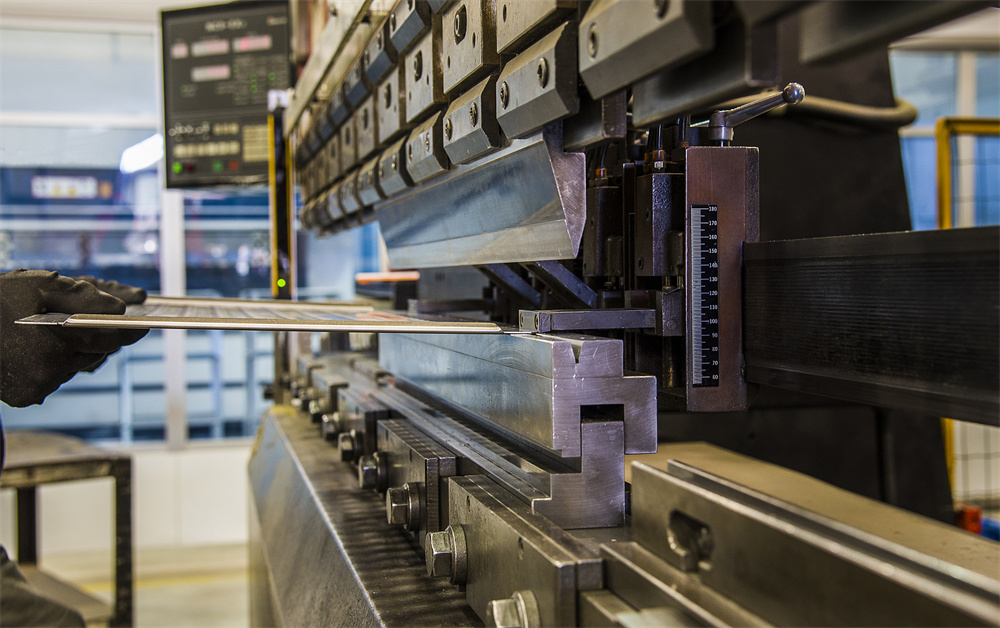
If the bend is not in the correct location, the backgauge is likely the culprit. Over time, the backgauge fingers can become loose or misaligned due to repeated impact from heavy sheets. This results in parts that are out of square. To fix this, perform a daily calibration check. Use a precision square to ensure the backgauge is parallel to the die rail. HARSLE machines feature high-precision ball screws for the backgauge, but regular lubrication and tightening of mounting bolts are necessary to maintain accuracy.
4. Ram Drift or Non-Parallelism
In hydraulic press brakes, the ram must descend perfectly parallel to the bed. If one side (Y1) moves faster or further than the other (Y2), the bend angle will vary from left to right. This is often caused by air in the hydraulic lines or a faulty proportional valve. To fix this, bleed the hydraulic system to remove air and check the synchronization settings in the CNC controller. Regular maintenance of hydraulic oil and filters is essential to prevent valve clogs that lead to ram drift.
Common Engineering Mistakes in Metal Bending
Engineering mistakes often happen before the machine even starts. One common error is ignoring the minimum flange length. Every V-die has a minimum flange requirement; if the flange is too short, the material will slip into the V-opening before the bend is completed, resulting in a distorted edge and potential tool damage. Engineers must consult die charts to ensure the design accommodates the chosen tooling.
Another mistake is overlooking the ‘Springback’ effect. All metals have some elasticity and will try to return to their original shape after the pressure is released. If an engineer designs a 90-degree bend without accounting for springback, the final part might end up at 92 degrees. The solution is to ‘over-bend’ the part. Advanced HARSLE CNC systems have built-in springback databases that automatically calculate the necessary over-bend based on the material type.
Finally, poor tooling selection can sabotage a project. Using a worn-out die or a punch that isn’t rated for the required tonnage is a recipe for failure. Tooling should be inspected for nicks, flat spots, or deformation. Using precision-ground, hardened tooling may have a higher upfront cost, but it significantly reduces the occurrence of common press brake bending problems and extends the life of the machine.
Selection Checklist for a HARSLE Press Brake
- Tonnage Requirement: Calculate the maximum thickness and length you plan to bend. Always choose a machine with 20% more capacity than your maximum requirement to avoid straining the hydraulics.
- Bending Length: Ensure the distance between the side frames is sufficient for your longest parts.
- CNC Controller: Do you need a simple 2-axis controller or a multi-axis (up to 8+ axes) system for complex geometries? HARSLE offers Delem and Cybelec options.
- Crowning System: For any machine over 2.5 meters, a crowning system (mechanical or hydraulic) is highly recommended for angle consistency.
- Backgauge Speed and Precision: Look for R-axis (height) and Z-axis (lateral) movement if you handle varied part shapes.
- Safety Features: Ensure the machine includes laser guards (like DSP or Lazersafe) and light curtains to protect operators.
- Tooling Compatibility: Check if the machine uses standard European or American style clamping for easy tool sourcing.
Frequently Asked Questions (FAQ)
How do I stop my press brake from squeaking during a bend?
Squeaking is usually a sign of friction due to lack of lubrication. Check the gibs (the guides that the ram slides on) and the backgauge ball screws. Apply the manufacturer-recommended grease. If the noise persists, it may indicate a hydraulic pump issue or air in the cylinders.
Why is my bend angle different every time I change the sheet of metal?
This is likely due to variations in the material’s yield strength or thickness. Even within the same batch, metal properties can fluctuate. To fix this, use a press brake with an angle measurement system that provides real-time feedback and adjusts the stroke depth automatically.
Can I bend stainless steel using the same settings as mild steel?
No. Stainless steel is much harder and has more springback. You generally need about 50% more tonnage to bend stainless steel compared to mild steel of the same thickness. You also need to account for a larger springback angle in your CNC settings.
What causes the ‘dog-bone’ effect on a bend?
The ‘dog-bone’ effect, where the ends of the bend are tighter than the middle, is caused by excessive crowning compensation. Reduce the crowning setting on your HARSLE controller until the angle is uniform across the length.
How often should I change the hydraulic oil?
For most HARSLE press brakes, the hydraulic oil should be changed every 2,000 to 4,000 hours of operation, or at least once a year. Always check the oil color and clarity; if it looks cloudy or smells burnt, change it immediately to protect the proportional valves.
What is the best way to prevent tool marks on sensitive materials?
To prevent marking on materials like polished stainless steel or aluminum, use a ‘no-mar’ tape or a urethane die film over the V-opening. This acts as a buffer between the hard steel die and the workpiece.