How to Improve Press Brake Productivity Without Sacrificing Bending Quality


Technical Overview of High-Efficiency Press Brake Operations
In the modern metal fabrication landscape, the pressure to deliver high volumes of precision parts has never been greater. To improve press brake productivity without sacrificing bending quality, manufacturers must look beyond simply increasing the speed of the ram. True productivity is a synergy of mechanical precision, advanced control software, and optimized workflow. At HARSLE, we recognize that a press brake is not just a machine but a critical node in the production chain where efficiency and accuracy must coexist.
The technical evolution of the press brake has transitioned from simple mechanical linkages to sophisticated CNC-controlled hydraulic systems. Modern machines utilize Y1 and Y2 axis synchronization, where dual cylinders are monitored by linear encoders to ensure the ram remains perfectly level, even with off-center loading. This level of control is fundamental to maintaining quality while pushing the limits of speed. When we discuss productivity, we are looking at the ‘floor-to-floor’ time, which includes setup, material handling, the bending cycle, and part removal.
One of the primary bottlenecks in productivity is the setup time. Traditional manual press brakes require extensive trial and error to achieve the correct angle, especially when dealing with material thickness variations. CNC technology addresses this by allowing for offline programming and 3D simulation. By simulating the bend sequence before the material even touches the machine, operators can avoid collisions and ensure the first part is a good part. This ‘Right First Time’ approach is the cornerstone of improving productivity without compromising the integrity of the final product.
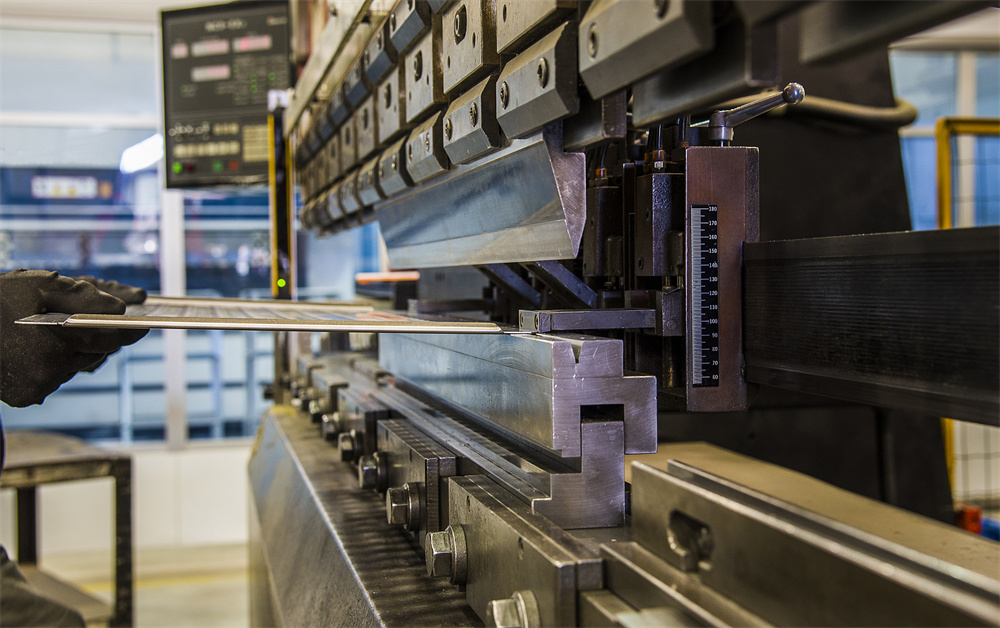
Furthermore, the integration of hydraulic crowning systems has revolutionized the way we handle long workpieces. In the past, operators had to use shims to compensate for the natural deflection of the machine bed. Modern HARSLE press brakes utilize automatic crowning systems that adjust the bed’s profile in real-time based on the tonnage applied. This ensures a consistent angle across the entire length of the bend, which is essential for high-quality output in large-scale fabrication projects.
Core Parameters Influencing Productivity and Quality
To effectively improve press brake productivity without sacrificing bending quality, one must understand the core parameters that govern the machine’s performance. These parameters are not independent; a change in one often necessitates an adjustment in another to maintain the desired output quality. The most critical parameters include approach speed, bending speed, return speed, and positioning accuracy.
Approach and Return Speeds: These are the ‘non-productive’ parts of the cycle where the ram moves to and from the work area. High-performance press brakes utilize high-speed hydraulics to minimize this time. However, the transition from approach speed to bending speed must be seamless. If the transition is too abrupt, it can cause vibration, which negatively impacts the surface finish and the accuracy of the bend. Modern CNC controllers manage this transition using sophisticated ramping algorithms.
Bending Speed: While it might seem intuitive to increase bending speed to boost productivity, there is a physical limit imposed by the material’s properties. If the material is bent too quickly, it can lead to cracking or excessive springback. The goal is to find the ‘sweet spot’ where the material flows plastically without structural failure. For sensitive materials like high-strength steel or polished stainless steel, controlled bending speeds are mandatory to preserve the surface quality.
Backgauge Speed and Precision: The backgauge is responsible for the dimensional accuracy of the flange. A multi-axis backgauge (X, R, Z1, Z2) allows for complex part geometries to be handled in a single setup. The speed at which the backgauge moves between steps significantly impacts the total cycle time. However, speed must not come at the cost of repeatability. High-quality servo motors and precision ball screws are essential components that ensure the backgauge returns to the exact position every time.
Calculation Method for Optimal Bending Force
Accurate calculation of the required bending force (tonnage) is vital for both machine longevity and part quality. Overloading a machine can lead to permanent deformation of the frame or tooling, while underestimating the force required can result in incomplete bends. The standard formula for calculating the bending force for air bending mild steel is as follows:
F = (1.42 * σ * L * s²) / V
Where:
F = Bending Force (Tons)
σ = Tensile Strength of the material (kg/mm²)
L = Length of the bend (mm)
s = Material thickness (mm)
V = V-opening of the lower die (mm)
To improve productivity, engineers often use this formula to select the largest possible V-opening that still meets the minimum flange requirements. A larger V-opening reduces the required tonnage, which in turn reduces the stress on the machine and allows for faster cycle times. However, the V-opening must be carefully chosen; a V-opening that is too large will result in a larger inside radius, which might not meet the design specifications.
Another critical calculation is the K-Factor, which determines the neutral axis of the material during a bend. This is essential for calculating the flat pattern length. If the flat pattern is incorrect, the final part dimensions will be off, leading to scrap and wasted time. By integrating these calculations into the CNC controller, HARSLE machines can automatically adjust the backgauge position to account for material thickness and bend radius, ensuring high-quality results from the very first piece.
Technical Parameter Table for Mild Steel Bending
The following table provides a reference for selecting the appropriate V-opening and calculating the required tonnage per meter for mild steel (Tensile Strength approx. 450 MPa). Using the correct parameters is a fundamental step to improve press brake productivity without sacrificing bending quality.
| Material Thickness (mm) | Recommended V-Opening (mm) | Min. Flange Length (mm) | Inside Radius (mm) | Tonnage per Meter (T/m) |
|---|---|---|---|---|
| 1.0 | 8 | 5.5 | 1.3 | 8 |
| 1.5 | 12 | 8.5 | 2.0 | 11 |
| 2.0 | 16 | 11.5 | 2.6 | 17 |
| 3.0 | 24 | 17.0 | 4.0 | 25 |
| 4.0 | 32 | 23.0 | 5.3 | 33 |
| 5.0 | 40 | 28.0 | 6.7 | 42 |
| 6.0 | 50 | 35.0 | 8.3 | 51 |
| 8.0 | 63 | 45.0 | 10.5 | 72 |
| 10.0 | 80 | 55.0 | 13.3 | 90 |
Note: These values are for air bending. If bottoming or coining is required, the tonnage requirements can increase by 3 to 5 times. Always consult your machine’s capacity chart before performing high-tonnage operations.
Common Engineering Mistakes in Press Brake Operations
Even with the best equipment, certain common mistakes can hinder your efforts to improve press brake productivity without sacrificing bending quality. Identifying and correcting these errors is essential for maintaining a high-performance fabrication shop.
1. Incorrect Tooling Selection: Using the wrong punch and die combination is a leading cause of poor quality. For example, using a punch with a radius that is too small for the material thickness can cause ‘creasing’ or cracking at the bend line. Conversely, using a die with a V-opening that is too narrow increases the tonnage unnecessarily, leading to faster tool wear and potential machine damage.
2. Neglecting Material Grain Direction: Metal has a grain direction resulting from the rolling process at the mill. Bending with the grain (parallel) is easier but more prone to cracking. Bending across the grain (perpendicular) requires more force but results in a stronger, higher-quality bend. Ignoring this factor can lead to inconsistent results across a production run, especially with high-strength alloys.
3. Poor Maintenance of Hydraulic Systems: Productivity is killed by downtime. Contaminated hydraulic oil or worn-out seals can lead to inconsistent ram pressure and positioning errors. A regular maintenance schedule, including oil filtration and seal inspection, is non-negotiable for shops that prioritize both speed and quality.
4. Over-Reliance on Manual Adjustments: In an attempt to ‘tweak’ a part into tolerance, operators often make manual adjustments to the CNC program. While sometimes necessary, excessive manual intervention suggests a problem with the initial setup or the material data. This slows down production and introduces human error into the process.
Selection Checklist for High-Productivity Press Brakes
When looking to invest in new machinery to improve press brake productivity without sacrificing bending quality, use the following checklist to ensure the machine meets your technical requirements:
- CNC Controller Capabilities: Does the controller support offline programming, 3D visualization, and automatic bend sequencing? Controllers like Delem DA-66T or DA-69T are industry standards for high-efficiency operations.
- Crowning System: Is the machine equipped with an automatic hydraulic or mechanical crowning system? This is vital for maintaining angle consistency over long lengths.
- Backgauge Configuration: How many axes does the backgauge have? For complex parts, a 4-axis (X, R, Z1, Z2) or 6-axis (X1, X2, R1, R2, Z1, Z2) backgauge is highly recommended.
- Tooling Compatibility: Does the machine use standard European or New Standard (Wila) tooling? Quick-change clamping systems can reduce setup times by up to 80%.
- Safety Systems: High-speed operation requires advanced safety. Laser-based systems like DSP or LazerSafe allow the machine to operate at high speeds closer to the workpiece without compromising operator safety.
- Frame Rigidity: A heavy, stress-relieved steel frame is essential to minimize deflection under load, which directly impacts the accuracy of the bend.
- Energy Efficiency: Modern servo-hydraulic systems (Hybrid systems) only run the motor when the machine is moving, significantly reducing energy costs and heat generation in the hydraulic oil.
Frequently Asked Questions (FAQ)
How does air bending differ from bottoming in terms of productivity?
Air bending is significantly more productive because it requires less tonnage and allows for a wider range of angles to be produced with a single set of tools. Since the material only touches the tool at three points, there is less friction and less wear on the machine. Bottoming, while offering higher precision for specific angles, requires much higher tonnage and specific tooling for every angle, which increases setup time and limits flexibility.
Can software really improve my bending quality?
Yes, absolutely. Modern CAD/CAM software for press brakes allows you to calculate the exact flat pattern, taking into account the specific material properties and tooling you will use. It also detects potential collisions and optimizes the bend sequence. By the time the program reaches the machine, the operator is simply executing a proven process, which eliminates the ‘trial and error’ phase that often compromises quality and wastes time.
What is the impact of material thickness variation on productivity?
Material thickness can vary slightly from sheet to sheet. On a standard press brake, this causes the bend angle to change. To maintain quality without stopping to adjust the machine, you can use ‘Angle Measurement Systems.’ These sensors measure the angle in real-time during the bend and signal the CNC to adjust the ram depth instantly. This ensures every part is identical, regardless of material fluctuations.
How often should I calibrate my press brake?
For high-productivity environments, a basic check of the backgauge and ram parallelism should be done daily. A full calibration by a certified technician should be performed annually or whenever the machine is moved. Regular calibration ensures that the digital readings on the CNC accurately reflect the physical movement of the machine, which is critical for maintaining tight tolerances.
Is robotic integration worth it for small batch sizes?
Traditionally, robots were only for high-volume production. However, with modern ‘easy-to-program’ robotic interfaces, the ‘cobot’ (collaborative robot) or modular bending cells are becoming viable for medium and even small batch sizes. If the goal is to improve press brake productivity without sacrificing bending quality, automation provides the most consistent results by removing human fatigue and variability from the equation.