
Press Brake Case Study: Real Results in Precision Bending for Industrial Manufacturing


Introduction: The Evolution of Precision Bending
In the modern landscape of industrial manufacturing, the demand for high-precision components has never been greater. As industries ranging from aerospace to automotive and construction push the boundaries of design, the role of the press brake has transitioned from a simple forming tool to a sophisticated, high-tech centerpiece of the production floor. This Press Brake Case Study: Real Results In Precision Bending Industrial Manufacturing explores how HARSLE machinery empowers fabricators to achieve unparalleled accuracy, repeatability, and efficiency.
Precision bending is not merely about applying force to a sheet of metal; it is a complex interplay of material science, hydraulic control, and software-driven automation. When manufacturers face challenges such as spring-back, material thickness variations, or complex geometric requirements, the choice of equipment becomes the deciding factor between a profitable operation and one plagued by scrap and rework. HARSLE has consistently addressed these pain points by integrating advanced CNC systems with robust mechanical design.
This article delves into a comprehensive analysis of how HARSLE press brakes transform raw metal sheets into high-tolerance components. By examining real-world applications, we highlight the technical nuances that separate standard bending operations from high-precision manufacturing. Whether you are a job shop owner looking to upgrade your capabilities or a plant manager optimizing a production line, understanding these results is essential for staying competitive in today’s global market.
Through this Press Brake Case Study: Real Results In Precision Bending Industrial Manufacturing, we aim to provide a roadmap for success. We will explore the critical technical parameters that define precision, the selection criteria for choosing the right machine, and the maintenance practices that ensure long-term performance. Join us as we uncover the secrets behind HARSLE’s industry-leading bending solutions.

Key Considerations for Precision Metal Fabrication
Achieving precision in metal fabrication requires a holistic approach that considers the machine, the tooling, and the material properties. The first consideration is the machine’s structural rigidity. A press brake must be able to withstand significant tonnage without deflection. HARSLE machines are engineered with high-strength steel frames that minimize frame deformation, ensuring that the bending force is applied consistently across the entire length of the workpiece.
Another critical factor is the synchronization of the hydraulic cylinders. In precision bending, even a fraction of a millimeter of misalignment can lead to angular errors. HARSLE utilizes advanced electro-hydraulic proportional valve technology to synchronize the Y1 and Y2 axes with extreme accuracy. This ensures that the ram remains perfectly parallel to the bed throughout the entire stroke, which is vital for maintaining consistent bend angles across complex parts.
Material variability is a constant challenge in industrial manufacturing. Different batches of steel, aluminum, or stainless steel may have varying yield strengths and thicknesses. A high-quality press brake must be equipped with adaptive control systems that can compensate for these variations in real-time. By utilizing laser angle measurement systems, HARSLE machines can detect spring-back and automatically adjust the ram position to achieve the target angle on the first attempt, significantly reducing scrap rates.
Tooling selection is equally important. The interaction between the punch and the die determines the final bend profile. Precision-ground tooling is essential for high-tolerance work. HARSLE offers a wide range of modular tooling solutions that allow fabricators to switch between different bending profiles quickly. Proper tooling maintenance, including regular inspection for wear and ensuring correct seating, is a fundamental aspect of maintaining the precision levels required in modern industrial applications.
Technical Details: The HARSLE Advantage
The technical superiority of HARSLE press brakes lies in the integration of intelligent control systems and high-performance hardware. At the core of our machines is a user-friendly CNC interface that simplifies complex bending sequences. Operators can program multi-bend parts with ease, utilizing 3D simulation software to visualize the bending process before the first sheet is even loaded. This reduces setup time and minimizes the risk of collisions.
Our hydraulic systems are designed for energy efficiency and precision. By using variable-frequency drive (VFD) motors, HARSLE press brakes consume less power during idle periods while providing instantaneous response when the bending cycle begins. This not only lowers operational costs but also extends the lifespan of the hydraulic components by reducing heat generation and oil degradation. The result is a machine that is both environmentally conscious and economically efficient.
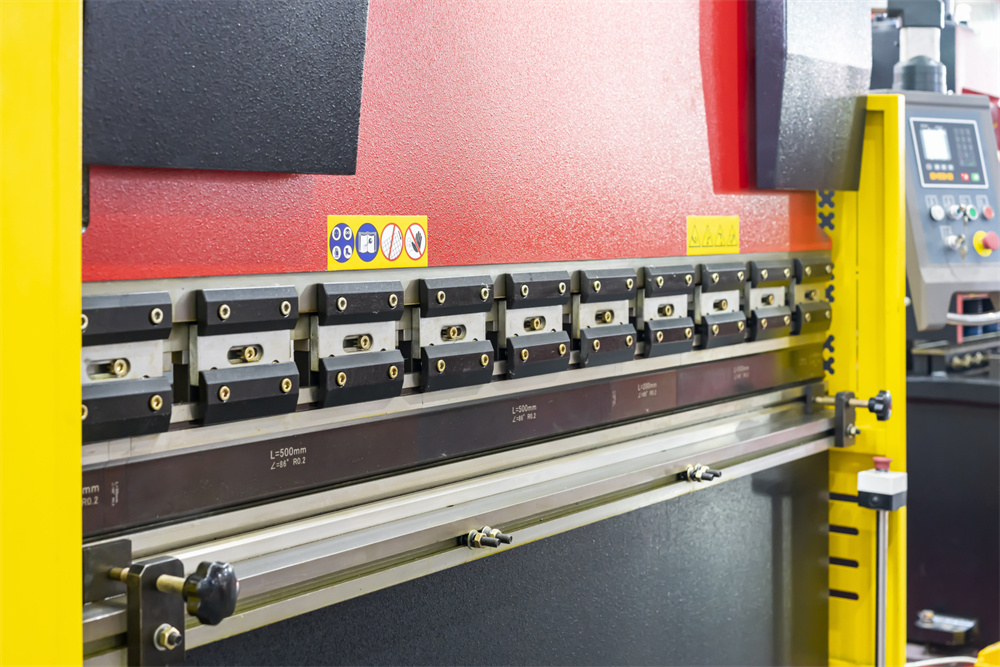
The backgauge system is another area where HARSLE excels. A multi-axis backgauge (X, R, Z1, Z2) allows for the positioning of complex parts with high precision. This is particularly useful when bending parts with non-parallel edges or multiple flanges. The high-speed movement of the backgauge fingers ensures that the cycle time is kept to a minimum, maximizing throughput without sacrificing accuracy. The repeatability of these backgauges is measured in microns, ensuring that every part in a production run is identical.
Furthermore, HARSLE incorporates advanced safety features that do not impede productivity. Laser safety curtains and light guards provide a protective zone around the bending area, automatically stopping the machine if an obstruction is detected. This commitment to safety ensures that operators can work confidently and efficiently, knowing that the machine is designed to protect them while maintaining the high-speed performance required for modern industrial manufacturing.
Selection Advice: Choosing the Right Press Brake
Selecting the right press brake is a strategic investment that requires careful analysis of your current and future production needs. The first step is to determine the maximum tonnage required for your thickest and longest parts. While it is tempting to choose a machine with excess capacity, it is more cost-effective to select a model that aligns with your typical production requirements while providing a margin for growth. HARSLE’s sales engineering team works closely with clients to perform a tonnage analysis based on material type, thickness, and bend length.
Next, consider the bending length. If your shop primarily produces small, intricate brackets, a shorter bed length will offer better ergonomics and faster cycle times. Conversely, if you are involved in structural steel fabrication, a long-bed press brake is non-negotiable. HARSLE offers a diverse range of bed lengths and throat depths to accommodate various workpiece sizes, ensuring that you never have to compromise on the geometry of your designs.
Automation level is another key decision point. For high-volume production, consider integrating a robotic bending cell. HARSLE’s press brakes are designed for seamless integration with robotic arms, allowing for 24/7 operation with minimal human intervention. For job shops with high-mix, low-volume production, a manual or semi-automated machine with quick-change tooling is often the better choice. We provide flexible solutions that can be upgraded as your business scales.
Finally, evaluate the support and service infrastructure of the manufacturer. A press brake is a long-term asset, and its performance depends on regular maintenance and technical support. HARSLE provides comprehensive training for operators and maintenance staff, along with a global network of service technicians. Choosing a partner who understands your industry and provides responsive support is just as important as the machine specifications themselves.
FAQ: Common Questions About Precision Bending
- What is the most important factor in achieving high-precision bends? The most important factor is the rigidity of the machine frame combined with the accuracy of the CNC synchronization system. These ensure that the bending force is applied evenly, preventing angular deviations.
- How does HARSLE handle material spring-back? HARSLE machines utilize advanced CNC controllers that can be programmed with material compensation factors. Additionally, optional laser angle measurement systems can monitor the bend in real-time and adjust the ram position to compensate for spring-back automatically.
- Can HARSLE press brakes be integrated into existing production lines? Yes, our machines are designed with open architecture and standard communication protocols, making them compatible with various robotic systems and factory automation software.
- What kind of maintenance is required for a hydraulic press brake? Regular maintenance includes checking hydraulic oil levels and quality, inspecting seals for leaks, cleaning the backgauge rails, and ensuring that the tooling is free of debris and properly aligned.
- How do I determine the correct tonnage for my application? Tonnage depends on the material thickness, the length of the bend, and the V-die opening width. You can use our online tonnage calculator or consult with our engineering team to determine the exact requirements for your specific parts.
Conclusion: Driving Future Success with HARSLE
The results presented in this Press Brake Case Study: Real Results In Precision Bending Industrial Manufacturing demonstrate that precision is not an accident; it is the outcome of deliberate engineering and the right choice of equipment. By leveraging HARSLE’s advanced CNC technology, robust mechanical design, and commitment to innovation, manufacturers can achieve the high tolerances and production speeds necessary to thrive in a competitive market.
As we look to the future, the integration of Industry 4.0 technologies will continue to redefine the capabilities of press brakes. From predictive maintenance alerts to cloud-based production monitoring, HARSLE is at the forefront of these developments, ensuring that our clients are always equipped with the tools they need to succeed. We invite you to partner with us and experience the difference that precision bending can make in your manufacturing operations.
Investing in a HARSLE press brake is more than just purchasing a machine; it is a commitment to quality and efficiency. Whether you are bending thin-gauge aluminum for electronics or thick-plate steel for heavy machinery, our solutions are tailored to meet your specific challenges. Contact our team today to learn more about how we can help you optimize your production processes and achieve real results in precision bending.
In summary, the path to manufacturing excellence is paved with precision. By focusing on the critical aspects of machine selection, technical integration, and ongoing maintenance, you can ensure that your fabrication shop remains a leader in the industry. HARSLE is proud to be your partner in this journey, providing the reliable, high-performance equipment that turns complex designs into reality, one bend at a time.


