
A Press Brake Upgrade Improved Order Delivery Time: Case Study From A Metal Shop


Introduction: The Bottleneck Challenge in Modern Fabrication
In the competitive landscape of metal fabrication, the ability to meet tight deadlines is often the difference between securing a long-term contract and losing a client to a faster competitor. For many mid-sized metal shops, the press brake is the heart of the production line. However, as order volumes increase and design complexity grows, legacy equipment often becomes the primary bottleneck. This article explores how a press brake upgrade improved order delivery time: case study from a metal shop, providing a blueprint for shops looking to scale their operations.
When a shop relies on manual, older-generation bending machines, the margin for error is high, and the setup time is excessive. Operators spend more time adjusting backgauges and calculating bend allowances than actually producing parts. This inefficiency cascades through the entire workflow, leading to delayed shipments, increased labor costs, and frustrated customers. By transitioning to modern CNC-synchronized hydraulic systems, shops can reclaim lost hours and significantly boost their throughput.
HARSLE has observed numerous clients facing these exact challenges. The transition from mechanical or basic hydraulic systems to advanced CNC-controlled press brakes is not just a hardware update; it is a fundamental shift in production philosophy. This case study delves into the technical, operational, and financial impacts of such an upgrade, illustrating why modernizing your bending department is a strategic imperative in today’s high-speed manufacturing environment.
Key Considerations: Identifying the Need for an Upgrade
Before investing in new machinery, shop owners must conduct a thorough audit of their current production bottlenecks. The most common indicator that a press brake upgrade is necessary is a consistent failure to meet delivery deadlines despite having sufficient raw material and labor. If your team is spending more than 30% of their shift on machine setup and tool changes, your current equipment is likely hindering your growth.
Another critical consideration is the complexity of the parts being produced. Modern designs often require multi-stage bending, complex angles, and high-precision tolerances that older machines simply cannot maintain. When operators have to perform multiple test bends to achieve the desired angle, material waste increases, and the cost per part skyrockets. An upgrade allows for automated angle correction and real-time compensation, ensuring that the first part is a good part.
Energy efficiency and maintenance costs also play a significant role. Older hydraulic systems are often prone to leaks, require frequent calibration, and consume excessive electricity during idle times. By contrast, modern HARSLE press brakes feature energy-saving modes and robust hydraulic components that reduce the total cost of ownership. When calculating the ROI of an upgrade, shops must factor in not just the speed of production, but the reduction in scrap rates and maintenance downtime.
Finally, consider the skill gap in the workforce. Modern CNC press brakes are designed with intuitive, touch-screen interfaces that simplify the programming process. This allows less experienced operators to produce complex parts with high accuracy, effectively mitigating the challenges of a shrinking skilled labor pool. Investing in technology is, in many ways, an investment in your team’s ability to perform at a higher level.
Technical Details: How Modern Systems Drive Efficiency
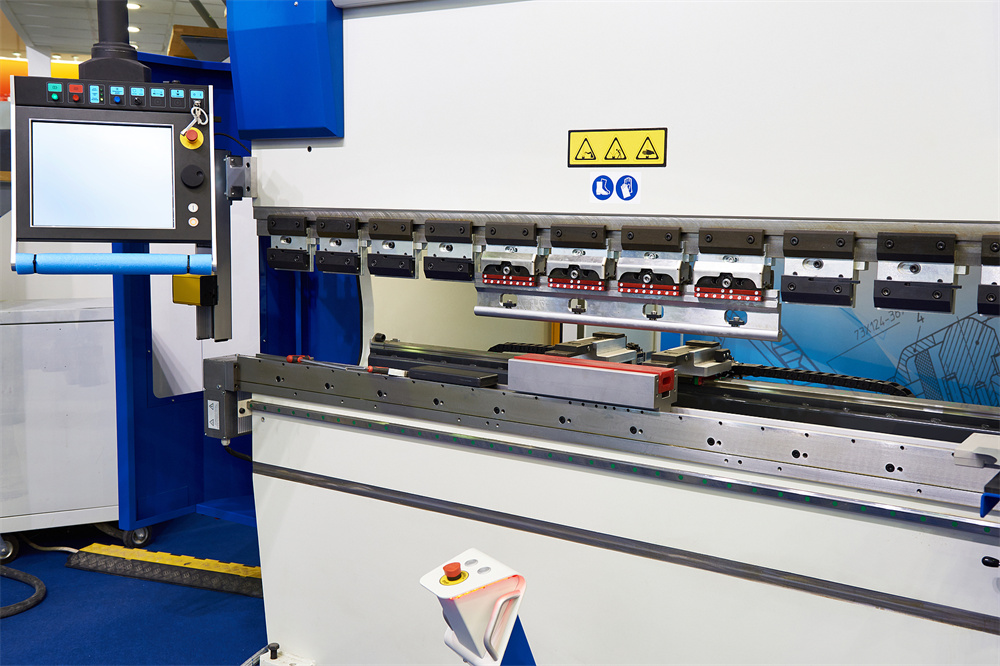
The core of the productivity boost lies in the integration of advanced CNC controllers and synchronized hydraulic systems. In the case study of our featured shop, the transition to a HARSLE CNC press brake replaced a manual backgauge system with a multi-axis (X, R, Z1, Z2) automated backgauge. This allows for complex bending sequences to be programmed offline, reducing setup time from hours to minutes.
Synchronization is the second pillar of this efficiency. Modern machines utilize high-precision proportional valves and linear encoders to ensure that both cylinders move in perfect harmony. This eliminates the ‘twisting’ or uneven bending often seen in older, non-synchronized machines. The result is consistent bend angles across the entire length of the workpiece, regardless of the material thickness or tensile strength variations.
Furthermore, the inclusion of dynamic crowning systems ensures that the bed and ram remain perfectly parallel under load. In older machines, the center of the bed would often deflect, leading to inconsistent angles in the middle of the part. Modern crowning systems automatically adjust the bed geometry based on the bending force, ensuring that every bend is uniform from end to end. This level of precision is essential for industries like aerospace, automotive, and high-end architectural metalwork.
Integration with CAD/CAM software is another game-changer. By importing 3D models directly into the press brake controller, the machine can automatically generate the optimal bending sequence, suggest tool layouts, and calculate the blank size. This ‘digital thread’ from design to production minimizes human error and ensures that the shop floor is always working from the most current engineering data.

Selection Advice: Choosing the Right Press Brake for Your Shop
Selecting the right press brake requires a balance between your current production needs and your future growth projections. Start by analyzing your most common part sizes, material types, and thickness ranges. If your shop primarily handles thin-gauge stainless steel, a high-speed, high-precision machine with a smaller tonnage might be ideal. Conversely, if you are processing heavy-duty structural steel, you will need a machine with a robust frame and higher tonnage capacity.
Consider the length of the bed as well. While it might be tempting to purchase the longest bed available, remember that a longer bed requires more floor space and may have higher energy requirements. A common strategy is to select a bed length that covers 90% of your typical projects and utilize a tandem configuration or a secondary, smaller machine for specialized, long-run parts. This modular approach provides greater flexibility and prevents the ‘over-tooling’ of your shop.
Tooling compatibility is another often-overlooked factor. Ensure that the press brake you choose supports standard tooling systems (such as European or American style) to allow for easy sourcing and interchangeability. HARSLE offers a wide range of tooling solutions designed to work seamlessly with our machines, ensuring that you can tackle everything from simple U-bends to complex hemmed edges without needing custom-engineered solutions for every job.
Finally, look for a partner, not just a vendor. The support, training, and maintenance services provided by the manufacturer are just as important as the machine itself. A press brake is a long-term asset; ensure that the company you choose has a strong track record of technical support, readily available spare parts, and comprehensive training programs for your operators. This ensures that your investment continues to deliver value for years to come.
FAQ: Common Questions About Press Brake Upgrades
- How much can a press brake upgrade reduce my lead times? Most shops report a 30% to 50% reduction in setup times and a significant increase in overall throughput within the first three months of operation.
- Is it difficult to train operators on new CNC press brakes? Modern controllers are designed to be user-friendly. Most operators can become proficient with basic operations within a few days of training.
- What is the typical lifespan of a modern hydraulic press brake? With proper maintenance, a high-quality press brake can provide 15 to 20 years of reliable service in a standard industrial environment.
- Can I integrate a press brake with my existing ERP system? Yes, many modern CNC controllers support data exchange with ERP and MES systems, allowing for better tracking of production metrics and inventory.
- What maintenance is required to keep the machine running at peak efficiency? Regular oil changes, filter replacements, and annual calibration of the backgauge and ram positioning are essential for maintaining high precision.
Conclusion: Transforming Your Shop for the Future
The case study of how a press brake upgrade improved order delivery time demonstrates that technology is the most effective lever for scaling a metal fabrication business. By moving away from the limitations of legacy equipment and embracing the precision, speed, and automation of modern CNC-synchronized hydraulic press brakes, shops can transform their production capabilities. The result is not just faster delivery times, but a more profitable, reliable, and competitive business model.
At HARSLE, we are committed to helping metal shops navigate this transition. Whether you are looking to replace a single aging machine or overhaul your entire bending department, our team provides the technical expertise and high-performance equipment necessary to achieve your goals. Investing in the right technology today is the best way to ensure your shop remains a leader in the industry tomorrow. Contact us today to discuss how we can help you optimize your fabrication workflow and take your production to the next level.












