Press Brake Tooling Costs: What to Budget Beyond the Machine


Understanding Press Brake Tooling Costs: Budget Beyond Machine
When investing in a high-performance HARSLE press brake, the machine price is often just the beginning of the capital expenditure. Many fabricators fall into the trap of focusing solely on the tonnage and bed length, neglecting the critical component that actually shapes the metal: the tooling. Understanding press brake tooling costs is essential for maintaining operational profitability and ensuring your shop can handle diverse customer requirements.
Tooling represents a significant long-term investment. Unlike the machine itself, which is a fixed asset, tooling is subject to wear, tear, and the constant need for adaptation to new bending profiles. If you fail to budget for these components, you may find your machine sitting idle while waiting for the right punch or die set to arrive. This guide breaks down exactly what you need to account for when planning your fabrication budget.
The total cost of ownership for a press brake includes not just the initial purchase, but the ongoing investment in precision tooling. Whether you are dealing with standard air bending or complex bottoming operations, the quality of your tools dictates the accuracy of your parts. By planning your budget to include a robust tooling library, you position your business to take on more complex, higher-margin projects immediately upon machine installation.
In this article, we will explore the variables that influence pricing, the hidden costs of maintenance and storage, and how to calculate the return on investment for high-quality tooling. By the end of this guide, you will have a clear roadmap for allocating your capital to maximize the efficiency of your HARSLE press brake system.
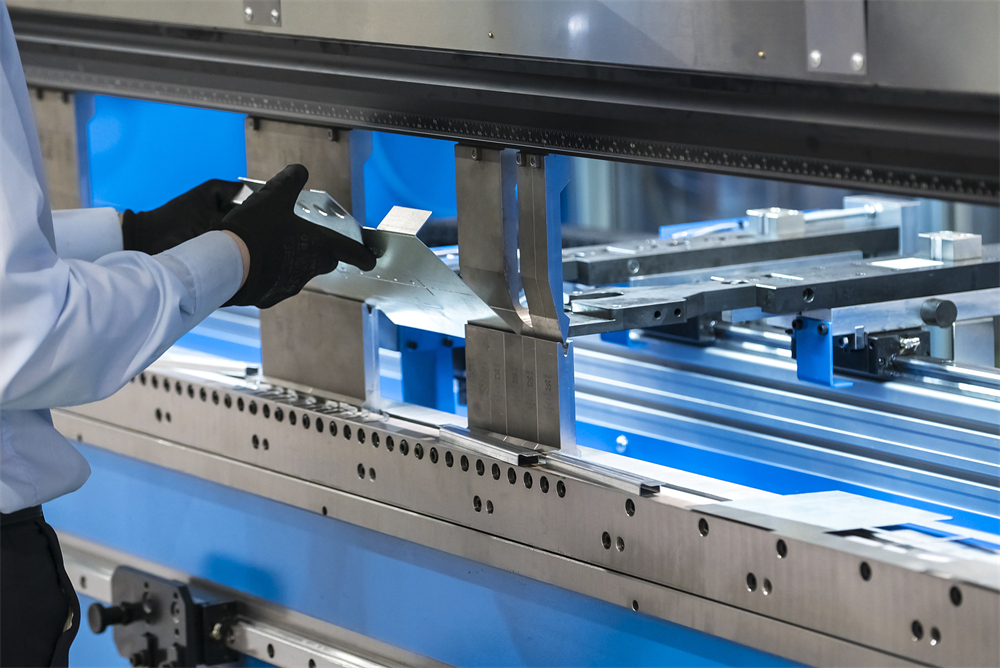
Price Range Overview: What to Expect
The cost of press brake tooling varies wildly based on material, precision, and complexity. For a standard entry-level shop, a basic set of European-style punches and dies might cost a few thousand dollars. However, for shops performing high-precision aerospace or medical fabrication, specialized hardened and ground tooling can easily run into the tens of thousands of dollars for a single setup.
Standard air-bending tooling is the most affordable category. These tools are designed for general-purpose work and are readily available from most manufacturers. If your shop focuses on simple brackets and enclosures, you can expect to spend roughly 5% to 10% of the machine’s total cost on an initial tooling package. This provides a solid foundation for most common bending tasks.
Specialized tooling, such as radius tools, hemming sets, or multi-V dies, carries a premium price tag. These tools are engineered for specific applications and often require higher-grade steel alloys to withstand the intense pressure of complex bends. When budgeting, it is wise to categorize your tooling needs into ‘essential’ and ‘optional’ tiers to ensure you don’t overspend on tools you won’t use frequently.
Finally, consider the cost of custom tooling. If your product line requires unique geometries that cannot be achieved with standard off-the-shelf components, you will need to commission custom-engineered solutions. These involve design fees, prototyping, and specialized manufacturing processes, which can significantly increase your upfront costs. Always factor in a 15-20% contingency fund for these custom requirements when drafting your annual equipment budget.
Main Cost Drivers: Why Prices Vary
The primary driver of press brake tooling costs is the material composition. Tools made from standard carbon steel are cheaper but wear out faster. Conversely, tools manufactured from high-grade chrome-molybdenum alloys, often induction-hardened to 50-60 HRC, provide superior longevity and precision. While the upfront cost is higher, the cost-per-bend is significantly lower due to reduced replacement frequency.
Precision grinding is another major factor. Tooling that is ground to tight tolerances (e.g., +/- 0.01mm) ensures consistent bend angles across the entire length of the bed. This level of precision is non-negotiable for automated systems or high-volume production. The labor and technology required to achieve these tolerances are reflected in the final price of the tool.
The complexity of the tool geometry also dictates cost. A simple 88-degree punch is inexpensive to manufacture. However, a complex goose-neck punch designed for deep box bending requires more material, more machining time, and more complex heat treatment processes. The more ‘features’ a tool has, the higher the price will be.
Finally, the brand and origin of the tooling play a role. While generic, low-cost tooling may seem attractive, it often lacks the consistency required for modern CNC press brakes. Investing in reputable tooling brands ensures that your tools are compatible with your machine’s clamping system and that you have access to technical support and replacement parts for years to come.
Configuration Impact: Sectionalized vs. Full Length
One of the most important decisions you will make is choosing between full-length tooling and sectionalized tooling. Full-length tools are often cheaper per foot, but they are heavy, difficult to handle, and lack the flexibility required for box bending. If your shop produces a wide variety of parts, full-length tooling will quickly become a bottleneck.
Sectionalized tooling, while slightly more expensive, offers unparalleled versatility. By using segments of various lengths, operators can build a tool setup that matches the exact length of the part being bent. This reduces the need for constant tool changes and allows for the production of complex boxes and cabinets that would be impossible with full-length tools.
The clamping system on your HARSLE press brake also impacts your tooling configuration. Hydraulic clamping systems are designed to work seamlessly with specific types of sectionalized tooling. When budgeting, ensure that your tooling choice is compatible with your machine’s clamping mechanism to avoid the need for expensive adapters or modifications later on.
Consider the ‘set-up time’ cost as well. Sectionalized tools are easier for a single operator to load and unload, reducing the labor cost associated with changeovers. In a high-mix, low-volume environment, the efficiency gains from sectionalized tooling often pay for the price difference within the first few months of operation.
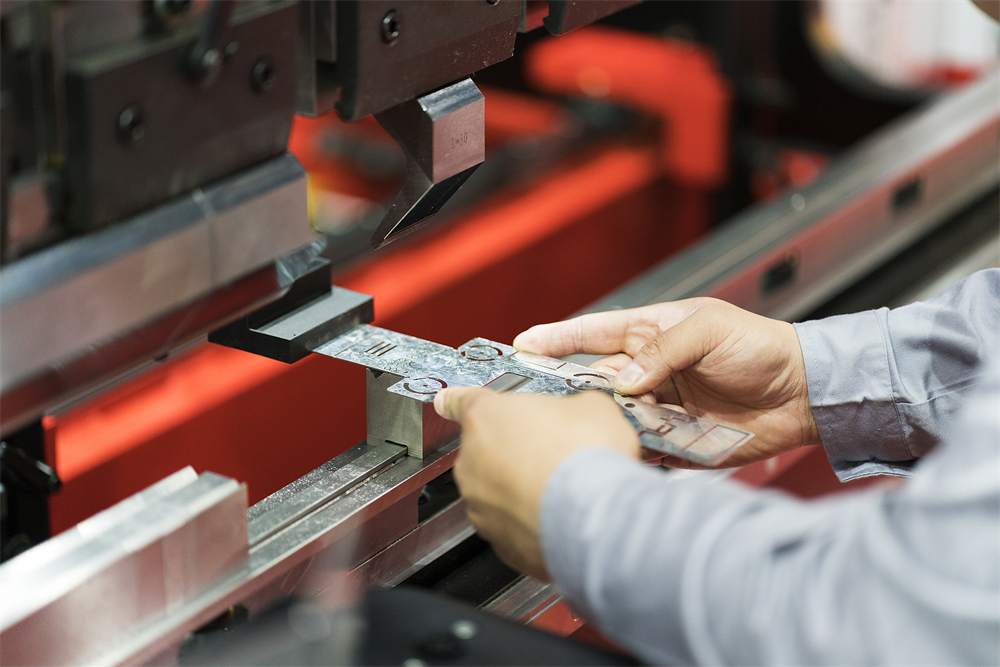
Hidden Costs: The Often Overlooked Expenses
Beyond the sticker price of the punch and die, there are several hidden costs that fabricators often overlook. Storage is a major one. High-quality tooling is a precision instrument; it must be stored in a clean, dry, and organized environment to prevent rust and damage. Investing in proper tooling cabinets, racks, and protective coatings is a necessary expense that protects your investment.
Maintenance and sharpening are ongoing costs. Even the best tooling will eventually show signs of wear. You must budget for periodic regrinding services or invest in your own tool-sharpening equipment. Ignoring tool wear leads to inconsistent bend angles, increased scrap rates, and potential damage to the press brake’s ram and bed.
Training is another hidden cost. Your operators need to know how to properly install, align, and care for the tooling. Improper installation can lead to ‘tool crashing,’ where the punch and die collide, causing catastrophic damage to both the tooling and the machine. Budgeting for professional training sessions is an investment that prevents costly accidents.
Finally, consider the cost of consumables. Shims, spacers, and specialized lubricants are required for many bending applications. While these items seem inexpensive individually, they add up over the course of a year. Keeping a well-stocked inventory of these consumables ensures that your production line never stops due to a missing $5 part.
ROI Calculation: Justifying the Investment
To justify the cost of high-quality tooling, you must look at the return on investment (ROI) through the lens of productivity and quality. High-quality tooling reduces setup times, minimizes scrap, and eliminates the need for secondary operations like re-bending or manual adjustments. When you calculate the labor savings and the reduction in material waste, the premium price of better tooling often pays for itself.
Consider the ‘cost of quality.’ If your tooling is imprecise, you will spend hours troubleshooting bend angles and adjusting your CNC program. If your tooling is high-quality, the machine will hit the target angle on the first part, every time. This consistency is the key to scaling your business and taking on more demanding clients.
Another way to view ROI is through machine uptime. If your tooling is durable and easy to change, your press brake spends more time bending metal and less time sitting idle. In a shop where the machine’s hourly rate is high, every minute of increased uptime contributes directly to your bottom line.
Finally, factor in the longevity of the tools. A cheap set of tools might last for 50,000 bends before needing replacement, while a premium set might last for 200,000 bends. When you divide the cost by the number of bends, the premium tooling is often the more economical choice in the long run. Always perform a ‘cost-per-bend’ analysis before making your final purchase decision.
Buying Advice: A Checklist for Fabricators
Before you purchase your next set of tooling, use this checklist to ensure you are making an informed decision. First, define your material requirements. Are you bending thin-gauge aluminum or thick, high-tensile steel? The material thickness and strength will dictate the required tonnage and the type of steel needed for your tools.
Second, evaluate your clamping system. Ensure that the tooling you choose is fully compatible with your HARSLE press brake’s clamping mechanism. If you are unsure, consult with your HARSLE representative to verify compatibility. Using incompatible tools is a safety hazard and can void your machine’s warranty.
Third, think about your future growth. Don’t just buy tooling for the parts you are making today. Consider the types of projects you want to take on in the next two to three years. Investing in a versatile ‘starter kit’ that includes a variety of radii and V-openings will give you the flexibility to bid on a wider range of jobs.
Fourth, prioritize quality over price. It is better to have a smaller set of high-quality tools than a massive collection of cheap, inaccurate ones. You can always add to your collection over time, but you cannot easily ‘fix’ a set of poorly manufactured tools. Build your library strategically, focusing on the tools that will provide the most value to your specific production needs.
FAQ: Frequently Asked Questions
How often should I replace my press brake tooling?
Replacement frequency depends on the material being bent and the volume of production. Generally, you should inspect your tools for signs of wear, such as chipping or rounding of the punch tip, every 500 hours of operation. If you notice inconsistent bend angles, it is time to have your tools reground or replaced.
Can I use tooling from a different manufacturer on my HARSLE press brake?
Yes, as long as the tooling profile matches your machine’s clamping system (e.g., European style, American style). However, we recommend using HARSLE-approved tooling to ensure optimal performance, safety, and compatibility with your machine’s software and clamping hardware.
What is the difference between air bending and bottoming?
Air bending uses the press brake’s CNC control to determine the bend angle by controlling the depth of the punch. Bottoming (or coining) forces the metal into the die to achieve a specific angle. Air bending is more versatile and requires less tonnage, while bottoming provides higher precision for specific, repetitive parts.
How do I prevent rust on my press brake tools?
Keep your tools in a climate-controlled environment. After use, wipe them down with a light machine oil or a specialized rust-preventative spray. Store them in dedicated cabinets or racks rather than leaving them on the machine bed or the shop floor.
Is it worth buying used tooling?
Used tooling can be a cost-effective option, but it carries risks. You must inspect the tools for wear, cracks, and straightness. If you buy used, ensure you have the ability to regrind them if necessary. For critical, high-precision work, we always recommend purchasing new, certified tooling.