
Case Study of Faster Production with a CNC Bending Machine in Small-Batch Metal Fabrication

Introduction
In the modern landscape of metal fabrication, the ability to pivot between diverse project requirements while maintaining high-speed output is the hallmark of a successful shop. For small-to-medium enterprises (SMEs), the challenge often lies in balancing the high setup times associated with traditional bending methods against the need for rapid, high-precision results. This article explores a comprehensive Case Study Of Faster Production With A CNC Bending Machine In Small-Batch Metal Fabrication, demonstrating how HARSLE technology transforms operational bottlenecks into streamlined workflows.
Small-batch fabrication is inherently complex. Unlike mass production, where a single setup can run for weeks, small-batch shops must frequently retool, recalibrate, and adjust for varying material thicknesses and bend angles. This constant state of flux can lead to significant downtime if the machinery is not equipped with advanced CNC capabilities. By integrating a HARSLE CNC press brake, shops can automate the transition between jobs, ensuring that the transition from a prototype to a production run is seamless and efficient.
The shift toward CNC-driven bending is not merely about speed; it is about the intelligent application of force and geometry. Modern CNC controllers allow operators to store hundreds of programs, meaning that a job completed last month can be recalled and executed in seconds. This capability is the cornerstone of the Case Study Of Faster Production A CNC Bending Machine In Small-Batch Metal Fabrication, providing the agility required to compete in today’s fast-paced industrial market.
Throughout this article, we will examine the technical nuances that make HARSLE machines the preferred choice for fabricators worldwide. From the initial design phase to the final quality control check, we will break down how the right equipment selection influences the bottom line, reduces material waste, and elevates the overall quality of the finished product.

Key Considerations for Small-Batch Efficiency
When evaluating the efficiency of a fabrication shop, the primary metric is often the ‘setup-to-run’ ratio. In small-batch environments, if a machine takes two hours to set up for a one-hour job, the operation is fundamentally inefficient. The key to overcoming this is the implementation of a CNC press brake that features quick-change tooling and intuitive software interfaces. By reducing the time spent on manual adjustments, fabricators can significantly increase their throughput.
Material handling is another critical factor. In manual or semi-automatic setups, the operator often spends more time positioning the sheet than the machine spends performing the bend. HARSLE CNC systems utilize advanced backgauge technology that moves in multiple axes (X, R, Z1, Z2), allowing for complex bends to be performed in a single handling sequence. This reduces the risk of operator error and ensures that every piece in the batch is identical to the first.
Consistency across batches is vital for client satisfaction. When a customer orders a small batch of custom brackets, they expect the tenth piece to be as accurate as the first. CNC bending machines eliminate the ‘human factor’ variability that plagues manual press brakes. By controlling the ram position to within microns, the machine ensures that the bend angle remains constant, regardless of material spring-back or minor variations in sheet thickness.
Finally, energy consumption and maintenance cycles play a role in long-term profitability. Modern CNC press brakes are designed to be energy-efficient, drawing power only when the ram is in motion. Furthermore, the integration of diagnostic software allows for predictive maintenance, alerting the operator to potential issues before they result in costly downtime. This proactive approach is a central theme in our Case Study Of Faster Production With A CNC Bending Machine In Small-Batch Metal Fabrication.
Technical Details of HARSLE CNC Press Brakes
HARSLE CNC press brakes are engineered with a focus on structural rigidity and software intelligence. The frame is typically constructed from high-tensile steel, stress-relieved to prevent deformation under heavy loads. This structural integrity is the foundation upon which high-precision bending is built. Without a stable frame, even the most advanced software cannot compensate for the ‘bowing’ effect that occurs during high-tonnage operations.
The heart of the machine is the CNC controller. HARSLE utilizes industry-leading controllers that support 2D and 3D graphical programming. This allows the operator to draw the part on the screen, and the machine automatically calculates the bending sequence, the required tooling, and the backgauge positions. This ‘offline programming’ capability means that the machine can continue to produce parts while the next job is being programmed in the office, effectively eliminating setup downtime.
Hydraulic systems in HARSLE machines are equipped with proportional valves that allow for extremely fine control over the ram speed and pressure. This is particularly important when working with delicate materials or complex geometries where over-bending or under-bending can lead to scrap. The synchronization of the Y1 and Y2 axes ensures that the ram remains perfectly parallel to the bed, even under off-center loading conditions.
Tooling compatibility is another technical advantage. HARSLE press brakes are designed to accept a wide range of standard and custom tooling, including European-style and American-style systems. This flexibility allows shops to utilize their existing inventory of dies and punches while benefiting from the superior performance of the HARSLE machine. The quick-clamping systems further reduce the time required to swap tools, making the machine ideal for high-mix, low-volume production.
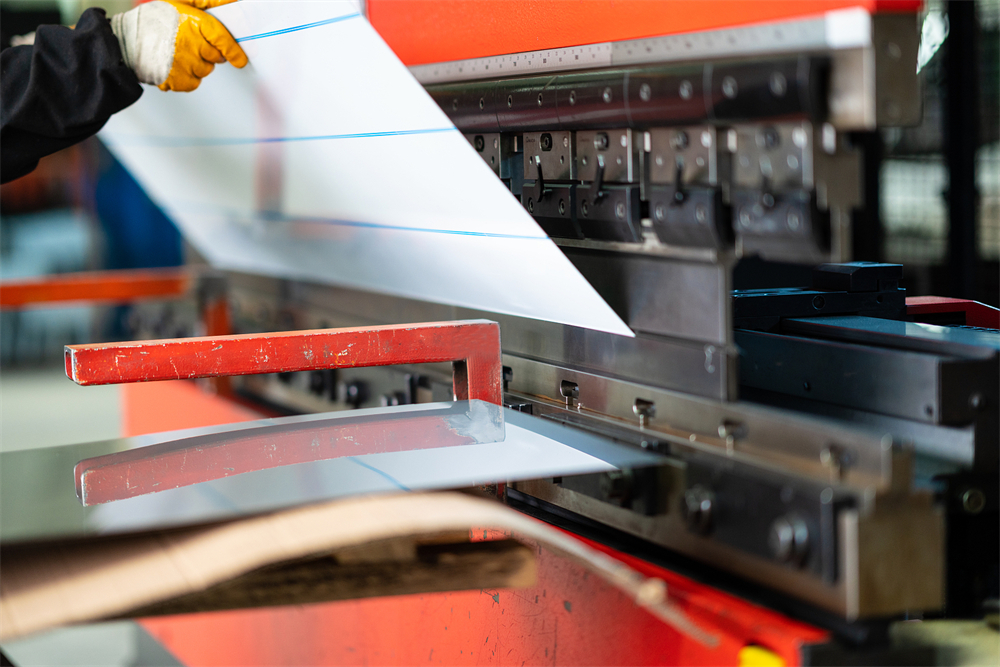
Selection Advice: Choosing the Right Bending Machine
Selecting the right press brake is a significant capital investment. The first step is to analyze your current and projected workload. If your shop primarily handles thin-gauge stainless steel, a high-tonnage machine might be overkill. Conversely, if you are frequently bending thick plate, a machine with insufficient tonnage will lead to premature wear and poor bend quality. Always calculate the maximum bending force required for your thickest material and longest bend length.
Consider the number of axes you truly need. While a 3-axis machine might be sufficient for simple boxes, a 6-axis or 8-axis machine provides the versatility needed for complex, multi-bend parts. The investment in additional axes pays for itself by reducing the number of times the part must be handled or re-oriented. In the context of the Case Study Of Faster Production A CNC Bending Machine In Small-Batch Metal Fabrication, the ability to perform complex bends in one cycle was the primary driver of increased productivity.
Evaluate the software ecosystem. A machine is only as good as its user interface. Ensure that the controller is user-friendly and that your operators can be trained quickly. HARSLE provides comprehensive training and support, which is a critical factor in the successful adoption of new technology. Look for manufacturers that offer remote diagnostic support, as this can save days of downtime in the event of a software glitch.
Finally, look at the after-sales support and spare parts availability. A machine that is down for weeks waiting for a part from overseas is a liability. HARSLE maintains a robust supply chain and a network of service technicians, ensuring that your production remains uninterrupted. When comparing quotes, always factor in the cost of installation, training, and long-term maintenance contracts.
FAQ: Common Questions About CNC Bending
What is the main advantage of a CNC press brake over a manual one?
The main advantage is repeatability and speed. CNC machines automate the backgauge positioning and ram depth, ensuring that every part is identical. This eliminates the need for manual measurements and trial-and-error bending, which is essential for small-batch efficiency.
How does HARSLE ensure precision in their bending machines?
HARSLE uses high-precision linear encoders and proportional hydraulic valves to monitor and adjust the ram position in real-time. This ensures that the Y1 and Y2 axes are perfectly synchronized, even under uneven load.
Can I use my existing tooling on a HARSLE press brake?
Yes, HARSLE machines are designed to be compatible with a wide variety of standard tooling systems. We offer various clamping options to ensure your existing inventory can be integrated seamlessly.
What kind of maintenance does a CNC press brake require?
Regular maintenance includes checking hydraulic fluid levels, cleaning the backgauge rails, inspecting the tooling for wear, and ensuring the software is updated. HARSLE provides a detailed maintenance schedule with every machine.
Is it difficult to train staff on HARSLE CNC controllers?
Our controllers are designed with an intuitive interface that mimics common CAD/CAM software. Most operators can become proficient with basic operations within a few days of training.
Conclusion
The transition to CNC-driven technology is no longer a luxury; it is a necessity for shops that want to remain competitive in the metal fabrication industry. As demonstrated in this Case Study Of Faster Production With A CNC Bending Machine In Small-Batch Metal Fabrication, the integration of HARSLE machinery allows fabricators to achieve higher precision, faster turnaround times, and greater overall profitability. By focusing on the right equipment, investing in operator training, and maintaining a proactive approach to machine care, small-batch shops can achieve the same levels of efficiency as large-scale industrial manufacturers.
HARSLE remains committed to providing the tools and support necessary for your success. Whether you are looking to upgrade your existing facility or starting a new venture, our range of CNC press brakes offers the reliability, speed, and precision required to meet the demands of modern metal fabrication. We invite you to explore our full catalog and contact our expert team to discuss how we can help you optimize your production workflow today.
Remember, the goal of any fabrication shop is to deliver value to the customer. By reducing waste, improving accuracy, and increasing speed, you are not just buying a machine; you are investing in the future of your business. Let HARSLE be your partner in this journey toward manufacturing excellence.