CNC Shearing Machine Price Guide: Is Automation Worth the Investment?


Introduction to CNC Shearing Machine Investment
In the competitive landscape of modern metal fabrication, the quest for precision and efficiency often leads manufacturers to a critical crossroads: the transition from manual or conventional hydraulic shearing to full CNC automation. A CNC shearing machine is not merely a tool for cutting metal; it is a sophisticated piece of engineering designed to optimize material usage, reduce labor costs, and ensure repeatable accuracy. However, the primary hurdle for many workshop owners remains the initial capital expenditure. Understanding the CNC Shearing Machine Price : Is Automation Worth Investment? requires a deep dive into the technical specifications, long-term operational savings, and the specific needs of your production line.
HARSLE has been at the forefront of providing high-quality metal fabrication solutions, and we recognize that price is often the deciding factor. Yet, the ‘price’ of a machine is more than just the number on the invoice. It encompasses the total cost of ownership, including maintenance, energy consumption, and the potential for increased revenue through higher throughput. This guide aims to demystify the pricing structures of CNC shearing machines and provide a framework for calculating whether the leap to automation is the right move for your business.
Price Range Overview: From Entry-Level to Industrial Powerhouses
The market for shearing machines is vast, with prices ranging from a few thousand dollars for basic mechanical units to well over $100,000 for high-end, fully automated CNC guillotine shears. To understand where your needs fit, it is helpful to categorize these machines into three primary tiers based on their capabilities and price points.
1. Entry-Level CNC Swing Beam Shears ($8,000 – $18,000)
Entry-level machines are typically swing beam shears equipped with basic CNC controllers like the E21S or DAC-310. These machines are ideal for small workshops or maintenance departments that require more precision than a manual shear but do not run 24/7 production cycles. They usually handle thinner gauges (up to 6mm) and shorter lengths (up to 2500mm or 3200mm). While they offer CNC control over the backgauge, other adjustments like blade gap and stroke length might still be manual or semi-automatic.
2. Mid-Range CNC Guillotine Shears ($20,000 – $45,000)
This is the ‘sweet spot’ for most professional fabrication shops. These machines are typically variable rake guillotine shears. The variable rake angle allows for cutting thicker materials with less distortion. Prices in this range include advanced CNC controllers (such as the Delem DAC-360T or Cybelec CybTouch series) that automatically calculate and adjust the blade gap, rake angle, and stroke length based on the material type and thickness entered by the operator. These machines are built for durability and high-volume production.
3. High-End Automated Shearing Systems ($50,000 – $120,000+)
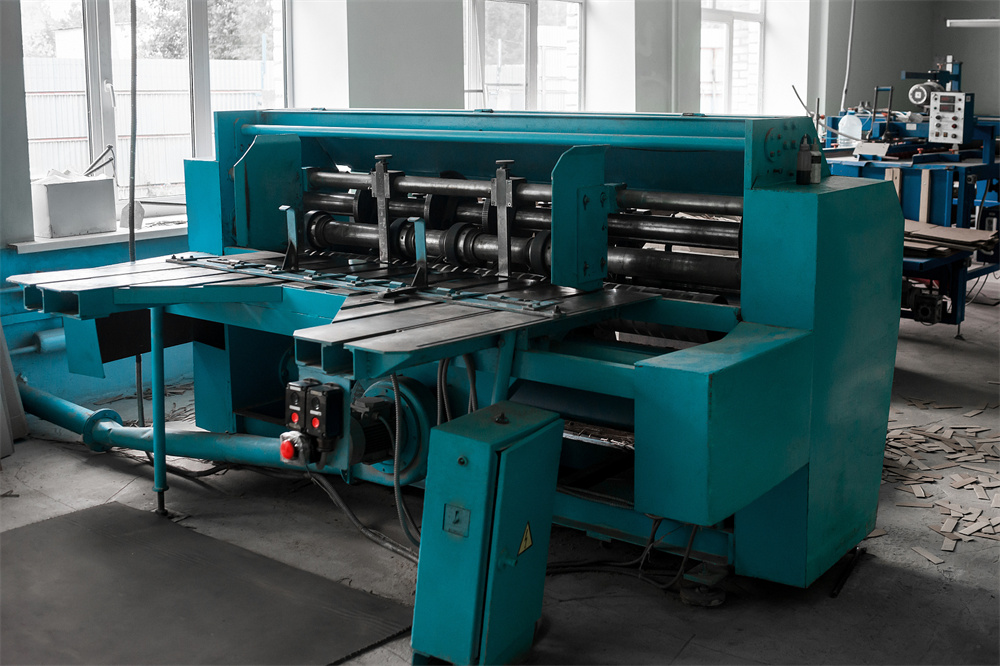
At the top of the spectrum are heavy-duty machines designed for extreme thicknesses (20mm+) or very long plates (6000mm to 8000mm). These systems often feature sophisticated material handling automation, such as pneumatic rear support systems, front-loading conveyors, and scrap sorting gates. The price reflects the massive frame construction, high-end hydraulic components (like Rexroth or Hoerbiger), and the integration of safety systems like laser curtains and interlocked fencing.
Main Cost Drivers: What Are You Paying For?
When evaluating a CNC Shearing Machine Price : Is Automation Worth Investment?, it is essential to identify the specific components that drive the cost upward. Not all machines are created equal, and the internal components often dictate the price more than the external appearance.
Material Capacity and Frame Rigidity
The most obvious cost driver is the physical size and cutting capacity. A machine designed to cut 16mm carbon steel requires a significantly more robust frame, larger hydraulic cylinders, and a more powerful motor than a machine designed for 4mm aluminum. The quality of the steel used in the frame and whether it has been stress-relieved through vibration or heat treatment also impacts the price. A stress-relieved frame ensures that the machine maintains its precision over decades of use without warping.
Hydraulic and Electrical Systems
The reliability of a shearing machine depends heavily on its ‘veins and nerves.’ Premium machines utilize world-class hydraulic valves (Rexroth from Germany) and electrical components (Schneider or Siemens). These components are more expensive upfront but offer superior longevity and are easier to source globally when repairs are needed. Cheaper machines may use generic components that are prone to leaks or electrical failures, leading to costly downtime.
The CNC Controller: The Brain of the Machine
The sophistication of the CNC controller is a major price differentiator. A basic controller that only manages the backgauge position is relatively inexpensive. In contrast, a high-end touch-screen controller that manages the entire cutting process—including rake angle, blade gap, and stroke length—adds several thousand dollars to the price. However, this automation significantly reduces the skill level required by the operator and eliminates human error in machine setup.
Configuration Impact: Customizing for Efficiency
The base price of a CNC shearing machine is often just the starting point. Depending on your specific applications, certain configurations can drastically improve efficiency but will also increase the initial investment.
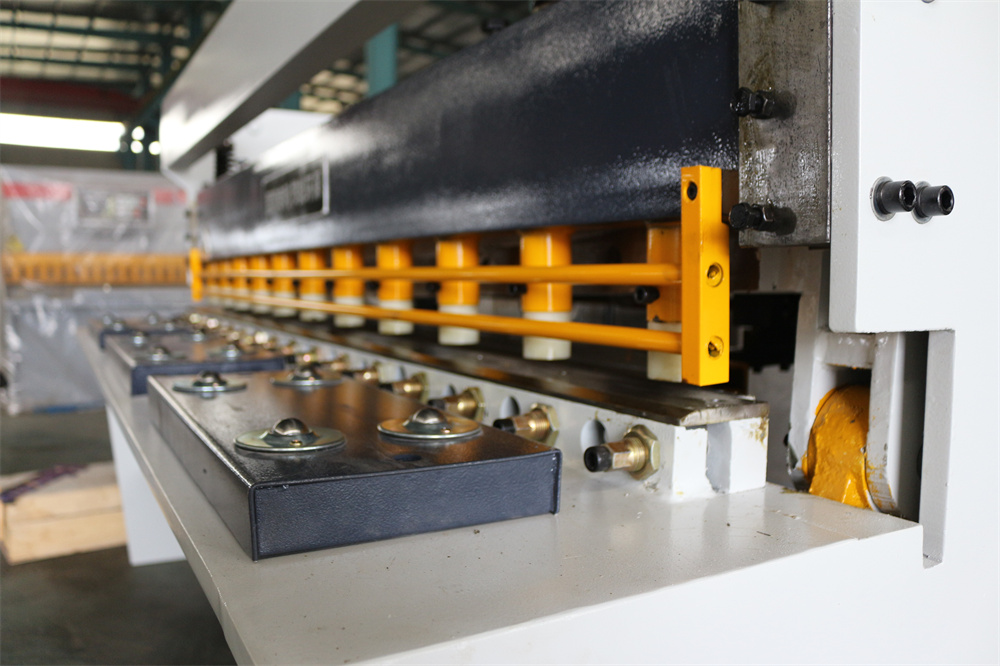
- Pneumatic Rear Support: For thin sheets that tend to sag under their own weight, a pneumatic support system is vital. It holds the sheet level with the blade until the cut is made, ensuring dimensional accuracy. This can add $2,000 to $5,000 to the price.
- Blade Material: Standard blades are suitable for carbon steel, but if you are frequently cutting stainless steel, you will need high-chrome, high-carbon blades (such as 6CrW2Si). These blades stay sharp longer under high-stress conditions but come at a premium.
- Front Feeding Systems: For high-speed production, automatic front feeders or CNC-controlled front gauges can be integrated. This transforms the shear from a standalone tool into a semi-automated production cell.
- Safety Features: While basic safety guards are standard, advanced light curtains or laser-based finger guards provide better protection without slowing down the operator. In many regions, these are mandatory for compliance with local safety regulations.
Hidden Costs: Beyond the Sticker Price
When calculating the CNC Shearing Machine Price : Is Automation Worth Investment?, many buyers overlook the secondary costs associated with acquiring industrial machinery. To get a true picture of the investment, you must account for the following:
Shipping and Logistics
Industrial shears are heavy and bulky. Shipping a 10-ton machine across the ocean involves sea freight, port fees, customs duties, and inland trucking. Depending on your location, these costs can range from $2,000 to $10,000. Additionally, you may need to hire a heavy-lift crane service to offload and position the machine in your facility.
Installation and Training
While some experienced shops can install a machine themselves, most benefit from professional commissioning. A technician from the manufacturer or a local distributor will ensure the machine is leveled correctly, the hydraulics are purged of air, and the CNC controller is calibrated. Training your staff on the new software is equally important to ensure you are getting the most out of the automation features.
Maintenance and Consumables
Every shearing machine requires ongoing maintenance. This includes hydraulic oil changes, filter replacements, and, most importantly, blade sharpening. CNC machines often have self-lubrication systems that reduce manual labor but require the purchase of specific lubricants. Factor in the cost of a spare set of blades to ensure zero downtime when the primary set is sent out for regrinding.
ROI Calculation: Is Automation Worth the Investment?
The core of the CNC Shearing Machine Price : Is Automation Worth Investment? debate lies in the Return on Investment (ROI). To determine if the extra $15,000 for a CNC guillotine shear over a manual swing beam is worth it, consider these three factors:
1. Labor Savings and Skill Requirements
A manual shear requires a skilled operator to manually set the blade gap and backgauge for every different material thickness. This takes time and leaves room for error. A CNC machine automates these settings. An operator can simply select a pre-saved program or enter the material type, and the machine adjusts itself in seconds. This allows less-experienced (and lower-cost) operators to produce high-quality parts, while also reducing the total man-hours per job.
2. Material Yield and Scrap Reduction
Precision is the enemy of waste. CNC backgauges are accurate to within 0.05mm. In a manual process, a slight misalignment can ruin an entire sheet of expensive material. Over a year, reducing scrap by even 2-3% can save thousands of dollars, directly contributing to the machine’s payback period.
3. Increased Throughput
CNC machines are faster. The ability to program a sequence of cuts with different backgauge depths allows the operator to finish a complex job in one pass rather than multiple setups. If a CNC machine allows you to process 30% more steel per day, the increased revenue can often cover the monthly financing cost of the machine on its own.
| Feature | Manual/Basic Hydraulic | CNC Automated Shear | ROI Impact |
|---|---|---|---|
| Setup Time | 5-10 Minutes | < 1 Minute | High (Labor Savings) |
| Accuracy | +/- 0.5mm | +/- 0.05mm | Medium (Scrap Reduction) |
| Operator Skill | High | Moderate | High (Labor Cost) |
| Versatility | Limited | High (Multi-material) | Medium (Market Reach) |
Buying Advice: How to Choose the Right Machine
Choosing the right CNC shearing machine requires a balance between your current budget and your future growth. Here is a checklist to guide your purchase:
- Analyze Your Material Mix: If you only cut 3mm mild steel, a high-end variable rake shear is overkill. However, if you switch between 2mm aluminum and 12mm stainless steel daily, the CNC variable rake is essential.
- Check the Controller Support: Ensure the CNC controller brand is well-supported in your region. Delem and Cybelec are industry standards with plenty of online resources and local technicians.
- Evaluate the Frame Construction: Ask the manufacturer for the weight of the machine. Heavier usually means more rigid, which translates to better cuts and longer blade life.
- Consider Future-Proofing: It is often cheaper to buy a machine with a slightly larger capacity than you currently need than to replace the machine in two years when your business grows.
At HARSLE, we recommend looking at the total value proposition. A machine that costs 10% more but offers 20% higher efficiency will pay for itself much faster than the ‘cheapest’ option on the market.
Frequently Asked Questions (FAQ)
How long does a CNC shearing machine typically last?
With proper maintenance, a high-quality CNC shearing machine from a reputable manufacturer like HARSLE can last 20 to 25 years. The mechanical frame is often nearly indestructible; the components that may need upgrading over time are the CNC controller and the hydraulic seals.
Can I upgrade a manual shear to CNC?
While it is technically possible to retro-fit a CNC backgauge to an older machine, it is rarely cost-effective. Modern CNC shears integrate the controller with the hydraulic system for blade gap and rake angle adjustment, which cannot be easily added to a manual machine. It is usually better to trade in the old machine for a new CNC model.
What is the difference between a swing beam and a guillotine shear?
A swing beam shear moves the upper blade in an arc. It is simpler and cheaper but has a fixed rake angle. A guillotine shear moves the blade vertically and usually allows for a variable rake angle, which provides cleaner cuts on thicker materials and reduces ‘twist’ or ‘bow’ in the cut pieces.
Is a CNC shearing machine difficult to maintain?
Not necessarily. While they have more electronic components, they often include self-diagnostic tools that help identify issues quickly. Regular maintenance involves checking hydraulic fluid levels, sharpening blades, and ensuring the backgauge lead screws are lubricated.
Does HARSLE provide international support for their machines?
Yes, HARSLE provides comprehensive support including installation guidance, video tutorials, and remote technical assistance. We also stock a wide range of spare parts to ensure our global customers experience minimal downtime.
Conclusion
Investing in a CNC shearing machine is a significant step for any fabrication business. While the CNC Shearing Machine Price may seem daunting at first, the long-term benefits of automation—ranging from precision and reduced waste to lower labor costs—make it a highly profitable investment for growing shops. By understanding the cost drivers and calculating your potential ROI, you can choose a machine that not only fits your current budget but also serves as a cornerstone for your company’s future success. Whether you are looking for an entry-level solution or a high-capacity industrial shear, HARSLE is committed to providing the technology and support you need to stay competitive in today’s market.