
Press Brake Backgauge Not Working Correctly: Troubleshooting Alignment Control Problems


Introduction to Press Brake Backgauge Challenges
In the world of precision metal fabrication, the press brake backgauge is often referred to as the unsung hero of the workshop. While the hydraulic cylinders provide the raw force necessary to bend thick plates of steel, it is the backgauge that ensures every bend is placed with mathematical precision. When an operator encounters a Press Brake Backgauge Not Working Correctly: Troubleshooting Alignment Control Problems scenario, production can grind to a frustrating halt. A malfunctioning backgauge doesn’t just slow down the workflow; it leads to wasted material, compromised part integrity, and potential safety hazards.
Modern CNC press brakes, such as those manufactured by HARSLE, rely on sophisticated multi-axis backgauge systems. These systems use a combination of high-speed servo motors, precision ball screws, and linear guides to position the workpiece. However, like any mechanical system subjected to the rigors of industrial use, backgauges are prone to wear, misalignment, and electronic glitches. Understanding the root causes of these issues is the first step toward maintaining a high-output fabrication environment.
This guide is designed to provide a deep dive into the technical aspects of backgauge troubleshooting. We will explore why alignment shifts occur, how control systems can lose their reference points, and what steps maintenance teams can take to restore factory-level accuracy. Whether you are dealing with a simple X-axis drift or a complex multi-axis synchronization error, the following sections will provide the technical clarity needed to resolve the issue.
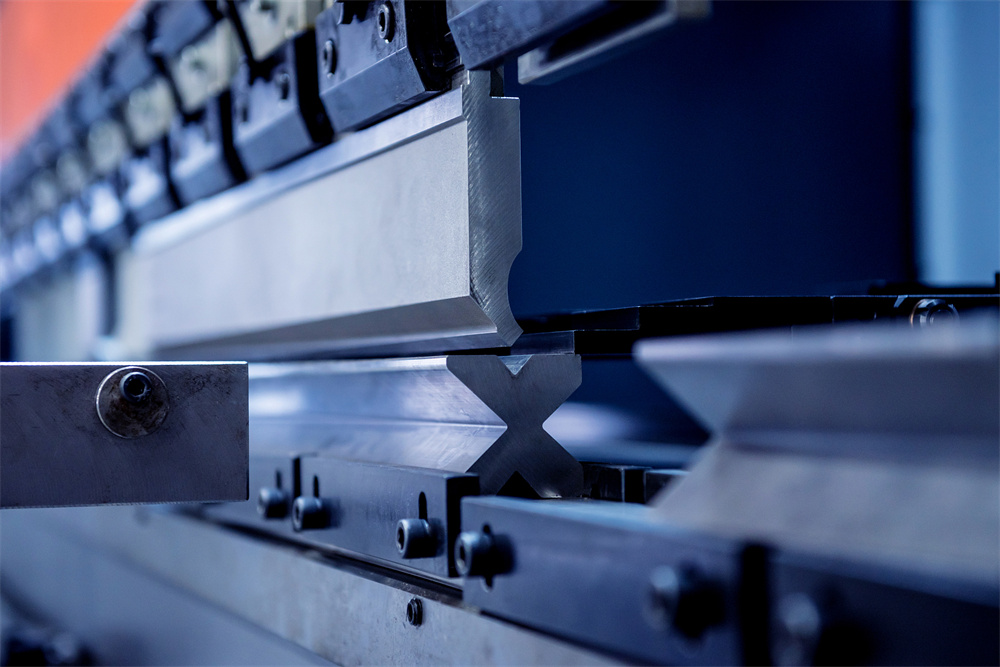
Key Considerations for Backgauge Performance
Before diving into specific repairs, it is essential to understand the environmental and operational factors that influence backgauge performance. A backgauge is not an isolated component; it is part of a holistic system that includes the machine frame, the CNC controller, and the tooling. If any of these elements are out of sync, the backgauge will appear to be failing even if its internal components are functional.
Environmental Factors and Cleanliness
One of the most common reasons for a Press Brake Backgauge Not Working Correctly: Troubleshooting Alignment Control Problems is the accumulation of industrial debris. Metal dust, scale from hot-rolled steel, and excess grease can create a grinding paste that wears down linear guides and clogs ball screw nuts. In many cases, what looks like a control error is actually a mechanical resistance issue that causes the servo motor to draw too much current, triggering a safety shut-off in the CNC.
Operator Handling and Impact
Backgauges are precision instruments, yet they are often subjected to heavy impacts. If an operator slams a heavy plate against the gauge fingers too forcefully, it can knock the entire assembly out of alignment or even bend the gauge bar. Regular training on proper material handling is a critical “soft” fix for many backgauge problems. Furthermore, the use of heavy-duty “disappearing” fingers can help mitigate damage during the bending of large, heavy parts that might whip up and strike the gauge.
Software and Parameter Integrity
The CNC controller is the brain of the backgauge. Occasionally, software updates, power surges, or accidental changes to the machine parameters can lead to erratic behavior. If the backgauge moves to the wrong position but does so consistently, the problem is likely a parameter error or a loss of the “home” reference point rather than a mechanical failure. Ensuring that you have a backup of your machine’s original parameters is a vital consideration for any shop owner.
Technical Details: Diagnosing Alignment and Control Issues
To effectively troubleshoot a backgauge, one must understand the mechanical and electrical architecture of the system. Most modern HARSLE press brakes utilize a multi-axis backgauge (X, R, Z1, Z2). Each axis has its own set of potential failure points.
The X-Axis: Depth and Parallelism
The X-axis controls the depth of the bend. If the backgauge is not parallel to the center of the die, the resulting bend will be tapered. To diagnose this, operators should perform a “parallelism test” by placing two small test pieces at opposite ends of the bed. If the flange lengths differ, the X-axis mechanical linkage or the individual servo timing may be off. In many systems, the X-axis is driven by two independent ball screws; if these become unsynchronized, the gauge bar will tilt.
The R-Axis: Vertical Positioning
The R-axis moves the gauge fingers up and down. This is crucial for parts with multiple bends or flanges that require the gauge to move out of the way. Common problems here include “sagging” due to worn lead screws or failure of the brake mechanism on the R-axis motor. If the R-axis fails to hold its position under the weight of the fingers, the material will not sit flat against the gauge, leading to inaccurate bend angles.
Control System Feedback Loops
The backgauge relies on encoders to tell the CNC exactly where it is. If the encoder cable is damaged or if the encoder itself is dirty, the system may experience “hunting,” where the motor vibrates back and forth trying to find the correct position. This is a classic Press Brake Backgauge Not Working Correctly: Troubleshooting Alignment Control Problems scenario. Checking the integrity of the shielded cables and ensuring they are away from high-voltage lines (to prevent EMI) is a standard technical procedure.
| Symptom | Potential Mechanical Cause | Potential Electrical Cause |
|---|---|---|
| Inconsistent Flange Lengths | Loose ball screw mounting or worn nut | Encoder scaling error in CNC |
| Backgauge Vibrates/Noisy | Lack of lubrication on linear guides | Servo drive gain settings too high |
| Axis Overload Alarm | Mechanical jam or crashed fingers | Short circuit in motor winding |
| Loss of Home Position | Loose coupling between motor and screw | Faulty limit switch or proximity sensor |
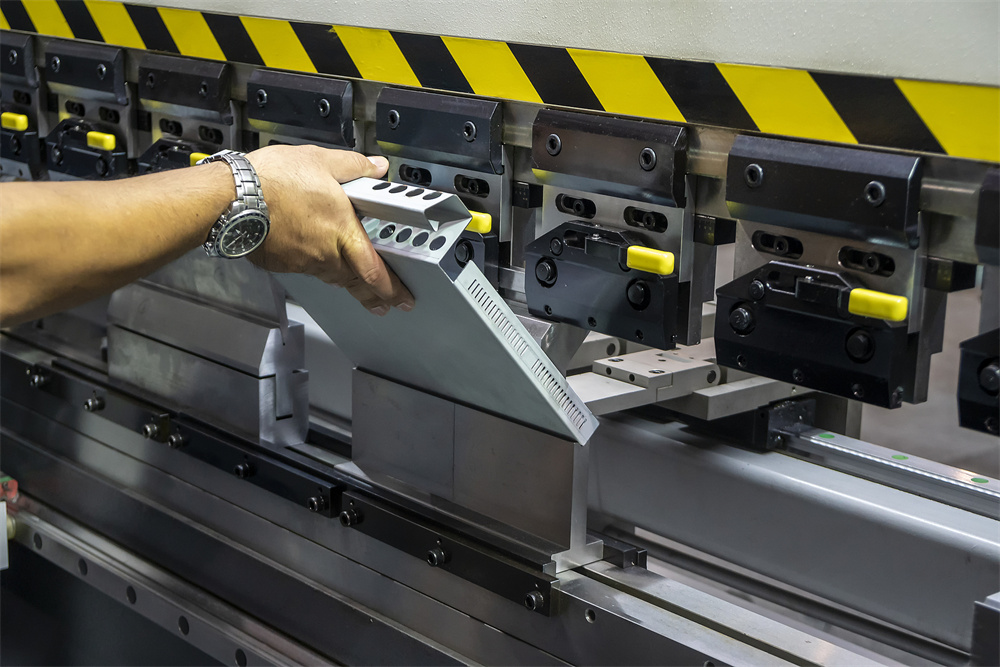
Selection Advice: Choosing and Maintaining a Reliable Backgauge
When purchasing a new press brake or upgrading an existing one, the backgauge should be a primary focus. Not all backgauges are created equal, and selecting the right one can prevent many of the troubleshooting headaches discussed above. For those looking at HARSLE machinery, there are several tiers of backgauge complexity available.
Number of Axes: More Isn’t Always Better
While a 6-axis backgauge (X1, X2, R1, R2, Z1, Z2) offers incredible flexibility for complex, tapered parts, it also introduces more points of failure. For a shop that primarily does straight, simple bends, a robust 2-axis (X, R) or 4-axis (X, R, Z1, Z2) system is often more reliable and easier to maintain. Choose a system that matches your most common production needs rather than buying the most complex system “just in case.”
Build Quality and Component Sourcing
Look for backgauges that use reputable components. HARSLE machines often utilize high-quality ball screws and HIWIN linear guides, which are known for their longevity. A backgauge with a heavy-duty aluminum or steel extrusion for the main beam will resist flexing better than lighter alternatives. Additionally, check if the fingers are modular and easy to replace; fingers are the most likely part to be damaged by operator error, and being able to swap them out quickly is a major advantage.
Maintenance Accessibility
A backgauge that is hard to reach is a backgauge that won’t be maintained. When selecting a machine, look at how easy it is to access the lubrication points for the ball screws and guides. Some modern machines feature centralized lubrication systems that automatically grease the backgauge components at set intervals. This feature alone can extend the life of the backgauge by years and prevent the majority of alignment problems caused by friction and wear.
Frequently Asked Questions (FAQ)
Why does my backgauge lose its position after a power outage?
Most backgauges use incremental encoders that require a “homing” procedure every time the machine is turned on. If the machine loses its position after an outage, it usually means the backup battery for the absolute encoder (if equipped) has failed, or the machine simply needs to be re-homed to its physical limit switches to re-establish its coordinate system.
How often should I calibrate the backgauge alignment?
For high-precision work, a quick check should be performed weekly. A full calibration, involving a dial indicator and test bends, should be conducted every six months or immediately following any significant “crash” where the material or tooling struck the backgauge fingers.
Can I fix a noisy backgauge by just adding more grease?
While lubrication is essential, noise often indicates that damage has already occurred or that there is a misalignment causing the ball screw to bind. If the noise persists after greasing, you should inspect the ball bearings within the nut and check the parallelism of the linear rails. Over-greasing can also be a problem, as it attracts more dust and debris.
What is the most common cause of ‘Backgauge Not Working Correctly’ alarms?
The most common cause is a “Servo Alarm” or “Overload Alarm.” This usually happens when the backgauge hits a physical obstruction (like a forgotten tool on the bed) or when the mechanical resistance becomes too high due to lack of maintenance. Always check for physical obstructions before diving into the electrical cabinet.
Is it possible to upgrade an old backgauge to a modern CNC system?
Yes, many older hydraulic press brakes can be retrofitted with modern CNC backgauges. However, this requires a compatible controller and often a complete replacement of the drive motors and mechanical linkages. For many shops, it is more cost-effective to trade in the old machine for a modern HARSLE CNC press brake with an integrated high-speed backgauge.
Conclusion: Ensuring Long-Term Backgauge Accuracy
Solving the issue of a Press Brake Backgauge Not Working Correctly: Troubleshooting Alignment Control Problems requires a systematic approach that balances mechanical inspection with electronic diagnostics. As we have explored, the backgauge is a precision instrument that demands a clean environment, regular lubrication, and careful handling. By understanding the relationship between the X, R, and Z axes and the feedback provided by the CNC controller, operators and maintenance teams can keep their HARSLE machines running at peak performance.
Investing time in preventative maintenance—such as cleaning the linear guides daily and checking the tightness of couplings monthly—will pay dividends in the form of reduced downtime and higher part quality. Remember that the backgauge is the foundation of your bend accuracy. When the backgauge is dialed in, the rest of the fabrication process follows suit, leading to a more efficient, profitable, and professional metalworking operation. If you continue to experience persistent issues, reaching out to a qualified technician or the manufacturer’s support team is always the best course of action to prevent further damage to your industrial machinery.


