Press Brake Technical Guide: How to Choose the Right Machine for Sheet Metal Bending


Technical Overview: The Evolution of Modern Bending Technology
In the realm of metal fabrication, the press brake stands as the cornerstone of precision forming. Understanding the Press Brake Technical : Choose Machine Sheet Metal Bending process requires a deep dive into how these machines have evolved from simple mechanical levers to sophisticated CNC-controlled powerhouses. Modern press brakes utilize advanced hydraulics or electric servo motors to drive a punch into a die, creating precise angles in sheet metal. The transition from traditional torsion bar synchronization to electro-hydraulic synchronous systems (using Y1 and Y2 axes) has revolutionized the industry, allowing for sub-millimeter accuracy even across long bending lengths.
When evaluating a press brake, one must consider the drive system. Hydraulic press brakes remain the industry standard for high-tonnage applications due to their reliability and force density. However, hybrid and all-electric models are gaining traction for their energy efficiency and high-speed cycles. For a fabrication shop, the choice depends on the balance between raw power and the need for rapid, repetitive precision. HARSLE machines integrate these technologies to ensure that whether you are bending thin aluminum or thick carbon steel, the structural integrity of the machine remains uncompromised.
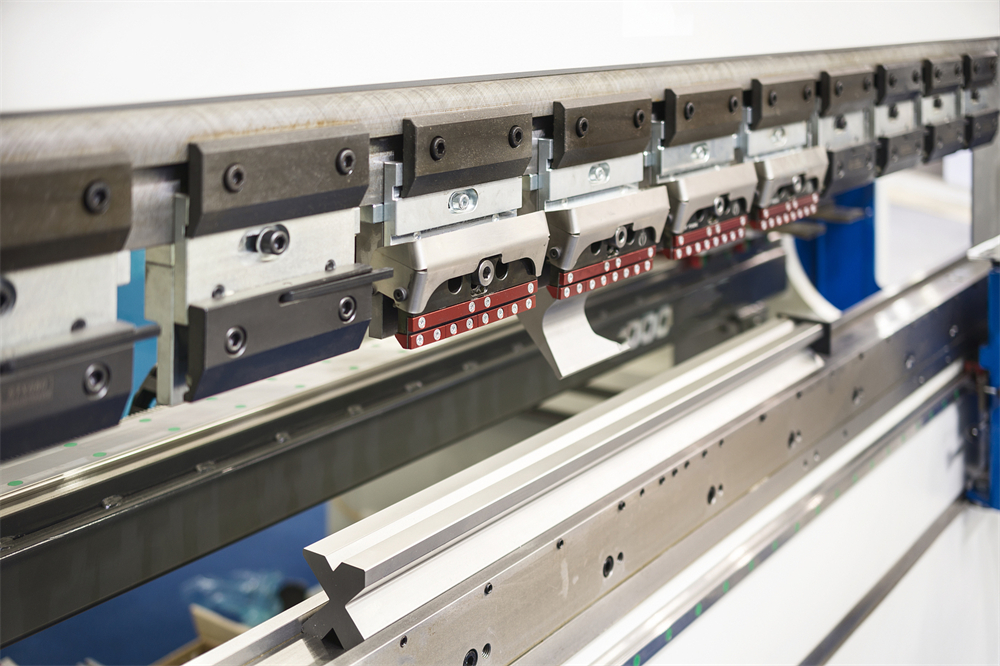
Furthermore, the frame construction plays a vital role in technical performance. A high-quality press brake features a heavy-duty, stress-relieved steel frame. This prevents the machine from deforming under load, a phenomenon known as “deflection.” Without proper frame rigidity and a sophisticated crowning system, the center of a long bend will often be wider than the ends, leading to rejected parts and wasted material. Technical mastery starts with understanding these mechanical foundations before moving into software and control systems.
Core Parameters: Defining Your Machine Requirements
To successfully Choose Machine Sheet Metal Bending equipment, you must first define the core parameters that align with your production goals. The most critical parameter is Tonnage. Tonnage is the pressing capacity of the machine, measured in tons. If you underestimate the required tonnage, you risk damaging the machine or failing to complete the bend. Conversely, over-specifying leads to unnecessary energy costs and higher initial investment. Tonnage is influenced by material thickness, material type (tensile strength), and the V-die opening width.
The second core parameter is the Bending Length. This refers to the maximum width of the sheet metal the machine can process. It is important to distinguish between the total length of the worktable and the distance between the side housings. If you need to pass a long part through the machine, the distance between housings becomes the limiting factor. Additionally, the Throat Depth determines how far the metal can be inserted into the machine before hitting the frame. For complex parts with deep flanges, a larger throat depth is essential.
Stroke and Open Height are also vital for technical selection. The stroke is the total distance the ram can move, while the open height is the space between the upper beam and the lower table when the ram is fully retracted. If you are using tall tools or creating deep box shapes, you need a machine with a significant open height to allow for part removal. Finally, the Backgauge system (X, R, Z1, Z2, and sometimes Delta X axes) dictates the complexity of the shapes you can form. A multi-axis backgauge allows for tapered bends and complex multi-step sequences without manual repositioning.
Calculation Method: Determining Tonnage and V-Opening
The technical heart of press brake operation lies in the tonnage calculation. The standard formula for air bending mild steel (with a tensile strength of approximately 450 MPa) is: P = (650 x S² x L) / V. In this formula, P represents the force in kilonewtons (kN), S is the material thickness in millimeters, L is the length of the sheet in meters, and V is the width of the V-die opening. To convert kN to tons, divide the result by 9.8.
Choosing the correct V-die opening is a prerequisite for this calculation. The general rule of thumb for materials up to 6mm thick is to use a V-opening that is 8 times the material thickness (V=8S). For thicker materials (8mm to 12mm), the ratio increases to 10S, and for plates thicker than 12mm, it may reach 12S. Using a smaller V-opening increases the required tonnage significantly and can lead to surface marking or even tool breakage. For example, reducing the V-opening by half quadruples the required pressure.
Material type also introduces a multiplier to the calculation. Stainless steel, which has a higher tensile strength (approx. 700 MPa), requires roughly 1.5 times the tonnage of mild steel. Aluminum, being softer, requires about 0.5 to 0.8 times the tonnage. When you Choose Machine Sheet Metal Bending, always calculate for your toughest material to ensure the machine has sufficient overhead. HARSLE provides integrated software in their CNC controllers that automates these calculations, reducing the risk of operator error.
Technical Parameter Table for Common Press Brake Models
The following table provides a technical snapshot of standard CNC press brake configurations to assist in your selection process.
| Model Type | Nominal Force (Tons) | Bending Length (mm) | Distance Between Columns (mm) | Throat Depth (mm) | Ram Stroke (mm) |
|---|---|---|---|---|---|
| Standard Small | 40T – 63T | 1600 – 2500 | 1200 – 2000 | 250 – 320 | 100 – 150 |
| Medium Versatile | 100T – 160T | 3200 – 4000 | 2600 – 3200 | 320 – 400 | 150 – 200 |
| Heavy Duty | 200T – 400T | 4000 – 6000 | 3200 – 5000 | 400 – 500 | 200 – 300 |
| Ultra Heavy | 500T+ | 6000+ | Custom | 500+ | 300+ |
Common Engineering Mistakes in Press Brake Selection
One of the most frequent mistakes engineers make is ignoring the “Concentrated Load” limit. While a machine might be rated for 100 tons over a 3-meter bed, applying that full 100 tons over a 300mm section can cause permanent deformation (ram upset) to the bed or the ram. Always check the machine’s tons-per-meter rating. If your work involves small, thick parts, you may need a machine with a reinforced bed or a higher tonnage rating than the simple calculation suggests.
Another common oversight is neglecting the Crowning System. As mentioned earlier, all press brakes deflect under load. Manual crowning requires the operator to insert shims under the die, which is time-consuming and imprecise. Mechanical or hydraulic auto-crowning systems, controlled by the CNC, compensate for this deflection in real-time. Failing to include an auto-crowning system on a machine longer than 2.5 meters is a technical mistake that will inevitably lead to inconsistent bend angles across the length of the part.
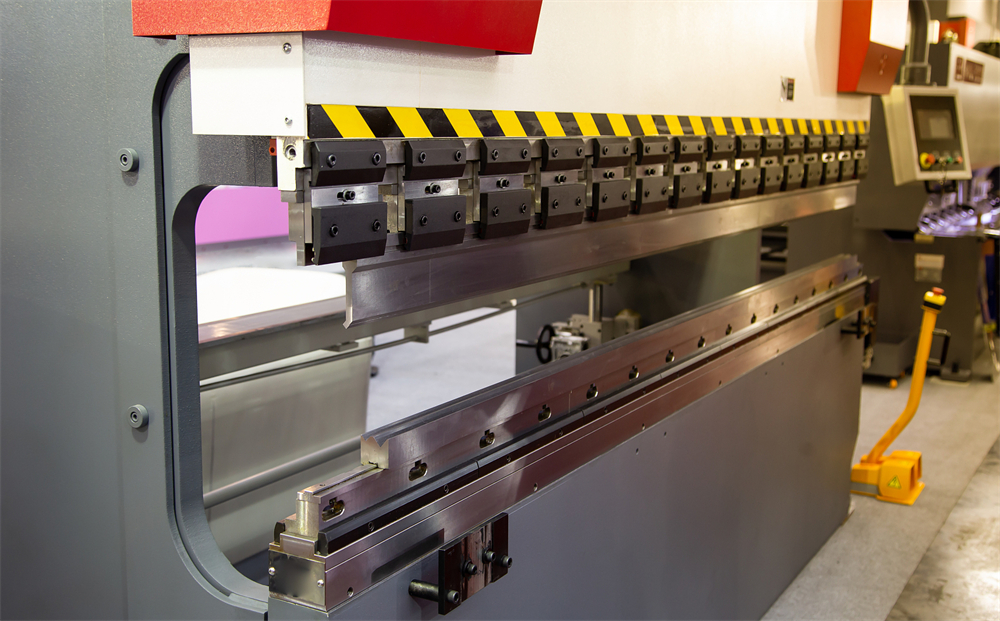
Finally, many buyers focus solely on the machine and ignore the Tooling. The press brake is only as good as the tools it holds. Using low-quality, non-hardened tooling leads to rapid wear, which changes the bending geometry over time. Furthermore, the compatibility of the tool clamping system (e.g., Amada-style, Wilia-style) should be decided based on your existing tool library and the speed of tool changes required for your production mix. Precision-ground tooling is a must for any CNC-controlled operation aiming for high accuracy.
Selection Checklist: How to Choose the Right Machine
When you are ready to Choose Machine Sheet Metal Bending solutions, follow this technical checklist to ensure all bases are covered:
- Material Analysis: What is the maximum thickness and tensile strength of the materials you will bend? (Always calculate for the hardest material).
- Maximum Part Length: Does the bending length accommodate your longest part, and is there enough clearance between the side frames?
- Accuracy Requirements: Do you need a torsion bar (economy) or an electro-hydraulic synchronous (precision) system?
- Backgauge Complexity: How many axes are required? For most complex work, 4-axis (X, R, Z1, Z2) is the recommended minimum.
- Controller Preference: Is the CNC interface intuitive? Does it support 2D or 3D graphical programming and offline simulation?
- Safety Features: Does the machine include laser guards (like DSP or FIESSLER) to protect the operator without slowing down production?
- Future Proofing: Is the tonnage sufficient for potential future projects that might involve thicker materials or tighter radii?
Frequently Asked Questions (FAQ)
1. What is the difference between NC and CNC press brakes?
An NC (Numerical Control) press brake typically controls only the X-axis (backgauge) and the Y-axis (stroke depth) with manual adjustment for other parameters. It is suitable for simple, repetitive bends. A CNC (Computer Numerical Control) press brake offers full automation of multiple axes, automatic crowning, and graphical interfaces, making it ideal for complex parts and high-precision requirements.
2. How often should I change the hydraulic oil?
For most hydraulic press brakes, the oil should be changed every 2,000 to 4,000 hours of operation. However, it is more important to monitor the oil temperature and cleanliness. Modern HARSLE machines often include filtration systems and cooling units to extend oil life and maintain consistent viscosity for accurate bending.
3. Can I bend small parts on a high-tonnage machine?
Yes, but you must be careful not to exceed the concentrated load limit of the tooling or the machine bed. Also, high-tonnage machines may have slower cycle speeds, which could be less efficient for small, light parts compared to a smaller, faster electric press brake.
4. Why is my bend angle inconsistent?
Inconsistency is usually caused by one of three factors: material thickness variation, lack of a crowning system, or worn tooling. If the angle varies along the length of a single bend, it is likely a deflection issue that requires crowning adjustment. If it varies from part to part, check the material consistency or the backgauge positioning accuracy.
5. What is air bending vs. bottoming?
Air bending is the most common method where the punch presses the metal into the die but does not touch the bottom of the V. The angle is determined by the depth of the punch. Bottoming involves pressing the metal all the way to the bottom of the die. Air bending requires less tonnage and is more versatile, while bottoming offers higher accuracy but requires specific tooling for every angle and much higher force.
Choosing the right press brake is a strategic investment in your shop’s future. By focusing on the Press Brake Technical : Choose Machine Sheet Metal Bending criteria outlined in this guide, you can ensure that your equipment provides the precision, efficiency, and longevity required for modern metal fabrication. HARSLE remains dedicated to providing the technical support and high-performance machinery needed to turn these calculations into high-quality finished products.