
Comprehensive Guide to Press Brake Use in Metal Stair, Guardrail, and Structural Component Fabrication


Introduction to Precision Bending in Architectural and Structural Metalwork
In the modern construction and architectural landscape, the demand for high-quality, durable, and aesthetically pleasing metal components has never been higher. From the sleek lines of a commercial skyscraper’s staircase to the robust safety of industrial guardrails, the precision of these components relies heavily on advanced machinery. Central to this process is the Press Brake Use In Metal Stair, Guardrail, Structural Component Fabrication. This specialized application of hydraulic and CNC technology allows fabricators to transform flat sheets and plates of steel, aluminum, and stainless steel into complex, load-bearing structures with millimeter precision.
HARSLE, a leader in metalworking machinery, understands that structural fabrication requires more than just raw power; it requires accuracy, repeatability, and versatility. Whether you are a small custom shop or a large-scale industrial manufacturer, understanding how to leverage a press brake for these specific applications is essential for maintaining a competitive edge. This guide explores the intricate details of using press brakes in the fabrication of stairs, rails, and structural elements, providing technical insights into machine configuration, material handling, and workflow optimization.
Application Scenarios: Where Press Brakes Excel
Metal Staircase Fabrication
Metal stairs are a staple in both industrial and commercial settings. The fabrication of stair stringers—the structural members that support the treads and risers—often requires long, precise bends in heavy-gauge plate. A CNC press brake is used to create the ‘zigzag’ profile of a stringer or the specialized channels used in modern mono-stringer designs. Additionally, the stair treads themselves, often made from diamond plate or perforated metal, require multiple 90-degree bends to create the leading edge and the mounting flanges. The ability to handle long workpieces is critical here, often necessitating a press brake with a large distance between housings.
Guardrails and Handrail Systems
Guardrails are not only safety features but also architectural statements. Fabrication involves bending mounting brackets, post sleeves, and decorative panels. For guardrails, the aesthetic finish is paramount. Using a press brake with specialized non-marking tooling ensures that stainless steel or aluminum rails are bent without surface marring. Complex geometries, such as curved balcony railings or multi-angled transition pieces for ramps, are programmed into the CNC controller to ensure every piece in a large project is identical.
Structural Components and Gussets
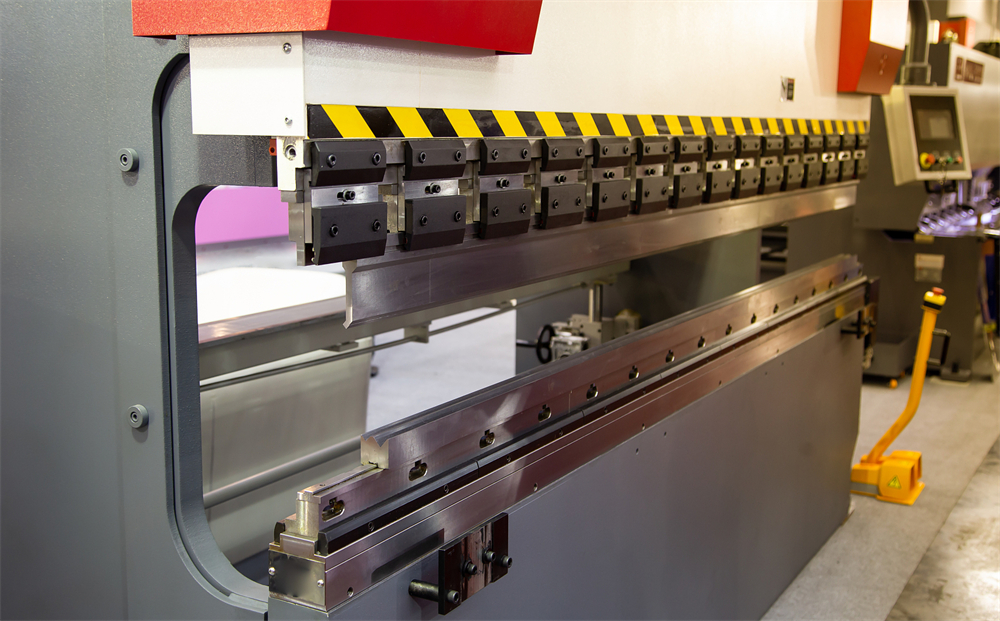
Beyond stairs and rails, press brakes are indispensable for creating structural gussets, base plates, and custom C-channels or Z-purlins. These components often use high-strength carbon steel and require high tonnage to achieve the desired bend radius without fracturing the material. In structural fabrication, the press brake is used to create stiffening ribs in large plates, which increases the load-bearing capacity of the component while reducing the overall weight of the structure.
Material and Process Requirements
Material Diversity and Thickness
The materials used in Press Brake Use In Metal Stair, Guardrail, Structural Component Fabrication vary widely. Carbon steel (such as A36) is the most common for industrial stairs due to its cost-effectiveness and strength. Stainless steel (304 or 316) is preferred for architectural guardrails and outdoor environments where corrosion resistance is vital. Aluminum is chosen for its lightweight properties in specialized structural applications. Fabricators must account for the different yield strengths of these materials; for instance, stainless steel requires significantly more pressure to bend than aluminum and exhibits more ‘springback,’ which the press brake’s CNC system must compensate for.
Precision and Tolerance Standards
Structural components must adhere to strict building codes and safety standards. A deviation of even a few degrees in a stair stringer bend can lead to alignment issues during site installation, resulting in costly rework. Therefore, the process requires high-precision backgauges and real-time angle measurement systems. The tolerance for structural bends is typically within +/- 0.5 degrees, a feat easily achieved by modern CNC hydraulic press brakes but difficult for manual machines.
Tooling Selection for Structural Work
The choice of die and punch is critical. For heavy structural plates, large V-openings are required to reduce the required bending force and prevent material cracking. For guardrails where aesthetics matter, fabricators often use urethane inserts or specialized ‘wing’ dies that rotate with the material to prevent die marks. Deep-necked punches are also frequently used to provide clearance for the complex return bends often found in custom stair tread designs.
Recommended Machine Configuration
Tonnage and Length Considerations
For structural fabrication, HARSLE recommends a machine with at least 100 to 300 tons of pressure, depending on the thickness of the plate. Since stair stringers can be quite long, a bed length of 3200mm to 6000mm is standard. For exceptionally long components, a tandem press brake configuration—where two machines work in sync—is the ideal solution, allowing for the fabrication of continuous structural members up to 12 meters or more.
Advanced CNC Controllers
A high-end controller, such as the Delem DA-66T or DA-69T, is essential. These systems offer 3D visualization, allowing the operator to see the part and the bending sequence before the first bend is made. This is particularly useful for complex stair components where the sequence of bends is critical to avoid collisions with the machine frame. The controller also manages the ‘crowning’ system, which compensates for the natural deflection of the machine bed under high pressure, ensuring a consistent angle across the entire length of a long bend.
Multi-Axis Backgauge Systems
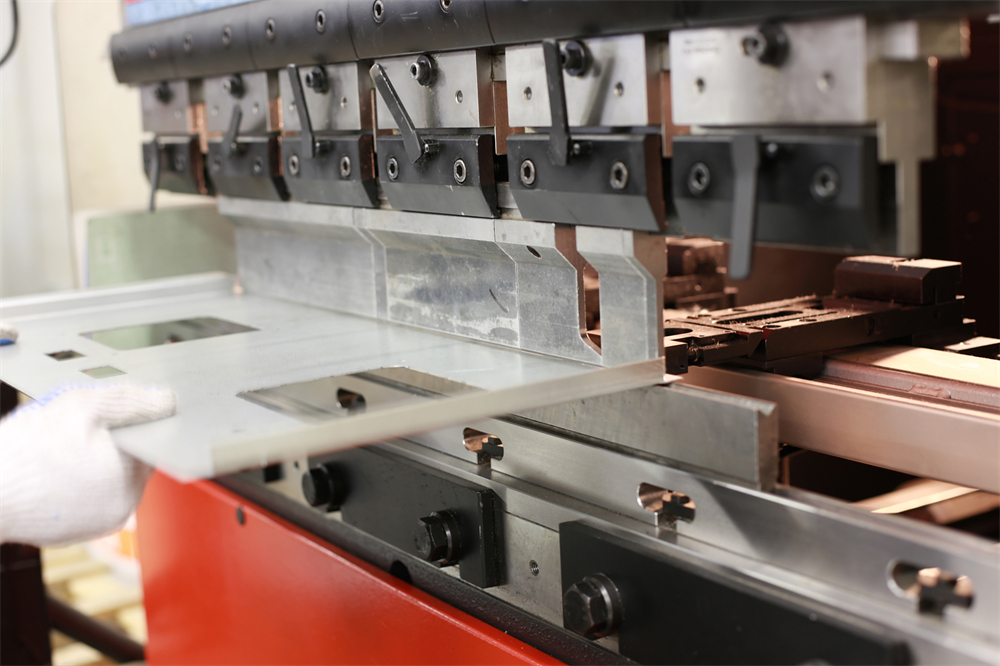
Structural parts are rarely simple rectangles. They often feature tapered edges or offset holes. A 4-axis (X, R, Z1, Z2) or 6-axis (X1, X2, R1, R2, Z1, Z2) backgauge system allows for the independent positioning of the gauge fingers. This enables the operator to securely position complex-shaped stair treads or structural gussets, ensuring that every bend is perfectly aligned with the part’s geometry.
Workflow for Structural Metal Fabrication
Step 1: Design and CAD/CAM Integration
The process begins with a 3D model of the staircase or structural assembly. This model is exported to CAM software, which calculates the flat pattern and the exact bend deductions based on the material’s K-factor. This data is then transferred directly to the press brake’s CNC controller, minimizing manual data entry errors.
Step 2: Tooling Setup and Calibration
The operator selects the appropriate punch and die based on the software’s recommendations. Modern HARSLE machines often feature quick-change tooling systems, reducing setup time from thirty minutes to just a few minutes. The machine then undergoes a self-calibration check to ensure the Y-axis (ram) and backgauge are perfectly zeroed.
Step 3: The Bending Sequence
The operator follows the visual guide on the CNC screen. For a stair stringer, this might involve a series of 90-degree bends. The backgauge moves automatically between each step. If the machine is equipped with an optical angle detection system, it will measure the angle during the bend and automatically adjust the ram depth to account for material thickness variations or springback.
Step 4: Quality Control and Inspection
Once the part is bent, it is inspected using digital protractors or check-fixtures. Because the CNC press brake maintains high repeatability, once the first part is verified, subsequent parts in the batch can be produced with high confidence in their accuracy. This is vital for large projects where hundreds of identical guardrail brackets are required.
Productivity Benefits of CNC Press Brakes
Reduction in Labor and Rework
Traditional methods of structural bending often involved manual layout and multiple trial-and-error bends. By using a CNC press brake, the ‘first-part-correct’ rate increases significantly. This reduces the reliance on highly skilled manual operators and virtually eliminates the scrap costs associated with incorrect bends. In the context of expensive stainless steel guardrails, this saving is substantial.
Enhanced Safety and Ergonomics
Modern press brakes are equipped with advanced safety features like laser curtains (e.g., DSP or Lazersafe) that protect the operator without slowing down production. Furthermore, for heavy structural plates, HARSLE offers sheet followers—robotic arms that support the weight of the plate as it bends upward. This prevents ‘back-bending’ (deformation caused by the plate’s own weight) and reduces the physical strain on the operator.
Streamlined Production Timelines
With the ability to store thousands of programs, a CNC press brake allows for rapid switching between different jobs. A shop can move from bending stair treads to structural channels in a matter of minutes. This flexibility is crucial for meeting the tight deadlines often found in the construction industry.
Case Example: Commercial High-Rise Staircase Project
A mid-sized fabrication firm was contracted to provide 40 flights of custom steel stairs for a new commercial office building. The project required 10mm thick A36 steel stringers and 5mm diamond plate treads. Initially, the firm struggled with manual bending, leading to inconsistent angles that made on-site welding difficult.
After upgrading to a HARSLE 250T/4000 CNC Press Brake with a DA-66T controller and a 4-axis backgauge, the firm saw an immediate transformation. They utilized the 3D programming feature to simulate the stringer bends, identifying a collision risk that was resolved before production. The automatic crowning system ensured that the 4-meter long stringers were perfectly straight. The result was a 40% reduction in fabrication time and a 15% reduction in installation time because the components fit together perfectly on-site. This success allowed the firm to take on larger, more complex structural projects that were previously beyond their capability.
Frequently Asked Questions (FAQ)
What is the best press brake for bending thick structural steel?
For thick structural steel (over 12mm), a high-tonnage hydraulic press brake (200 tons or more) with a heavy-duty frame and a wide V-die is recommended. HARSLE’s WE67K series is specifically designed for these high-stress applications, offering the rigidity and power needed for consistent results.
How do I prevent marking on stainless steel guardrails?
To prevent marking, use ‘no-mark’ tooling such as urethane die pads or cloth, or specialized rotating wing dies. Additionally, ensure the dies are clean and free of carbon steel debris, which can embed in the stainless steel and cause rust later (cross-contamination).
Can a press brake handle the complex angles of a spiral staircase?
While a press brake is primarily for linear bends, it can be used to create the individual segments of a spiral staircase. By using a series of small-increment ‘bump’ bends, a press brake can approximate a curve in a structural stringer, though a plate rolling machine is often used in conjunction for smooth curves.
What maintenance is required for a press brake in a structural shop?
Structural fabrication is demanding. Regular maintenance should include checking hydraulic oil levels and filters, lubricating the backgauge rails, and inspecting the tooling for wear or cracks. Ensuring the crowning system is calibrated is also vital for maintaining accuracy over long bends.
Conclusion: Elevating Your Fabrication Standards
The Press Brake Use In Metal Stair, Guardrail, Structural Component Fabrication is a cornerstone of modern infrastructure. By investing in the right machinery and mastering the nuances of CNC bending, fabricators can deliver products that meet the highest standards of safety, durability, and design. HARSLE remains committed to providing the industry with the robust, high-precision tools necessary to turn architectural visions into structural reality.
Ready to upgrade your fabrication capabilities? Contact HARSLE today to discuss our range of CNC press brakes tailored for structural and architectural metalwork. Our experts are standing by to help you select the perfect machine configuration for your specific project needs.


