
Press Brake Uses in Shipbuilding and Marine Sheet Metal Work: A Comprehensive Guide


Introduction to Press Brake Uses in Shipbuilding and Marine Sheet Metal Work
The maritime industry represents one of the most demanding sectors for metal fabrication. From massive container ships and naval vessels to luxury yachts and offshore oil platforms, the structural integrity of a vessel depends heavily on the precision and strength of its components. Central to this fabrication process is the industrial press brake. Understanding the specific Press Brake Uses In Shipbuilding Marine Sheet Metal Work is essential for manufacturers looking to optimize their production lines and ensure the safety of sea-going structures.
Shipbuilding involves the manipulation of exceptionally large, thick, and often specialized metal plates. Unlike standard automotive or appliance manufacturing, marine fabrication requires machinery that can handle high-tensile steels and corrosion-resistant aluminum alloys with extreme accuracy. HARSLE, a leader in metal fabrication technology, provides high-performance press brakes designed to meet these rigorous industrial standards. In this guide, we will explore how press brakes are utilized in the marine sector, the technical challenges involved, and how to select the right equipment for these heavy-duty applications.
The evolution of CNC (Computer Numerical Control) technology has revolutionized how shipyards operate. Modern press brakes allow for complex geometries that were previously impossible or required extensive manual labor. By integrating advanced hydraulics and precision software, shipbuilders can now produce curved hull sections, reinforced bulkheads, and intricate internal fittings with minimal waste and maximum efficiency. This article serves as a deep dive into the technicalities of marine metal bending and the pivotal role of the press brake in modern naval architecture.
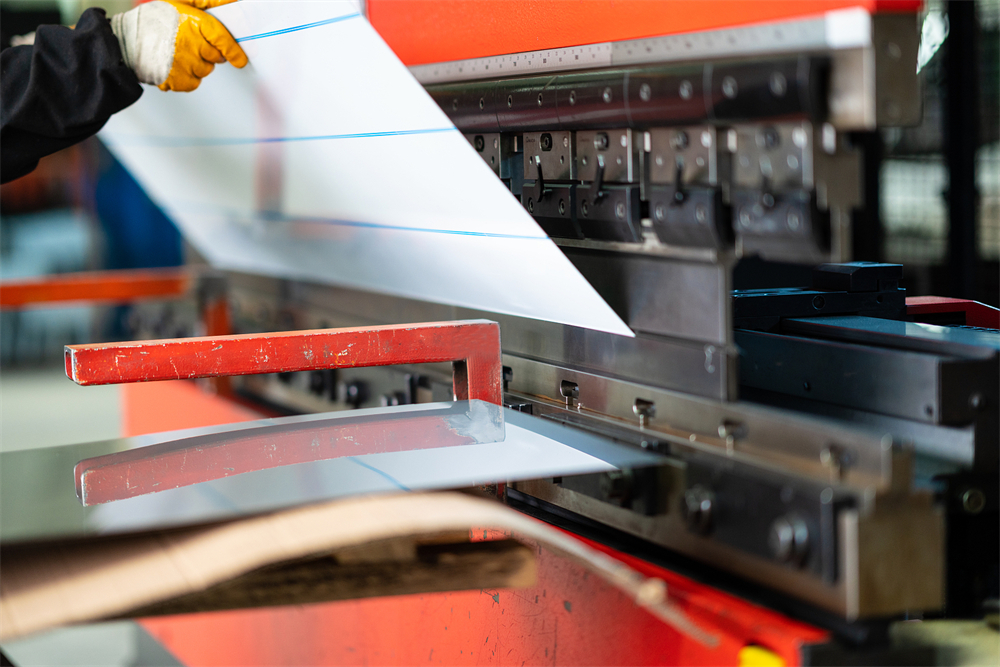
Key Considerations for Marine Metal Fabrication
When discussing Press Brake Uses In Shipbuilding Marine Sheet Metal Work, one must first consider the unique environmental challenges that marine components face. Saltwater is highly corrosive, meaning the materials used—and the way they are formed—must account for long-term durability. Common materials include AH36, DH36, and EH36 grade steels, as well as 5000 and 6000 series aluminum alloys. Each of these materials reacts differently under the pressure of a press brake.
One of the primary considerations is the “springback” effect. High-tensile marine steels have a significant tendency to return to their original shape after bending. This requires a press brake with sophisticated CNC controllers that can calculate the exact over-bend needed to achieve the desired angle. Furthermore, the thickness of the plates used in hull construction often exceeds 20mm, necessitating machines with immense tonnage—often ranging from 400 tons to over 2000 tons in tandem configurations.
Another critical factor is the grain direction of the metal. In shipbuilding, the structural load-bearing capacity of a plate is vital. Bending against the grain can lead to cracking, especially in the thick sections used for keels or engine mounts. Operators must be highly skilled in plate orientation and tool selection to ensure that the bending process does not compromise the metallurgical integrity of the ship’s components. HARSLE machines are equipped with advanced sensors to help operators monitor these variables in real-time.
Finally, the sheer size of marine components cannot be overstated. Shipyards often require bends that span 6, 8, or even 12 meters in length. This is where tandem press brakes—two machines working in perfect synchronization—become indispensable. These setups allow for the uniform bending of long hull plates while maintaining the precision required for seamless welding in the assembly block stage.
Technical Details of Press Brake Operations in Shipyards
Tonnage and Bending Force Requirements
The most defining technical characteristic of Press Brake Uses In Shipbuilding Marine Sheet Metal Work is the requirement for high tonnage. Calculating the required force involves analyzing the material’s tensile strength, the thickness of the plate, and the V-die opening. For marine-grade steel, which is significantly tougher than mild steel, the tonnage per meter is substantially higher. HARSLE’s heavy-duty series is specifically engineered to provide consistent pressure across the entire beam length, preventing the “bowing” effect that can occur under extreme loads.
Crowning Systems and Accuracy
In long-bed press brakes, the deflection of the upper and lower beams is an inevitable physical reality. To counteract this, shipbuilders rely on advanced crowning systems. Whether hydraulic or mechanical, the crowning system ensures that the bend angle remains consistent from one end of the plate to the other. In the marine industry, where a 1-degree deviation over a 10-meter plate can lead to significant alignment issues during hull assembly, the precision of the crowning system is a non-negotiable technical requirement.
Tooling for Marine Alloys
The choice of tooling is another technical hurdle. Marine aluminum, while lighter, is prone to surface marking and cracking if the bend radius is too tight. Large-radius “bullnose” punches and adjustable V-dies are commonly used to create the smooth, sweeping curves required for modern hull designs. Hardened steel tooling is essential to withstand the abrasive nature of heavy-scaled shipyard plates, ensuring a long service life for the equipment even in high-volume production environments.

Specific Applications of Press Brakes in the Marine Industry
The versatility of the press brake allows it to be used across various stages of ship construction. One of the most prominent Press Brake Uses In Shipbuilding Marine Sheet Metal Work is the creation of bulkheads. These internal walls provide structural rigidity and create watertight compartments. By using a press brake to form corrugated bulkheads, shipbuilders can increase the strength of the wall without adding the weight of additional stiffeners, a technique that is both cost-effective and structurally superior.
Beyond the hull and bulkheads, press brakes are essential for outfitting and interior sheet metal work. This includes the fabrication of ventilation ducting, cable trays, and galley equipment. These components often use thinner gauge stainless steel or aluminum, requiring a press brake that offers high-speed precision and the ability to handle smaller, more intricate bends. HARSLE’s mid-range CNC press brakes are ideal for these secondary but vital fabrication tasks.
In the offshore sector, press brakes are used to manufacture components for oil rigs and wind turbine foundations. These structures must withstand the harshest environments on Earth. The ability to form thick-walled tubular sections or hexagonal support legs using a press brake and specialized deep-throat tooling is a key capability for specialized marine fabricators. The flexibility to switch between heavy structural bending and lighter outfitting work makes the press brake the most utilized machine in the shipyard.
Selection Advice: Choosing the Right Press Brake for Marine Work
Selecting a press brake for shipbuilding is a significant capital investment that requires careful planning. The first step is to define the maximum plate length and thickness you intend to process. For most shipyards, a tandem configuration is the most versatile choice, as it allows for the processing of exceptionally long plates while also providing the option to operate as two independent machines for smaller components. This dual-functionality maximizes the Return on Investment (ROI).
Secondly, consider the CNC control system. For marine applications, a controller that supports 3D visualization and has a robust library of material properties is essential. The software should be able to import CAD files directly, reducing the time spent on manual programming and minimizing the risk of human error. HARSLE integrates top-tier controllers like Delem or ESA, which are renowned for their user-friendly interfaces and powerful processing capabilities in heavy-duty environments.
Thirdly, evaluate the throat depth and stroke length. Marine components often involve deep bends or large flanges that require significant clearance. A machine with an extended throat depth allows for greater flexibility in the types of parts that can be formed. Additionally, look for features like laser angle measurement systems, which provide real-time feedback and automatic adjustments during the bending process, ensuring that every part meets the stringent tolerances required for naval certification.
| Feature | Requirement for Shipbuilding | HARSLE Solution |
|---|---|---|
| Tonnage | High (400T – 2000T+) | Heavy-duty Electro-hydraulic Series |
| Bed Length | Long (4m – 12m+) | Tandem Press Brake Configurations |
| Crowning | Automatic/High Precision | CNC Controlled Hydraulic Crowning |
| Material Handling | Heavy Plate Support | Front and Rear Sheet Support Systems |
| Accuracy | High (±0.5 degrees) | Laser Angle Monitoring Systems |
Maintenance and Quality Control in Marine Fabrication
Maintaining a press brake in a shipyard environment presents unique challenges. The presence of metal dust, humidity, and potentially corrosive air means that a rigorous maintenance schedule is mandatory. Lubrication of the guides and the hydraulic system must be performed more frequently than in a standard factory setting. HARSLE machines are designed with high-quality seals and protected components to mitigate these environmental risks, but operator diligence remains key.
Quality control in Press Brake Uses In Shipbuilding Marine Sheet Metal Work often involves non-destructive testing (NDT) of the bends. Because a ship’s hull is a pressure vessel of sorts, any micro-cracks in the bend radius can lead to catastrophic failure under the stress of ocean waves. Using a press brake with precise pressure control and the correct tooling radius significantly reduces the risk of material fatigue. Regular calibration of the backgauge and the ram ensures that the machine continues to produce parts that fit perfectly during the welding phase.
Furthermore, the integration of Industry 4.0 features allows shipyard managers to track the performance of their press brakes remotely. Data on cycle times, energy consumption, and maintenance alerts can be monitored to ensure the production line remains efficient. For large-scale projects like aircraft carriers or cruise ships, where thousands of individual parts must be tracked, the digital integration provided by modern HARSLE press brakes is a vital asset for project management.
FAQ: Press Brake Uses in Shipbuilding
1. Why are tandem press brakes preferred in shipbuilding?
Tandem press brakes consist of two machines synchronized to work as one. This is preferred because ship components, such as hull plates, are often much longer than standard machine beds. The tandem setup provides the necessary length and tonnage while offering the flexibility to use the machines separately for smaller parts.
2. Can a press brake handle high-tensile marine steel?
Yes, but it requires a machine with high tonnage and a robust frame. Marine steels like AH36 have higher yield strengths, so the press brake must be able to apply more force and accurately account for the increased springback of the material.
3. How does crowning affect the quality of marine metal parts?
Crowning compensates for the natural deflection of the machine’s beams under load. Without it, the bend would be shallower in the middle than at the ends. In shipbuilding, where long plates must be perfectly straight for welding, crowning is essential for structural integrity.
4. What is the best tooling for bending aluminum in marine applications?
For marine aluminum, large-radius punches are used to prevent cracking. Additionally, using specialized dies with nylon inserts or highly polished surfaces can prevent marking the material, which is important for both aesthetics and corrosion resistance.
5. How does CNC technology improve shipyard efficiency?
CNC technology automates the bending process, allowing for complex multi-bend sequences to be performed with high repeatability. It reduces the need for manual measurements and trial-and-error, which is crucial when working with expensive, large-format marine plates.
Conclusion: The Future of Press Brakes in the Maritime Sector
The role of the press brake in shipbuilding is more critical today than ever before. As the industry moves toward more fuel-efficient hull designs and the use of advanced composite-metal hybrids, the demand for precision forming technology continues to grow. The Press Brake Uses In Shipbuilding Marine Sheet Metal Work span from the deepest structural keels to the most visible interior finishes, proving that this machine is the backbone of marine fabrication.
HARSLE remains committed to providing the maritime industry with the tools it needs to succeed. By focusing on high-tonnage capacity, tandem synchronization, and intuitive CNC controls, HARSLE press brakes empower shipbuilders to push the boundaries of naval engineering. Whether you are building a small fishing vessel or a massive cargo ship, the right press brake ensures that your metalwork is strong, precise, and built to last in the world’s toughest environments.
Investing in a high-quality press brake is not just about bending metal; it is about ensuring the safety of those who go to sea and the efficiency of global trade. As technology advances, HARSLE will continue to innovate, ensuring that our machinery meets the evolving needs of shipyards worldwide, providing the power and precision required for the next generation of marine excellence.


