How to Reduce Burrs and Edge Deformation in Shearing Machine Cutting


Technical Overview of the Shearing Process
In the world of metal fabrication, the quality of a cut is often the primary indicator of the overall manufacturing standard. When we discuss how to reduce burrs and edge deformation in shearing machine cutting, we must first understand the physics of the shearing process itself. Shearing is not a simple ‘snapping’ of metal; it is a controlled mechanical separation involving three distinct stages: plastic deformation, penetration, and fracture. When a shearing machine’s upper blade descends upon the workpiece, it initially compresses the material, leading to plastic flow. As the blade penetrates deeper, the material reaches its ultimate tensile strength, and a crack propagates from both the top and bottom edges, meeting in the middle to complete the separation.
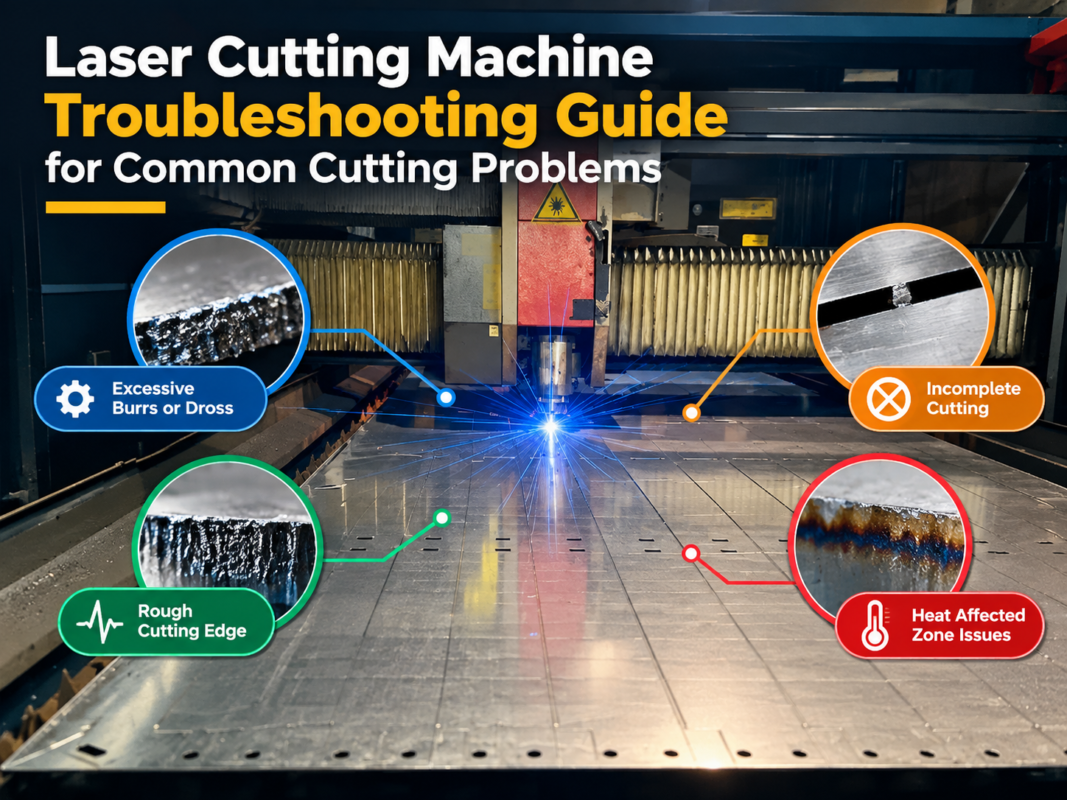
Burrs and edge deformation occur when these three stages are out of balance. A burr is essentially an unwanted extension of material beyond the intended edge, often caused by the material being ‘dragged’ into the gap between the blades rather than being cleanly fractured. Edge deformation, on the other hand, includes phenomena such as ‘roll-over’ (the rounded top edge), ‘twist’ (the spiral distortion of a narrow strip), and ‘bow’ (the vertical curvature of the sheet). These issues are not merely aesthetic; they can interfere with subsequent welding, painting, or assembly processes, leading to increased labor costs for deburring and rework.
To achieve a high-quality edge, the shearing machine must be perfectly calibrated to the specific material properties of the workpiece. Factors such as tensile strength, thickness, and ductility play a massive role in how the metal reacts to the shear force. For instance, softer materials like aluminum are more prone to heavy burrs because they tend to flow into the blade gap, while high-strength stainless steel requires significantly more force and tighter tolerances to prevent edge cracking and excessive tool wear. Understanding these nuances is the first step toward optimizing your HARSLE shearing machine for peak performance.
Furthermore, the mechanical rigidity of the shearing machine itself is a critical factor. Any deflection in the machine frame or the blade beam during the cutting stroke will cause the blade clearance to fluctuate. This inconsistency is a leading cause of uneven edge quality across the length of a long cut. High-quality machines are designed with heavy-duty steel frames and advanced hydraulic systems to maintain a constant gap, ensuring that the fracture occurs precisely where intended. By focusing on the technical synergy between the machine, the blades, and the material, fabricators can drastically improve their output quality.
Core Parameters Influencing Edge Quality
When aiming to reduce burrs and edge deformation in shearing machine cutting, four primary parameters must be managed with precision: blade clearance, rake angle, blade sharpness, and the hold-down system pressure. Each of these factors interacts with the others, and a failure in one can negate the benefits of the others.
1. Blade Clearance (The Gap)
Blade clearance is the horizontal distance between the upper and lower blades as they pass each other. This is arguably the most critical setting in any shearing operation. If the clearance is too small, the cracks initiated from the top and bottom do not meet, causing a ‘double shear’ effect which results in a ragged edge and excessive machine wear. If the clearance is too large, the material is pulled down between the blades, resulting in a large, heavy burr and significant edge roll-over. The ideal clearance allows the fracture lines to meet perfectly, leaving a clean, flat edge with minimal burr height.
2. Rake Angle
The rake angle is the slope of the upper blade relative to the lower blade. A higher rake angle reduces the required shearing force because it cuts less material at any given moment (similar to how scissors work). However, a high rake angle increases the likelihood of ‘twist’ and ‘bow’ in the cut piece, especially when shearing narrow strips. To minimize deformation, the rake angle should be kept as low as possible while still remaining within the machine’s tonnage capacity. Modern CNC shearing machines often allow for automatic rake angle adjustment to balance force and quality.
3. Blade Sharpness and Condition
A dull blade does not cut; it tears. As the radius of the cutting edge increases due to wear, the shearing force required increases, and the material is subjected to more compressive stress before the fracture begins. This leads to massive burrs and significant hardening of the edge (work hardening), which can be problematic for later machining. Regular inspection and rotation of the blades (most shearing blades have four usable edges) are essential maintenance tasks for any high-production shop.
4. Hold-Down System Pressure
The hold-down cylinders (or ‘feet’) are responsible for keeping the sheet metal flat and stationary during the cut. If the hold-down pressure is insufficient, the sheet can tip or slide during the stroke, leading to an angled cut or ‘creeping’ that causes edge distortion. Conversely, if the pressure is too high on delicate or polished materials, it can leave marks or indentations. Using independent hydraulic hold-downs that apply pressure proportional to the shearing force is a hallmark of a professional-grade shearing machine.
Calculation Method for Optimal Blade Clearance
Determining the correct blade clearance is not a matter of guesswork; it is a calculation based on the material’s thickness and its physical properties. The general rule of thumb for mild steel is that the clearance should be approximately 5% to 10% of the material thickness. However, this percentage changes as the material becomes harder or thicker.
The standard formula used by many engineers is: C = K * S, where C is the clearance, S is the material thickness, and K is a constant based on the material type. For mild steel (tensile strength ~400 MPa), K is typically 0.05 to 0.07. For stainless steel (tensile strength ~600+ MPa), the material is tougher and less ductile, requiring a tighter clearance, often with a K value of 0.03 to 0.05 to prevent the edge from ‘smearing’. For softer materials like aluminum, a K value of 0.08 to 0.10 might be used to account for the material’s tendency to flow.
It is also important to consider the ‘Shear Strength’ of the material. The force required to shear is calculated as: F = L * S * τ, where L is the length of the cut, S is the thickness, and τ is the shear strength (usually about 75-80% of the tensile strength). If your clearance is set incorrectly, the actual force required can spike significantly, potentially overloading the hydraulic system and causing the frame to flex, which in turn alters the effective clearance during the cut. Therefore, precise calculation is the foundation of both edge quality and machine longevity.
Parameter Table for Common Materials
The following table provides a reference guide for setting blade clearance on a HARSLE shearing machine to reduce burrs and edge deformation in shearing machine cutting. Note that these are starting points; fine-tuning may be required based on the specific grade of metal.
| Material Type | Thickness (mm) | Recommended Clearance (mm) | Recommended Rake Angle (°) |
|---|---|---|---|
| Mild Steel | 1.0 – 3.0 | 0.05 – 0.15 | 0.5 – 1.0 |
| Mild Steel | 4.0 – 6.0 | 0.20 – 0.40 | 1.0 – 1.5 |
| Mild Steel | 8.0 – 12.0 | 0.50 – 0.90 | 1.5 – 2.5 |
| Stainless Steel | 1.0 – 3.0 | 0.03 – 0.10 | 1.0 – 1.5 |
| Stainless Steel | 4.0 – 6.0 | 0.15 – 0.30 | 1.5 – 2.0 |
| Aluminum (Soft) | 1.0 – 3.0 | 0.10 – 0.25 | 0.5 – 1.0 |
| Aluminum (Hard) | 4.0 – 6.0 | 0.30 – 0.50 | 1.0 – 1.5 |
When using this table, always prioritize the lower end of the clearance range for a cleaner cut, provided the machine does not show signs of laboring or ‘clashing’ blades. For high-speed production, slightly larger clearances can extend blade life at the cost of a slightly larger burr.
Common Engineering Mistakes in Shearing
Even with the best equipment, certain common mistakes can lead to poor edge quality. One of the most frequent errors is neglecting the material’s grain direction. Like wood, rolled metal has a grain. Shearing parallel to the grain can sometimes result in more cracking or a ‘waviness’ in the edge compared to shearing perpendicular to the grain. While not always avoidable due to sheet layout, it is a factor to consider for high-precision parts.
Another mistake is improper blade rotation cycles. Many operators wait until the burr is visually unacceptable before rotating the blades. By this time, the rounded edge of the blade has already caused excessive stress on the machine’s bearings and hydraulic seals. A proactive maintenance schedule based on ‘meters cut’ rather than visual failure is far more effective. Furthermore, using the wrong blade material—such as using standard carbon steel blades to cut stainless steel—will lead to rapid dulling and immediate edge degradation.
Ignoring the backgauge alignment is a third common pitfall. If the backgauge is not perfectly parallel to the bottom blade, the sheet will be cut at a slight angle. This creates a ‘tapered’ cut where the width of the piece varies from one end to the other. This misalignment often forces the operator to try and ‘hold’ the sheet manually, which is dangerous and leads to inconsistent hold-down pressure, further contributing to edge deformation.
Finally, failing to lubricate the sheet can be a hidden cause of burrs. For certain materials, especially stainless steel and thicker aluminum, a light application of shearing oil can reduce the friction between the blade face and the material. This allows for a smoother penetration phase and reduces the ‘galling’ effect where small bits of the workpiece weld themselves to the blade edge, causing scratches and burrs on subsequent cuts.
Selection Checklist for High-Quality Shearing Machines
If you are in the market for a new machine and your goal is to reduce burrs and edge deformation in shearing machine cutting, use this checklist to ensure the equipment is up to the task:
- Rigid Frame Construction: Look for a heavy, welded steel plate frame that has been stress-relieved. Vibration and flex are the enemies of a clean cut.
- Rapid Blade Gap Adjustment: Does the machine have a manual handwheel with a digital readout, or better yet, a CNC-controlled motorized gap adjustment? This ensures operators actually change the gap when switching materials.
- Shadow Line Lighting: This allows the operator to see exactly where the blade will fall, ensuring precise alignment and reducing waste.
- High-Quality Blade Material: Ensure the blades are made from high-chrome, high-carbon steel (like Cr12MoV or D2) which can handle both mild and stainless steel.
- Adjustable Rake Angle: A machine that allows you to flatten the rake angle for thin materials will significantly reduce twist and bow.
- Ball Transfers on Table: These allow for easy movement of heavy sheets, preventing operator fatigue and ensuring the sheet is squared properly against the side squarring arm.
- Hydraulic Hold-downs with Protective Pads: To prevent marking on sensitive materials like polished stainless or aluminum.
- CNC Backgauge with Swing-up Feature: This allows for cutting pieces longer than the backgauge range and ensures repeatable accuracy within 0.1mm.
Frequently Asked Questions (FAQ)
Q1: Why does my shearing machine produce a ‘double cut’ or ‘secondary shear’ mark?
A: This is almost always caused by the blade clearance being too tight. The fracture lines from the top and bottom blades do not meet, forcing the blade to ‘cut’ through the remaining material a second time. Increase your blade gap slightly to resolve this.
Q2: How often should I sharpen or rotate my shearing blades?
A: This depends on the material. If cutting mostly mild steel, you might rotate edges every 6-12 months. If cutting stainless steel regularly, you may need to rotate every 3-4 months. Always check for ‘nicks’ or rounded edges weekly.
Q3: Can I eliminate edge twist when cutting very narrow strips?
A: Twist is difficult to eliminate entirely on a swing-beam shear, but you can minimize it by reducing the rake angle to the lowest possible setting and ensuring your hold-down pressure is maximized. Using a guillotine-style shear with a low rake angle is generally better for narrow strips.
Q4: What is the maximum burr height allowed in industrial standards?
A: While it varies by industry, a general rule is that the burr should not exceed 10% of the material thickness. For precision work, many shops aim for less than 5%.
Q5: Does the temperature of the material affect the cut quality?
A: Yes. Extremely cold metal can be more brittle, leading to ‘flaking’ at the edge. Metal at room temperature is ideal. In very hot environments, some materials may become more ductile, potentially increasing burr size if the clearance isn’t adjusted accordingly.
Q6: Why is my sheet ‘bowing’ (curving vertically) after the cut?
A: Bowing is usually caused by excessive rake angle or internal stresses in the metal sheet itself. Try reducing the rake angle. If the problem persists, it may be the quality of the raw material (coil set).