How to Reduce Springback in Press Brake Bending Applications: A Comprehensive Technical Guide


Technical Overview of Springback in Metal Bending
In the world of precision metal fabrication, achieving the perfect bend angle is rarely as simple as setting a machine to a specific degree. The primary obstacle that engineers and operators face is a physical phenomenon known as springback. To effectively reduce springback in press brake bending applications, one must first understand the underlying physics. When a metal sheet is bent, the material undergoes both elastic and plastic deformation. While plastic deformation is permanent and gives the part its new shape, elastic deformation is temporary. Once the bending force of the press brake is released, the elastic energy stored within the metal fibers causes the part to partially return to its original flat state.
The magnitude of springback is dictated by the material’s yield strength and its elastic modulus (Young’s Modulus). High-strength materials, such as stainless steel or high-tensile alloys, exhibit significantly more springback than softer materials like mild steel or aluminum. This is because high-strength materials can store more elastic energy before reaching their plastic limit. In a CNC press brake environment, failing to account for this recovery leads to inaccurate parts, increased scrap rates, and wasted production time. Precision bending requires a calculated approach to over-bending, ensuring that the final ‘relaxed’ state of the metal matches the design specifications.
Furthermore, the geometry of the bend plays a critical role. The relationship between the internal bend radius and the material thickness (R/t ratio) is a primary indicator of how much springback to expect. As the bend radius increases relative to the thickness, the volume of material undergoing only elastic deformation increases, leading to a more pronounced springback effect. Understanding these dynamics is the first step toward implementing corrective measures in industrial fabrication workflows.
Core Parameters Influencing Springback
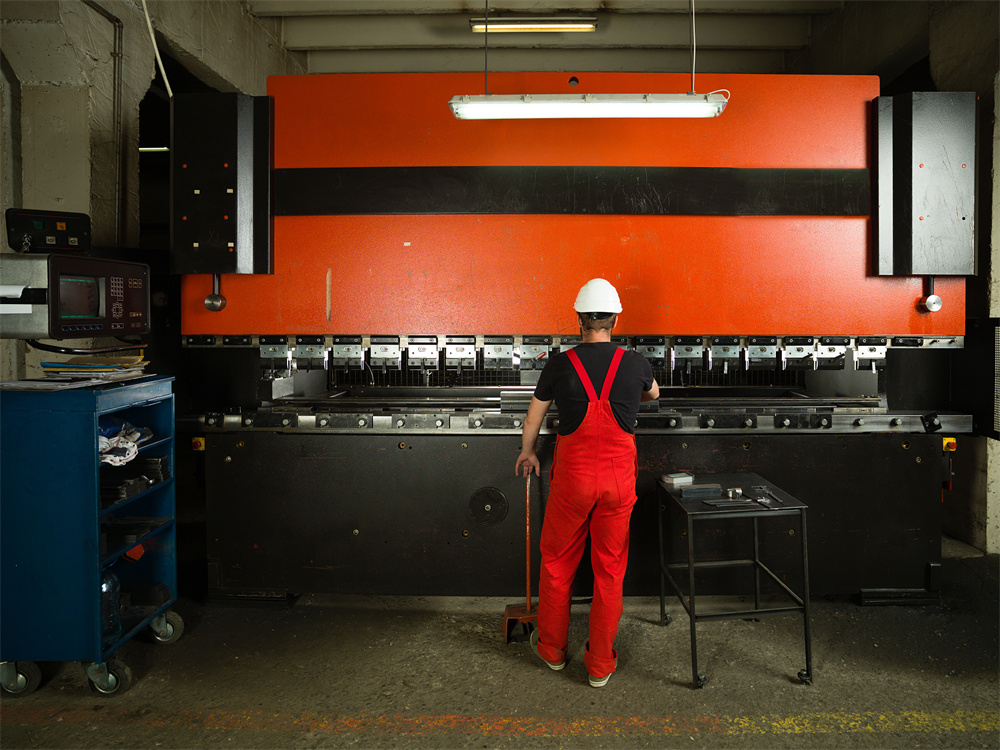
To effectively reduce springback in press brake bending applications, operators must control several core parameters. The first and most influential is the material type. Every metal has a unique stress-strain curve. For instance, T6 aluminum will behave very differently from cold-rolled steel. The yield strength of the material determines the point at which permanent deformation begins; the higher the yield strength, the greater the springback. Operators must verify material certifications to ensure consistency across different batches of sheet metal.
The second parameter is material thickness. Thicker materials generally exhibit less springback relative to their total bend angle because the ratio of plastic to elastic deformation is higher. However, thickness variations within a single sheet (T-tolerance) can cause inconsistent results. Even a 0.05mm difference in thickness can result in a noticeable angular deviation after the punch is retracted. This is why high-end CNC press brakes utilize thickness detection sensors to adjust the stroke depth in real-time.
Thirdly, the die opening (V-width) significantly impacts the result. A wider V-die increases the leverage and the radius of the bend, which typically increases the springback. Conversely, a narrower V-die can reduce springback but requires significantly higher tonnage and increases the risk of marking the material or damaging the tooling. Choosing the optimal V-die—usually 6 to 8 times the material thickness for mild steel—is a balancing act between precision and machine longevity.
Finally, the bending method itself—air bending, bottoming, or coining—is a decisive factor. Air bending is the most common method in modern CNC fabrication but is also the most susceptible to springback because the material does not make full contact with the die surfaces. Bottoming and coining physically force the material into the desired shape, significantly reducing springback, but they require much higher pressures and specialized tooling that may not be suitable for all applications.
Calculation Method for Springback Compensation
Calculating the exact amount of springback is essential for programming CNC press brakes. The most common way to express springback is through the springback factor (K), which is the ratio of the final bend angle (αf) to the initial bend angle under pressure (αi). The formula is expressed as K = αf / αi. A K-factor of 1.0 would mean zero springback, while a factor of 0.95 indicates that the material will return by 5% of the intended angle.
To determine the required over-bend angle, engineers often use the following simplified formula: Required Angle = Target Angle – Springback Amount. For example, if you need a 90-degree bend and the material has a 3-degree springback, you must program the press brake to bend to 87 degrees. However, the springback amount is not a constant; it changes based on the R/t ratio. A common engineering approximation for the springback angle (Δα) in air bending is: Δα = (3 * R * σy) / (E * t), where R is the bend radius, σy is the yield strength, E is the Modulus of Elasticity, and t is the thickness.
In modern industrial settings, manual calculations are often supplemented or replaced by CNC software. Advanced controllers, like those found on HARSLE press brakes, feature built-in databases for various materials. These systems allow operators to input the material type and thickness, and the software automatically calculates the necessary depth of the punch (Y-axis) to compensate for the predicted springback. For high-precision jobs, a ‘test bend’ is performed, the resulting angle is measured, and the ‘angle correction’ value is entered into the CNC to refine the subsequent bends in the production run.
Springback Parameter Table for Common Materials
The following table provides a general reference for springback angles when air bending at a 90-degree target using standard V-die openings (8x thickness).
| Material Type | Thickness (mm) | Yield Strength (MPa) | Approx. Springback (Degrees) | Recommended Over-bend |
|---|---|---|---|---|
| Mild Steel (A36) | 2.0 | 250 | 0.5° – 1.0° | 89.0° |
| Mild Steel (A36) | 6.0 | 250 | 0.2° – 0.5° | 89.5° |
| Stainless Steel (304) | 2.0 | 290 | 2.0° – 3.0° | 87.5° |
| Stainless Steel (316) | 2.0 | 310 | 3.0° – 4.0° | 86.5° |
| Aluminum (5052-H32) | 2.0 | 190 | 0.5° – 1.5° | 89.0° |
| Aluminum (6061-T6) | 2.0 | 270 | 3.0° – 5.0° | 86.0° |
| High Strength Steel | 4.0 | 700+ | 5.0° – 10.0° | 82.0° |
Note: These values are estimates. Actual springback depends on the specific batch of material, the grain direction, and the condition of the tooling.
Common Engineering Mistakes in Managing Springback
One of the most frequent mistakes when trying to reduce springback in press brake bending applications is ignoring the grain direction of the sheet metal. Sheet metal is rolled at the mill, creating a longitudinal grain structure. Bending “with the grain” (parallel to the rolling direction) results in more springback and a higher risk of cracking. Bending “across the grain” (perpendicular) is more stable and provides a tighter radius with less springback. Engineers must nest parts on the sheet with these orientations in mind to ensure consistency across a batch.
Another common error is the use of worn or inappropriate tooling. If the punch tip radius is too small for the material, it can cause localized thinning and unpredictable springback. Conversely, if the V-die is worn unevenly, the material will not be supported correctly during the bend, leading to angular variations. Regular inspection of tool geometry is vital. Furthermore, failing to account for “machine deflection” can be mistaken for springback. As the press brake applies tonnage, the side frames and the bed can flex. Without a proper crowning system (mechanical or hydraulic), the center of the bend will be wider than the ends, a phenomenon often misdiagnosed as inconsistent springback.
Finally, many operators fail to maintain a consistent “dwell time.” Dwell time is the duration the punch remains at the bottom of the stroke. Allowing the material a second or two to “set” under pressure can help the internal stresses stabilize, slightly reducing the elastic recovery. Skipping this step in an attempt to speed up production often leads to greater angular variance and the need for manual re-work, which ultimately slows down the entire operation.
Selection Checklist for Minimizing Springback
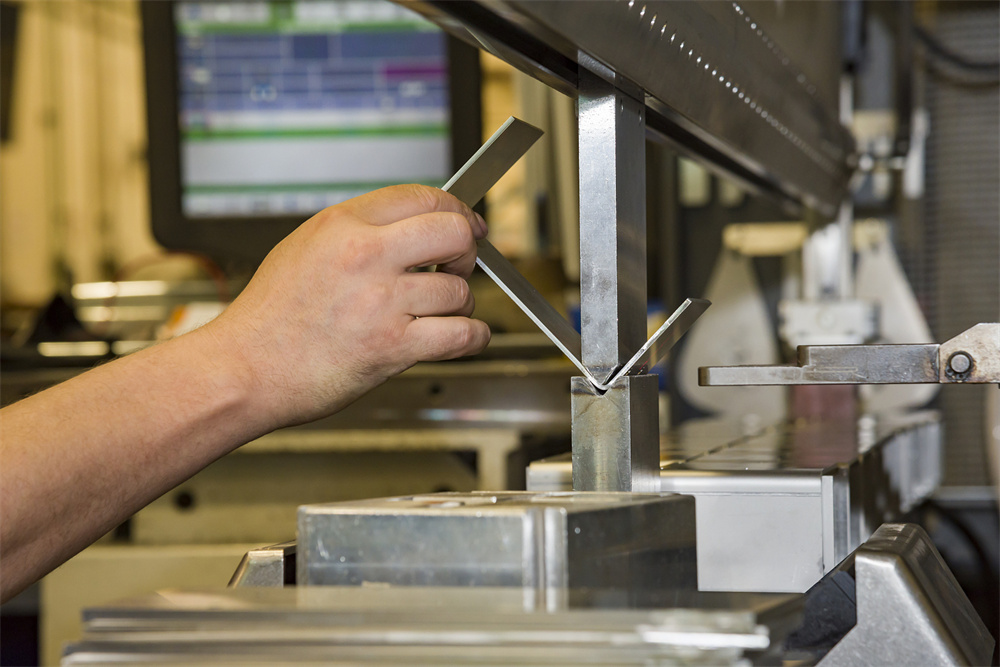
When selecting equipment or setting up a new job to reduce springback in press brake bending applications, use the following checklist to ensure maximum precision:
- Material Verification: Have you checked the actual yield strength and thickness of the current batch of material?
- Grain Direction: Are the parts oriented perpendicular to the rolling grain of the sheet?
- Tooling Match: Is the punch radius appropriate for the material thickness (ideally equal to or slightly less than the thickness)?
- V-Die Selection: Is the V-die opening 6-8 times the material thickness for optimal air bending?
- Crowning System: Is the CNC crowning system calibrated to compensate for bed deflection?
- Angle Measurement: Are you using an integrated laser angle measurement system for real-time correction?
- Dwell Time: Has a sufficient dwell time (0.5 to 2.0 seconds) been programmed into the CNC cycle?
- Machine Calibration: Has the Y1 and Y2 axis parallelism been verified recently?
Advanced CNC Solutions for Springback Control
Modern technology has provided fabricators with powerful tools to combat springback. HARSLE’s high-end CNC press brakes often come equipped with laser-based angle monitoring systems. These sensors measure the actual angle of the part during the bending process. If the sensor detects that the material is springing back more than predicted, the CNC controller automatically adjusts the stroke depth for the next hit or even performs a secondary ‘re-hit’ to bring the part into tolerance. This eliminates the need for manual measurement and reduces scrap to nearly zero.
Additionally, the use of sophisticated simulation software allows engineers to predict springback before the first piece of metal is even cut. By importing CAD files into the press brake’s offline programming software, the system can simulate the bend sequence, identify potential collisions, and apply theoretical springback compensations based on extensive material libraries. This “Right First Time” approach is essential for high-value materials like titanium or specialized aerospace alloys where mistakes are incredibly costly.
FAQ: Frequently Asked Questions
1. Why does stainless steel have more springback than mild steel?
Stainless steel has a higher yield strength and a different work-hardening rate compared to mild steel. This means it requires more force to reach the point of permanent deformation, and it stores more elastic energy, which is released as springback once the pressure is removed.
2. Can I eliminate springback entirely?
Technically, you cannot eliminate the physical property of springback in air bending, but you can compensate for it perfectly. Methods like “coining” can nearly eliminate springback by compressing the material at the bend point, but this requires extreme tonnage and is not suitable for most modern CNC applications.
3. How does the V-die width affect springback?
A wider V-die increases the bend radius. A larger bend radius involves more material in the elastic deformation zone, which generally increases the amount of springback. Narrower dies reduce springback but increase the required bending force and tool wear.
4. What is the role of crowning in springback management?
Crowning doesn’t directly change the material’s springback, but it ensures that the bend angle is consistent across the entire length of the workpiece. Without crowning, the center of a long part might have a different angle than the ends due to machine deflection, which makes springback compensation impossible to apply uniformly.
5. Does temperature affect springback?
Yes, material temperature can influence springback. Cold materials are generally stiffer and may exhibit more springback, while heated materials (though rare in standard press brake work) become more ductile. In most shop environments, maintaining a consistent ambient temperature helps ensure repeatable results.
6. How often should I calibrate my CNC for springback?
Calibration should be checked whenever you change material batches, even if the material type is the same. Small variations in chemical composition or the cold-rolling process at the mill can significantly alter springback characteristics.
7. Is air bending or bottoming better for controlling springback?
Bottoming provides more consistent results and less springback because the material is forced to take the shape of the punch and die. However, air bending is more versatile and requires less tonnage. Most modern shops use air bending combined with CNC compensation to achieve the same accuracy as bottoming.
8. What is the “K-factor” in bending?
In the context of springback, the K-factor is the ratio of the final angle to the bent angle. In the context of flat pattern development, the K-factor refers to the location of the neutral axis. Both are critical for precision, but they represent different aspects of the bending process.