
Top Press Brake Applications in Automotive Metal Parts Production


Introduction to Press Brake Technology in the Automotive Sector
The automotive industry is one of the most demanding sectors for metal fabrication, requiring a perfect balance between high-volume production, extreme precision, and structural integrity. As vehicles evolve toward electric powertrains and lightweight designs, the role of the press brake has become more critical than ever. Top Press Brake Applications In Automotive Metal Parts Production range from the creation of heavy-duty chassis components to the intricate brackets that house sensitive electronic sensors. Modern CNC press brakes provide the flexibility needed to handle various materials, including high-strength steel and aluminum alloys, ensuring that every bend meets the rigorous safety standards of the global automotive market.
HARSLE has been at the forefront of providing high-performance bending solutions tailored for automotive Tier 1 and Tier 2 suppliers. By integrating advanced CNC controllers, precision backgauges, and sophisticated hydraulic systems, these machines allow manufacturers to achieve complex geometries that were once thought impossible or too costly for mass production. In this comprehensive guide, we will explore the specific application scenarios, technical requirements, and productivity benefits of using press brakes in modern automotive manufacturing.
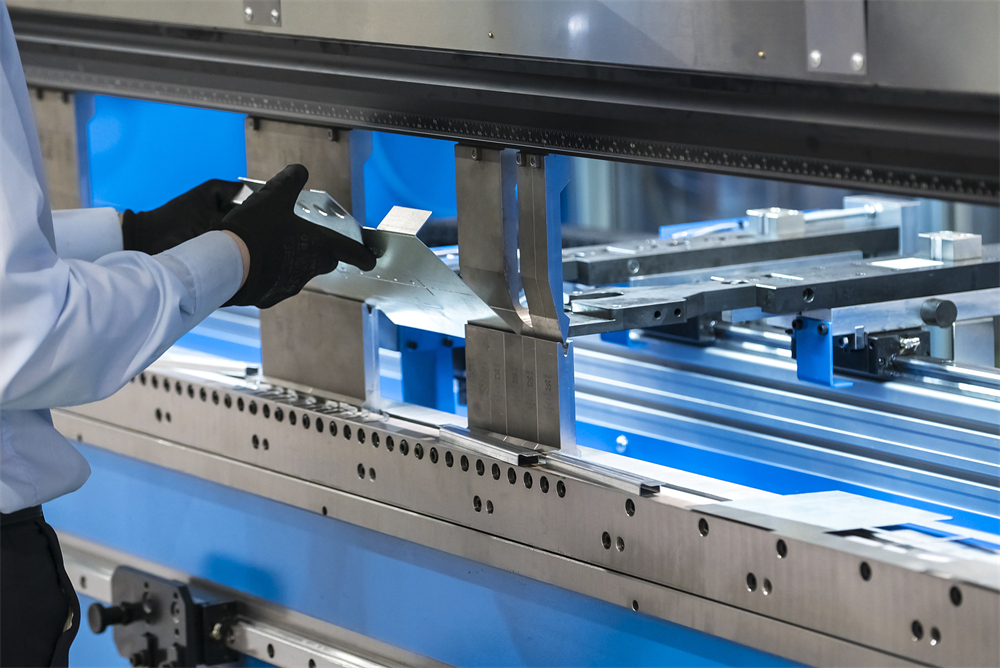
Application Scenarios: Where Press Brakes Excel
1. Chassis and Frame Components
The chassis is the backbone of any vehicle, requiring immense strength and durability. Press brakes are used to form long, heavy-gauge sections of the frame, such as side rails and crossmembers. These parts often require high tonnage and long bed lengths. Because the chassis must absorb impact energy and support the vehicle’s weight, the accuracy of the bend angle is paramount. Even a slight deviation can lead to structural misalignment during the welding phase, resulting in a rejected assembly.
2. Body-in-White (BIW) Structural Reinforcements
Body-in-White refers to the stage in automobile manufacturing where the sheet metal components have been welded together. Press brakes are essential for creating reinforcements like A-pillars, B-pillars, and roof rails. These components often utilize Advanced High-Strength Steel (AHSS) to provide maximum passenger protection while keeping the vehicle’s weight low. The ability of a CNC press brake to handle the high springback associated with AHSS makes it an indispensable tool in the BIW production line.
3. Brackets, Mounts, and Internal Housings
A modern vehicle contains hundreds of small to medium-sized brackets used for mounting engines, suspension components, and interior trim. These parts often feature complex, multi-bend sequences. Using a multi-axis backgauge, a press brake can complete these complex shapes in a single handling, reducing labor costs and increasing throughput. Precision is key here, as these brackets must align perfectly with pre-drilled holes in the vehicle frame.
4. Exhaust Systems and Heat Shields
Exhaust components and heat shields require bending materials like stainless steel and aluminum-coated steel. While some exhaust piping is handled by tube benders, the mounting plates, hangers, and heat shielding are typically produced on press brakes. These parts often involve thin-gauge materials that require delicate handling to avoid surface marring, necessitating the use of specialized tooling and precision pressure control.
Material and Process Requirements
Automotive manufacturing involves a diverse range of materials, each presenting unique challenges during the bending process. Understanding these requirements is essential for selecting the right machinery and tooling.
- High-Strength Steel (HSS) and AHSS: These materials are favored for safety-critical parts. However, they possess high yield strength, which requires higher bending forces (tonnage) and exhibits significant springback. Press brakes used for these materials must have robust frames and advanced springback compensation software.
- Aluminum Alloys (5000 and 6000 series): To improve fuel efficiency and range (especially in EVs), aluminum is increasingly used. Aluminum is more prone to cracking if the bend radius is too tight and can suffer from surface marking. Specialized V-dies and protective films are often employed.
- Stainless Steel: Used primarily in exhaust systems for its corrosion resistance. It requires higher pressure than mild steel and can be abrasive on standard tooling, requiring hardened dies.
- Tolerances: Automotive standards typically demand angular tolerances within +/- 0.5 degrees and dimensional tolerances within +/- 0.1mm. Achieving this consistently across thousands of parts requires a high-end CNC system and a stable hydraulic environment.
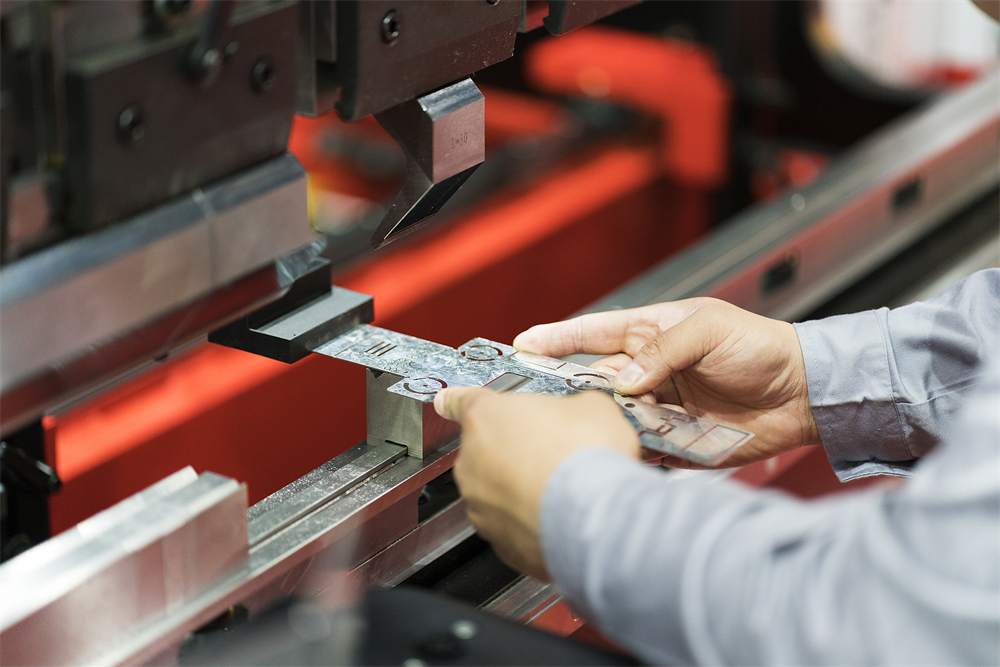
Recommended Machine Configuration for Automotive Parts
To meet the demands of Top Press Brake Applications In Automotive Metal Parts Production, a standard machine often falls short. HARSLE recommends specific configurations to ensure peak performance:
1. Advanced CNC Control Systems
Controllers like the Delem DA-66T or DA-69T are preferred. These systems offer 3D visualization, allowing operators to see the bending sequence before the first part is made. This reduces setup time and prevents tool collisions. Furthermore, these controllers can calculate the developed length of the part automatically, ensuring that the blank size is correct from the start.
2. Multi-Axis Backgauge (4-Axis to 6-Axis)
Automotive parts are rarely simple 90-degree bends. A 6-axis backgauge (X1, X2, R1, R2, Z1, Z2) allows for the independent movement of each gauge finger. This is critical for bending asymmetrical parts or parts with tapered flanges, which are common in aerodynamic automotive components.
3. Hydraulic Crowning Systems
Long parts, such as chassis rails, are susceptible to the “canoe effect,” where the center of the bend is not as deep as the ends due to machine deflection. An automatic hydraulic crowning system compensates for this in real-time, ensuring a perfectly straight bend across the entire length of the workpiece.
4. Angle Measurement and Correction
Laser angle measurement systems (like the Iris Plus) monitor the bend as it happens. If the material’s thickness or grain direction causes the angle to deviate, the system adjusts the depth of the punch instantly. This is vital when working with batches of material that may have slight metallurgical variations.
Workflow in Automotive Bending Operations
The workflow for producing automotive parts on a press brake is a highly synchronized process designed to minimize waste and maximize speed.
- Design and Simulation: Engineers create 3D models of the part. This data is imported into the press brake’s CAM software, which determines the optimal bending sequence and selects the appropriate tooling.
- Material Preparation: Sheets are typically laser-cut or punched to the required blank size. In high-volume environments, these blanks may be loaded onto the press brake by robotic arms.
- Setup: The operator (or an automated tool changer) installs the required punches and dies. The CNC program is loaded, and the backgauge moves into the starting position.
- Execution: The bending process begins. For complex parts, the CNC screen guides the operator through each step, showing exactly how to orient the part against the backgauge.
- Quality Control: The first part of every batch is usually inspected using a CMM (Coordinate Measuring Machine) or a digital protractor to verify that it meets the design specifications.
- Batch Production: Once verified, the machine runs the full batch. In automated cells, the finished parts are stacked by robots, ready for the next stage of assembly or welding.
Productivity Benefits of Modern Press Brakes
Investing in high-quality press brakes for automotive production yields significant long-term benefits:
- Reduced Scrap Rates: Precision control and real-time angle correction mean fewer parts end up in the scrap bin, which is especially important when working with expensive materials like aluminum or AHSS.
- Energy Efficiency: Modern servo-hybrid press brakes use up to 60% less energy than traditional hydraulic machines. They only consume power when the ram is moving, reducing operational costs and the manufacturer’s carbon footprint.
- Increased Versatility: A single press brake can produce hundreds of different parts simply by changing the program and tooling. This flexibility is essential for manufacturers who handle multiple vehicle models on the same production line.
- Enhanced Safety: Integrated light curtains and laser guarding systems protect operators without slowing down production, ensuring compliance with strict industrial safety regulations.
Case Example: Bumper Reinforcement Beam Production
A Tier 1 automotive supplier was tasked with producing a new bumper reinforcement beam made from Ultra-High-Strength Steel (UHSS). The part required three complex bends with a very tight tolerance to ensure it would fit into the robotic welding jig. Initially, the supplier struggled with inconsistent angles due to the extreme springback of the UHSS.
By switching to a HARSLE Gen-5 CNC Press Brake equipped with a laser angle tracking system and a 6-axis backgauge, the supplier was able to automate the compensation process. The result was a 30% reduction in cycle time and a near-zero rejection rate. The 3D simulation software also allowed them to prototype the part virtually, saving two weeks of physical trial-and-error testing.
Frequently Asked Questions (FAQ)
What is the best press brake for automotive prototyping?
For prototyping, flexibility is key. A CNC press brake with a 4-axis backgauge and a large library of universal tooling is ideal. This allows for quick changes between different part designs without needing custom-made dies for every iteration.
How does springback affect automotive part production?
Springback is the tendency of metal to return to its original shape after being bent. In automotive production, where high-strength steels are common, springback can be as high as 10-15 degrees. CNC press brakes compensate for this by over-bending the part to a calculated degree so that it “springs back” to the correct final angle.
Can press brakes be integrated into fully automated robotic cells?
Yes, most modern HARSLE press brakes are “robot-ready.” They can be interfaced with industrial robots that handle material loading, part manipulation during the bending sequence, and unloading, allowing for 24/7 lights-out manufacturing.
What maintenance is required for a press brake in a high-volume automotive environment?
Regular maintenance includes checking hydraulic oil levels and filters, lubricating the backgauge rails, and inspecting the tooling for wear. In high-volume settings, daily calibration checks of the backgauge and annual professional servicing are recommended to maintain precision.
Conclusion and Call to Action
The automotive industry continues to push the boundaries of what is possible with metal fabrication. As we have seen, Top Press Brake Applications In Automotive Metal Parts Production are diverse, demanding, and essential for the safety and efficiency of modern vehicles. Choosing the right machinery is not just about tonnage; it is about precision, software integration, and reliability.
HARSLE provides the cutting-edge technology required to stay competitive in this fast-paced market. Whether you are producing heavy chassis components or intricate interior brackets, our range of CNC press brakes is designed to meet your specific needs. Contact HARSLE today to speak with our technical experts and discover how our bending solutions can transform your automotive production line.


