
The Role of Press Brakes in Furniture and Fixture Metal Parts: A Comprehensive Guide


Introduction to Metal Fabrication in the Furniture Industry
The modern furniture and fixture industry has undergone a significant transformation, moving from traditional wood-centric designs to sleek, industrial, and minimalist aesthetics that heavily feature metal. From the skeletal frames of ergonomic office chairs to the intricate shelving units in high-end retail boutiques, metal parts provide the structural integrity and aesthetic versatility required by today’s designers. At the heart of this manufacturing revolution is the press brake, a piece of machinery that has become indispensable for creating precise, repeatable, and complex bends in sheet metal.
Understanding the Role Of Press Brakes In Furniture Fixture Metal Parts is essential for any manufacturer looking to stay competitive. These machines allow for the conversion of flat metal sheets into three-dimensional components with high accuracy. Whether it is stainless steel, aluminum, or cold-rolled steel, the press brake provides the force and precision necessary to meet the demanding tolerances of the furniture sector. This article explores the multifaceted applications, technical requirements, and productivity benefits of using HARSLE press brakes in the production of furniture and fixtures.
Application Scenarios: Where Press Brakes Shape Our Environment
Commercial and Office Furniture
In the corporate world, durability and modularity are key. Press brakes are used to manufacture desk frames, cable management trays, and filing cabinet housings. The ability to create long, straight bends with consistent angles ensures that modular components fit together perfectly during assembly. For instance, the legs of a modern standing desk often require multiple bends to house internal motors and wiring, a task that demands the high-precision backgauge systems found in HARSLE CNC press brakes.
Retail Fixtures and Display Systems
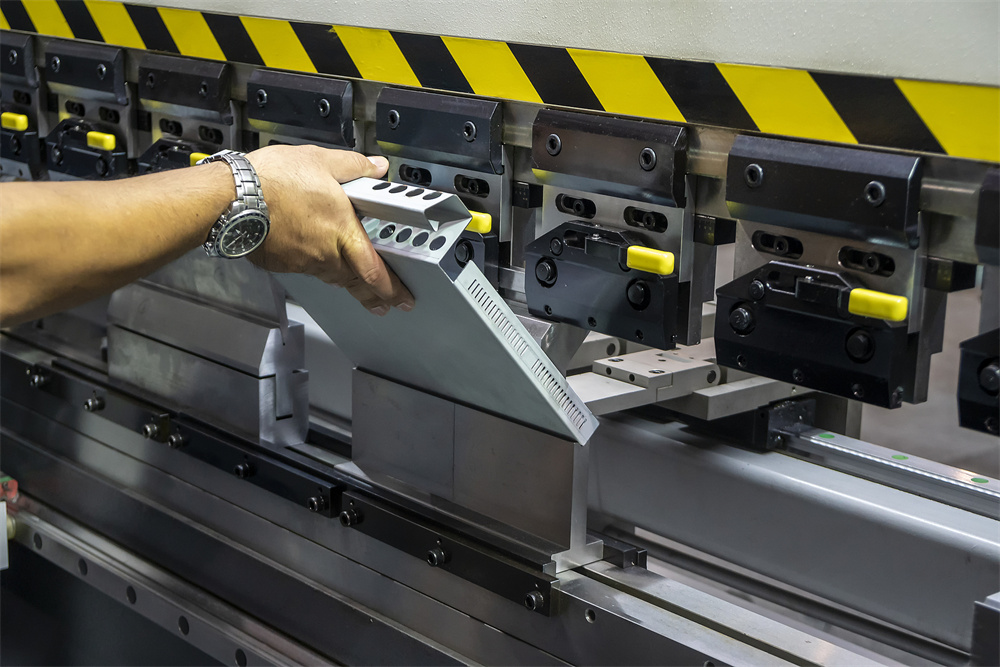
Retail environments require fixtures that are both visually appealing and capable of supporting significant weight. Shelving brackets, garment racks, and point-of-purchase displays are frequently produced using press brakes. These parts often involve complex geometries and small-batch production runs, making the quick setup times of CNC-controlled machines a major advantage. Custom retail displays often use perforated metals or high-polish stainless steel, requiring specialized tooling to prevent surface marring.
Residential and Designer Furniture
High-end residential furniture often pushes the boundaries of metal fabrication. Designers frequently request organic shapes or sharp, crisp angles that can only be achieved with high-tonnage precision. Chair frames, coffee table bases, and decorative wall panels are common examples. In this scenario, the press brake acts as a creative tool, allowing fabricators to experiment with different bend radii and folding sequences to achieve a specific artistic vision without compromising structural stability.
Industrial and Laboratory Fixtures
In environments like laboratories or industrial kitchens, furniture must be hygienic and resistant to corrosion. Stainless steel is the material of choice here. Press brakes are used to create seamless countertops, integrated sinks, and heavy-duty storage cabinets. The precision of the bend is critical to ensure there are no gaps where bacteria can grow, highlighting the role of the press brake in maintaining safety and hygiene standards in specialized fixture manufacturing.
Material and Process Requirements for Furniture Parts
Common Materials and Gauges
Furniture manufacturing typically utilizes thinner gauges of metal compared to heavy industrial construction. Common materials include:
- Cold-Rolled Steel (CRS): Used for painted or powder-coated frames. Usually ranges from 1.0mm to 3.0mm in thickness.
- Stainless Steel (304 or 316): Preferred for high-end furniture and medical fixtures. Requires higher bending force and specialized tooling to avoid contamination.
- Aluminum: Chosen for its lightweight properties and corrosion resistance. Requires careful handling to prevent cracking at the bend line.
Aesthetic and Surface Quality
Unlike structural steel components used in building frames, furniture parts are often highly visible. This means that the “Role Of Press Brakes In Furniture Fixture Metal Parts” extends beyond just bending; it involves preserving the surface finish. Fabricators often use urethane tape or specialized “no-mark” dies to prevent the metal from being scratched by the lower die during the bending process. HARSLE machines can be equipped with precision-ground tooling designed specifically for these sensitive applications.
Precision and Repeatability
In mass production, every part must be identical. A deviation of even half a degree in a bend angle can lead to a wobbly chair or a misaligned cabinet door. This requires a press brake with an advanced crowning system (to compensate for machine deflection) and a high-resolution CNC controller that can adjust for variations in material thickness and grain direction.
| Material Type | Typical Gauge (mm) | Common Application | Bending Challenge |
|---|---|---|---|
| Cold-Rolled Steel | 1.2 – 2.5 | Office Desks, Cabinets | Springback consistency |
| Stainless Steel | 1.0 – 2.0 | Kitchen Fixtures, Luxury Decor | Surface marking, High force |
| Aluminum Alloy | 2.0 – 4.0 | Outdoor Seating, Lightweight Frames | Cracking at tight radii |
| Galvanized Steel | 1.5 – 3.0 | Storage Racking, Industrial Shelving | Coating flaking |
Recommended Machine Configuration for Furniture Fabrication
CNC vs. NC Control
For furniture parts, a CNC (Computer Numerical Control) press brake is almost always recommended over a manual or NC machine. The complexity of furniture components—often requiring 4 to 8 different bends per part—means that manual adjustment of the backgauge for every bend is inefficient. A HARSLE CNC press brake with a Delem or Cybelec controller allows the operator to program the entire sequence once and execute it with high speed and accuracy.
Multi-Axis Backgauge Systems
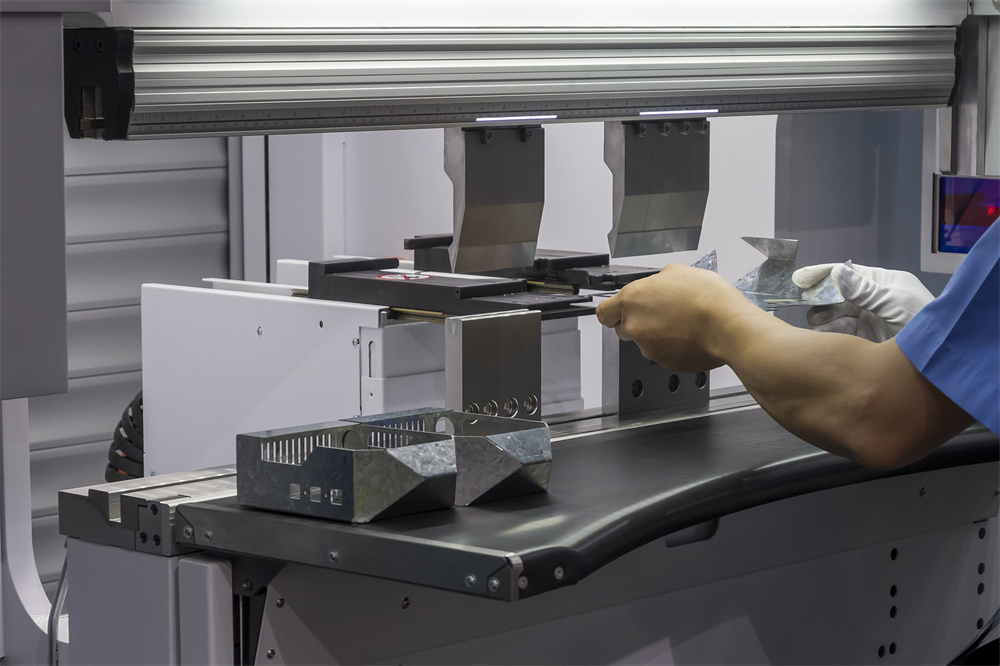
Furniture parts often have asymmetrical shapes or require bending at angles that are not parallel to the edge of the sheet. A 4-axis (X, R, Z1, Z2) or 6-axis (X1, X2, R1, R2, Z1, Z2) backgauge is crucial. This allows for the precise positioning of complex parts, ensuring that every flange is the correct length and every bend is perfectly square or angled as designed.
Hydraulic Crowning Systems
When bending long parts, such as the side panels of a tall locker or a long conference table frame, the machine’s bed and ram can deflect slightly in the center. This results in a “boating” effect where the angle in the middle of the part is different from the ends. HARSLE’s integrated hydraulic crowning system automatically compensates for this deflection, ensuring a perfectly uniform angle across the entire length of the workpiece.
Tooling Selection
The choice of tooling is vital. For furniture, “Gooseneck” punches are frequently used to allow for deep returns and complex “U” shapes without the part hitting the upper ram. Additionally, multi-V dies or adjustable dies can help in quickly switching between different material thicknesses, which is common in custom fixture shops.
The Workflow: From Design to Finished Fixture
Step 1: CAD/CAM Integration
The process begins with a 3D model of the furniture part. Software like SolidWorks or AutoCAD is used to design the part, which is then processed through CAM software to create a flat pattern. This software calculates the “bend deduction” based on the material type and the specific tooling that will be used on the HARSLE press brake.
Step 2: Material Preparation
Sheet metal is cut to the required flat dimensions using a fiber laser or waterjet. For furniture, laser cutting is preferred as it provides clean edges and can cut intricate patterns or holes that will be positioned relative to the bends later in the process.
Step 3: Machine Setup and Programming
The operator loads the program into the HARSLE CNC controller. The machine automatically positions the backgauge. The operator installs the correct punch and die. Modern HARSLE machines often feature 2D or 3D graphical interfaces that show the operator exactly how to orient the part for each bend, reducing the risk of error.
Step 4: The Bending Process
The operator places the metal sheet against the backgauge fingers and initiates the cycle. The hydraulic system applies the precise tonnage required to form the angle. For complex furniture parts, the operator may need to flip or rotate the part multiple times. The high-speed approach and return speeds of HARSLE press brakes significantly reduce the cycle time for these multi-bend parts.
Step 5: Quality Control and Finishing
After bending, the parts are checked for angular accuracy using digital protractors or laser measurement systems. Once verified, the parts move to finishing—which might include welding, grinding, and finally powder coating or plating to achieve the desired furniture finish.
Productivity Benefits of Using HARSLE Press Brakes
Reduced Material Waste
Precision is the enemy of waste. By using a high-quality press brake, manufacturers can eliminate the “trial and error” phase of bending. The first part off the machine is often a perfect part, which is critical when working with expensive materials like brushed stainless steel or specialized alloys.
Increased Design Flexibility
With a CNC press brake, designers are no longer limited to simple 90-degree folds. They can incorporate large radii, hemmed edges for safety (common in school furniture), and complex offset bends. This flexibility allows furniture brands to differentiate themselves in a crowded market with unique, high-quality designs.
Lower Labor Costs
The automation features of HARSLE press brakes mean that less experienced operators can produce high-quality parts with minimal training. The graphical interface guides the user through the process, and the automated backgauge eliminates the need for manual measurements, significantly increasing the number of parts produced per shift.
Enhanced Safety
Modern press brakes are equipped with advanced safety features such as laser guards (e.g., DSP or Lazersafe systems). These systems allow the machine to operate at high speeds while instantly stopping the ram if an obstruction (like an operator’s hand) is detected. In a high-volume furniture factory, this ensures a safe working environment and reduces downtime due to accidents.
Case Example: Transforming a Retail Shelving Factory
A mid-sized manufacturer specializing in retail shelving systems was struggling with inconsistent bend angles and slow production times using older, manual mechanical brakes. They frequently faced issues where shelves would not sit level because the support brackets were off by just a fraction of a degree. This led to high scrap rates and customer complaints.
After upgrading to a HARSLE WE67K Series CNC Press Brake, the company saw an immediate improvement. The CNC-controlled crowning system ensured that even their 4-meter long shelving units had perfectly consistent angles from end to end. By utilizing the multi-axis backgauge, they were able to combine three separate bending operations into a single handling sequence. The result was a 40% increase in production throughput and a 15% reduction in material waste, allowing them to take on larger contracts with tighter deadlines.
Frequently Asked Questions (FAQ)
What is the best press brake tonnage for furniture parts?
For most furniture and fixture applications, a tonnage range of 40 to 125 tons is sufficient. Since furniture typically uses thinner gauge materials (1mm to 3mm), high tonnage is rarely required unless you are bending very long sections or using heavy-duty industrial materials.
How do I prevent die marks on decorative stainless steel?
To prevent marking, you can use urethane die film (bending tape) over the lower die, or invest in specialized nylon/urethane inserts for your dies. Additionally, ensuring that your dies have a large, polished radius can help distribute the pressure and minimize surface indentation.
Can a press brake handle small, intricate fixture parts?
Yes, but it requires the right tooling and a precise backgauge. Small parts often require “finger” style backgauges that can get close to the tooling. HARSLE offers specialized small-scale press brakes (mini press brakes) specifically designed for high-speed, high-precision small part production.
What is ‘Springback’ and how does it affect furniture parts?
Springback is the tendency of metal to return to its original shape after the bending force is removed. In furniture, where precision is key, the CNC controller must calculate the exact over-bend required to achieve the final desired angle. This varies by material; for example, stainless steel has more springback than mild steel.
Is CNC worth the investment for a small custom furniture shop?
Absolutely. While the initial cost is higher, the time saved in setup and the elimination of wasted material make CNC press brakes much more cost-effective in the long run, even for low-volume, high-variety custom work.
How often should a press brake be maintained in a high-volume factory?
Daily checks of oil levels and cleanliness are essential. A full professional service, including hydraulic oil filtration and calibration of the backgauge and ram, should be performed every 2,000 operating hours or annually to ensure the machine continues to meet the tight tolerances required for furniture parts.
Conclusion: Elevating Furniture Quality with HARSLE
The Role Of Press Brakes In Furniture Fixture Metal Parts cannot be overstated. As the industry continues to lean towards metal as a primary material for both structural and aesthetic components, the need for precision, efficiency, and versatility in bending has never been greater. HARSLE press brakes provide the technological edge necessary to transform flat sheets of metal into the beautiful, functional furniture of tomorrow.
By investing in the right machine configuration—focusing on CNC precision, advanced backgauges, and quality tooling—manufacturers can significantly improve their productivity and product quality. Whether you are a boutique designer or a mass-market manufacturer, HARSLE has the expertise and the machinery to help you master the art of metal bending.
Ready to Upgrade Your Furniture Production?
HARSLE is a leading global manufacturer of high-quality metal fabrication machinery. Our range of CNC press brakes is specifically engineered to meet the rigorous demands of the furniture and fixture industry. Contact us today to discuss your specific application and find the perfect machine to take your manufacturing to the next level.
Visit our website or contact our sales team for a custom quote!


