Press Brake Ram Not Moving Smoothly? Troubleshooting Hydraulic and Mechanical Issues


Introduction to Press Brake Ram Performance
In the world of precision metal fabrication, the press brake is the workhorse of the shop floor. Its ability to deliver tons of force with sub-millimeter accuracy is what allows manufacturers to create complex components for aerospace, automotive, and construction industries. However, when the Press Brake Ram Not Moving Smoothly? Troubleshooting Hydraulic Mechanical Issues becomes a reality, production can grind to a halt. A ram that jerks, hesitates, or moves unevenly is not just a nuisance; it is a symptom of underlying mechanical or hydraulic distress that can lead to catastrophic machine failure or serious safety hazards.
Smooth ram movement is the foundation of bending accuracy. If the ram does not descend and ascend with fluid consistency, the angle of the bend will vary across the length of the workpiece, leading to high scrap rates and wasted material. For operators using high-end equipment like HARSLE CNC press brakes, maintaining this fluidity is essential to leveraging the machine’s advanced synchronization capabilities. Understanding the root causes of erratic movement requires a holistic view of the machine’s anatomy, spanning from the high-pressure fluid dynamics of the hydraulic circuit to the physical friction points of the mechanical guides.
This comprehensive guide is designed to help maintenance managers and machine operators diagnose and resolve issues related to ram movement. We will explore the common culprits behind stuttering rams, provide technical insights into hydraulic and mechanical failures, and offer actionable advice on how to select and maintain equipment to prevent these issues from occurring in the first place. By the end of this article, you will have a clear roadmap for restoring your press brake to peak operational efficiency.
Key Considerations for Diagnosing Ram Irregularities
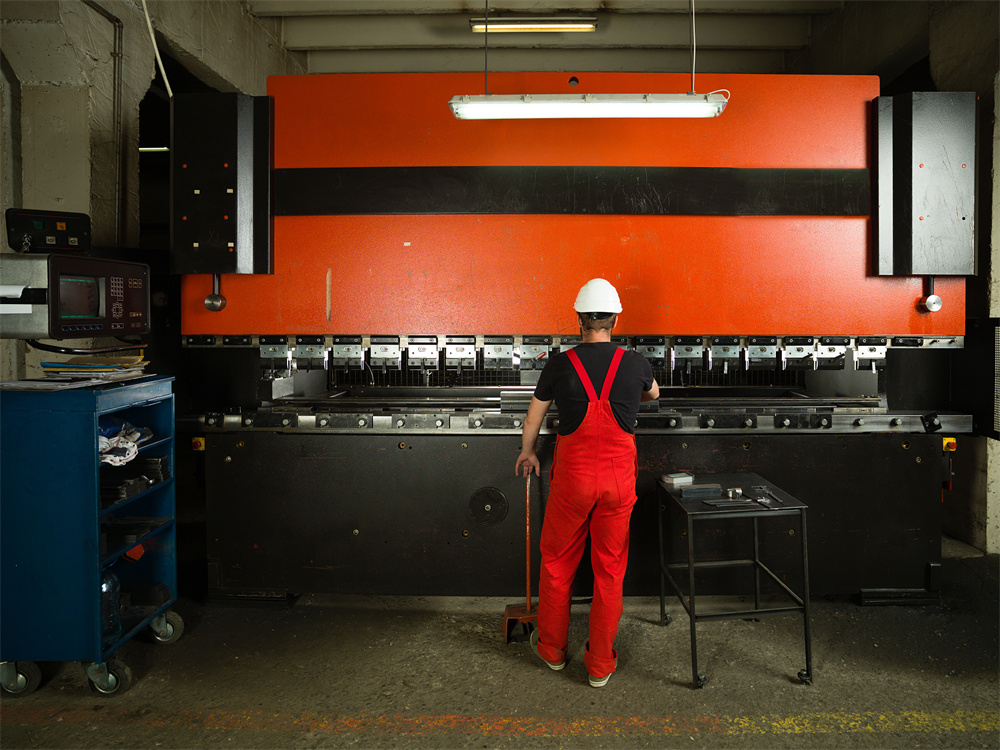
Before diving into the technical specifics, it is crucial to approach troubleshooting with a systematic mindset. The first consideration is safety. A press brake ram carries immense potential energy, even when it appears to be stuck. Never attempt to inspect the hydraulic cylinders or mechanical gibs while the ram is unsupported. Always use safety blocks and follow Lockout/Tagout (LOTO) procedures to ensure the machine cannot be accidentally cycled during maintenance.
The second consideration is identifying the “symptoms” accurately. Does the ram jerk only during the high-speed approach, or does it happen during the slow pressing phase? Is the unevenness consistent, or does it change as the machine warms up? For instance, if the ram moves smoothly when the oil is cold but starts to stutter after two hours of operation, the issue is likely related to oil viscosity or thermal expansion in the mechanical guides. Conversely, if the stuttering is constant, you might be looking at a mechanical obstruction or a faulty proportional valve.
Environmental factors also play a significant role. In shops with high dust levels or poor climate control, the lubrication on the guide rails can become contaminated with abrasive particles. This creates a “lapping compound” effect that increases friction and causes the ram to move in a stop-start motion known as stick-slip. Furthermore, the stability of the electrical power supply can affect the CNC controller’s ability to send smooth signals to the hydraulic valves. Always check the basics—power, lubrication, and cleanliness—before dismantling complex components.
Finally, consider the age and technology of the machine. Older torsion bar press brakes rely on a physical shaft to synchronize the two ends of the ram, whereas modern HARSLE CNC machines use independent hydraulic cylinders controlled by high-resolution linear encoders. The troubleshooting path for a mechanical synchronization issue is vastly different from a digital feedback loop error. Knowing which system your machine utilizes is the first step in effective diagnosis.
Technical Details: Hydraulic System Failures
Air Entrapment and Cavitation
One of the most common reasons for a Press Brake Ram Not Moving Smoothly? Troubleshooting Hydraulic Mechanical Issues is the presence of air in the hydraulic lines. Unlike hydraulic oil, air is highly compressible. When the pump attempts to move the ram, any trapped air pockets will compress and expand, leading to a “spongy” feel or a jerking motion as the pressure fluctuates. This often happens after a filter change or if the oil level in the reservoir has dropped too low, allowing the pump to suck in air.
Cavitation is a more severe form of this issue, where vacuum bubbles form in the oil due to restricted suction lines or clogged intake filters. When these bubbles reach the high-pressure side of the pump, they implode with enough force to pit metal surfaces. This not only causes erratic ram movement but also generates a distinct high-pitched whining or growling noise. Regular bleeding of the system and ensuring that all suction-side fittings are airtight are essential maintenance tasks to prevent these hydraulic disturbances.
Proportional Valve Malfunctions
In modern CNC press brakes, the flow of oil to the cylinders is regulated by sophisticated proportional valves. These valves receive electrical signals from the CNC controller to adjust the flow rate precisely. If the internal spool of a proportional valve becomes sticky due to oil contamination or varnish buildup, it will not respond linearly to the controller’s commands. This results in “hunting,” where the ram overshoots and undershoots its target position, causing a visible vibration or stutter.
Furthermore, the electrical solenoids that drive these valves can weaken over time. If the solenoid cannot generate enough force to overcome the friction of the spool, the ram may hesitate before moving. Testing these valves often requires specialized diagnostic equipment to monitor the command signal versus the actual spool position. For HARSLE machines, ensuring that the hydraulic oil meets the ISO cleanliness standards (typically ISO 4406 16/14/11 or better) is the best defense against valve-related ram issues.
Cylinder Seal Friction and Internal Leakage
The hydraulic cylinders themselves can be a source of uneven movement. The seals inside the cylinder are designed to prevent oil from bypassing the piston, but they also create a certain amount of friction. If the seals are worn, hardened, or if the cylinder rod is slightly bent, the friction can become non-uniform. This leads to a condition where the ram requires more pressure to start moving than to keep moving, resulting in a jerky “jump” at the start of the stroke.
Internal leakage across the piston seals can also cause synchronization issues. If one cylinder is leaking more than the other, the CNC controller must constantly compensate by adjusting the flow to that side. If the leakage is significant, the controller may reach its compensation limit, causing the ram to tilt or move in a staggered fashion. Monitoring the “Y1” and “Y2” axis values on the CNC screen can often reveal if one side is struggling to keep up with the other.
Technical Details: Mechanical Obstructions and Misalignment
Guide Rail and Gib Adjustment
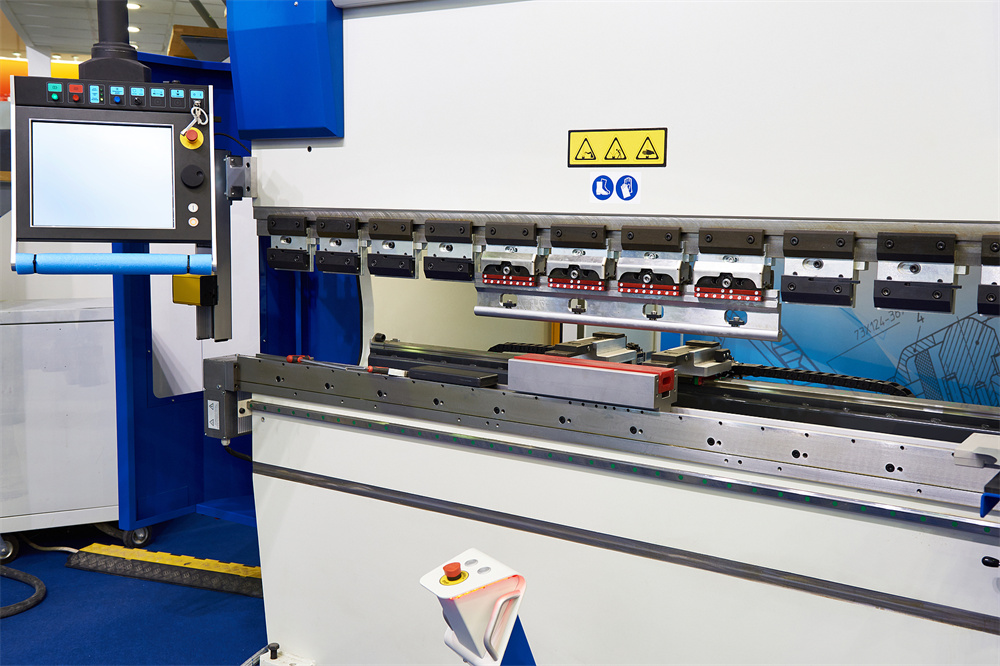
The ram of a press brake is held in place by a system of guide rails and gibs. These components ensure that the ram moves perfectly vertically without any side-to-side play. Over time, the gibs can wear down or become loose, allowing the ram to tilt slightly. Conversely, if the gibs are adjusted too tightly, they can bind the ram, creating excessive friction that the hydraulic system must overcome. This binding is a frequent cause of the Press Brake Ram Not Moving Smoothly? Troubleshooting Hydraulic Mechanical Issues.
Proper gib adjustment is a delicate balance. It requires measuring the clearance with feeler gauges and ensuring that the ram can move freely under its own weight (with the hydraulics disconnected and safely supported). Additionally, the lubrication of these guides is paramount. Most modern machines feature automatic lubrication systems, but if a line is blocked or the reservoir is empty, the dry metal-on-metal contact will quickly lead to galling and erratic movement. Always inspect the guide surfaces for scoring or bright spots, which indicate localized high-pressure points.
Frame Deflection and Foundation Issues
While press brakes are built to be incredibly rigid, they are still subject to the laws of physics. If a machine is not properly leveled or if the foundation is unstable, the frame can twist slightly. This twist, even if measured in thousandths of an inch, can cause the ram guides to move out of parallel. When the ram tries to move through a non-parallel path, it will bind at certain points in the stroke, leading to uneven movement.
This issue is particularly prevalent in larger machines or those that have been moved recently. Using a high-precision machinist’s level, the machine should be checked across its length and width. Furthermore, the anchor bolts must be tightened to the manufacturer’s specifications. A “walking” machine—one that moves slightly during heavy bends—will eventually develop mechanical misalignments that manifest as ram stuttering.
Backgauge Interference
It may seem simple, but mechanical interference from the backgauge system is a common yet overlooked cause of ram issues. If the backgauge fingers are positioned too close to the die or if the R-axis (vertical movement of the backgauge) is miscalibrated, the ram or the upper tooling may physically contact the backgauge during the descent. This contact creates a mechanical bind that the hydraulics will try to push through, resulting in a sudden jerk or a complete machine stall. Always verify that the programmed backgauge positions provide ample clearance for the entire stroke of the ram.
Selection Advice: Choosing a Machine for Long-Term Smoothness
When purchasing a new press brake, the quality of the components directly correlates to the smoothness of the ram over the machine’s lifespan. Buyers should look for machines that utilize high-quality hydraulic components from reputable brands like Rexroth or Hoerbiger. These manufacturers produce valves with tighter tolerances and better resistance to contamination, which are critical for maintaining smooth movement in industrial environments.
Another key feature to look for is the type of guiding system. “X-type” or “V-type” guides with hardened and ground surfaces offer superior stability compared to older, flat-surface designs. Furthermore, machines equipped with high-resolution optical linear encoders (such as those from Heidenhain or Givi Misure) provide the CNC controller with the precise data needed to maintain perfect synchronization between the Y1 and Y2 cylinders. HARSLE’s range of CNC press brakes, for example, integrates these high-end components to ensure that the ram remains smooth and accurate even after years of heavy use.
Consider the control system as well. A sophisticated CNC like the Delem or Cybelec series offers advanced diagnostic tools that can help identify ram issues before they become critical. These controllers can monitor valve response times, encoder feedback consistency, and even suggest maintenance intervals based on actual machine usage. Investing in a machine with a robust control system is an investment in easier troubleshooting and reduced downtime.
| Feature | Impact on Ram Smoothness | Recommended Specification |
|---|---|---|
| Hydraulic Valves | Controls fluid flow precision and response time. | Proportional valves (Rexroth/Hoerbiger) |
| Linear Encoders | Provides real-time position feedback to the CNC. | High-resolution optical (±0.005mm) |
| Guide System | Ensures vertical alignment and reduces friction. | Hardened and ground V-guides |
| Lubrication | Prevents stick-slip and wear on mechanical parts. | Automatic centralized lubrication |
Frequently Asked Questions (FAQ)
1. Why does my press brake ram jerk only when it starts to move?
This is often due to “static friction” or “stiction.” It occurs when the lubrication on the guide rails has broken down or when the cylinder seals are too tight. The hydraulic system must build up significant pressure to overcome the initial resistance, causing the ram to “jump” once it finally breaks free. Checking the lubrication system and gib clearance is the first step.
2. Can low hydraulic oil levels cause the ram to move unevenly?
Yes. Low oil levels can allow air to enter the pump, leading to aeration of the fluid. Since air is compressible, it causes the ram to move in a spongy or erratic manner. Always maintain the oil level within the manufacturer’s recommended range on the sight glass.
3. How often should I bleed the air out of my press brake’s hydraulic system?
Under normal operation, a sealed system should not require frequent bleeding. However, you should bleed the system after any hydraulic maintenance, such as replacing a hose, valve, or filter. If you find yourself needing to bleed the system regularly, there is likely a leak on the suction side of the pump.
4. What is the role of the CNC controller in ram synchronization?
The CNC controller acts as the “brain.” It reads the position of the ram from linear encoders on both sides (Y1 and Y2). If one side is lagging, the controller sends a signal to the proportional valve to increase flow to that side, ensuring the ram stays perfectly level and moves smoothly.
5. Can a dirty environment affect ram movement?
Absolutely. Metal dust and grinding grit can settle on the guide rails and mix with the grease, creating an abrasive paste. This increases friction and can cause the ram to stutter. Keeping the machine clean and the guides wiped down is a simple but effective maintenance task.
Conclusion: Maintaining the Flow of Production
A press brake ram that does not move smoothly is a clear warning sign that the machine requires attention. Whether the issue stems from a simple lack of lubrication, air in the hydraulic lines, or a complex failure of a proportional valve, addressing the problem early is the key to avoiding expensive repairs and prolonged downtime. By understanding the interplay between hydraulic pressure and mechanical resistance, operators and maintenance teams can keep their equipment running with the precision that modern manufacturing demands.
Regular maintenance remains the most effective strategy for preventing Press Brake Ram Not Moving Smoothly? Troubleshooting Hydraulic Mechanical Issues. This includes monitoring oil quality, ensuring the lubrication system is functional, and performing periodic checks on the mechanical alignment of the guides. When these tasks are performed diligently, a high-quality machine like a HARSLE press brake will provide decades of reliable, smooth, and accurate service. Remember, a smooth-moving ram is not just about machine health—it is about the quality of every part that leaves your shop floor.