
How to Fix Press Brake Springback Issues for More Accurate Bending


Introduction to the Challenge of Springback in Metal Bending
In the world of precision metal fabrication, achieving the perfect angle is both an art and a science. One of the most persistent challenges faced by operators is springback. Springback occurs when a metal sheet is bent and then partially returns to its original shape after the bending force is released. This phenomenon is caused by the elastic recovery of the material. To fix press brake springback issues for more accurate bending, one must understand the metallurgical properties of the workpiece and the mechanical capabilities of the press brake itself.
HARSLE, a leader in industrial machinery, recognizes that even the most advanced CNC press brakes require a deep understanding of material behavior to achieve sub-millimeter accuracy. Whether you are working with stainless steel, aluminum, or high-tensile carbon steel, springback is an inevitable factor. However, it is not an uncontrollable one. By implementing the right technical strategies and utilizing high-performance equipment, fabricators can minimize errors, reduce scrap rates, and ensure that every component meets strict design specifications.
This comprehensive guide will delve into the mechanics of springback, the variables that influence it, and the professional techniques used to compensate for it. From manual overbending to the use of sophisticated CNC crowning systems and real-time angle sensors, we will explore how to master the bend and achieve consistent results in any fabrication environment.
Key Considerations: Why Springback Occurs
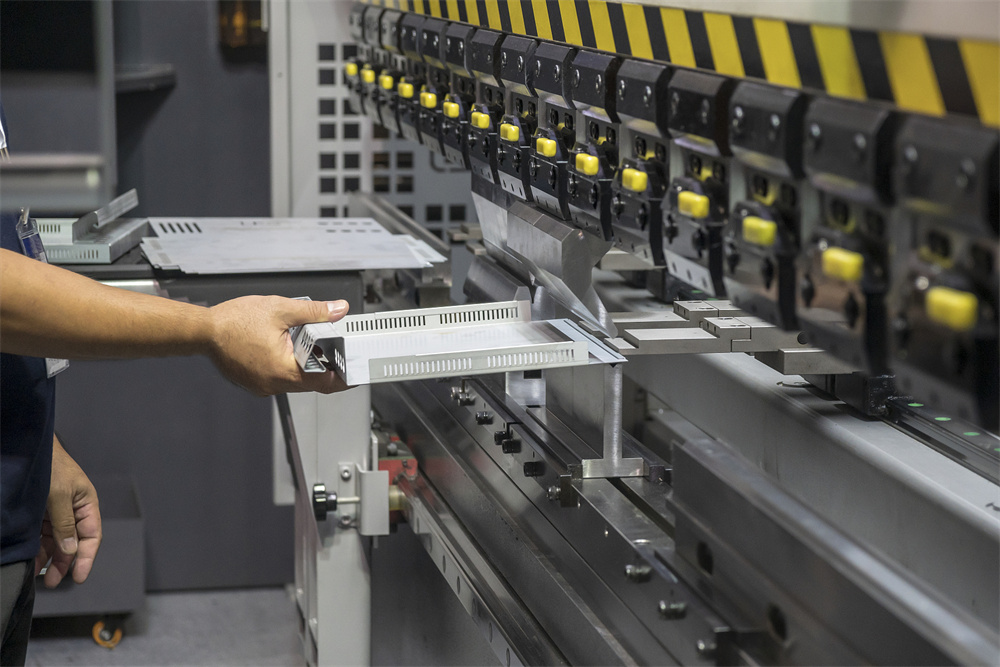
Before you can fix press brake springback issues for more accurate bending, you must identify the root causes. Springback is primarily a result of the transition between elastic and plastic deformation. When metal is bent, the outer layers are stretched (tension) and the inner layers are compressed. While much of this deformation is permanent (plastic), a portion of the internal stress remains elastic. When the punch retracts, this elastic energy is released, causing the metal to “spring” back toward its flat state.
Material Properties and Yield Strength
The type of material being processed is the most significant factor in springback. Materials with high yield strength, such as stainless steel or high-strength alloys, exhibit much more springback than softer materials like mild steel or certain aluminum grades. This is because high-yield materials can store more elastic energy before reaching the point of permanent deformation. When calculating your bend, you must account for the specific yield strength of the batch of material you are using, as even slight variations between heat lots can affect the final angle.
The Role of Bend Radius
The relationship between the thickness of the material and the inside bend radius is critical. A larger bend radius relative to the material thickness generally results in more springback. This is because a larger radius distributes the deformation over a wider area, meaning less of the material reaches the plastic deformation stage. Conversely, a sharp bend concentrates the force, forcing more of the material into a permanent set, which reduces the amount of elastic recovery.
Material Thickness Variations
In industrial production, material thickness is rarely perfectly uniform. A sheet that is supposed to be 3mm thick might actually range from 2.8mm to 3.2mm. These minor fluctuations significantly impact how much force is required to achieve a bend and, consequently, how much springback occurs. To fix press brake springback issues for more accurate bending, operators must be vigilant about measuring material thickness and adjusting the press brake settings accordingly.
Technical Details: Methods to Compensate for Springback
Achieving precision requires a multi-faceted approach. Modern fabrication shops use a combination of traditional techniques and advanced technology to neutralize the effects of elastic recovery. Below are the most effective technical methods used in the industry today.
1. Overbending: The Traditional Solution
The most common way to compensate for springback is overbending. If you need a 90-degree angle and the material has a 2-degree springback, you program the press brake to bend the material to 92 degrees. When the punch releases, the material springs back to the desired 90 degrees. While this sounds simple, calculating the exact degree of overbending requires experience or sophisticated software, as it changes based on material type, thickness, and the V-die opening used.
2. Bottoming and Coining
Unlike air bending, where the material only touches the punch tip and the two edges of the die, bottoming involves pressing the material against the bottom of the V-die. This extra pressure helps to “set” the metal, significantly reducing springback. Coining is an even more extreme version where the punch actually penetrates the material’s surface at the bend line, effectively eliminating springback by neutralizing internal stresses. However, coining requires massive amounts of tonnage (often 5 to 10 times more than air bending) and can cause significant wear on the machine and tooling.
3. CNC Crowning Systems
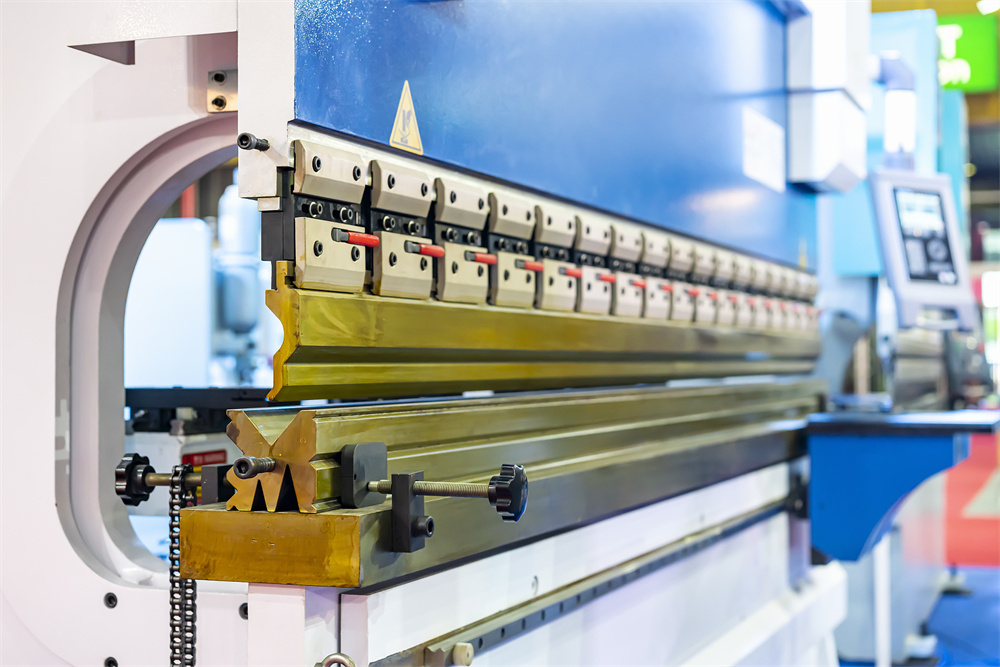
When a press brake applies force, the bed and the ram naturally deflect or “bow” in the center. This deflection causes the bend angle to be inconsistent across the length of the workpiece—usually wider in the middle than at the ends. To fix press brake springback issues for more accurate bending over long distances, HARSLE machines utilize CNC crowning systems. These systems (either hydraulic or mechanical) apply a counter-force to the bed, ensuring that the punch and die remain perfectly parallel throughout the stroke, resulting in a uniform angle from end to end.
4. Real-Time Angle Measurement
The most advanced way to handle springback is through real-time angle measurement systems. These sensors use lasers or mechanical probes to measure the actual angle of the bend while the material is still under pressure. The CNC controller then calculates the springback instantly and adjusts the depth of the stroke to compensate before the part is even removed from the machine. This technology is invaluable for high-precision industries like aerospace and medical device manufacturing.
Selection Advice: Choosing the Right Press Brake and Tooling
Not all machinery is created equal when it comes to managing springback. If your goal is to fix press brake springback issues for more accurate bending, your choice of equipment and tooling is paramount. Here is what you should look for when selecting a HARSLE press brake or upgrading your current setup.
CNC vs. NC Control
While NC (Numerical Control) machines are cost-effective, they lack the sophisticated algorithms required to automatically calculate springback. A full CNC (Computer Numerical Control) system allows operators to input material parameters (type, thickness, length) and automatically suggests the correct depth and crowning adjustments. For shops dealing with various materials and complex geometries, a CNC press brake is a necessary investment for accuracy.
Tooling Quality and Geometry
The quality of your punches and dies directly affects bend consistency. Precision-ground, hardened tooling maintains its shape over thousands of cycles, whereas cheaper tooling can deform, leading to unpredictable springback. Additionally, using the correct V-die opening is essential. A general rule of thumb is that the V-die opening should be 8 times the material thickness. Using a V-die that is too small increases the required tonnage and can lead to inconsistent springback, while a V-die that is too large increases the bend radius and the amount of springback.
Hydraulic vs. Electric Press Brakes
Hydraulic press brakes, like those offered by HARSLE, provide the high tonnage necessary for bottoming and coining operations, which are effective at reducing springback. However, electric press brakes offer superior speed and repeatability for thinner materials. When choosing, consider the primary thickness and material type of your production line. For heavy-duty applications where springback is a major hurdle, a high-tonnage hydraulic machine with a robust crowning system is usually the best choice.
Maintenance and Calibration for Long-Term Accuracy
Even the best machine will struggle with springback if it is not properly maintained. Over time, hydraulic fluid can degrade, seals can wear, and the frame can experience minor shifts. Regular calibration of the backgauge and the ram depth (Y1 and Y2 axes) is essential. If the ram is not perfectly level, one side of your part will always have more springback than the other, making it impossible to achieve a consistent 90-degree bend.
Furthermore, keep your tooling clean. Metal dust and scale can build up in the V-die, effectively changing its geometry and leading to inconsistent bends. A simple daily cleaning routine can prevent many of the “mysterious” accuracy issues that plague fabrication shops.
Frequently Asked Questions (FAQ)
How do I calculate the springback factor?
The springback factor (K) is calculated by dividing the final angle by the initial bend angle. However, for practical shop use, most operators rely on empirical data or CNC software. A common formula involves the ratio of the bend radius to the material thickness (R/t). As R/t increases, the springback factor increases. Most HARSLE CNC controllers have these tables pre-loaded for common materials.
Does grain direction affect springback?
Yes, significantly. Metal has a “grain” resulting from the rolling process at the mill. Bending with the grain (parallel to the rolling direction) usually results in more springback and a higher risk of cracking. Bending across the grain (perpendicular) is generally more stable and allows for tighter radii with more predictable springback. Always try to orient your parts so that the most critical bends are across the grain.
Can I fix springback issues on an old manual press brake?
Yes, but it requires more trial and error. You will need to perform test bends for every new batch of material and manually adjust the depth stop to achieve overbending. You can also use shims under the die to simulate crowning if the machine is bowing in the center. However, for high-volume precision work, upgrading to a CNC machine with automatic compensation is highly recommended.
Why is my springback inconsistent even with the same material?
Inconsistency is often caused by variations in material thickness or yield strength within the same sheet. It can also be caused by heat—if the material has been laser-cut, the heat-affected zone (HAZ) near the edges may have different mechanical properties than the rest of the sheet. Finally, check your machine’s hydraulic oil temperature; as oil heats up, its viscosity changes, which can slightly affect the ram’s positioning accuracy.
What is the best V-die opening to minimize springback?
While the standard is 8x material thickness, using a slightly smaller V-die (6x thickness) can sometimes reduce springback by forcing a sharper bend. However, this increases the tonnage required and the risk of marking the material. Conversely, for high-strength steels, a larger V-die (10x or 12x thickness) is often used to prevent cracking, though this will increase the springback that needs to be compensated for.
Conclusion: Mastering Precision with HARSLE
To fix press brake springback issues for more accurate bending, you must combine metallurgical knowledge with mechanical precision. Springback is not a sign of a failing machine; it is a natural physical reaction of the metal. By understanding the variables—yield strength, bend radius, and thickness—and utilizing advanced tools like CNC crowning and overbending, you can turn this challenge into a manageable part of your workflow.
HARSLE continues to innovate in the field of metal fabrication, providing machines that simplify the compensation process. With robust construction, intuitive CNC interfaces, and high-precision hydraulic systems, HARSLE press brakes are designed to deliver consistent results even when working with the most difficult materials. By following the technical advice and selection criteria outlined in this guide, you can ensure that your shop remains competitive, efficient, and, above all, accurate.
Investing in the right technology and operator training is the ultimate solution to springback. As materials evolve and tolerances tighten, the ability to predict and correct for elastic recovery will remain a hallmark of a top-tier fabrication professional. Trust HARSLE to provide the equipment you need to master every bend.

