Press Brake Buying Guide: How to Choose the Right Machine for Accurate Metal Bending


Introduction to the Press Brake Buying Journey
In the world of metal fabrication, the press brake stands as the cornerstone of production. Whether you are a small job shop or a large-scale industrial manufacturer, the ability to bend sheet metal with precision, speed, and repeatability is what separates profitable operations from those struggling with waste and rework. However, the market is flooded with various types of machines, from basic manual hydraulic brakes to high-end multi-axis CNC electric models. Choosing the right one is not just about the price tag; it is about matching the machine’s capabilities to your specific production needs and long-term growth strategy.
At HARSLE, we understand that purchasing a press brake is a significant capital investment that can define your shop’s capabilities for the next decade. This guide is designed to walk you through every critical factor involved in the decision-making process. We will explore the technical specifications, the different technologies available, and the hidden factors that contribute to long-term accuracy and productivity. By the end of this article, you will have a clear roadmap for selecting a machine that ensures accurate metal bending and a high return on investment (ROI). The evolution of bending technology has moved from simple mechanical force to sophisticated software-driven precision, and understanding this shift is key to making an informed Press Brake Buying decision.
Identifying Buyer Pain Points in Metal Bending
Before diving into the technical specs, it is essential to address the common frustrations fabricators face. Understanding these pain points helps in prioritizing features during the buying process. One of the most frequent complaints is the lack of consistency, often referred to as “angle hunting.” Operators often find that the first bend of the day differs from the hundredth, or that the angle varies across the length of a long workpiece due to material grain or machine deflection. This inconsistency leads to high scrap rates and wasted material, which directly impacts the bottom line.
Another major pain point is the setup time. In a high-mix, low-volume production environment, the time spent changing tools and programming the backgauge can exceed the actual bending time. If a machine is difficult to program or requires manual adjustments for every new part, productivity plummets. Furthermore, the “skill gap” in the manufacturing industry means that finding highly experienced operators is getting harder. Modern shops need machines with intuitive interfaces that allow less experienced workers to produce high-quality parts with minimal training. The frustration of “trial and error” bending is a cost that many businesses can no longer afford.
Maintenance and downtime also rank high on the list of concerns. A press brake that breaks down frequently or requires specialized technicians for every minor adjustment can paralyze a production line. Buyers are increasingly looking for reliability, easy access to spare parts, and robust after-sales support. Finally, the total cost of ownership—including energy consumption and hydraulic oil changes—is a growing concern for environmentally conscious and cost-sensitive businesses. When you choose a machine for accurate metal bending, you are also choosing a maintenance profile that will follow you for years.
Machine Type Selection: Hydraulic, Electric, or Hybrid?
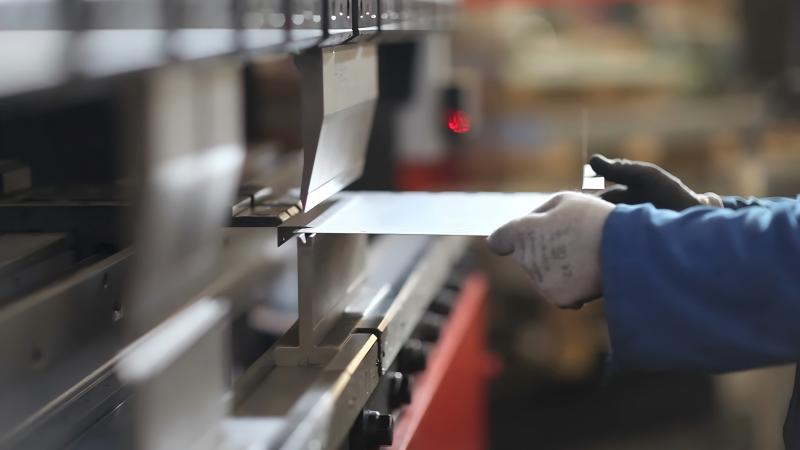
The first major decision in the Press Brake Buying process is choosing the drive system. Each technology has its strengths and weaknesses depending on your application, material thickness, and production volume.
1. Hydraulic Press Brakes
Hydraulic press brakes are the workhorses of the industry. They use hydraulic cylinders to move the top beam. They are known for their high tonnage capacity and durability. For heavy-duty applications involving thick plates (over 10mm), hydraulic machines are often the only viable option. HARSLE’s hydraulic series offers incredible power and reliability at a competitive price point. However, they can be slower than electric models because the hydraulic fluid must be cycled, and they require regular oil maintenance and cooling systems to maintain accuracy as the oil heats up.
2. Electric Press Brakes
Electric press brakes utilize servo motors and belt-drive or ball-screw systems to move the ram. These machines are prized for their extreme precision and speed. Because they don’t use hydraulic oil, they are cleaner and more energy-efficient, only consuming power when the ram is moving. They are ideal for thin-to-medium gauge materials where high-speed repetition and tight tolerances are required. The ram acceleration and deceleration are much faster than hydraulic systems, significantly reducing cycle times. The downside is typically a higher initial cost and lower maximum tonnage compared to hydraulic counterparts.
3. Hybrid Press Brakes (Servo-Hydraulic)
Hybrid machines combine the best of both worlds. They use a small hydraulic system driven by a servo motor rather than a constant-speed AC motor. This setup provides the high force of hydraulics with the precision and energy efficiency of electric drives. Hybrid press brakes are exceptionally quiet and offer significant energy savings (up to 60% compared to traditional hydraulics) because the motor only runs when the ram is in motion. Furthermore, because the oil doesn’t heat up as much, the machine maintains better accuracy over long shifts. For many modern shops, the hybrid model represents the future of accurate metal bending.
Key Specifications: Tonnage and Bending Length
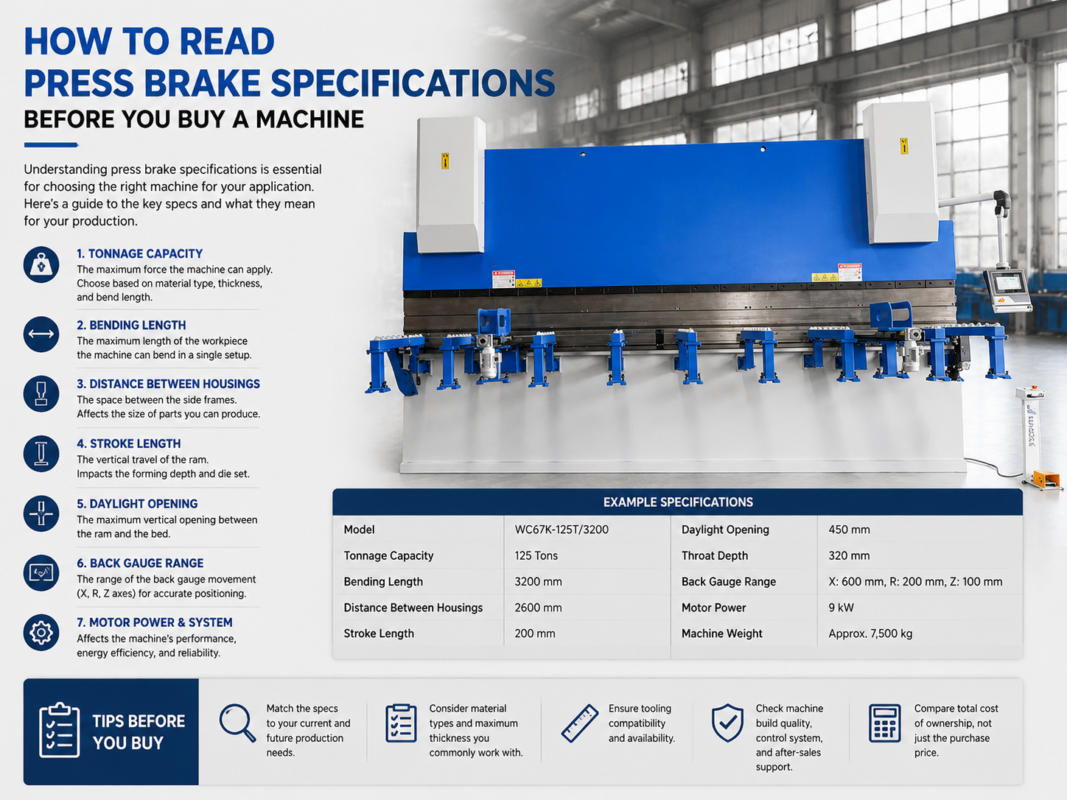
When you choose a machine for accurate metal bending, the two most fundamental specs are tonnage and length. Tonnage is the amount of pressure the press brake can apply. If you underestimate the tonnage, you won’t be able to bend your material; if you overestimate significantly, you might be overpaying for a machine that takes up too much floor space and consumes unnecessary power.
Calculating Tonnage Requirements
To calculate the required tonnage, you must consider the material type (stainless steel requires roughly 50% more force than mild steel), the material thickness, and the V-die opening. A general rule of thumb for mild steel is that the V-die opening should be 8 times the material thickness. Using a smaller V-die increases the required tonnage exponentially and can damage the machine or the tooling. It is always recommended to buy a machine with about 20% more tonnage than your maximum calculated requirement to avoid running the machine at its absolute limit, which extends the life of the hydraulic components and ensures the frame remains rigid.
Bending Length and Throat Depth
Bending length refers to the maximum width of the sheet metal you can process. However, you must also consider the distance between the side frames (housings). If you need to bend a long part that must pass through the machine, the distance between the frames is more critical than the total bed length. Additionally, the “throat depth”—the space behind the tooling—determines how deep a flange you can bend before the material hits the machine frame. If your parts have deep returns or complex box shapes, a deep throat is a non-negotiable requirement.
Accuracy and Productivity Factors
Accuracy in bending is determined by how well the machine can control the position of the ram and the backgauge. This is where high-quality CNC systems and mechanical features come into play. In the context of Press Brake Buying, these features often distinguish a “budget” machine from a high-performance production tool.
The Role of the CNC Controller
The “brain” of the press brake is the CNC controller. Modern controllers like those from Delem, ESA, or Cybelec offer 2D and 3D graphical interfaces. These systems allow operators to import DXF or STP files, automatically calculate the bend sequence, and simulate the process to check for collisions. A high-end controller significantly reduces setup time and minimizes the risk of human error. Advanced controllers also manage “Springback Compensation,” adjusting the depth of the stroke based on the material’s tendency to return to its original shape after the pressure is released.
Backgauge Precision and Axis Configuration
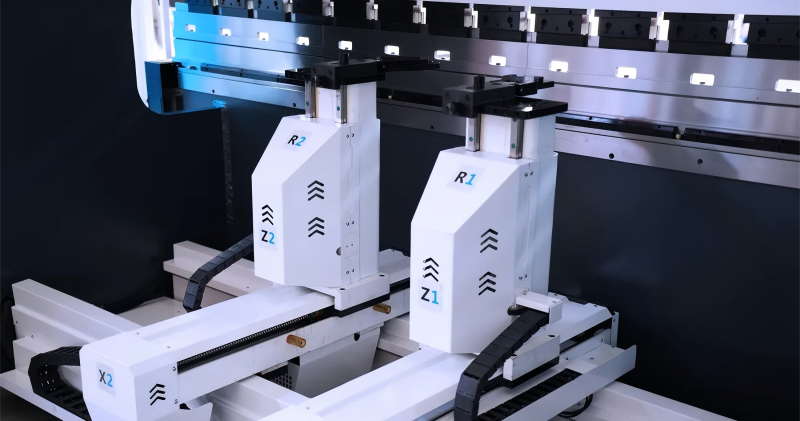
The backgauge is what positions the metal before the bend. A multi-axis backgauge (X, R, Z1, Z2, X1, X2) allows for complex, asymmetrical bends. For accurate metal bending, the backgauge must be fast, rigid, and precise. High-quality ball screws and linear guides are essential components here. An ‘R’ axis (vertical movement) is particularly important if you are doing multiple bends with different flange heights on the same part.
Crowning Systems: Compensating for Deflection
When a press brake applies pressure, the bed and the ram naturally deflect or “bow” in the center. Without compensation, this results in a “canoe effect,” where the bend angle in the middle of the part is different from the ends. A crowning system (either hydraulic or mechanical) applies a counter-curve to the bed to ensure the bend angle is consistent across the entire length. Mechanical crowning, often integrated into the table, is widely preferred for its precision and lack of dependence on oil temperature or pressure fluctuations. It provides a more stable and repeatable correction over time.
Tooling and Clamping Systems
Even the most expensive press brake is useless without high-quality tooling. The choice of punches and dies directly affects the accuracy of the bend. Hardened and precision-ground tooling lasts longer and maintains its shape under high pressure. Furthermore, the clamping system—how the tools are held in the machine—impacts setup speed. Quick-change clamping systems, such as hydraulic or pneumatic clamps, allow operators to swap tools in seconds rather than minutes, which is vital for maintaining high productivity in a busy shop.
Consider the “American Style” vs. “European Style” (Promecam) tooling. European style is widely popular for its versatility and precision, featuring a standardized tang that fits into a wide variety of holders. HARSLE machines are compatible with a wide range of tooling standards, giving you the flexibility to use existing tools or invest in specialized sets for unique profiles like hemming or large-radius bends. Investing in a “New Standard” style clamping system can also provide vertical tool loading, which is safer and faster for the operator.
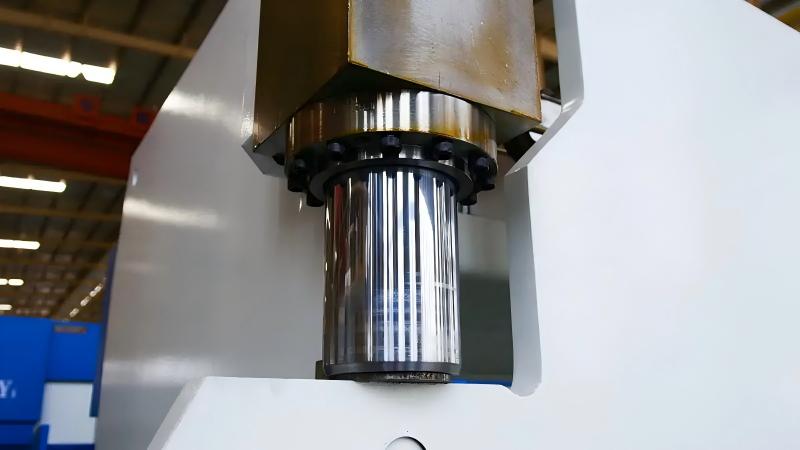
Hydraulic System Integrity and Ram Synchronization
For hydraulic and hybrid machines, the quality of the hydraulic components is paramount. High-pressure pumps, valves, and cylinders must be manufactured to exacting standards to prevent leaks and ensure smooth ram movement. Modern CNC press brakes use Y1 and Y2 axes—independent hydraulic cylinders on each side of the ram. These are synchronized via linear encoders that provide real-time feedback to the CNC controller. This ensures the ram stays perfectly level, even if the workpiece is positioned off-center.
Supplier Evaluation: Why HARSLE?
Choosing a supplier is just as important as choosing the machine itself. You need a partner who provides more than just hardware. When evaluating a supplier, look at their track record, their manufacturing facility, and their commitment to innovation. HARSLE has built a global reputation by focusing on the intersection of advanced technology and user-friendly design. A supplier should be able to demonstrate their quality control process and provide references from similar industries.
Key factors to evaluate include:
1. **Technical Support:** Does the supplier offer remote diagnostics via the internet? This can solve 90% of software issues without a site visit.
2. **Spare Parts Availability:** Can they ship critical components like valves or encoders quickly? A machine down for two weeks is a massive financial drain.
3. **Customization:** Can they modify the machine (e.g., increased stroke length or special backgauge fingers) to fit your specific workflow?
4. **Documentation and Training:** Are the manuals clear? Does the supplier provide video tutorials or on-site training for your staff?
Cost and ROI: The Long-Term View
The cheapest machine is rarely the most cost-effective in the long run. When calculating ROI for your Press Brake Buying project, consider the following factors beyond the initial purchase price:
- **Labor Savings:** A CNC machine that reduces setup time from 20 minutes to 2 minutes through offline programming and quick-clamping will pay for itself through increased throughput.
- **Scrap Reduction:** If a high-precision machine reduces scrap by even 5%, the material savings (especially with expensive alloys) over a year can be substantial.
- **Energy Efficiency:** Electric and hybrid models can save thousands of dollars in electricity bills over their lifespan, often paying back their price premium in 3-5 years.
- **Resale Value:** Well-known brands like HARSLE maintain their value better on the secondary market than generic, unbranded machines, providing an exit strategy if you need to upgrade later.
A comprehensive ROI analysis should look at a 5-to-10-year horizon. Investing in a 4-axis or 6-axis machine today might seem like an overkill, but it provides the flexibility to take on more complex and higher-paying jobs in the future, preventing you from outgrowing the machine too quickly.
Safety Standards and Compliance
Safety should never be an afterthought in metal fabrication. Modern press brakes must be equipped with advanced safety systems to protect the operator without hindering productivity. Laser protection systems (like DSP, Fiessler, or LazerSafe) monitor the area around the punch tip. These systems allow the ram to move at high speed and only slow down to a “pressing speed” just before contact, stopping the ram instantly if an obstruction (like a finger) is detected. This allows the operator to work closely with the machine safely. Additionally, light curtains and interlocked side guards are standard requirements. Ensure the machine you choose complies with CE, OSHA, or your local safety standards to avoid legal liabilities and ensure worker well-being.
Maintenance Checklist for Longevity
To keep your press brake performing at its peak and ensure accurate metal bending for years, a regular maintenance schedule is required. Neglect is the primary cause of precision loss. Follow this expanded checklist:
- **Daily:** Check oil levels, clean the backgauge rails of dust and scale, and inspect tools for chips or cracks. Wipe down the linear encoders to ensure accurate reading.
- **Weekly:** Lubricate linear guides and ball screws. Check for any loose bolts or hydraulic fittings that may have vibrated loose. Inspect the cooling fans on the electrical cabinet.
- **Monthly:** Inspect electrical connections for tightness. Clean air filters on the control cabinet. Check the parallelism of the ram and bed using a dial indicator.
- **Annually:** Change the hydraulic oil and replace all filters. Perform a full calibration of the ram (Y1/Y2) and backgauge axes. Inspect the hydraulic hoses for any signs of wear or bulging.
Frequently Asked Questions (FAQ)
What is the difference between air bending and bottoming?
Air bending is the most common method where the material only touches the tip of the punch and the two edges of the V-die. The angle is determined by how deep the punch descends into the die. It is versatile and requires less tonnage. Bottoming involves pressing the material all the way into the die so it takes the shape of the tool. This requires much higher tonnage (3-5 times more) but offers higher precision for specific angles and reduces springback issues.
How do I know if I need a CNC crowning system?
If you frequently bend parts longer than 2 meters (approx. 6-7 feet), a crowning system is almost essential to maintain angle consistency across the length. Without it, you will spend hours “shimming” the die with paper or metal strips to get a straight bend. For shorter parts, it may be less critical, but it still adds a layer of precision that manual adjustments cannot match.
Can I bend stainless steel on a standard press brake?
Yes, but you must account for the fact that stainless steel is much harder and has more springback than mild steel. You will typically need about 50% more tonnage for the same thickness. Furthermore, you should use hardened tooling to prevent premature wear and consider using protective tape on the material to prevent marking the aesthetic surface of the stainless steel.
What CNC controller is best for beginners?
Controllers like the Delem DA-53T or DA-58T are highly recommended for their touch-screen interfaces and intuitive “Wizard” modes. They allow the operator to draw the part on the screen, and the software automatically determines the best bend sequence, making the learning curve much shorter for new staff.
How does material grain direction affect bending?
Bending with the grain (parallel to the rolling direction of the sheet) is easier but more prone to cracking. Bending against the grain (perpendicular) requires more force but results in a stronger bend with less risk of cracking. A good CNC controller can help account for these variations if the operator inputs the grain orientation.
Conclusion: Making Your Final Choice
Choosing the right press brake is a balancing act between current needs, budget constraints, and future growth. By focusing on accurate metal bending, evaluating the right tonnage, and selecting a drive system that fits your production volume, you set your business up for long-term success. Remember that the machine is only one part of the equation; the quality of the tooling, the sophistication of the software, and the ongoing support from a manufacturer like HARSLE are what truly drive shop-floor productivity.
Are you ready to upgrade your fabrication capabilities and eliminate the headaches of inaccurate bends? Contact HARSLE today to speak with our technical experts. We can help you run tonnage calculations for your specific materials, select the right CNC configuration, and provide a detailed quote for a machine that will transform your shop’s efficiency and precision.
Contact HARSLE for Expert Advice
Don’t leave your production quality to chance. Whether you need a simple hydraulic brake for heavy plate or a state-of-the-art hybrid system for high-speed precision work, HARSLE has the expertise and the technology to guide you. Visit our website or call our sales team today to find the perfect solution for your metal bending challenges and take the first step toward a more profitable future.