
CNC Hydraulic Press vs Traditional Hydraulic Press: Which Improves Accuracy?


Comparison Summary: The Evolution of Precision in Metal Fabrication
In the modern industrial landscape, the debate between the CNC Hydraulic Press Vs Traditional Hydraulic Press: Which Improves Accuracy? is central to optimizing production lines. For decades, the traditional hydraulic press was the workhorse of the metalworking industry, relying on robust mechanical designs and manual adjustments. However, as industries like aerospace, automotive, and electronics demand tighter tolerances and higher repeatability, the CNC (Computer Numerical Control) hydraulic press has emerged as a transformative solution. While both machines utilize pressurized fluid to generate force, the method of controlling that force differs significantly, leading to a wide gap in precision and operational efficiency.
The fundamental difference lies in the control loop. A traditional hydraulic press typically operates on an open-loop system where the operator sets physical stops or manual valves to determine the stroke length and pressure. In contrast, a CNC hydraulic press utilizes a closed-loop system integrated with high-resolution encoders and pressure sensors. This allows the machine to make real-time micro-adjustments during the pressing cycle. When we ask which improves accuracy, the answer is overwhelmingly the CNC model, but understanding the ‘why’ requires a deep dive into the mechanics of both systems and how they handle variables like material thickness fluctuations and thermal expansion.
HARSLE, a leader in metal fabrication machinery, has observed that the transition to CNC technology is not just about accuracy; it is about the democratization of skill. Traditional presses require highly experienced operators who ‘feel’ the machine, whereas CNC systems use programmed logic to ensure that the first part is identical to the thousandth part. This article will provide a comprehensive breakdown of these two technologies, helping manufacturers decide which investment aligns with their specific accuracy requirements and production goals.
Traditional Hydraulic Press Overview: The Reliable Workhorse
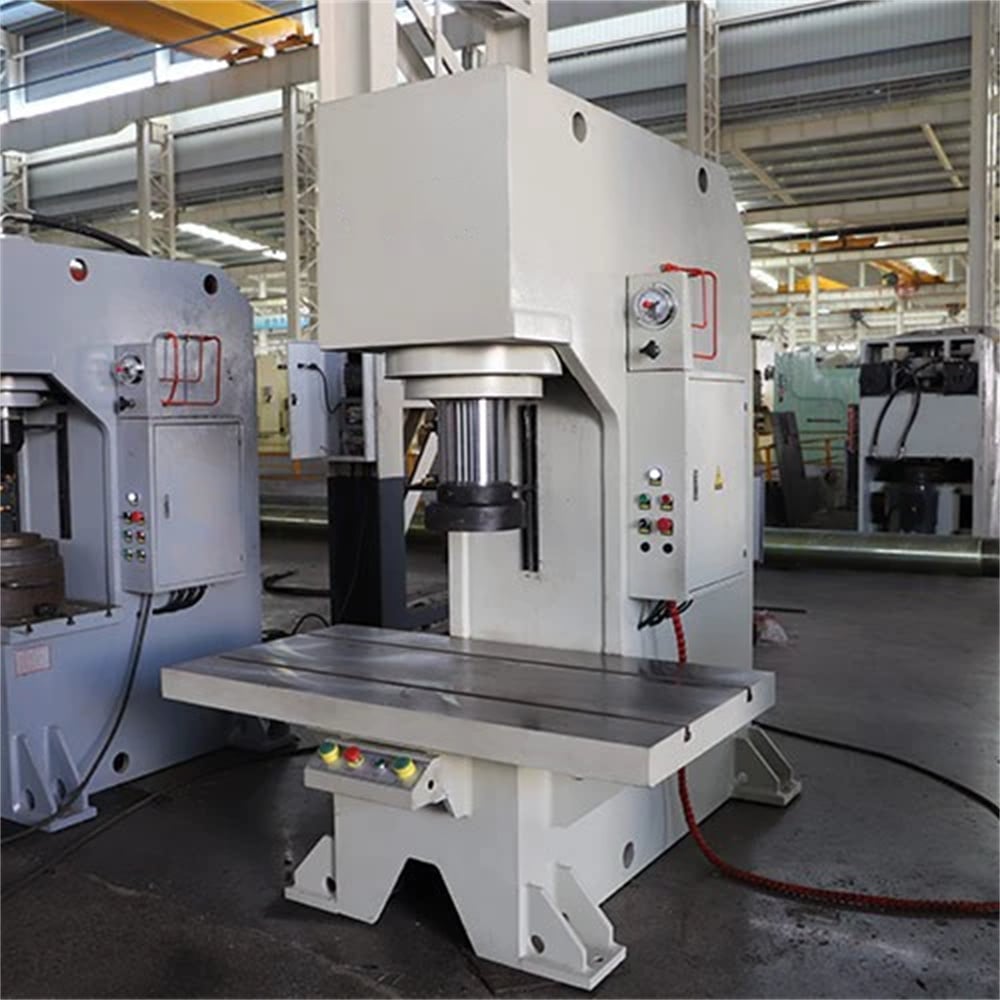
The traditional hydraulic press is characterized by its simplicity and raw power. These machines consist of a large frame, a hydraulic cylinder, a pump, and manual control valves. The accuracy of a traditional press is largely dependent on the mechanical setup. Operators use physical limit switches or mechanical dead stops to define the bottom of the stroke. While this is effective for heavy-duty forging, deep drawing, or simple stamping where tolerances are generous (e.g., +/- 0.5mm to 1.0mm), it struggles with precision-sensitive tasks.
One of the primary challenges with traditional presses is the lack of feedback. Once the cycle begins, the machine follows the path of least resistance. If the material being processed varies slightly in thickness or hardness, the press may not compensate, leading to inconsistent results. Furthermore, as the hydraulic oil heats up during a long shift, its viscosity changes, which can affect the speed and pressure of the ram. Without a computer to monitor these changes, the operator must manually recalibrate the machine throughout the day to maintain even a basic level of consistency.
Despite these limitations, traditional hydraulic presses remain popular in environments where high precision is secondary to cost-effectiveness and durability. They are easier to repair because they lack complex electronic components, making them ideal for remote locations or shops with limited technical support for electronics. However, in the context of the CNC Hydraulic Press Vs Traditional Hydraulic Press: Which Improves Accuracy? debate, the traditional press is clearly outmatched by digital alternatives.
CNC Hydraulic Press Overview: The Precision Powerhouse
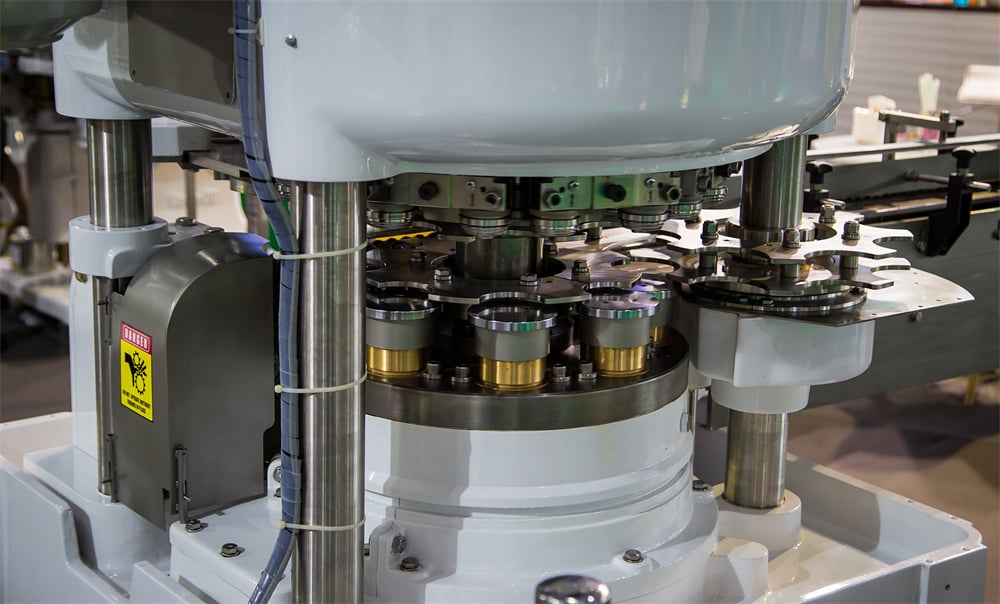
The CNC hydraulic press represents the pinnacle of modern metal forming technology. By integrating a Computer Numerical Control system, these machines transform the hydraulic press from a blunt instrument into a precision tool. The core of a CNC press is its ability to monitor every millisecond of the stroke. Using linear scales (encoders) mounted on the frame, the CNC controller knows the exact position of the ram within microns. This allows for precise control over the ‘Top Dead Center’ (TDC) and ‘Bottom Dead Center’ (BDC), ensuring that the ram stops exactly where it is programmed to, regardless of load variations.
Beyond position, CNC systems manage pressure with incredible granularity. Proportional valves and servo-driven pumps allow the machine to ramp up pressure gradually or hold a specific tonnage with minimal fluctuation. This is critical for delicate operations like powder compaction or complex bending where over-pressing can ruin the workpiece. HARSLE’s CNC models often feature multi-axis control, allowing for the synchronization of multiple cylinders to ensure the ram remains perfectly parallel to the bed, even with off-center loading—a feat nearly impossible for traditional presses.
Another significant advantage is the ability to store ‘recipes’ or programs. For a manufacturer producing 50 different parts, a CNC press allows for near-instant changeovers. The operator simply selects the correct program, and the machine automatically adjusts its stroke, pressure, and speed settings. This eliminates the ‘trial and error’ phase common with traditional presses, where several pieces of scrap are often produced while dialing in the manual settings. In the quest for accuracy, the CNC hydraulic press provides a level of control that is mathematically superior to manual systems.
Specification Comparison Table
To better understand the technical differences, the following table compares the typical performance metrics of a standard traditional press versus a high-end CNC hydraulic press from HARSLE.
| Feature | Traditional Hydraulic Press | CNC Hydraulic Press |
|---|---|---|
| Positioning Accuracy | +/- 0.5mm to 1.0mm | +/- 0.01mm to 0.05mm |
| Repeatability | Low (Depends on operator/oil temp) | High (Closed-loop feedback) |
| Pressure Control | Manual Valve / Gauge | Digital Proportional Control |
| Setup Time | 30 – 60 Minutes (Manual) | < 5 Minutes (Program Load) |
| Data Logging | None | Full Cycle Data Tracking |
| Energy Efficiency | Standard (Constant Pump Speed) | High (Servo-driven / On-demand) |
| Parallelism Control | Mechanical Guide Rails Only | Active Hydraulic Synchronization |
Best-fit Applications: Choosing Based on Production Needs
When deciding between a CNC Hydraulic Press Vs Traditional Hydraulic Press, the application is the deciding factor. Traditional hydraulic presses are best suited for heavy-duty, low-precision work. This includes scrap metal baling, basic forging, simple hole punching, and large-scale assembly where the tolerances are wide. If your shop focuses on structural steel components or heavy agricultural equipment where a millimeter of deviation is acceptable, the lower capital investment of a traditional press makes sense.
Conversely, CNC hydraulic presses are essential for high-tech industries. In the automotive sector, where lightweight high-strength steels are used, the press must precisely control the speed and pressure to prevent material cracking. In the electronics industry, CNC presses are used for precision stamping of connectors and shielding where tolerances are measured in microns. Furthermore, any application involving ‘Smart Manufacturing’ or Industry 4.0 requires the data output capabilities of a CNC system to monitor quality in real-time.
Medical device manufacturing is another area where CNC presses shine. The ability to document the exact pressure and displacement for every single part produced is a regulatory requirement in many cases. A traditional press cannot provide this level of traceability. Therefore, if your business model relies on high-volume, high-precision, or highly regulated parts, the CNC hydraulic press is the only viable option to remain competitive and compliant.
Cost and Maintenance Comparison
The initial purchase price of a CNC hydraulic press is significantly higher than that of a traditional press, often by 40% to 100% depending on the complexity of the control system. However, the ‘Total Cost of Ownership’ (TCO) often tells a different story. A CNC press reduces scrap rates, shortens setup times, and often consumes less energy due to servo-motor integration. For a high-volume shop, the ROI (Return on Investment) for a CNC machine can often be realized within 18 to 24 months through labor savings and material efficiency.
Maintenance requirements also differ. Traditional presses require ‘grease and oil’ maintenance—checking seals, changing hydraulic fluid, and ensuring mechanical guides are lubricated. They are rugged and can survive in dusty, harsh environments with minimal care. CNC presses, while still requiring hydraulic maintenance, also need a clean environment for their electronic controllers and sensors. Maintenance personnel may need specialized training to troubleshoot PLC (Programmable Logic Controller) issues or calibrate linear encoders. However, modern CNC systems like those from HARSLE include self-diagnostic tools that can alert operators to a failing component before it causes a breakdown, potentially reducing unplanned downtime.
Recommendation: Which One Should You Buy?
The decision ultimately hinges on your specific production requirements. If you are a small job shop performing general repair work or basic metal forming where speed and extreme precision are not critical, a traditional hydraulic press offers a cost-effective, durable solution that will last for decades with basic maintenance. It is a ‘buy it once’ type of machine for low-complexity tasks.
However, if you are looking to scale your business, reduce waste, and take on high-precision contracts, the CNC Hydraulic Press is the clear winner. The accuracy improvements provided by CNC technology allow for more complex part geometries and tighter tolerances that are simply impossible to achieve manually. In the modern market, the ability to guarantee part consistency is a major selling point for Tier 1 and Tier 2 suppliers. HARSLE recommends that any facility looking to modernize its workflow should prioritize CNC technology to future-proof their operations against rising labor costs and increasing quality standards.
Frequently Asked Questions (FAQ)
1. Can a traditional hydraulic press be upgraded to CNC?
Yes, it is possible to retrofit a traditional press with a CNC controller, linear encoders, and proportional valves. However, this is often expensive and may not be as efficient as a purpose-built CNC machine. The frame of the traditional press must also be rigid enough to handle the increased precision.
2. Does a CNC hydraulic press require a specialized operator?
While the initial programming requires some training, the day-to-day operation of a CNC press is often easier than a traditional one. The machine handles the complex adjustments, meaning a less experienced operator can produce high-quality parts once the program is set.
3. How does heat affect the accuracy of these machines?
In traditional presses, heat thins the hydraulic oil, leading to ‘drift’ in accuracy. CNC presses use temperature sensors and feedback loops to automatically compensate for changes in oil viscosity, maintaining consistent accuracy throughout the workday.
4. Is the CNC system worth it for low-volume production?
Yes, because of the reduced setup time. If you change tools frequently, the ability to load a program and have the machine ready in minutes—rather than an hour of manual adjustment—saves significant labor costs even on small batches.
5. What is the typical lifespan of a CNC controller?
Industrial CNC controllers are designed for harsh environments and typically last 10-15 years. While the electronics may need an upgrade before the heavy steel frame of the press wears out, the productivity gains during that period far outweigh the cost of the electronics.


