
Hydraulic Press with PLC Control vs Conventional Hydraulic Press: What Are the Benefits?


Introduction to Modern Hydraulic Press Technology
In the rapidly evolving landscape of metal fabrication, the choice of machinery can dictate the trajectory of a business’s productivity and profitability. Among the most critical decisions for workshop managers and industrial engineers is the selection between a Hydraulic Press with PLC Control vs Conventional Hydraulic Press: What Are the Benefits? This debate is not merely about old versus new; it is about understanding the technical nuances, operational efficiencies, and long-term financial implications of each system. As HARSLE continues to lead in the manufacturing of high-quality industrial equipment, providing clarity on these two distinct technologies is essential for informed decision-making.
Hydraulic presses have been the backbone of the forging, stamping, and molding industries for over a century. Traditionally, these machines relied on manual valves and simple electrical relay logic to manage the movement of the ram and the application of force. However, the advent of the Programmable Logic Controller (PLC) has revolutionized the industry. By integrating digital intelligence into the hydraulic circuit, manufacturers can now achieve levels of precision and repeatability that were previously impossible. This article provides an exhaustive comparison to help you determine which machine fits your specific production requirements.
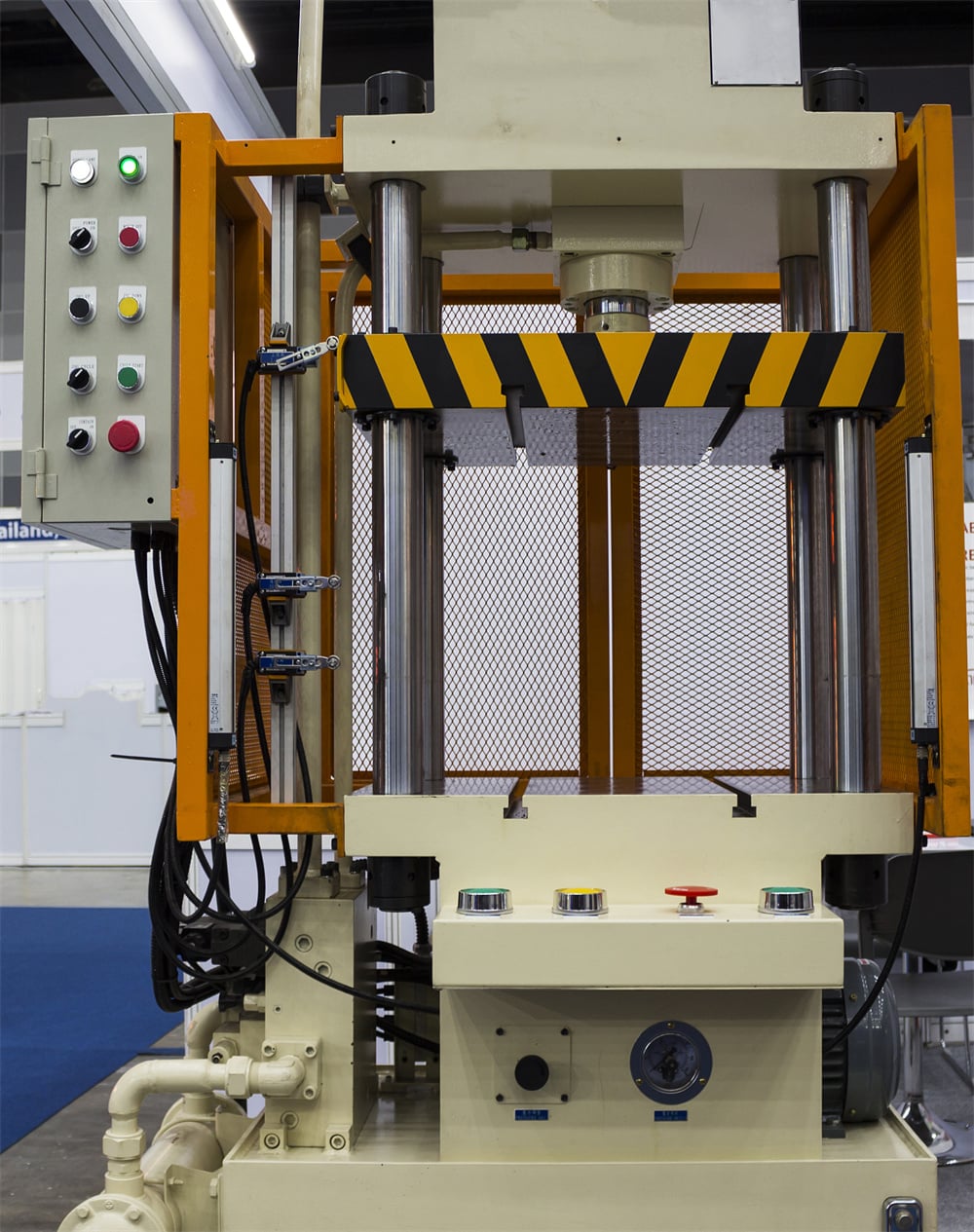
Comparison Summary: PLC vs. Conventional Systems
When evaluating Hydraulic Press Plc Control Vs Conventional Hydraulic Press: Are Benefits?, the summary boils down to a trade-off between simplicity and sophistication. A conventional hydraulic press is characterized by its straightforward design. It uses physical limit switches to determine the stroke length and manual or solenoid-operated valves to control fluid flow. It is the ‘workhorse’ of the industry—reliable, easy to understand, and cost-effective for basic tasks. However, it lacks the flexibility to handle complex, multi-stage forming processes without significant manual intervention.
In contrast, a PLC-controlled hydraulic press acts as a ‘smart’ machine. The PLC serves as the brain of the operation, receiving data from high-precision sensors (such as linear encoders and pressure transducers) and making real-time adjustments to the hydraulic output. This allows for variable speed control, precise pressure dwelling, and the storage of multiple ‘recipes’ for different parts. While the initial investment is higher, the benefits in terms of reduced scrap rates, faster cycle times, and enhanced safety are substantial. For modern facilities aiming for Industry 4.0 standards, the PLC-controlled system is the clear frontrunner.
Machine A Overview: Hydraulic Press with PLC Control
The PLC-controlled hydraulic press represents the pinnacle of modern metal forming. At its core, the system utilizes a Programmable Logic Controller—a ruggedized industrial computer—to manage all machine functions. This integration allows for a Human-Machine Interface (HMI), typically a touch screen, where operators can input specific parameters such as approach speed, pressing speed, return speed, and exact tonnage. The ability to control these variables with millimetric precision is the primary driver behind the adoption of this technology.
One of the standout features of PLC systems is the implementation of proportional valve technology. Unlike standard valves that are either ‘on’ or ‘off,’ proportional valves can open to varying degrees based on signals from the PLC. This allows for smooth acceleration and deceleration of the ram, which prevents hydraulic shock and extends the lifespan of the machine’s seals and structural components. Furthermore, the PLC can monitor the health of the machine in real-time, providing diagnostic codes on the HMI if a sensor fails or if the oil temperature exceeds safe limits.
Data management is another significant advantage. In a PLC-controlled environment, every stroke can be logged. This data is invaluable for quality control, especially in industries like aerospace and medical device manufacturing, where traceability is mandatory. Operators can save ‘recipes’ for specific dies, meaning that when a job changes, the machine can be reconfigured in seconds rather than minutes or hours. This drastically reduces downtime and eliminates the ‘trial and error’ phase often associated with manual setups.
Machine B Overview: Conventional Hydraulic Press
The conventional hydraulic press remains a staple in many workshops due to its rugged simplicity. These machines operate on relay logic—a system of electrical switches, timers, and counters that follow a fixed sequence. The control interface usually consists of physical buttons, knobs, and levers. To adjust the stroke of the ram, an operator must physically move limit switches or adjust mechanical stops. While this may seem antiquated, it offers a level of transparency that many veteran technicians appreciate.
The primary appeal of the conventional press is its ease of maintenance. Because there is no complex software or sensitive microelectronics, a standard industrial electrician can usually troubleshoot and repair the machine using basic tools. There are no software licenses to renew, and no risk of ‘bricking’ the controller during a power surge. For simple applications like basic hole punching, straightening, or assembly (pressing bearings), the high-tech features of a PLC might be considered overkill.
However, the conventional press has inherent limitations in precision. Because it relies on physical switches, there is always a slight margin of error in the ram’s stopping position due to hydraulic lag or temperature changes in the oil. Additionally, conventional presses are generally less energy-efficient. They often run the hydraulic pump at full capacity regardless of the actual force required, whereas modern PLC systems can be paired with frequency inverters (VFDs) or servo motors to scale energy consumption based on demand.
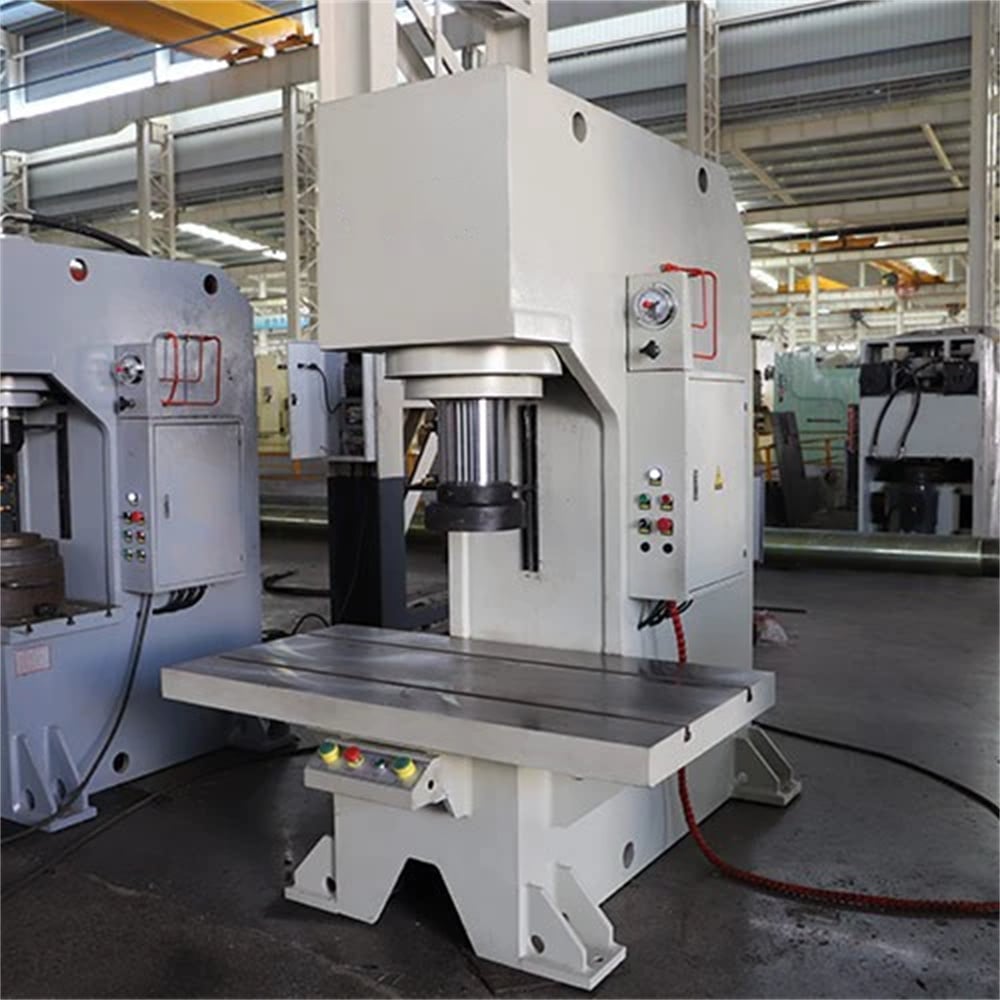
Specification Comparison Table
| Feature | PLC Controlled Hydraulic Press | Conventional Hydraulic Press |
|---|---|---|
| Control Interface | Digital HMI / Touch Screen | Physical Buttons / Levers |
| Precision | High (±0.01mm) | Moderate (±0.1mm to 0.5mm) |
| Recipe Storage | Yes (Hundreds of programs) | No (Manual setup every time) |
| Speed Control | Variable / Programmable | Fixed / Manually Adjusted |
| Diagnostics | Real-time on-screen alerts | Manual troubleshooting required |
| Safety Integration | Advanced (Light curtains, dual-check) | Basic (E-stops, physical guards) |
| Energy Efficiency | High (Servo/VFD compatible) | Standard |
| Initial Cost | Higher | Lower |
Best-fit Applications: Choosing the Right Tool
High-Precision and Complex Manufacturing
For industries such as automotive manufacturing, where parts must meet exacting tolerances across thousands of cycles, the PLC-controlled press is indispensable. Applications like deep drawing, where the speed and pressure must change at different points during the stroke to prevent metal tearing, are nearly impossible to perform consistently on a conventional press. The PLC allows for ‘multi-stage’ pressing profiles that ensure the material flows correctly into the die.
General Workshop and Maintenance
On the other hand, a conventional hydraulic press is often the better choice for maintenance and repair shops. If the machine’s primary purpose is to press bushings, straighten bent shafts, or perform occasional low-volume stamping, the simplicity of a conventional system is a benefit. In these environments, the time saved by PLC recipe storage is negligible, and the lower upfront cost allows the business to allocate capital elsewhere.
Research and Development (R&D)
In R&D labs, the PLC-controlled press is preferred because of its data-gathering capabilities. Engineers can experiment with different pressure levels and dwell times, recording the results of each test to find the optimal parameters for a new product. The ability to fine-tune the machine’s behavior via software makes it a versatile tool for innovation.
Cost and Maintenance Comparison
When discussing Hydraulic Press Plc Control Vs Conventional Hydraulic Press: Are Benefits?, the financial aspect is often the deciding factor. A PLC-controlled machine typically costs 20% to 40% more than a conventional equivalent of the same tonnage. This premium covers the cost of the PLC, the HMI, the high-precision sensors, and the more sophisticated hydraulic valves. However, the Return on Investment (ROI) is often realized within 12 to 18 months through reduced labor costs, lower scrap rates, and increased throughput.
Maintenance profiles also differ significantly. A conventional press requires regular physical inspections of relays and contactors, which can wear out over time. Hydraulic leaks are the primary concern. A PLC-controlled press requires a cleaner environment; dust and heat can affect the electronic components. However, the PLC’s ability to self-diagnose means that when a problem does occur, the ‘mean time to repair’ (MTTR) is often lower because the machine tells the operator exactly which sensor or valve is malfunctioning.
It is also important to consider the ‘hidden’ costs of conventional machines. The lack of precision can lead to ‘tooling wear.’ If a ram does not descend perfectly level or hits a hard stop with too much force, it can damage expensive dies. The PLC’s ability to control ‘soft start’ and ‘soft stop’ sequences significantly extends the life of the tooling, which can save thousands of dollars annually in a high-volume production environment.
Recommendation: Which One Should You Buy?
The recommendation depends entirely on your production volume and the complexity of your parts. If your facility operates 24/7 and requires high repeatability, the Hydraulic Press with PLC Control is the only logical choice. The efficiency gains and the ability to integrate the machine into a wider factory network (IIoT) provide a competitive advantage that far outweighs the initial cost. HARSLE recommends PLC systems for any client involved in automotive, aerospace, or high-end consumer goods manufacturing.
However, if you are a small job shop or a vocational school where the machine will be used intermittently for various simple tasks, a Conventional Hydraulic Press remains a viable and robust option. It provides the raw power needed for heavy-duty work without the complexity of digital programming. Before purchasing, evaluate your operator’s skill level; a PLC system requires an operator who is comfortable with digital interfaces, whereas a conventional press is more intuitive for those with a traditional mechanical background.
Frequently Asked Questions (FAQ)
1. Can a conventional hydraulic press be upgraded to PLC control?
Yes, it is possible to retrofit a conventional press with a PLC system. This involves installing a PLC, an HMI, and replacing manual valves with solenoid or proportional valves. While this can breathe new life into an old machine, the cost of labor and components often makes it more practical to purchase a new PLC-controlled unit from a manufacturer like HARSLE.
2. Is a PLC-controlled press harder to operate?
Actually, for most modern workers, the PLC is easier to operate. The touch screen interface is intuitive, and the ability to load pre-saved settings means the operator doesn’t need to be an expert in hydraulic physics to get the job done correctly. It reduces the ‘human error’ factor significantly.
3. How does PLC control improve safety?
PLC systems allow for much more sophisticated safety integrations. For example, the PLC can ensure that the press will not operate unless the light curtains are clear, the dual-hand start buttons are pressed simultaneously, and the hydraulic pressure is within a safe range. It can also perform ‘safety self-checks’ before every cycle.
4. Does a PLC press use less electricity?
By itself, a PLC doesn’t save much power, but it enables the use of energy-saving technologies like Servo-Hydraulic systems. In these setups, the motor only spins when the ram is moving, potentially saving up to 50-70% in energy costs compared to a conventional press where the motor runs constantly.
5. What happens if the PLC software crashes?
Industrial PLCs are designed for extreme reliability and rarely ‘crash’ like a home computer. However, it is essential to keep backups of the machine’s program. HARSLE provides comprehensive support and software backups to ensure that even in the event of a hardware failure, your machine can be restored to operation quickly.












