
Press Brake vs Roll Bending Machine: Best Choice for Metal Fabrication


Introduction: Navigating the Choice Between Press Brakes and Roll Bending Machines
In the competitive landscape of modern manufacturing, selecting the right equipment is the cornerstone of operational efficiency and product quality. For metal fabricators, the debate often centers on Press Brake Vs Roll Bending Machine: Best Choice Metal Fabrication. Both machines are indispensable in the workshop, yet they serve fundamentally different purposes and utilize distinct mechanical principles to shape metal. Understanding these nuances is not just about technical knowledge; it is about optimizing your production line for maximum ROI.
A press brake is primarily designed for creating precise, sharp angles and complex multi-bend sequences in sheet metal. It uses a punch and die system to force the material into a specific shape. Conversely, a roll bending machine (or plate roller) is engineered to produce continuous curves, cylinders, and large-radius arcs by passing the metal through a series of adjustable rollers. While there is some overlap in their capabilities, using the wrong machine for a specific job can lead to wasted material, increased labor costs, and inferior finished products.
HARSLE, a leader in metal fabrication machinery, understands that every fabrication shop has unique requirements. Whether you are producing intricate brackets for the electronics industry or massive pressure vessels for the oil and gas sector, the choice between a press brake and a roll bending machine will define your throughput. This guide provides a comprehensive deep dive into both technologies, comparing their specifications, applications, and long-term maintenance needs to help you make an informed investment decision.
Overview of the Press Brake: Precision and Versatility
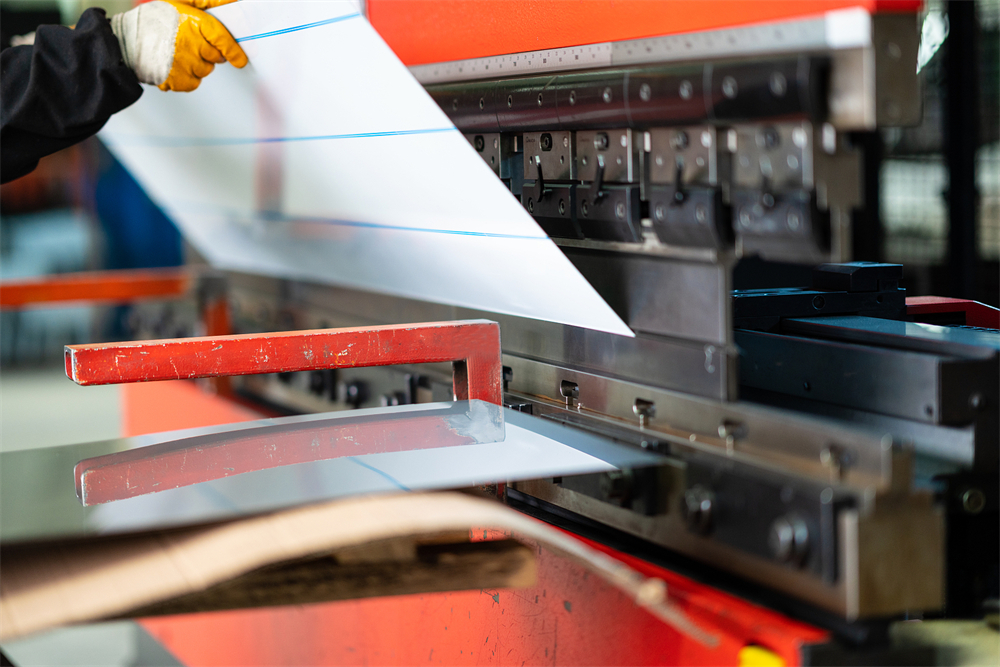
The press brake is the workhorse of the precision sheet metal industry. Its primary function is to perform linear bends. Modern CNC press brakes, such as those offered by HARSLE, utilize advanced hydraulic or electric systems to drive a ram downward, pressing the workpiece into a V-shaped or U-shaped die. The versatility of the press brake lies in its tooling; by simply changing the punch and die, an operator can switch from creating a simple 90-degree bend to complex hemming or offset bending in minutes.
One of the defining features of a press brake is its accuracy. High-end models feature multi-axis backgauges (X, R, Z1, Z2, and even 6-axis systems) that position the metal with sub-millimeter precision. This makes the press brake the Best Choice Metal Fabrication tool for parts that require tight tolerances and repeatable results. Furthermore, the integration of CNC controllers like Delem or Cybelec allows for 3D visualization and automatic bend sequence calculation, significantly reducing the skill gap required for complex operations.

Press brakes are also categorized by their drive mechanism. Hydraulic press brakes are known for their high tonnage and ability to handle thick plates, while electric press brakes offer higher speeds, lower energy consumption, and extreme precision for thinner materials. For a fabrication shop, the press brake offers the flexibility to handle a wide variety of small to medium-sized parts, making it an essential component of any general-purpose metalworking facility.
Overview of the Roll Bending Machine: Mastering Curves
While the press brake excels at angles, the roll bending machine is the master of the curve. Also known as a plate rolling machine, this equipment uses three or four rollers to apply pressure to the metal, gradually deforming it into a circular or conical shape. The process is continuous, meaning the metal moves through the rollers as they rotate, ensuring a smooth, uniform radius without the “kinked” appearance that can sometimes occur when trying to form large radii on a press brake.
Roll bending machines are categorized by the number of rollers they possess. Three-roll initial pinch machines are common for lighter gauges, while four-roll machines are the industry standard for heavy-duty applications and automation. The four-roll design allows for “pre-bending” of both ends of the plate without removing it from the machine, which minimizes the flat edges often left at the start and end of a roll. This capability is crucial for producing high-quality cylinders that require seamless welding.
In the context of Press Brake Vs Roll Bending Machine: Best Choice Metal Fabrication, the roll bending machine is the undisputed winner for large-scale cylindrical work. It is used extensively in the production of tanks, pipes, silos, and structural steel components. Unlike the press brake, which is limited by the length of its bed and the depth of its throat, roll bending machines can often process very long plates, provided there is enough space in the facility to support the material as it exits the rollers.
Technical Specification Comparison Table
To better understand the trade-offs between these two machines, let’s look at a direct comparison of their technical capabilities and operational parameters.
| Feature | Press Brake | Roll Bending Machine |
|---|---|---|
| Primary Motion | Linear (Vertical Ram) | Rotary (Adjustable Rollers) |
| Shape Capability | Angles, Channels, Boxes, Hems | Cylinders, Cones, Large Arcs |
| Precision | Extremely High (CNC Controlled) | Moderate to High (Radius Dependent) |
| Material Thickness | 0.5mm to 50mm+ (Tonnage Dependent) | 1mm to 150mm+ (Heavy Duty Models) |
| Setup Time | Fast (Tooling Changes) | Moderate (Roller Adjustment) |
| Automation Potential | High (Robotic Tending) | High (Automatic Feed Systems) |
| Surface Finish | Risk of Tooling Marks | Smooth, Continuous Contact |
Best-fit Applications: Choosing Based on Project Geometry
The decision of Press Brake Vs Roll Bending Machine: Best Choice Metal Fabrication often comes down to the geometry of the final product. If your project involves creating a box, a bracket, or a chassis for an electronic device, the press brake is the only logical choice. Its ability to perform multiple bends on a single piece of metal with high repeatability is unmatched. For example, in the automotive industry, press brakes are used to form structural pillars and reinforcement plates where precise angles are vital for assembly.
On the other hand, if you are tasked with building a 50,000-gallon storage tank or a section of a wind turbine tower, a press brake would be entirely inefficient. While a press brake can technically create a large radius through a process called “bump bending” (making many small bends close together), the resulting surface is faceted rather than smooth. A roll bending machine produces a perfectly smooth curve in a fraction of the time, making it the superior choice for any application involving circular or elliptical profiles.
Another consideration is the material type. Soft metals like aluminum or polished stainless steel are prone to marking. While press brakes can use specialized urethane dies or protective tapes to prevent scratches, roll bending machines naturally distribute pressure over a larger surface area, which can be gentler on the material’s finish. However, for very thick plates (over 25mm), the sheer force required often necessitates heavy-duty hydraulic versions of either machine, depending on whether the goal is a sharp bend or a curve.
Cost and Maintenance Comparison
From an investment perspective, both machines represent significant capital expenditure, but their long-term cost structures differ. A press brake’s ongoing costs are heavily tied to tooling. To remain versatile, a shop must invest in a wide array of punches and dies. These tools wear out over time and require precision grinding or replacement. Maintenance for a press brake focuses on the hydraulic system (oil changes, seal inspections) and the calibration of the backgauge and ram parallelism.
Roll bending machines have fewer “consumable” parts like dies, but the rollers themselves are a major investment. If the rollers become scarred or misaligned, the quality of the output drops immediately. Maintenance for roll bending machines involves heavy-duty lubrication of the bearings and drive gears, as these components are under immense stress during the rolling process. Because roll bending machines often handle much larger and heavier workpieces, the auxiliary costs—such as overhead cranes and material handling systems—can be higher than those for a press brake setup.
In terms of labor, a CNC press brake requires an operator who understands bend deductions and sequencing. While modern software helps, the “art” of the press brake is in the setup. Roll bending, particularly for large plates, requires an operator with a keen eye for material springback and the ability to manage the plate’s movement to prevent spiraling or misalignment. Both machines benefit from HARSLE’s intuitive interfaces, which help reduce the learning curve for new technicians.
Final Recommendation: Which One Should You Buy?
When deciding on Press Brake Vs Roll Bending Machine: Best Choice Metal Fabrication, start by auditing your current and future project list. If your work is diverse, involving various angles and small parts, a HARSLE CNC Press Brake is the most versatile first investment. It will allow you to take on a wide range of sub-contracting work and provides the precision needed for modern assembly standards.
However, if you are moving into specialized sectors like HVAC ducting, tank manufacturing, or shipbuilding, a Roll Bending Machine is non-negotiable. It provides a level of productivity for curved parts that a press brake simply cannot match. For many growing shops, the ultimate goal is to have both. Having a press brake and a roll bending machine side-by-side allows a fabricator to bid on complex projects that require both sharp structural bends and smooth curved enclosures.
Buyer’s Checklist for Metal Forming Machinery:
- Material Capacity: Ensure the machine’s tonnage or rolling capacity exceeds your thickest material by at least 20% to account for high-tensile alloys.
- Control System: Look for user-friendly CNC interfaces that support offline programming to minimize machine downtime.
- Safety Features: Ensure the press brake has laser guarding (like DSP or Fiessler) and the roll bender has emergency stop pull-cords.
- Footprint: Consider the “swing” area needed for large plates exiting a roll bender or the clearance for long parts on a press brake.
- After-Sales Support: Choose a manufacturer like HARSLE that provides comprehensive manuals, spare parts availability, and technical guidance.
Frequently Asked Questions (FAQ)
1. Can a press brake do the work of a roll bending machine?
To a limited extent, yes. Through a process called “bump bending,” a press brake can create a radius by making a series of small, incremental bends. However, this is slow, leaves visible lines on the metal, and is not suitable for high-volume production of cylinders.
2. Which machine is easier to learn for a beginner?
Modern CNC press brakes are often considered easier for beginners because the software handles most of the complex calculations. Roll bending requires more “feel” for how the material behaves as it curves, although CNC roll benders are making this process much more automated.
3. What is the most common maintenance issue for press brakes?
The most common issues are hydraulic leaks and backgauge misalignment. Regular oil filtration and checking the tightness of mechanical fasteners can prevent most of these problems. HARSLE machines are designed with accessible components to make this maintenance straightforward.
4. Is a 3-roll or 4-roll bending machine better?
A 4-roll machine is generally superior for precision and ease of use. It allows for better clamping of the plate and more accurate pre-bending of the edges. A 3-roll machine is a more cost-effective option for shops that do not require high levels of automation or high-volume output.
5. How do I calculate the tonnage needed for a press brake?
Tonnage depends on the material thickness, the length of the bend, and the V-opening of the die. Most manufacturers provide a tonnage chart. It is crucial to never exceed the machine’s rated capacity, as this can cause permanent deformation of the ram or bed.
6. Can roll bending machines handle square tubing or angle iron?
Standard plate rollers are designed for flat sheets. To bend tubes, pipes, or structural profiles, you need a specific type of machine called a Section Bending Machine or Profile Bender, which uses specialized rollers shaped to the profile of the material.












