Press Brake Safety Systems Compared: Light Curtains vs Laser Guards


Comparison Summary: Navigating the Safety Landscape of Modern Press Brakes
In the high-stakes environment of metal fabrication, safety is not merely a regulatory requirement; it is a fundamental pillar of operational efficiency and employee well-being. When discussing Press Brake Safety Systems Compared: Light Curtains Vs Laser Guards, we are looking at the two most prevalent optical safeguarding technologies used in the industry today. Both systems aim to prevent catastrophic injuries by detecting the presence of an operator’s hands or limbs near the point of operation (the pinch point between the punch and die) and halting the machine’s motion instantly.
Light curtains have been the industry standard for decades, providing a vertical or horizontal barrier of infrared light. If any beam is broken, the machine stops. Laser guards, a more modern evolution, utilize laser beams that travel just below the tip of the punch, moving dynamically with the ram. While both serve the same ultimate goal, their impact on production speed, setup time, and the types of parts that can be safely formed varies significantly. Choosing between them requires an understanding of your specific production mix, the skill level of your operators, and your long-term throughput goals.
The primary difference lies in the “safety distance” and the “muting point.” Light curtains typically require the operator to stand further back from the machine or require complex “blanking” procedures to allow the workpiece to pass through the light field without triggering a stop. Laser guards, conversely, allow the operator to hold the workpiece very close to the tooling, as the safety zone is localized to the area immediately surrounding the punch tip. This fundamental difference in geometry dictates how each system performs in a real-world shop environment.
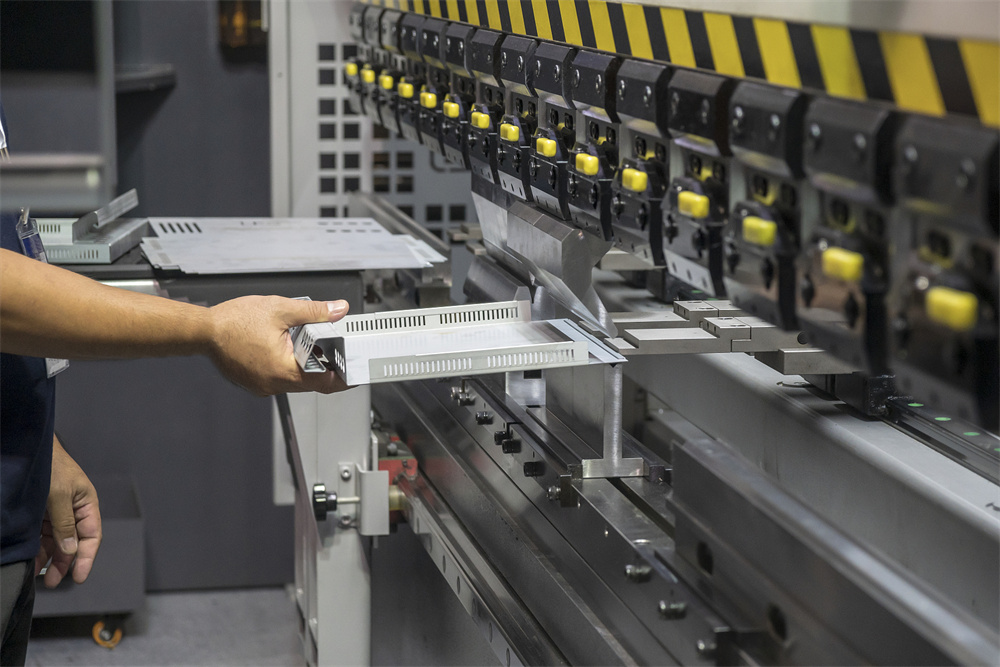
Machine A Overview: The Traditional Reliability of Light Curtains
Light curtains consist of a transmitter and a receiver mounted on either side of the press brake’s work area. The transmitter emits a series of parallel infrared light beams, creating a flat sensing field. If an object—be it a finger, a hand, or a workpiece—interrupts one or more of these beams, the safety controller sends a signal to the press brake’s emergency stop circuit, instantly arresting the downward movement of the ram. This technology is highly reliable and has been refined over many years to meet stringent international safety standards like ANSI B11.3 and CE regulations.
One of the defining characteristics of light curtains is their “fixed” nature. They are usually mounted to the side housings of the machine or on floor-standing pedestals. Because the light field is stationary, the system must account for the workpiece itself. If a large sheet of metal passes through the light curtain during the bending process, it would normally trigger a stop. To prevent this, light curtains use a feature called “muting.” Muting temporarily disables the safety function during the non-hazardous portion of the stroke (usually once the punch is within 6mm of the material). However, setting up these muting points requires precision and can add to the setup time for each new job.
Another critical aspect of light curtains is “blanking.” Floating blanking allows a certain number of beams to be obstructed without stopping the machine, which is useful when a workpiece must stay within the sensing field. Fixed blanking ignores specific beams in a set location. While these features add flexibility, they also require careful management to ensure that the “gap” created by blanking isn’t large enough for an operator’s hand to pass through undetected. This complexity often means that light curtains are best suited for long production runs where the setup doesn’t change frequently.
Despite these complexities, light curtains offer a broad zone of protection. They don’t just protect the point of operation; they can protect the entire front of the machine. For shops that handle very large, heavy plates where the operator is naturally positioned further away from the tooling, light curtains provide a robust and cost-effective safety solution. They are also generally less sensitive to the vibrations and slight misalignments that can sometimes plague laser-based systems in heavy-duty industrial environments.
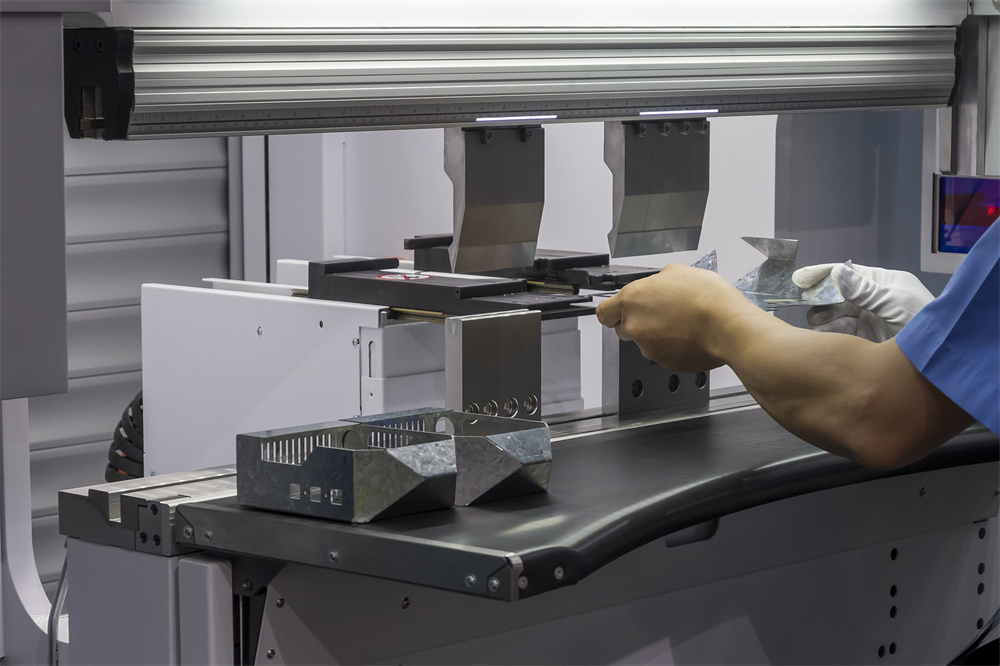
Machine B Overview: The Dynamic Precision of Laser Guards
Laser guards represent the cutting edge of Press Brake Safety Systems Compared: Light Curtains Vs Laser Guards. Unlike light curtains, which create a static wall of light, laser guards are mounted directly onto the ram of the press brake. They move up and down with the punch. The laser transmitter sends multiple beams (often in a specific pattern like a cross or a series of parallel lines) just millimeters below the tip of the punch. This creates a “safety envelope” that travels with the tool, providing protection exactly where it is needed most.
The most significant advantage of laser guards is that they allow the press brake to operate at high speeds for a larger portion of the stroke. Because the safety zone is so close to the punch, the machine can maintain its “approach speed” until the punch is very close to the material. This is a major productivity booster compared to light curtains, which often require the machine to transition to a slower “safety speed” much earlier in the stroke to ensure the ram can stop in time if the curtain is breached. Laser guards effectively minimize the “slow speed” portion of the bending cycle.
Laser guards are also superior for complex bending operations, such as forming boxes with deep flanges. In these scenarios, the side flanges of the box would constantly trip a light curtain, requiring the operator to use complex blanking or to turn the system off (which is a major safety violation). Laser guards, however, can be programmed to recognize the presence of flanges. Advanced systems like the LazerSafe or DSP systems can distinguish between the flat part of the material and a vertical flange, allowing the bend to proceed without interruption while still protecting the operator’s fingers.
However, laser guards require precise alignment. Since the transmitter and receiver are mounted on the moving ram, they are subject to the mechanical tolerances of the machine. If the ram has excessive play or if the machine is subjected to heavy impacts, the lasers can fall out of alignment, leading to nuisance stops. Modern laser guards have become much more resilient, but they still require a higher level of technical oversight during installation and daily checks compared to the relatively “set and forget” nature of light curtains.
Specification Comparison Table
To better understand the technical nuances of Press Brake Safety Systems Compared: Light Curtains Vs Laser Guards, the following table breaks down their key performance metrics.
| Feature | Light Curtains (Static) | Laser Guards (Dynamic) |
|---|---|---|
| Mounting Location | Side frames or floor pedestals | Mounted to the moving ram |
| Detection Zone | Large vertical/horizontal plane | Small zone directly under the punch |
| Operator Proximity | Must stand back (Safety Distance) | Can hold part close to tooling |
| Productivity/Speed | Moderate (requires early slow-down) | High (maintains speed longer) |
| Box/Flange Bending | Difficult (requires blanking/muting) | Excellent (intelligent detection) |
| Setup Complexity | High for varied parts | Low (once aligned) |
| Alignment Sensitivity | Low | High |
| Cost | Lower initial investment | Higher initial investment |
Best-fit Applications: Choosing the Right Tool for the Job
When deciding on Press Brake Safety Systems Compared: Light Curtains Vs Laser Guards, the “best” choice is entirely dependent on your shop’s specific workflow. For example, if your facility focuses on large-scale infrastructure components—such as long, flat plates for bridge construction or heavy-duty trailer frames—light curtains are often the superior choice. In these applications, the operator is rarely near the punch, and the simplicity of a wide-area light curtain provides ample protection without the need for the precision of a laser system.
Conversely, for precision sheet metal shops producing electronic enclosures, medical devices, or complex automotive brackets, laser guards are almost mandatory for staying competitive. These parts often involve multiple bends, small flanges, and intricate handling. A laser guard allows the operator to manipulate the part close to the die, ensuring accuracy and speed. The ability to perform “tray” or “box” mode bending without stopping to reconfigure the safety system saves hours of cumulative downtime over a week of production.
Another factor is the age and condition of the press brake. Older mechanical or early hydraulic brakes may not have the stopping time or the sophisticated CNC integration required to make the most of a laser guard. In such cases, retrofitting a light curtain is often the only viable way to bring the machine up to modern safety standards. Newer, high-speed CNC press brakes from manufacturers like HARSLE are typically designed with laser guards in mind, integrating the safety system directly into the machine’s logic for seamless operation.
Finally, consider the skill level of your workforce. Light curtains are very “visual”—operators can see the barriers and understand the limits. Laser guards are more “invisible” and integrated. While laser guards are more productive, they require operators who understand how to check alignment and how to use the different modes (Normal, Box, etc.) correctly. If your shop has high turnover or uses less experienced labor, the simplicity of a light curtain might actually lead to fewer accidental safety trips and less frustration on the shop floor.
Cost and Maintenance Comparison
The financial implications of Press Brake Safety Systems Compared: Light Curtains Vs Laser Guards extend far beyond the initial purchase price. Light curtains generally have a lower upfront cost, making them attractive for budget-conscious shops or for retrofitting older equipment. Maintenance for light curtains is minimal, usually involving nothing more than keeping the lenses clean and ensuring the mounting brackets haven’t been bumped by a forklift. Because they are stationary, they are not subjected to the constant vibration and movement of the ram.
Laser guards represent a higher initial investment, often costing 50% to 100% more than a standard light curtain setup. However, the Return on Investment (ROI) is typically realized through increased hits-per-minute. By allowing the machine to stay in high-speed approach mode for a longer duration, a laser guard can reduce cycle times by 20% or more. In a high-volume shop, this productivity gain pays for the system within the first year of operation. Furthermore, the reduction in setup time for complex parts adds to the bottom-line savings.
Maintenance for laser guards is more involved. The lenses must be kept pristine, as even a small amount of oil mist or dust can scatter the laser beam and cause a machine lockout. Furthermore, the alignment between the transmitter and receiver must be checked daily. Most modern systems include a “tool change” mode that helps the operator realign the lasers quickly after a punch change, but this still requires a level of diligence that light curtains do not. If the machine is located near a heavy stamping press or other source of significant floor vibration, the laser mounts may require specialized dampening to prevent alignment drift.
It is also worth noting the cost of compliance. In many jurisdictions, failing to have a functional, certified safety system can lead to massive fines and increased insurance premiums. While the initial cost of a laser guard is higher, its ability to provide high-level safety without tempting operators to “bypass” the system (a common issue with poorly configured light curtains) makes it a safer long-term investment for the business owner’s liability.
Recommendation: Which System Should You Choose?
After a thorough analysis of Press Brake Safety Systems Compared: Light Curtains Vs Laser Guards, our recommendation at HARSLE is based on a “Production-First” philosophy. If your shop is moving toward high-speed, high-precision fabrication with a variety of part geometries, Laser Guards are the clear winner. The productivity gains and the flexibility they offer for complex bending far outweigh the higher initial cost and the need for more careful maintenance. They are the standard for modern, competitive fabrication environments.
However, do not discount Light Curtains if your work is specialized. For shops that primarily bend large, simple plates or for those looking to add a layer of safety to an older, slower machine, light curtains offer a reliable, cost-effective, and easy-to-maintain solution. They provide a “wall of safety” that is hard to beat for general-purpose protection where high-speed approach is not a priority.
Ultimately, the best safety system is the one that your operators will actually use. A system that is too cumbersome or causes too many nuisance stops will inevitably be bypassed, leading to dangerous conditions. We suggest evaluating your most common part types and your machine’s cycle times. If you find your operators are constantly waiting for the ram to move at slow speeds, it’s time to invest in a laser guard. If your operators are mostly handling 10-foot long plates and standing three feet away from the bed, a light curtain will serve you perfectly.
Frequently Asked Questions (FAQ)
1. Can I retrofit a laser guard onto an old mechanical press brake?
Generally, no. Laser guards require the machine to have a very fast and consistent stopping time, as well as an advanced control system that can communicate with the safety unit. Most old mechanical brakes cannot stop fast enough to make a laser guard effective. Light curtains are the preferred retrofit option for older machinery, provided the machine’s braking system is in good working order.
2. Do laser guards work with all types of tooling?
Most modern laser guards are compatible with standard V-dies and punches. However, very specialized tooling, like extremely wide goose-neck punches or custom offset dies, may require the laser to be adjusted or moved. Some systems have a “teach” mode that allows the laser to learn the profile of the tool to avoid false triggers.
3. How often do I need to clean the sensors?
In a typical shop environment, lenses should be wiped down with a soft, lint-free cloth at the start of every shift. If your shop has a lot of oil mist or grinding dust in the air, you may need to clean them more frequently. Dirty lenses are the number one cause of “nuisance stops” in both light curtains and laser guards.
4. Is one system safer than the other?
Both systems are designed to meet the same high safety standards (Category 4 safety). Neither is inherently “safer” in terms of its ability to stop the machine. The difference is in *how* they protect the operator. Laser guards protect the point of operation more closely, while light curtains protect a larger area. The “safest” system is the one that is correctly installed, maintained, and never bypassed.
5. What is ‘Muting’ and why is it important?
Muting is the process of temporarily deactivating the safety sensors during the part of the stroke where there is no longer a danger of a finger entering the pinch point (usually when the punch is almost touching the metal). Without muting, the workpiece itself would trigger the safety system and stop the machine every time you tried to make a bend. Proper muting setup is critical for both productivity and safety.
6. Does a laser guard slow down the machine?
Actually, it’s the opposite. A laser guard allows the machine to run at its maximum approach speed for a longer distance than a light curtain. Because the laser is so close to the punch, the “safety distance” is minimized, allowing the machine to stay fast until the very last moment before the bend begins.