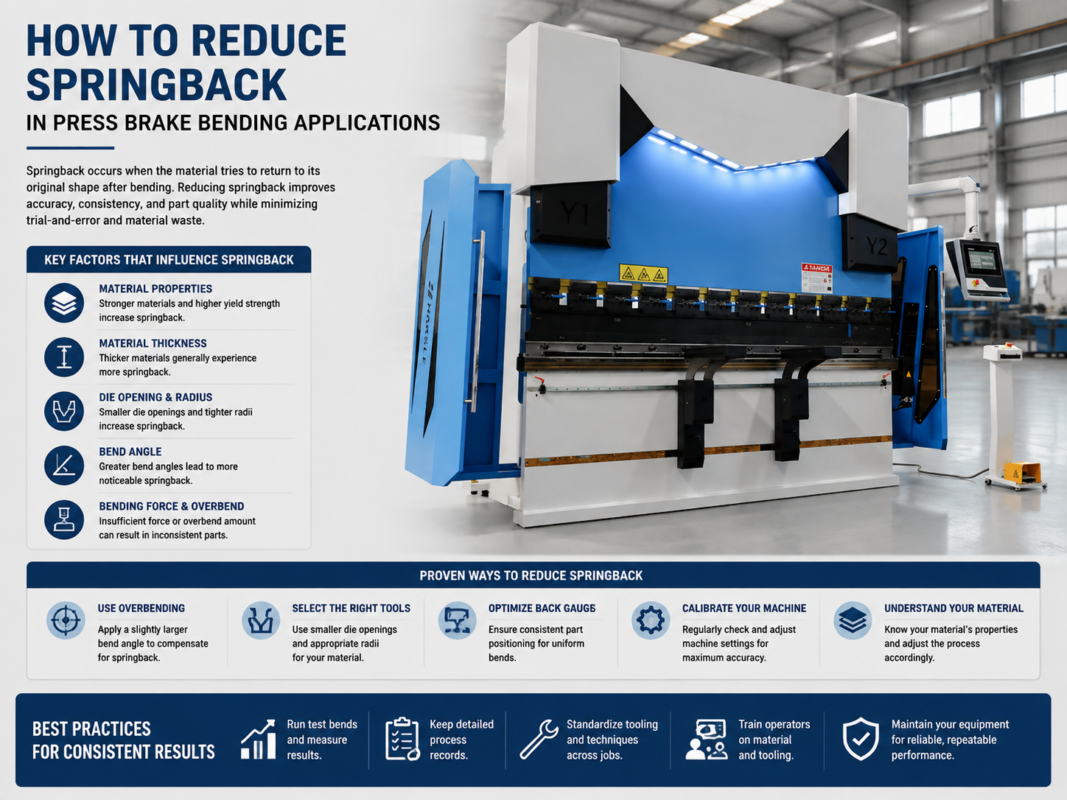
Top Bending Methods Compared: Air Bending vs Bottom Bending vs Coining on a Press Brake


Comparison Summary: Understanding the Fundamentals of Press Brake Bending
In the world of metal fabrication, the press brake is the cornerstone of precision forming. However, the machine itself is only as effective as the bending method employed by the operator. Choosing between air bending, bottom bending, and coining is not merely a matter of preference; it is a technical decision that impacts production speed, part accuracy, tooling longevity, and machine wear. Each method utilizes the interaction between the upper punch and the lower V-die differently to achieve the desired angle in sheet metal.
Air bending is the most modern and versatile approach, relying on the depth of the punch stroke rather than the shape of the die. Bottom bending, or bottoming, brings the material into contact with the die surfaces to improve repeatability. Coining, the oldest and most forceful method, literally stamps the metal into the die to eliminate springback entirely. While modern CNC technology has made air bending the industry standard for most applications, specialized high-precision tasks still demand the unique characteristics of bottoming or coining.
Understanding these methods requires a deep dive into the physics of metal deformation. When a press brake applies force, the material undergoes elastic deformation before reaching its plastic limit. The primary challenge in all bending is ‘springback’—the tendency of the metal to return to its original shape once the pressure is released. How each method manages this phenomenon defines its role in the workshop. This guide provides a comprehensive comparison to help fabricators optimize their HARSLE press brake operations for maximum efficiency and quality.
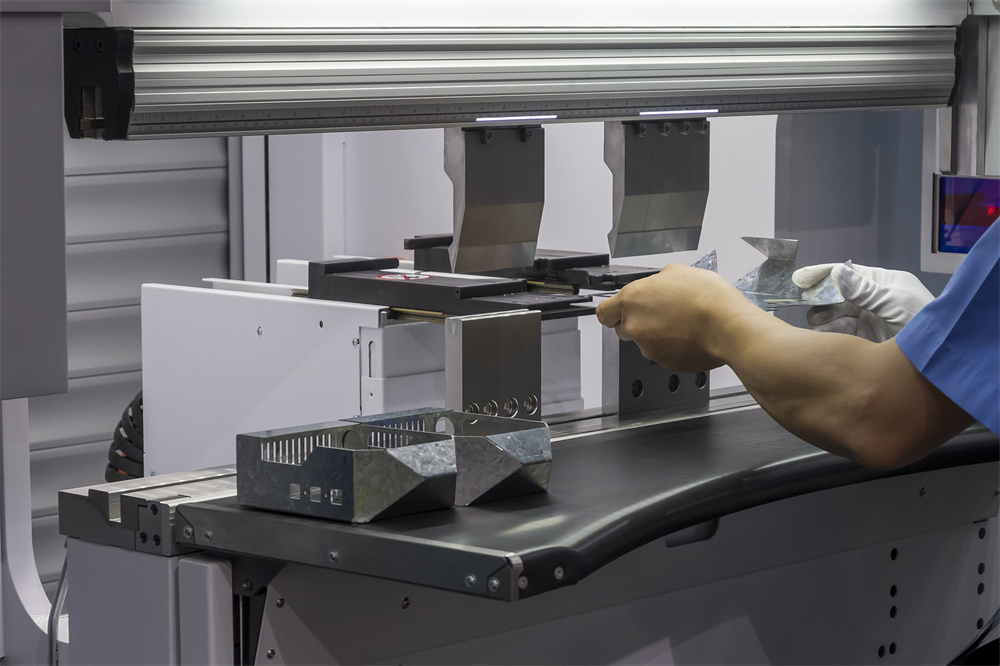
Air Bending: The Versatile Industry Standard
Air bending is characterized by the fact that the material only touches the tooling at three points: the tip of the upper punch and the two edges of the lower V-die. The angle of the bend is determined by how far the punch descends into the die. Because the material does not reach the bottom of the V-opening, a single set of tools can produce a wide variety of angles simply by adjusting the stroke depth of the press brake ram. This flexibility is the primary reason air bending is the preferred method for modern CNC-equipped shops.
One of the most significant advantages of air bending is the reduced tonnage required. Since the material is not being compressed against the die walls, the force needed to achieve a bend is significantly lower than in bottoming or coining. This results in less wear and tear on the machine’s hydraulic components and extends the life of the tooling. Furthermore, because the punch does not need to seat fully in the die, operators can use a 90-degree die to create 120-degree or 135-degree bends, reducing the need for frequent tool changes.
However, air bending is highly sensitive to variations in material thickness and tensile strength. Because the angle is stroke-dependent, a slight increase in sheet thickness will result in a sharper angle if the stroke remains constant. This is where advanced CNC controllers, such as those found on HARSLE machines, become essential. These systems can calculate the necessary stroke depth based on material parameters and even integrate laser angle measurement systems to compensate for material inconsistencies in real-time.
Springback is most prevalent in air bending. Since the metal is not ‘set’ by high pressure, it will always relax slightly after the punch retracts. To achieve a 90-degree bend, the operator must ‘over-bend’ the part to perhaps 88 or 85 degrees, depending on the material type. While this requires more initial setup and calculation, the versatility and speed of air bending make it the most cost-effective solution for high-volume, multi-angle production runs.
Bottom Bending: Balancing Precision and Force
Bottom bending, often referred to as ‘bottoming,’ involves pressing the sheet metal down until it makes contact with the sloping sides of the V-die. Unlike air bending, the angle of the bend is largely determined by the angle of the die itself. If you are using a 90-degree die, the punch forces the material into the bottom of the V to ensure the part conforms to that specific shape. This method provides a higher level of repeatability than air bending because the physical stop of the die acts as a guide.
The primary benefit of bottoming is the significant reduction in springback. By forcing the material against the die, the internal stresses of the metal are more thoroughly redistributed. While some springback still occurs, it is much more predictable and smaller in magnitude than in air bending. This makes bottoming an excellent choice for projects where high accuracy is required across large batches of parts, especially when using older press brakes that may lack the precision stroke control of modern CNC units.
However, bottom bending requires significantly more tonnage—typically three to four times the force of air bending for the same material thickness. This increased pressure puts more strain on the press brake and the tooling. Additionally, bottoming is less versatile. If you need to change the bend angle, you must change the tooling. You cannot produce a 135-degree bend using a 90-degree die in a bottoming operation. This leads to increased downtime for tool setups and a larger inventory of expensive precision-ground dies.
In modern fabrication, bottoming is often used for thinner gauge materials where the springback of air bending is difficult to control, or when the geometry of the part requires a very tight inside radius that air bending cannot consistently produce. It serves as a middle ground for shops that need more precision than basic air bending but do not want to invest in the extreme tonnage and specialized tooling required for coining.
Coining: The Ultimate in Geometric Accuracy
Coining is the most traditional and intensive bending method. The term comes from the process of making coins, where a metal blank is subjected to enough pressure to cause it to flow into the shape of the die. In press brake coining, the punch and die are used to literally stamp the bend into the metal. The punch tip actually penetrates the neutral axis of the material, causing plastic deformation that permanently sets the angle. This eliminates springback entirely.
The precision achieved through coining is unmatched. Because the metal is compressed to the point of flow, the resulting bend is an exact mirror of the tooling. This is the only method that can consistently produce an inside bend radius equal to or smaller than the material thickness without the risk of the metal ‘relaxing’ out of tolerance. For industries like aerospace or medical device manufacturing, where a fraction of a degree can mean the difference between a pass and a fail, coining remains a vital process.
The trade-off for this precision is the massive amount of force required. Coining can require five to ten times the tonnage of air bending. This necessitates heavy-duty press brakes and incredibly robust, hardened tooling. Most standard press brakes are not designed to handle continuous coining operations across their full bed length, as the concentrated force can lead to ‘ram upset’ or permanent deformation of the machine’s bed. Furthermore, the friction and pressure involved in coining cause rapid tool wear, leading to higher long-term maintenance costs.
Due to these requirements, coining has largely been phased out of general fabrication in favor of precision air bending with CNC compensation. However, it remains the go-to method for very thick materials, extremely tight tolerances, or when working with materials that have unpredictable springback characteristics. When a part must be perfect every single time without the need for manual adjustment, coining is the definitive solution.
Specification Comparison Table
The following table provides a technical breakdown of the three primary bending methods to assist in machine selection and process planning.
| Feature | Air Bending | Bottom Bending | Coining |
|---|---|---|---|
| Tonnage Required | Low (Baseline) | Medium (3x – 4x Baseline) | Very High (5x – 10x Baseline) |
| Springback | High (Requires Over-bending) | Low (Predictable) | Zero (Material is ‘Set’) |
| Angle Versatility | Excellent (One tool, many angles) | Poor (Tool-dependent) | None (Tool-dependent) |
| Accuracy | Good (CNC Dependent) | Very Good | Extreme |
| Tool Wear | Minimal | Moderate | High |
| Inside Radius | Larger (approx. 1/6 of V-opening) | Matches Punch Tip | Matches Punch Tip (Compressed) |
| Best Material Gauge | All Gauges | Thin to Medium | Thin to Heavy (High Precision) |
Best-fit Applications for Each Method
When to Choose Air Bending
Air bending is the ‘jack-of-all-trades’ for the modern fabrication shop. It is ideal for job shops that handle a wide variety of materials and thicknesses throughout the day. Because it requires the least amount of force, it is the best choice for large-format bending, such as long panels for HVAC systems, architectural cladding, and truck trailer components. If your HARSLE press brake is equipped with a high-end CNC controller and crowning system, air bending will provide the fastest throughput with minimal setup time.
When to Choose Bottom Bending
Bottoming is best suited for high-volume production of a single part type where the material is relatively thin (under 3mm) and the required angle is a standard 90 degrees. It is frequently used in the production of electrical enclosures, brackets, and appliance components. Shops that use older, manual press brakes often rely on bottoming to achieve consistent results because it relies on the physical geometry of the tools rather than the precision of the ram’s stroke depth.
When to Choose Coining
Coining is reserved for specialized applications where failure is not an option. It is used in the manufacturing of heavy-duty structural components, high-precision aerospace parts, and complex electronic chassis where multiple bends are located close together. If a part requires a very sharp inside corner that must be perfectly square to allow for the insertion of other components, coining is the only method that can guarantee that level of geometric integrity. It is also used when working with ‘exotic’ alloys that exhibit extreme or inconsistent springback.
Cost and Maintenance Comparison
From a cost perspective, air bending is the clear winner. The ability to use a single set of tools for multiple angles reduces the initial capital investment in tooling. Furthermore, the lower tonnage requirements mean that the press brake’s hydraulic seals, valves, and structural frame are subjected to less stress, leading to longer service intervals and lower repair costs. Energy consumption is also lower in air bending because the motor does not have to work as hard to generate the required force.
Bottom bending and coining involve higher operational costs. The tooling for these methods must be precision-ground and hardened to withstand the intense pressures. In coining, the tools are essentially consumables that will eventually deform or crack under the strain. Additionally, the high-tonnage requirements of coining can lead to ‘deflection’ in the press brake. If the machine does not have an advanced crowning system to compensate for this deflection, the center of the bend will be wider than the ends, leading to scrapped parts and wasted material.
Maintenance for machines used primarily for coining must be more rigorous. Operators must frequently check the parallelism of the bed and ram and ensure that the lubrication system is functioning perfectly to prevent galling. For shops looking to minimize long-term overhead, investing in a high-precision CNC press brake capable of accurate air bending is usually more economical than maintaining a high-tonnage coining setup.
Recommendation: Choosing the Right Method for Your HARSLE Press Brake
For the vast majority of modern metal fabrication tasks, Air Bending is the recommended method. Its combination of speed, versatility, and machine longevity makes it the most profitable choice for 90% of applications. When paired with a HARSLE CNC press brake featuring automatic crowning and a multi-axis backgauge, the accuracy of air bending can rival that of bottoming while offering much greater flexibility.
However, if you are working with thin materials and require absolute repeatability without the aid of high-end CNC compensation, Bottom Bending is a reliable alternative. It provides a ‘safety net’ for operators by using the die as a physical stop. Coining should be viewed as a niche process, utilized only when the part design demands an impossible-to-achieve radius or when springback cannot be managed through any other means. Before committing to a coining process, always ensure your press brake is rated for the required tonnage and that your tooling is specifically designed for ‘stamping’ operations.
Frequently Asked Questions (FAQ)
1. Can I use the same tools for air bending and coining?
Generally, no. Air bending tools are designed for versatility and may not have the structural integrity to handle the extreme tonnages required for coining. Coining tools must be specifically hardened and often have a slightly different geometry to allow for the ‘flow’ of metal. Using air bending tools for coining can result in tool breakage and operator injury.
2. How do I calculate the tonnage for air bending?
Tonnage for air bending is typically calculated based on the material thickness, the tensile strength of the metal, and the width of the V-die opening. A common rule of thumb is that the V-opening should be 8 times the material thickness. Most HARSLE CNC controllers have built-in tonnage calculators that automatically determine the safe operating force based on these inputs.
3. Why is my air-bent part inconsistent?
Inconsistency in air bending is usually caused by variations in the material’s ‘yield strength’ or thickness. Even within the same batch of steel, properties can vary. Other factors include machine deflection (lack of crowning) or thermal expansion of the hydraulic oil. Using a press brake with real-time angle tracking and a high-quality crowning system can eliminate these issues.
4. Is springback the same for all materials?
No. Springback varies significantly between materials. For example, stainless steel has much higher springback than mild steel, and high-strength aluminum alloys have even more. The ‘temper’ of the metal also plays a role. This is why air bending requires constant adjustment or advanced CNC compensation to maintain accuracy across different material types.
5. Does coining damage the press brake?
If the press brake is not rated for the tonnage required, coining can cause serious damage, including cracking the bed, warping the ram, or blowing out hydraulic seals. Even on a properly rated machine, continuous coining will accelerate wear. It is essential to stay within the machine’s ‘tonnage per foot’ limits to avoid permanent structural damage.