
How to Choose the Right Shearing Machine for Sheet Metal Fabrication


Introduction to Shearing in Modern Metal Fabrication
In the world of industrial manufacturing, the precision and efficiency of the initial cut often dictate the quality of the final product. Shearing is a fundamental process in sheet metal fabrication, acting as the primary method for cutting large sheets of metal into smaller, manageable sizes or specific shapes. Choosing the right shearing machine is not merely a matter of purchasing a piece of equipment; it is a strategic investment that affects production speed, material waste, and the structural integrity of the finished components. For companies like HARSLE, providing high-quality machinery means helping fabricators understand the nuances of hydraulic and mechanical shearing technology.
The process of shearing involves the use of two blades—a fixed lower blade and a moving upper blade—to apply a force that exceeds the material’s ultimate shear strength. This results in a clean fracture along the intended line. However, the complexity arises when dealing with different material thicknesses, tensile strengths, and required tolerances. A machine that handles 3mm aluminum perfectly might struggle or produce excessive burrs when tasked with 10mm stainless steel. Therefore, understanding the technical specifications and the mechanical differences between machine types is essential for any fabrication shop looking to optimize its workflow.
As we delve into this guide, we will explore the two primary categories of hydraulic shearing machines: the Swing Beam Shear and the Guillotine Shear. We will also examine the critical factors such as rake angle, blade gap adjustment, and backgauge precision. By the end of this article, you will have a comprehensive framework to evaluate your production needs and select a shearing machine that offers the best return on investment for your specific sheet metal fabrication requirements.
Comparison Summary: Swing Beam vs. Guillotine Shears
When you begin to choose a shearing machine for sheet metal fabrication, you will primarily encounter two designs: the Hydraulic Swing Beam Shearing Machine (often designated as QC12Y or QC12K) and the Hydraulic Guillotine Shearing Machine (QC11Y or QC11K). While both use hydraulic power to drive the cutting process, their mechanical movement and capabilities differ significantly. The swing beam shear operates on a pivot point, moving the upper blade in an arc. This design is generally simpler, more robust, and cost-effective for light to medium-duty applications. It is particularly favored for its ease of maintenance and reliability in high-volume environments where extreme precision is secondary to throughput.
On the other hand, the guillotine shear moves the upper blade in a strictly vertical path. This vertical movement allows for the adjustment of the rake angle—the angle of the upper blade relative to the lower blade. By reducing the rake angle, fabricators can minimize the distortion, twisting, and bowing of the cut metal, which is a common issue when cutting narrow strips. Guillotine shears are typically more expensive but offer higher precision and the ability to handle much thicker materials with greater accuracy. They are the preferred choice for shops that require high-quality edges and work with a wide variety of material thicknesses.
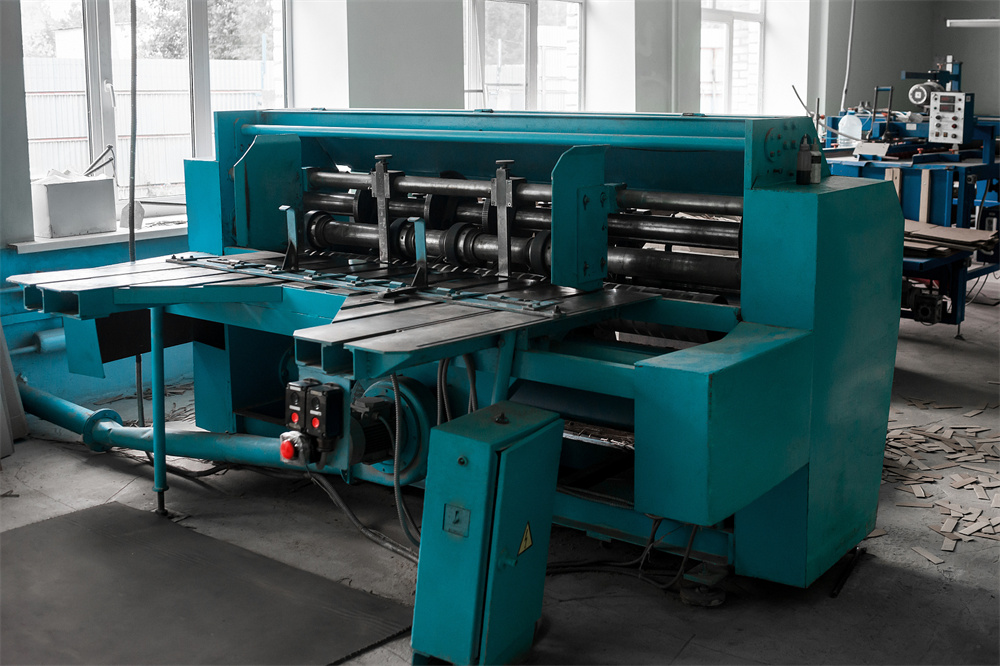
Machine A Overview: The Hydraulic Swing Beam Shearing Machine
The Hydraulic Swing Beam Shearing Machine is the workhorse of the sheet metal industry. Its defining characteristic is the upper blade beam, which is pivoted at the ends. When the hydraulic cylinders actuate, the beam swings downward in an arc to perform the cut. Because the blade moves in an arc, it naturally moves away from the lower blade after the cut is completed, which prevents the material from jamming and reduces wear on the blades. This “self-clearing” action is one of the reasons why swing beam shears are known for their longevity and lower maintenance requirements.
One of the primary advantages of the swing beam design is its structural simplicity. With fewer moving parts than a guillotine shear, there is less that can go wrong. The blade gap adjustment—the distance between the upper and lower blades—is usually handled via a manual or motorized quick-adjust mechanism. Proper blade gap is crucial; if the gap is too wide, the metal will bend rather than cut, leaving a large burr. If it is too tight, the blades will wear prematurely or even chip. Swing beam machines are excellent for cutting carbon steel and stainless steel up to certain thicknesses, typically up to 12mm or 16mm depending on the model.
However, the swing beam shear does have limitations. Because the rake angle is fixed by the machine’s geometry, it cannot be adjusted to compensate for different material thicknesses. This means that when cutting very thin materials on a machine designed for thick plates, or when cutting very narrow strips, you may experience some degree of “twist” or “bow” in the workpiece. For many general fabrication tasks, this is acceptable, but for high-precision aerospace or medical components, it may necessitate secondary leveling processes. Despite this, for the majority of HVAC, cabinetry, and general metalwork, the swing beam shear remains the most popular and cost-effective choice.
Machine B Overview: The Hydraulic Guillotine Shearing Machine
The Hydraulic Guillotine Shearing Machine represents the pinnacle of shearing precision. Unlike the swing beam, the guillotine’s upper blade moves straight up and down on heavy-duty hardened guides. This vertical motion allows for a much more rigid construction, which is essential when cutting very thick or high-tensile materials. The most significant technical advantage of the guillotine shear is the adjustable rake angle. By using a CNC controller to change the angle of the upper blade, the operator can optimize the cutting force and minimize material distortion.
When cutting thin sheets, a low rake angle is used to ensure the strip remains flat and straight. When cutting thick plates, the rake angle is increased to reduce the required shearing force, allowing the machine to cut through heavy material that would otherwise stall a swing beam shear. This versatility makes the guillotine shear an indispensable tool for heavy-duty fabrication shops and steel service centers. Furthermore, guillotine shears often feature more sophisticated CNC backgauge systems, allowing for complex cutting programs and high repeatability across large batches of parts.
Another benefit of the guillotine design is the blade configuration. Guillotine blades are typically rectangular with four cutting edges, whereas swing beam blades are often slightly curved or have only two usable edges. This means that when one edge of a guillotine blade becomes dull, it can be rotated three more times before requiring professional sharpening, effectively doubling the blade life compared to many swing beam models. While the initial investment for a guillotine shear is higher, the precision, versatility, and reduced material waste often justify the cost for professional fabricators aiming for the highest quality standards.
Specification Comparison Table
| Feature | Swing Beam Shear (QC12Y/K) | Guillotine Shear (QC11Y/K) |
|---|---|---|
| Cutting Motion | Circular Arc (Pivot) | Vertical (Linear Guides) |
| Rake Angle | Fixed | Adjustable (Manual or CNC) |
| Blade Edges | 2 Cutting Edges | 4 Cutting Edges |
| Precision | Standard / Good | High / Excellent |
| Material Distortion | Higher (especially on narrow strips) | Minimal (due to rake adjustment) |
| Maintenance | Low / Simple | Moderate (requires guide lubrication) |
| Max Thickness | Typically up to 16mm | Can exceed 40mm+ |
| Price Point | Economical | Premium |

Best-fit Applications for Each Machine Type
Choosing the right shearing machine for sheet metal fabrication requires a deep look at your specific industry applications. For instance, in the HVAC industry, where fabricators primarily work with thin-gauge galvanized steel to create ductwork, the Swing Beam Shearing Machine is often the ideal choice. The speed and reliability of the swing beam allow for rapid production of standard sizes, and the slight distortion inherent in the design is negligible for ducting components. Similarly, in the production of metal furniture or electrical enclosures, where material thickness rarely exceeds 3mm, the cost savings of a swing beam shear can be reinvested into other areas of the shop.
Conversely, industries such as shipbuilding, heavy machinery manufacturing, and bridge construction require the Hydraulic Guillotine Shearing Machine. These sectors often deal with thick plates of high-strength steel that require immense force and perfect edge quality for subsequent welding processes. A guillotine shear ensures that the edges are square and the plates remain flat, which is critical for automated welding robots that require tight tolerances. Furthermore, steel service centers that provide custom-cut blanks to various customers benefit from the guillotine’s ability to adjust to any material thickness at the touch of a button.
In the automotive sector, both machines find their place. Swing beam shears are used for internal structural components where speed is king, while guillotine shears are used for exterior body panels or chassis parts where precision and surface finish are paramount. When you choose a shearing machine, consider not just what you are making today, but what contracts you hope to win in the future. A machine with slightly more capability than you currently need can provide the flexibility to expand your service offerings without requiring a new equipment purchase a year down the road.
Cost and Maintenance Comparison
The total cost of ownership for a shearing machine extends far beyond the initial purchase price. When you choose a shearing machine for sheet metal fabrication, you must account for energy consumption, blade replacement, hydraulic oil maintenance, and downtime. Swing beam shears generally have a lower purchase price—often 20% to 30% less than a guillotine shear of the same capacity. Because they have fewer hydraulic valves and no rake-adjustment mechanism, the electrical systems are simpler and the maintenance is straightforward. For a small to medium-sized shop, this lower barrier to entry is a significant factor.
However, the guillotine shear offers long-term savings through blade efficiency and material yield. As mentioned, guillotine blades have four cutting edges. This means you can go twice as long between professional regrinding sessions compared to a two-edge swing beam blade. Additionally, the ability to minimize distortion means fewer scrapped parts and less time spent on secondary straightening operations. In a high-volume environment, the reduction in material waste alone can pay for the price difference of a guillotine shear within a few years of operation.
Maintenance for both machines involves regular checks of the hydraulic fluid, cleaning of the backgauge lead screws, and ensuring the lubrication system is functioning. Guillotine shears require more attention to the vertical slide guides, which must be kept clean and well-lubricated to prevent scoring. Swing beam shears require periodic inspection of the pivot bearings. For both types, HARSLE recommends a daily visual inspection of the blades for nicks or dullness, as cutting with dull blades puts unnecessary strain on the hydraulic system and degrades the quality of the cut. Investing in a machine with a high-quality CNC controller can also reduce maintenance costs by providing diagnostic alerts and tracking stroke counts for blade rotation schedules.
Recommendation: How to Make the Final Choice
To choose the right shearing machine for sheet metal fabrication, we recommend following a structured decision-making process. First, define your maximum material thickness and maximum width. Always choose a machine with a capacity slightly higher than your thickest material to avoid running the hydraulics at 100% load constantly. Second, evaluate your precision requirements. If you are cutting blanks for CNC press brakes, the accuracy of the shear’s backgauge and the flatness of the cut are critical. In this case, a guillotine shear with a high-end CNC controller (like the Delem DAC series) is the best choice.
Third, consider your production volume. If you are performing hundreds of cuts per day on the same material, a swing beam shear’s simplicity and speed are advantageous. If your shop handles a diverse range of materials—from thin aluminum to thick stainless steel—the adjustable rake angle of the guillotine shear is indispensable. Finally, consider your budget. If capital is tight and your requirements are standard, a high-quality swing beam shear from a reputable manufacturer like HARSLE will provide years of reliable service. However, if you are looking to future-proof your facility and demand the highest possible edge quality, the guillotine shear is the superior long-term investment.
Ultimately, the “right” machine is the one that balances your technical needs with your financial reality. We encourage fabricators to consult with technical experts who can analyze their part drawings and material specs. At HARSLE, we focus on providing detailed consultations to ensure that every customer receives a machine tailored to their specific production environment, whether it’s a robust swing beam for a busy workshop or a high-precision guillotine for a specialized manufacturing plant.
Frequently Asked Questions (FAQ)
1. What is the difference between a mechanical and a hydraulic shearing machine?
Mechanical shears use a flywheel and clutch system to deliver the cutting force. They are very fast but cannot be stopped mid-stroke and offer less control over the cutting process. Hydraulic shears use fluid power, allowing for adjustable stroke lengths, better safety features (the ability to stop the blade instantly), and the ability to handle much thicker materials. Most modern industrial shops prefer hydraulic shears for their versatility and safety.
2. How often should I sharpen the blades on my shearing machine?
The frequency of sharpening depends on the material being cut and the volume of production. Cutting stainless steel will dull blades much faster than cutting mild steel or aluminum. Generally, you should rotate or sharpen the blades when you notice increased burr height, a change in the sound of the cut, or if the machine requires more pressure to complete a cut. Regular blade gap adjustment can significantly extend the time between sharpenings.
3. Can I cut stainless steel on a machine rated for mild steel?
Yes, but you must reduce the maximum thickness. Stainless steel has a much higher tensile strength than mild steel. A general rule of thumb is that a machine’s capacity for stainless steel is approximately 50% to 60% of its rated capacity for mild steel. Always check the manufacturer’s specifications before attempting to cut high-tensile materials to avoid damaging the blades or the hydraulic system.
4. What is ‘Rake Angle’ and why does it matter?
The rake angle is the slope of the upper blade from one end to the other. A higher rake angle reduces the amount of force needed to cut through thick material because only a small portion of the blade is in contact with the metal at any given time. However, a high rake angle can cause the cut piece to twist or bow. An adjustable rake angle (found on guillotine shears) allows you to find the perfect balance between cutting force and part flatness.
5. What are the most important safety features to look for?
Safety is paramount in metal fabrication. Look for machines equipped with front finger guards, rear light curtains (which stop the machine if someone enters the backgauge area), and multiple emergency stop buttons. Additionally, a high-quality hydraulic system should have overload protection to prevent structural damage if an operator attempts to cut material that is too thick.












