
Cut Quality Comparison Across Shearing Machine Types for Metal Fabrication


Comparison Summary: Understanding Shearing Excellence
In the world of metal fabrication, the precision of a cut can make or break a project. When we discuss a Cut Quality Comparison Across Shearing Machine Types Metal Fabrication, we are primarily looking at how different mechanical designs influence the final edge of the workpiece. Shearing is a process of cutting sheet metal or plates by applying a high-force shearing action between a fixed lower blade and a moving upper blade. However, not all shears are created equal. The two industry standards—the Hydraulic Guillotine Shear and the Hydraulic Swing Beam Shear—offer distinct advantages and limitations regarding the quality of the cut they produce.
Cut quality is measured by several factors: the presence of burrs, the degree of twist (corkscrew effect), bow (vertical curvature), and camber (horizontal curvature). A high-quality cut requires minimal deformation and a clean, square edge. For manufacturers like HARSLE, providing the right machine for the right application is paramount. While both machine types utilize hydraulic power to drive the blades, their geometric approach to the metal differs significantly. This difference in geometry dictates the rake angle, the blade gap consistency, and ultimately, the aesthetic and structural integrity of the finished part.
Choosing between these machines involves balancing production speed, material thickness, and the required tolerance levels. For instance, a shop focused on thin-gauge decorative panels will have vastly different requirements than a heavy-duty shipyard. This guide provides an in-depth analysis of how these machines perform, helping fabricators make an informed decision based on technical specifications and real-world performance metrics. By the end of this comparison, you will understand which shearing technology aligns best with your fabrication goals.
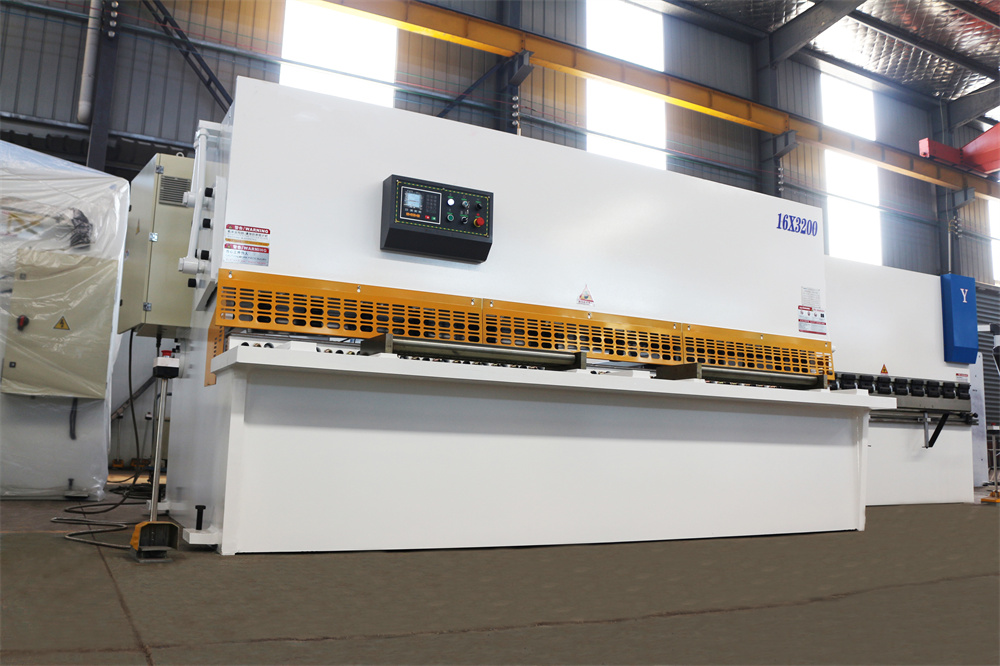
Machine A Overview: The Hydraulic Guillotine Shear (QC11K Series)
The Hydraulic Guillotine Shear, often represented by the QC11K series in the HARSLE catalog, is the gold standard for precision and heavy-duty cutting. The defining characteristic of a guillotine shear is its vertical cutting action. The upper blade moves in a strictly linear, vertical path. This design allows for the adjustment of the rake angle—the angle of the upper blade relative to the lower blade. By adjusting the rake angle, operators can significantly reduce the internal stresses applied to the metal during the cut, which is the primary cause of twisting and bowing.
One of the most significant advantages of the guillotine design is its ability to maintain a consistent blade gap across the entire length of the cut. Because the blade moves vertically, the distance between the upper and lower blades remains uniform. This is crucial for achieving a square edge, especially on thicker materials. In a Cut Quality Comparison Across Shearing Machine Types Metal Fabrication, the guillotine shear consistently ranks higher for edge squareness and minimal distortion. HARSLE’s QC11K models often feature CNC-controlled rake angle and blade gap adjustments, allowing for rapid transitions between different material thicknesses without sacrificing quality.
Furthermore, the guillotine shear is built with a more robust frame to handle the vertical forces. This rigidity translates to less deflection during the shearing process. When cutting high-tensile materials or thick plates (above 12mm), the guillotine’s ability to increase the rake angle prevents the material from “rolling” or deforming under the pressure of the blade. While the machine may have a slightly larger footprint and a higher initial cost, the precision it offers is indispensable for industries where secondary finishing processes like grinding or edge leveling need to be minimized.
From a technical standpoint, the guillotine shear also excels in stroke control. Operators can limit the stroke length for shorter pieces, increasing the number of cuts per minute. This versatility, combined with the superior edge quality, makes the guillotine shear the preferred choice for high-precision fabrication shops and service centers that handle a wide variety of material types and thicknesses.
Machine B Overview: The Hydraulic Swing Beam Shear (QC12Y Series)
The Hydraulic Swing Beam Shear, or the QC12Y series, is the workhorse of the general fabrication industry. Unlike the guillotine, the upper blade of a swing beam shear moves in an arc. It is pivoted at a fixed point, swinging down to meet the lower blade. This design is inherently simpler and involves fewer moving parts, which often translates to a more compact machine and a lower price point. For many small to medium-sized workshops, the swing beam shear provides an excellent balance of performance and value.
In terms of cut quality, the swing beam shear is highly effective for thinner materials. However, because the blade moves in an arc, the rake angle is fixed. This means that as the material thickness increases, the potential for twist and bow also increases. In a Cut Quality Comparison Across Shearing Machine Types Metal Fabrication, the swing beam shear is generally noted for having a slightly higher degree of material distortion on thicker plates compared to the guillotine. However, for materials under 10mm, the difference is often negligible for standard industrial applications.
One of the unique features of the swing beam design is the “built-in” blade gap clearance. As the blade swings down and through the material, it naturally moves away from the lower blade after the cut is completed. This reduces friction and wear on the blades, potentially extending the time between sharpenings. HARSLE’s swing beam shears are equipped with a quick-adjust blade gap mechanism, usually a manual or motorized dial, which allows the operator to set the clearance based on the material thickness quickly.
While it may lack the extreme precision of the guillotine for heavy plates, the swing beam shear is often faster for continuous cutting of standard sheets. Its simplicity makes it incredibly reliable and easy to maintain. For fabricators who primarily work with mild steel or aluminum in the 3mm to 8mm range, the swing beam shear offers a cost-effective solution that delivers acceptable cut quality for most structural and decorative components.
Specification Comparison Table
To better visualize the differences, the following table compares the key technical aspects that influence cut quality between the two primary shearing machine types.
| Feature | Hydraulic Guillotine (QC11K) | Hydraulic Swing Beam (QC12Y) |
|---|---|---|
| Blade Movement | Vertical / Linear | Arc / Circular |
| Rake Angle | Adjustable (0.5° – 3.0°) | Fixed (usually 1.5°) |
| Cut Precision | High (Minimal Twist/Bow) | Moderate (Standard) |
| Blade Gap Adjustment | CNC or Motorized (Very Precise) | Manual or Motorized (Quick) |
| Material Thickness Range | Excellent for 4mm to 40mm+ | Best for 1mm to 12mm |
| Edge Squareness | Superior | Good |
| Maintenance Complexity | Moderate | Low |
Best-fit Applications for Each Machine Type
When considering the Cut Quality Comparison Across Shearing Machine Types Metal Fabrication, the application is the ultimate deciding factor. Guillotine shears are the go-to choice for precision engineering sectors. In the aerospace and automotive industries, where parts must fit perfectly into jigs for robotic welding, the minimal distortion provided by a guillotine shear is essential. If your fabrication process involves narrow strips (slitting), the guillotine’s adjustable rake angle is a lifesaver, as it prevents the narrow pieces from curling into a “corkscrew” shape.
Heavy machinery manufacturing and shipbuilding also rely heavily on guillotine shears. These industries often work with high-strength alloys and thick carbon steel plates. The ability to increase the rake angle allows the machine to cut through 20mm or 30mm plates with significantly less tonnage than a fixed-angle machine, while maintaining a clean edge that requires little to no beveling before welding. If your shop’s reputation is built on high-tolerance, heavy-duty components, the guillotine is your best fit.
On the other hand, swing beam shears are ideal for general job shops, HVAC ductwork fabrication, and the production of metal furniture or cabinetry. In these applications, the material is typically thinner, and the slight arc of the cut does not negatively impact the final assembly. The speed and ease of use of a swing beam shear make it perfect for high-volume production of standard parts. Because they are generally more affordable, they allow smaller shops to increase their capacity without a massive capital outlay.
Furthermore, swing beam shears are excellent for maintenance departments within larger factories. Their robust and simple design means they can sit idle for periods and then perform reliably when a quick repair part is needed. They are also more forgiving for operators who may not be specialized shearing experts, as the fixed rake angle simplifies the setup process. If your primary goal is throughput and versatility for light to medium gauges, the swing beam shear is the logical choice.
Cost and Maintenance Comparison
The financial aspect of the Cut Quality Comparison Across Shearing Machine Types Metal Fabrication involves both the initial purchase price and the long-term operational costs. Generally, a Hydraulic Guillotine Shear (QC11K) will have a higher initial price tag—often 20% to 40% more than a swing beam shear of the same capacity. This is due to the more complex hydraulic system required for rake angle adjustment and the heavier, more rigid frame construction. However, for many businesses, this cost is offset by the reduction in secondary finishing labor and material waste.
Maintenance for a guillotine shear involves regular checks of the vertical guides and the rake angle adjustment cylinders. Because the machine has more moving parts and sophisticated CNC controls, it may require more specialized technical support for repairs. However, HARSLE designs these machines with modular components to simplify this process. The blades on a guillotine are typically rectangular with four cutting edges, allowing them to be rotated four times before needing a full regrind, which provides excellent long-term value.
Swing beam shears are known for their low maintenance requirements. The pivot point design is incredibly durable and requires only basic lubrication. The hydraulic system is simpler, with fewer valves and sensors. This makes the QC12Y series a favorite for shops in remote locations or those without a dedicated maintenance team. The blades on a swing beam shear are often slightly different; the upper blade usually has two cutting edges while the lower has four. While this means more frequent sharpening compared to the guillotine’s four-edge upper blade, the overall cost of ownership remains lower due to the machine’s simplicity.
Energy consumption is another factor. Modern HARSLE shears, both guillotine and swing beam, often incorporate inverter-driven motors or load-sensing hydraulics to reduce power usage during idle times. When comparing the two, the guillotine might use slightly more power during the actual cut due to the higher precision adjustments, but the difference is usually negligible compared to the overall productivity gains in a high-volume environment.
Recommendation: Which Shear Should You Choose?
Making the final decision in the Cut Quality Comparison Across Shearing Machine Types Metal Fabrication depends on a clear assessment of your production needs. If your work involves high-precision components, thick plates (over 12mm), or materials that are prone to distortion (like stainless steel or high-tensile alloys), the HARSLE QC11K Hydraulic Guillotine Shear is the clear winner. Its ability to provide a perfectly square edge with minimal twist will save you countless hours in downstream processes like welding and assembly.
Conversely, if your workshop handles a high volume of light to medium gauge mild steel (up to 10mm) and you are looking for a reliable, cost-effective, and easy-to-operate machine, the HARSLE QC12Y Hydraulic Swing Beam Shear is an outstanding choice. It provides the “workhorse” reliability needed for daily fabrication tasks without the premium price of a guillotine system. It is the ideal entry point for growing shops or a dependable secondary machine for larger facilities.
Before purchasing, we recommend a “Material Audit.” Look at the last six months of your production: What was the average thickness? What were the most common complaints regarding part quality? If “edge bow” or “twist” appears frequently in your quality control reports, it is a strong signal that upgrading to a guillotine shear is necessary. If your parts are mostly rectangular and used in standard structural frames, the swing beam will serve you perfectly. At HARSLE, we provide expert consultation to help you match these technical capabilities with your specific business objectives.
Frequently Asked Questions (FAQ)
1. What is the main difference between a guillotine and a swing beam shear?
The main difference lies in the blade movement. A guillotine shear moves the upper blade in a straight vertical line, allowing for an adjustable rake angle and higher precision. A swing beam shear moves the upper blade in an arc, which is simpler and more cost-effective but has a fixed rake angle.
2. Why does the rake angle matter for cut quality?
The rake angle is the slope of the upper blade. A higher rake angle reduces the force required to cut and minimizes the “twist” in the material. Being able to adjust this angle (as in a guillotine shear) is essential for maintaining quality across different material thicknesses.
3. Can I cut stainless steel on both types of machines?
Yes, both can cut stainless steel, but you must ensure the blades are rated for it (usually high-carbon, high-chrome blades). Because stainless steel is harder and tends to work-harden, a guillotine shear is often preferred for its rigidity and precise blade gap control.
4. How often should I sharpen the shearing blades?
This depends on the material type and volume of cuts. Generally, if you notice increased burr height or the machine struggling to cut, it’s time to rotate or sharpen the blades. Guillotine blades can typically be rotated four times (using all four edges) before sharpening.
5. Is a CNC controller necessary for a shearing machine?
A CNC controller is highly recommended for guillotine shears as it automates the backgauge position, rake angle, and blade gap. This ensures consistency, reduces setup time, and eliminates operator error, significantly improving overall cut quality.












