How to Compare Shearing Machine Brands Before Buying for Industrial Use


Introduction to Industrial Shearing Machine Procurement
In the competitive landscape of metal fabrication, selecting the right equipment is a pivotal decision that impacts long-term productivity and profitability. When you look to compare shearing machine brands before buying industrial use equipment, you are not merely looking at a price tag; you are evaluating the engineering integrity, the technological integration, and the after-sales support ecosystem of a manufacturer. A shearing machine is the workhorse of the shop floor, responsible for the primary processing of sheet metal and plate. Any inefficiency at this stage ripples through the entire production line, leading to wasted material, increased secondary grinding costs, and potential downtime.
Industrial shearing requires a balance of power, precision, and durability. Brands like HARSLE have spent decades refining the mechanics of hydraulic shearing to meet the rigorous demands of modern manufacturing. Whether you are a small job shop or a large-scale industrial facility, understanding the nuances between different brands and their specific machine series is essential. This guide provides a deep dive into the criteria necessary to make an informed investment, focusing on the two most prominent types of hydraulic shears: the swing beam and the guillotine shear.
The process of comparison should begin with a clear assessment of your production requirements. This includes the maximum thickness of the material you intend to cut, the maximum width of the sheets, and the frequency of operation. Furthermore, the type of material—whether it is mild steel, stainless steel, or aluminum—will dictate the necessary blade quality and shearing force. By the end of this article, you will have a comprehensive framework to evaluate any shearing machine brand against your specific industrial needs.
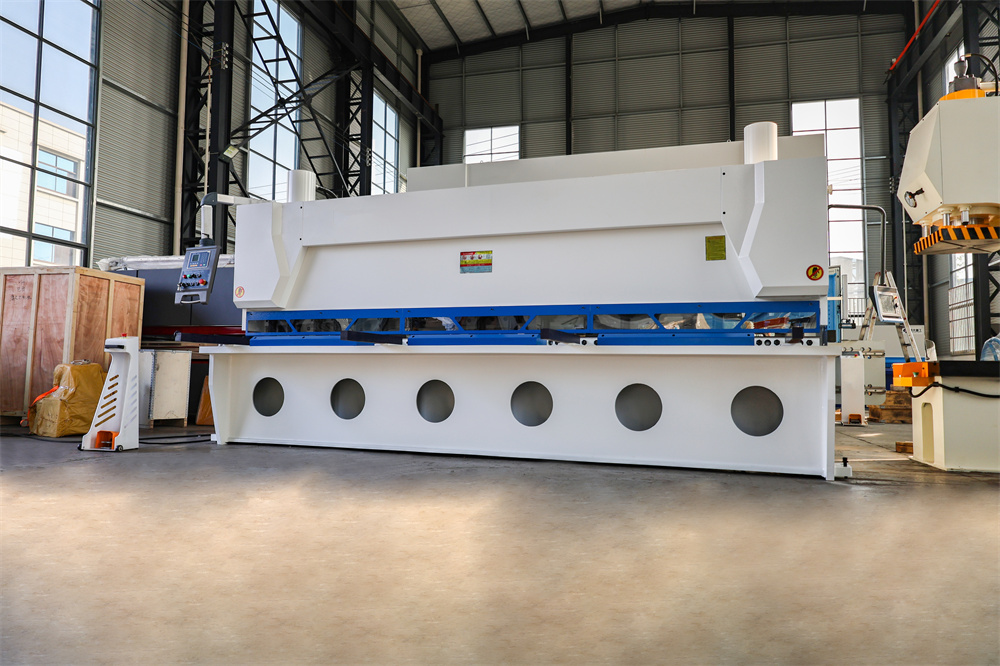
Comparison Summary: Swing Beam vs. Guillotine Shears
When you compare shearing machine brands before buying industrial use machinery, the first major fork in the road is choosing between a Hydraulic Swing Beam Shear (often categorized as the QC12K series) and a Hydraulic Guillotine Shear (the QC11K series). These two designs represent the vast majority of the industrial market, and each has distinct advantages depending on the application. The swing beam shear operates on a pivot point, where the upper blade moves in an arc. This design is inherently simpler, with fewer moving parts, making it a robust and cost-effective choice for many standard fabrication tasks.
On the other hand, the guillotine shear features an upper blade that moves vertically in a straight line. This allows for the adjustment of the rake angle—the angle at which the blade meets the material. By reducing the rake angle for thinner materials, the guillotine shear can significantly reduce the “twist” or “bow” often seen in sheared strips. For high-precision industries where flat, straight edges are non-negotiable, the guillotine design is often the preferred choice despite its higher initial cost and more complex hydraulic system.
Another critical factor in the comparison summary is the control system. Modern brands have moved away from manual backgauges to CNC-controlled systems. A brand that offers integrated controllers like the Estun E21S or Delem DAC series provides a significant advantage in terms of setup speed and repeatability. When comparing brands, look at how they integrate these electronics with their hydraulic manifolds. A well-integrated system ensures smoother transitions and less shock to the machine frame during the cutting cycle.
Machine A Overview: HARSLE QC12K Hydraulic Swing Beam Shear
The HARSLE QC12K series represents the pinnacle of swing beam technology. Designed for reliability and ease of use, this machine utilizes a welded steel plate structure that undergoes vibration stress relief to ensure long-term geometric stability. The “swing beam” action is powered by high-quality hydraulic cylinders that push the upper beam downward against powerful return springs or nitrogen cylinders. This design minimizes the number of wear points, as there are no vertical guides to lubricate or adjust, which is a significant factor when you compare shearing machine brands before buying industrial use.
One of the standout features of the QC12K is its rapid blade gap adjustment mechanism. Even in a swing beam design, the distance between the upper and lower blades must be tuned to the material thickness to prevent burrs or excessive blade wear. HARSLE incorporates a manual or motorized adjustment handle with a clear scale, allowing operators to make changes in seconds. This flexibility makes the QC12K an excellent choice for shops that handle a variety of gauges throughout the day.
Furthermore, the QC12K is typically equipped with the Estun E21S NC control system. This controller manages the backgauge positioning with high precision, featuring a built-in stroke counter and the ability to store multiple programs. The backgauge itself is often built with ball screws and polished rods, ensuring that the positioning is not only accurate but also repeatable over thousands of cycles. For industrial users looking for a balance between performance and budget, the QC12K is a formidable contender.
Machine B Overview: HARSLE QC11K Hydraulic Guillotine Shear
For applications requiring the highest levels of precision and the ability to cut very thick plates, the HARSLE QC11K Hydraulic Guillotine Shear is the industry standard. Unlike the swing beam, the QC11K moves the upper blade assembly vertically along heavy-duty hardened guides. This vertical movement allows for the implementation of an adjustable rake angle. By increasing the rake angle, the machine can cut thicker materials with less force; by decreasing it, the machine produces much flatter cuts on thin materials, virtually eliminating the distortion common in arc-based shearing.
The QC11K is engineered for heavy-duty industrial use. Its frame is significantly more massive than the swing beam equivalent to handle the vertical stresses of the guillotine action. The hydraulic system in the QC11K is also more sophisticated, often featuring independent control over the rake angle and the blade gap. This level of control is essential for high-end manufacturing sectors like aerospace or precision automotive components, where the quality of the sheared edge can affect subsequent welding or assembly processes.
In terms of automation, the QC11K often comes with advanced CNC controllers like the Delem DAC-360T. These controllers can automatically calculate the required blade gap and rake angle based on the material type and thickness entered by the operator. This “smart” shearing capability reduces the reliance on operator skill and minimizes the risk of human error. When you compare shearing machine brands before buying industrial use, the presence of such advanced automation features is a key indicator of a brand’s commitment to modern manufacturing standards.
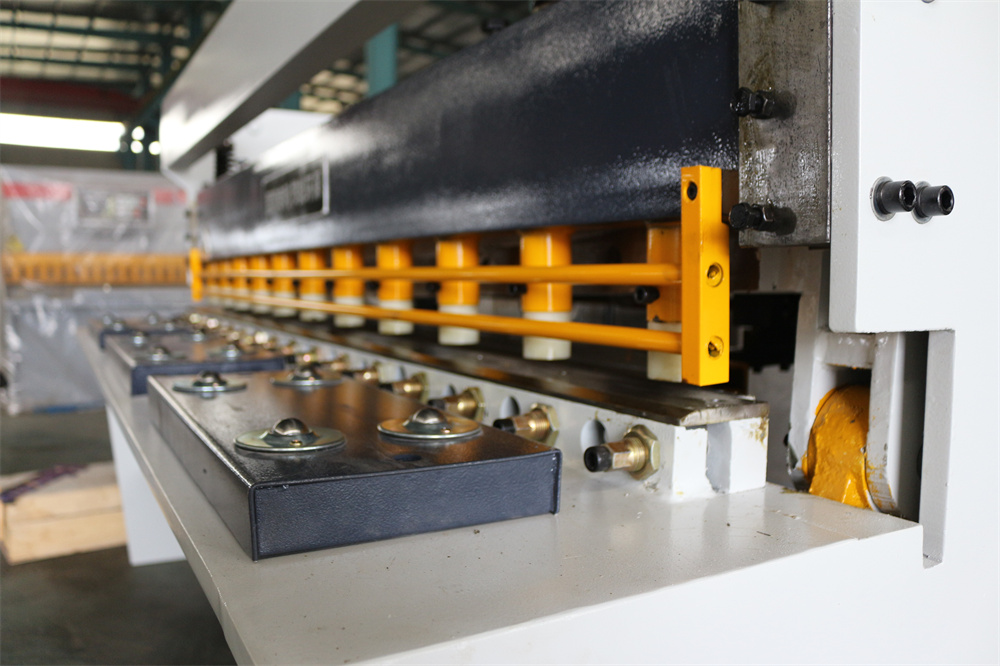
Specification Comparison Table
To help you compare shearing machine brands before buying industrial use, the following table highlights the technical differences between the standard Swing Beam (QC12K) and Guillotine (QC11K) models typically found in the HARSLE catalog.
| Feature | QC12K Swing Beam Shear | QC11K Guillotine Shear |
|---|---|---|
| Cutting Action | Arc/Pivot Movement | Vertical/Straight Movement |
| Rake Angle | Fixed (Optimized for range) | Adjustable (0.5° to 3.0°) |
| Blade Gap Adjustment | Manual or Motorized Handle | CNC Controlled / Automatic |
| Material Distortion | Low to Moderate | Minimal (Adjustable) |
| Controller Options | Estun E21S / E200PS | Delem DAC-310 / DAC-360T |
| Maintenance Needs | Low (Fewer moving parts) | Moderate (Guide lubrication) |
| Ideal Thickness | 3mm to 20mm | 4mm to 40mm+ |
| Frame Rigidity | High | Ultra-High |
Best-fit Applications for Industrial Shearing
Choosing the right machine depends heavily on the specific industrial application. The QC12K Swing Beam shear is the “all-rounder.” It is perfectly suited for general metal fabrication, HVAC ductwork, and the production of brackets or panels where a slight twist in the sheared strip is acceptable or can be corrected in subsequent forming steps. Because of its simpler design, it is also more resilient in environments where maintenance might not be performed with surgical precision. It is the go-to for construction-related fabrication and general repair shops.
The QC11K Guillotine shear finds its home in high-precision environments. If your facility produces long, narrow strips of metal, the guillotine’s ability to minimize “bowing” and “twisting” is indispensable. This makes it the preferred choice for manufacturers of metal furniture, high-end cabinetry, and decorative architectural elements. Additionally, for heavy industrial use involving plates over 20mm thick, the guillotine’s vertical force distribution is more efficient and puts less localized stress on the machine frame compared to a swing beam design.
Furthermore, industries that utilize a wide variety of materials—from soft aluminum to high-tensile stainless steel—benefit from the guillotine’s adjustable rake angle. Being able to fine-tune the machine’s geometry to the specific shear strength of the material ensures a cleaner cut and extends the life of the blades. When you compare shearing machine brands before buying industrial use, consider not just what you are cutting today, but the most challenging materials you might encounter in the next five years.
Cost and Maintenance Comparison
The total cost of ownership (TCO) is a critical metric when you compare shearing machine brands before buying industrial use. The initial purchase price is only the beginning. A swing beam shear like the QC12K generally has a lower upfront cost and lower maintenance requirements. Since it lacks the complex vertical guides of a guillotine, there are fewer surfaces to keep lubricated and fewer seals that might eventually leak. For many businesses, the ROI on a swing beam shear is realized much faster due to these lower operational costs.
However, the QC11K Guillotine shear, while more expensive initially, can offer lower costs in the long run for high-volume, high-precision operations. The ability to produce a perfect cut the first time reduces material waste—a significant saving when working with expensive alloys. Maintenance on a guillotine shear involves regular inspection of the guide rails and the hydraulic synchronization system. While more complex, a well-maintained guillotine shear can maintain its precision for decades, whereas a swing beam might eventually develop slight play in its pivot bearings after millions of cycles.
Blade maintenance is another factor. Both machines use high-carbon, high-chrome blades (often 9CrSi or 6CrW2Si). However, because the guillotine shear allows for more precise gap and rake settings, the blades often stay sharp longer because they are always operating in their “sweet spot.” When comparing brands, ask about the cost and availability of replacement blades and the ease with which they can be flipped (most blades have 4 cutting edges) or reground. HARSLE machines are designed with standard blade sizes to ensure that replacements are always accessible globally.
Recommendation for Industrial Buyers
When the time comes to compare shearing machine brands before buying industrial use, our recommendation is based on a tiered approach to your production needs. If your primary goal is a reliable, cost-effective machine for general fabrication of mild steel up to 16mm, the HARSLE QC12K Swing Beam Shear is the most logical choice. Its simplicity is its strength, providing a robust platform that is easy to operate and maintain, ensuring that your shop stays productive with minimal downtime.
For those who demand the highest precision, work with a wide range of material thicknesses, or require the ability to cut very thick plates (20mm and above), the HARSLE QC11K Guillotine Shear is the superior investment. The added control over rake angle and the vertical cutting action provide a level of edge quality that swing beam machines simply cannot match. In the context of modern “Industry 4.0” standards, the integration of CNC controls on the QC11K also makes it more compatible with automated workflows and digital shop management.
Finally, always look beyond the machine itself. A brand’s value is also found in its documentation, the availability of spare parts, and the technical expertise of its support team. HARSLE provides comprehensive manuals, video tutorials, and a global support network that ensures your investment is protected. Before making your final decision, request a cutting sample of your specific material to verify the edge quality and ensure the machine meets your exacting standards.
Frequently Asked Questions (FAQ)
What is the main difference between QC12K and QC11K?
The QC12K is a swing beam shear where the blade moves in an arc, while the QC11K is a guillotine shear where the blade moves vertically. The QC11K allows for rake angle adjustment, which reduces material distortion, whereas the QC12K is simpler and more cost-effective.
How often should I change the hydraulic oil?
For industrial use, it is generally recommended to change the hydraulic oil every 2,000 to 3,000 hours of operation, or at least once a year. Regular filtration and checking for contaminants can extend the life of the hydraulic components significantly.
Can these machines cut stainless steel?
Yes, both the QC12K and QC11K can cut stainless steel. However, because stainless steel is much harder than mild steel, you must reduce the rated capacity of the machine by approximately 50% (e.g., a 10mm mild steel shear is typically rated for 5mm stainless steel) and ensure the blade gap is set correctly.
What is the purpose of the nitrogen return cylinder?
The nitrogen return cylinder (found in many HARSLE models) provides a faster and smoother return stroke for the upper beam compared to traditional mechanical springs. This increases the number of strokes per minute and reduces the shock to the hydraulic system.
How do I know when the blades need sharpening?
Signs of dull blades include increased burrs on the cut edge, the machine struggling to cut material within its rated capacity, or a visible rounding of the blade’s cutting edge. Most blades can be flipped to a new edge or professionally reground several times before needing replacement.
Is CNC control necessary for a shearing machine?
While not strictly necessary for basic tasks, CNC control (like the Estun E21S) significantly improves accuracy and speed for jobs requiring multiple different backgauge settings. It also helps in tracking production through stroke counters and stored programs.