How to Select Press Brake Tonnage for Different Material Thicknesses: A Technical Guide


Technical Overview: Understanding Press Brake Tonnage
In the world of metal fabrication, precision and power must work in perfect harmony. When you select press brake tonnage for different material thicknesses, you are essentially determining the amount of pressure required to deform a metal sheet into a specific shape. Tonnage is the vertical force exerted by the ram of the press brake onto the workpiece and the die. If the tonnage is too low, the machine will fail to complete the bend, potentially stalling the hydraulic system. Conversely, if the tonnage is excessively high or applied incorrectly, it can lead to ‘ram upset,’ permanent deformation of the bed, or catastrophic failure of the tooling.
At HARSLE, we emphasize that tonnage is not just a number on a spec sheet; it is a critical engineering variable. The tonnage required for a bend is influenced by the material’s mechanical properties, the geometry of the tools, and the bending method employed (air bending, bottoming, or coining). For most modern industrial applications, air bending is the standard, where the material makes contact with only three points: the two edges of the V-die and the tip of the punch. This method requires significantly less tonnage than bottoming or coining but necessitates a deeper understanding of how to select press brake tonnage for different material thicknesses to ensure accuracy.
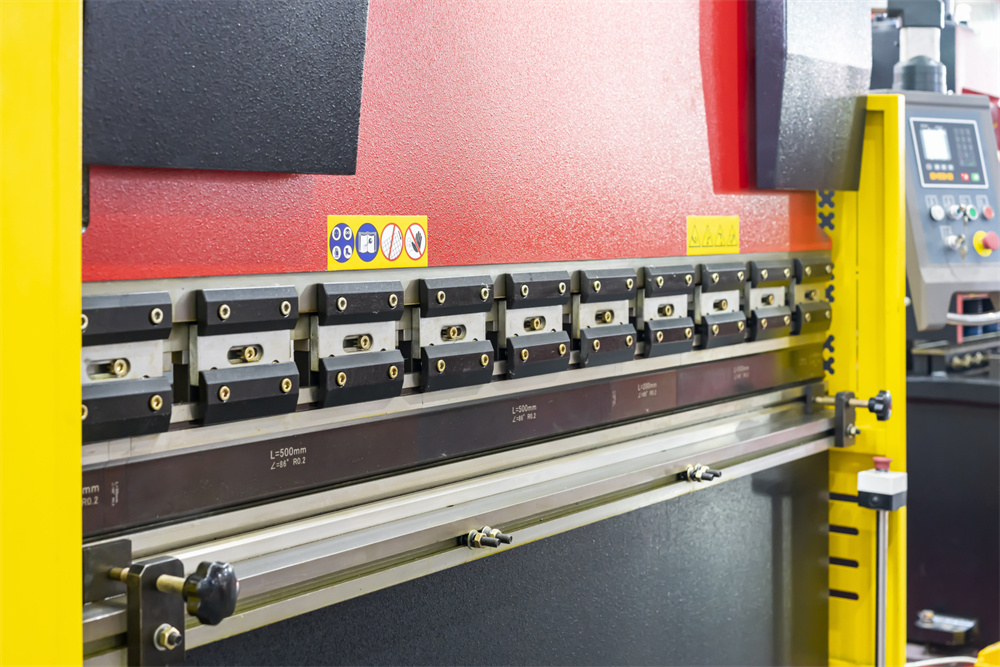
The relationship between material thickness and tonnage is non-linear. As the thickness of the sheet increases, the force required to bend it increases exponentially. Furthermore, the width of the V-die opening plays a pivotal role. A narrower V-die increases the required tonnage because the leverage is reduced, while a wider V-die decreases the tonnage but increases the minimum flange length and the internal bend radius. Understanding these trade-offs is the first step in optimizing your production line for both efficiency and machine longevity.
Core Parameters Influencing Tonnage Selection
To accurately select press brake tonnage for different material thicknesses, several core parameters must be evaluated. These factors form the basis of any calculation and will dictate the specifications of the machine you need for your workshop.
1. Material Tensile Strength
Not all metals are created equal. The tensile strength of the material—the maximum stress it can withstand while being stretched or pulled before breaking—is a primary factor. Standard tonnage charts are usually based on mild steel with a tensile strength of approximately 450 MPa (65,000 psi). If you are working with stainless steel (which can have a tensile strength of 700 MPa or higher), you will typically need 50% more tonnage than you would for mild steel of the same thickness. Conversely, soft aluminum alloys may require only 50% to 60% of the tonnage used for mild steel.
2. Material Thickness (T)
Thickness is the most obvious variable. In the standard bending formula, the thickness is squared, meaning that doubling the thickness of a plate doesn’t just double the required tonnage—it quadruples it, assuming the V-opening remains constant. This is why high-capacity machines are required for even relatively small increases in plate thickness when tight radii are needed.
3. V-Die Opening (V)
The V-die opening is the width of the bottom die. The industry standard for air bending is to use a V-opening that is 8 times the material thickness (8T) for materials up to 10mm thick. For thicker plates (over 10mm to 12mm), a V-opening of 10T or 12T is often used to keep the tonnage within manageable limits. Choosing a smaller V-opening allows for a smaller internal radius but drastically increases the pressure on the machine and the tools.
4. Bending Length (L)
Tonnage is usually expressed in tons per meter or tons per foot. The total tonnage required is the product of the tonnage per unit length and the total length of the bend. A 3-meter long bend will require three times the force of a 1-meter bend. It is crucial to ensure that the machine’s total capacity can handle the longest part you intend to produce at its maximum thickness.
The Calculation Method: The Tonnage Formula
While most modern HARSLE CNC press brakes come with integrated software that calculates tonnage automatically, every engineer and operator should understand the underlying physics. The standard formula for air bending mild steel is:
P = (650 x T² x L) / V
Where:
– P = Tonnage (in kN or Tons)
– 650 = A constant for mild steel (this varies slightly by source, some use 630-680)
– T = Material thickness (mm)
– L = Length of the bend (m)
– V = V-die opening width (mm)
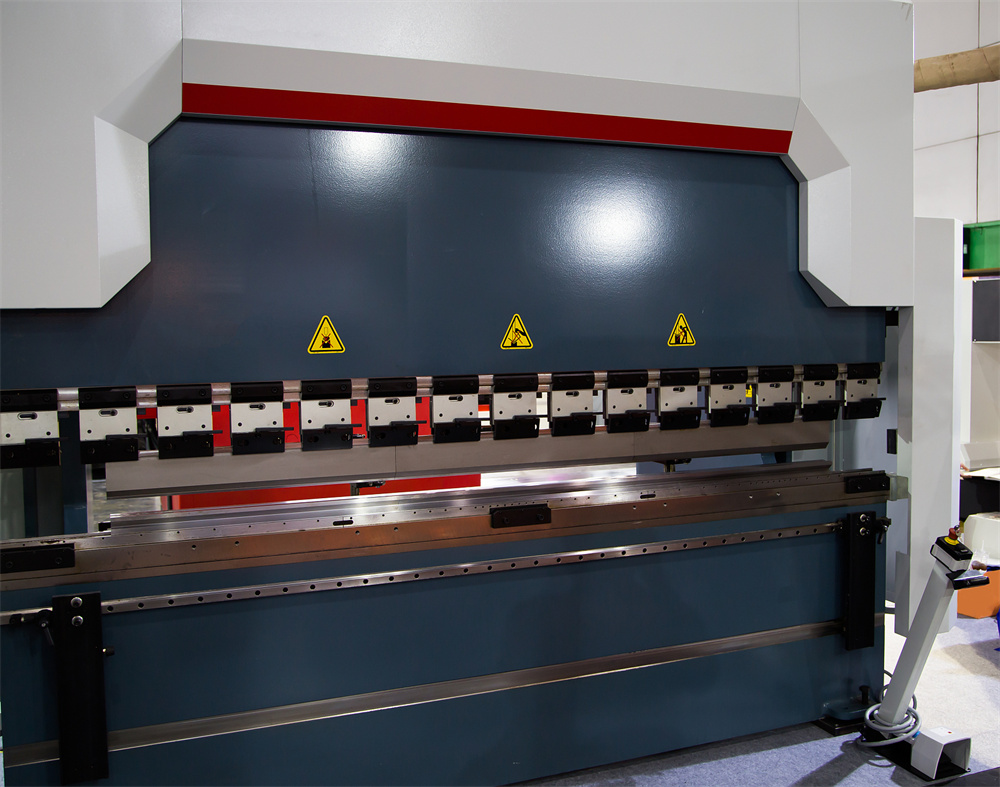
To convert the result from kilonewtons (kN) to metric tons, divide by 9.8 (or roughly 10 for a quick estimate). If you are bending stainless steel, multiply the final result by 1.5. For aluminum, multiply by 0.5. This formula provides the tonnage required for air bending. If you intend to perform bottoming (where the punch presses the material fully into the die), you must multiply the air bending tonnage by 3 to 5 times. For coining (where the material is actually thinned at the bend line), the tonnage can be 10 times higher than air bending.
It is also important to consider the ‘concentrated load’ limit. Even if a machine is rated for 100 tons, you cannot necessarily apply all 100 tons over a very short distance (e.g., 100mm) without damaging the bed or the ram. Always check the manufacturer’s specifications for the maximum tons per meter the machine can handle in a concentrated area.
Tonnage Parameter Table for Mild Steel
The following table provides a quick reference to select press brake tonnage for different material thicknesses using the standard 8T V-opening rule for mild steel (Tensile Strength ~450 MPa). Tonnage is shown as Tons per Meter (t/m).
| Material Thickness (mm) | Recommended V-Opening (mm) | Internal Radius (mm) | Min. Flange Length (mm) | Required Tonnage (t/m) |
|---|---|---|---|---|
| 0.5 | 4 | 0.7 | 2.8 | 4 |
| 1.0 | 8 | 1.3 | 5.5 | 8 |
| 1.5 | 12 | 2.0 | 8.5 | 12 |
| 2.0 | 16 | 2.6 | 11.0 | 17 |
| 3.0 | 24 | 4.0 | 16.5 | 25 |
| 4.0 | 32 | 5.3 | 22.0 | 33 |
| 5.0 | 40 | 6.7 | 28.0 | 42 |
| 6.0 | 48 | 8.0 | 33.0 | 50 |
| 8.0 | 64 | 10.7 | 45.0 | 67 |
| 10.0 | 80 | 13.3 | 55.0 | 83 |
| 12.0 | 100 | 16.0 | 70.0 | 100 |
| 16.0 | 160 | 26.0 | 110.0 | 110 |
| 20.0 | 200 | 33.0 | 140.0 | 140 |
Note: The values above are estimates for air bending. Always add a 20% safety margin when selecting a machine to account for variations in material hardness and thickness tolerances.
Common Engineering Mistakes in Tonnage Selection
Even experienced fabricators can make errors when they select press brake tonnage for different material thicknesses. Avoiding these common pitfalls will save you from costly repairs and scrapped parts.
1. Underestimating High-Strength Alloys
With the rise of high-strength steels like Hardox or specialized stainless grades, many shops try to use mild steel tonnage settings. These materials have much higher yield points. Attempting to bend them without adjusting the tonnage can cause the machine to reach its bypass pressure, or worse, crack the tooling. Always verify the tensile strength of your specific batch of material.
2. Using the Wrong V-Die for the Job
Operators often use whatever die is currently on the machine to save setup time. If you use a V-opening that is too small for the thickness, the tonnage spikes. For example, bending 6mm steel on a 32mm V-die (instead of the recommended 48mm) increases the required tonnage by nearly 50%. This puts unnecessary stress on the hydraulic seals and the frame.
3. Ignoring the Tonnage per Foot Limit
As mentioned earlier, press brakes have a limit on how much force can be concentrated in a small area. If you have a 200-ton machine that is 4 meters long, it is designed to handle 50 tons per meter. If you try to bend a very thick, short piece that requires 80 tons over only 0.5 meters, you are exceeding the local design limit, which can cause the ram to bow permanently (ram upset).
4. Neglecting Tooling Ratings
The machine might be capable of 300 tons, but your punch and die might only be rated for 100 tons per meter. Always check the load limit stamped on your tooling. Using high-tonnage settings on light-duty tools can cause the tools to shatter, posing a significant safety risk to the operator.
Selection Checklist for Press Brake Buyers
When you are ready to invest in a HARSLE press brake, use this checklist to ensure you select press brake tonnage for different material thicknesses correctly for your specific needs.
- Identify the thickest material: What is the absolute maximum thickness you will bend? (e.g., 12mm Mild Steel).
- Identify the longest bend: What is the maximum length for that thickness? (e.g., 3000mm).
- Determine the material type: Will you be bending stainless steel or high-tensile alloys frequently? If so, calculate based on their tensile strength, not mild steel.
- Calculate the peak tonnage: Use the formula P = (650 x T² x L) / V. For 12mm steel over 3m with a 100mm V-die: (650 x 144 x 3) / 100 = 2808 kN ≈ 286 Tons.
- Add a safety factor: Add 20% to your peak calculation. In the example above, a 350-ton or 400-ton machine would be the appropriate choice.
- Consider future-proofing: If your business is growing, consider if you might need to bend thicker materials in a year or two. It is much cheaper to buy more capacity now than to replace the machine later.
- Evaluate the control system: Ensure the machine features a CNC controller (like Delem or Cybelec) that includes a built-in tonnage calculator and overload protection.
- Check the throat depth: For large flanges, ensure the machine’s throat depth can accommodate the part geometry without interference.
Frequently Asked Questions (FAQ)
Can I bend a 10mm plate on a 60-ton press brake?
Generally, no. According to the tonnage chart, 10mm mild steel requires approximately 83 tons per meter using an 80mm V-die. If your part is 1 meter long, a 60-ton machine will not have enough power to complete the bend. You would need to use a much wider V-die (e.g., 120mm or 160mm) to reduce the tonnage, but this will result in a very large internal radius and a longer minimum flange requirement.
What is the ‘Rule of 8’ in press brake bending?
The ‘Rule of 8’ is a guideline suggesting that the V-die opening should be 8 times the material thickness (V=8T). This provides a balance between reasonable tonnage requirements and a standard internal bend radius (roughly equal to the material thickness). For materials thicker than 12mm, this often shifts to 10T or 12T to keep tonnage within machine limits.
How does stainless steel affect tonnage selection?
Stainless steel work-hardens rapidly and has a higher tensile strength than mild steel. To select press brake tonnage for different material thicknesses when working with stainless (like Grade 304 or 316), you should increase your tonnage calculations by 50% to 60%. Failure to do so will result in incomplete bends and potential machine strain.
What happens if I exceed the machine’s tonnage?
Modern HARSLE machines are equipped with hydraulic relief valves and CNC software that prevents the machine from exceeding its rated capacity. However, if these systems are bypassed or if the load is too concentrated, you can cause ‘ram upset’ (permanent deformation of the ram), damage the hydraulic cylinders, or break the punch and die. Always stay within the rated limits of both the machine and the tooling.
Does the bend angle affect the tonnage?
In air bending, the tonnage remains relatively constant once the material has reached its yield point and is being formed into the V-die. However, if you are bottoming or coining to achieve a specific angle, the tonnage increases dramatically as the punch reaches the bottom of the stroke. For most CNC air bending applications, the tonnage is calculated for a 90-degree bend as the peak reference point.