Press Brake Machine Buying Guide for Industrial Metal Fabricators

Technical Overview: The Evolution of Press Brake Technology
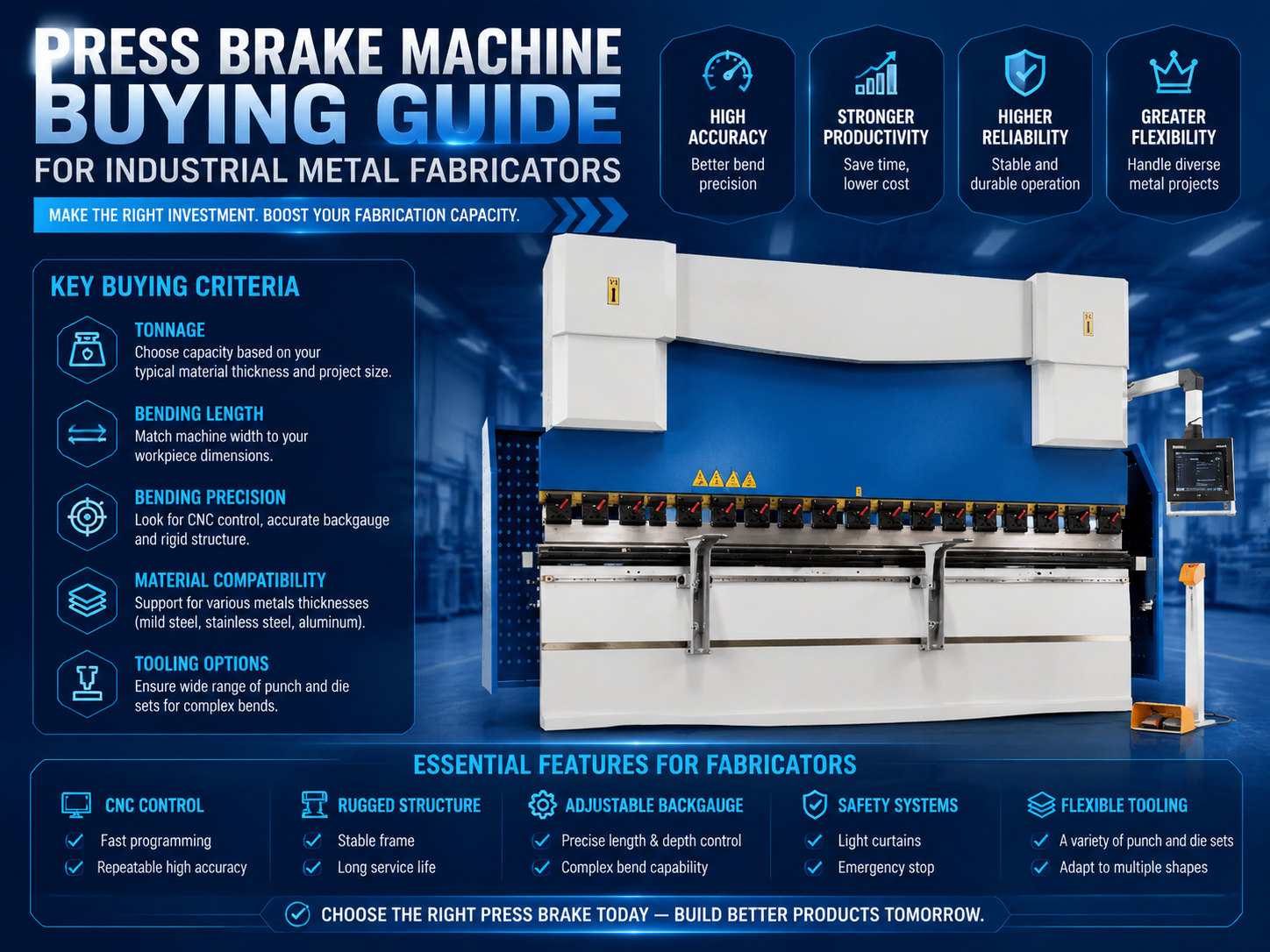
In the modern landscape of industrial manufacturing, the press brake stands as a cornerstone of sheet metal fabrication. For industrial metal fabricators, selecting the right press brake machine is not merely a purchase; it is a strategic investment that dictates the precision, efficiency, and versatility of their production line. A press brake is a machine tool designed to bend sheet and plate material, most commonly sheet metal, by clamping the workpiece between a matching punch and die. While the fundamental principle remains the same, the technology has evolved from simple mechanical levers to sophisticated CNC-controlled hydraulic and electric systems.
Industrial metal fabricators today must choose between several drive systems: mechanical, hydraulic, pneumatic, and servo-electric. Mechanical brakes, once the industry standard, have largely been phased out in favor of hydraulic systems due to safety and control limitations. Hydraulic press brakes, particularly CNC synchronous models, offer immense power and precision, making them the workhorse of heavy industry. Recently, servo-electric press brakes have gained traction for their high speed, energy efficiency, and extreme accuracy in thinner gauge materials. Understanding these technological nuances is the first step in the Press Brake Machine Buying Industrial Metal Fabricators journey.
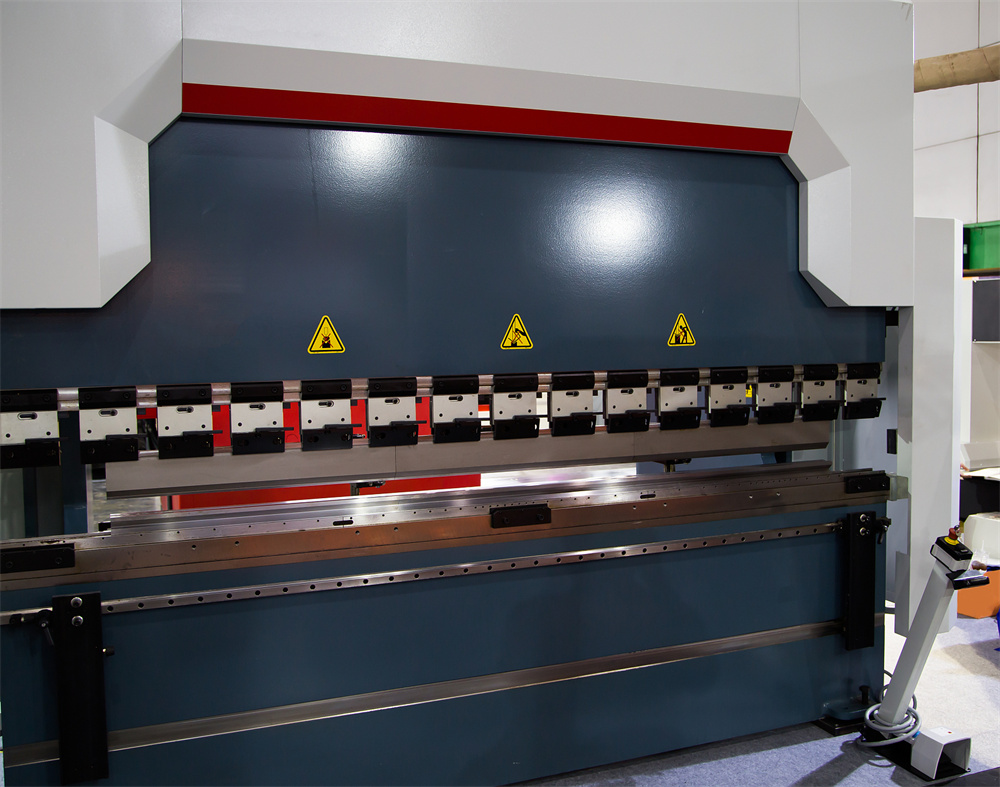
The integration of CNC (Computer Numerical Control) has revolutionized the industry. Modern CNC systems control not just the downward movement of the ram (Y-axis), but also the backgauge positioning (X, R, Z axes), crowning compensation, and even robotic loading systems. For a fabricator, this means reduced setup times, minimized scrap, and the ability to produce complex multi-bend parts with a single handling. HARSLE, as a leader in the field, emphasizes that the synergy between robust mechanical construction and advanced software is what defines a world-class press brake.
Core Parameters: Defining Your Machine Requirements
When navigating the Press Brake Machine Buying Industrial Metal Fabricators process, several core parameters must be evaluated to ensure the machine meets your specific production needs. These parameters are the physical and operational limits of the machine.
1. Tonnage (Bending Force)
Tonnage is the maximum pressure the press brake can exert. It is the most critical factor because if you underestimate the required tonnage, you risk damaging the machine or being unable to complete the bend. Conversely, over-specifying leads to unnecessary energy costs and higher initial investment. Tonnage requirements depend on material thickness, material type (tensile strength), and the V-opening of the die. For example, stainless steel requires significantly more tonnage than mild aluminum for the same thickness.
2. Bending Length
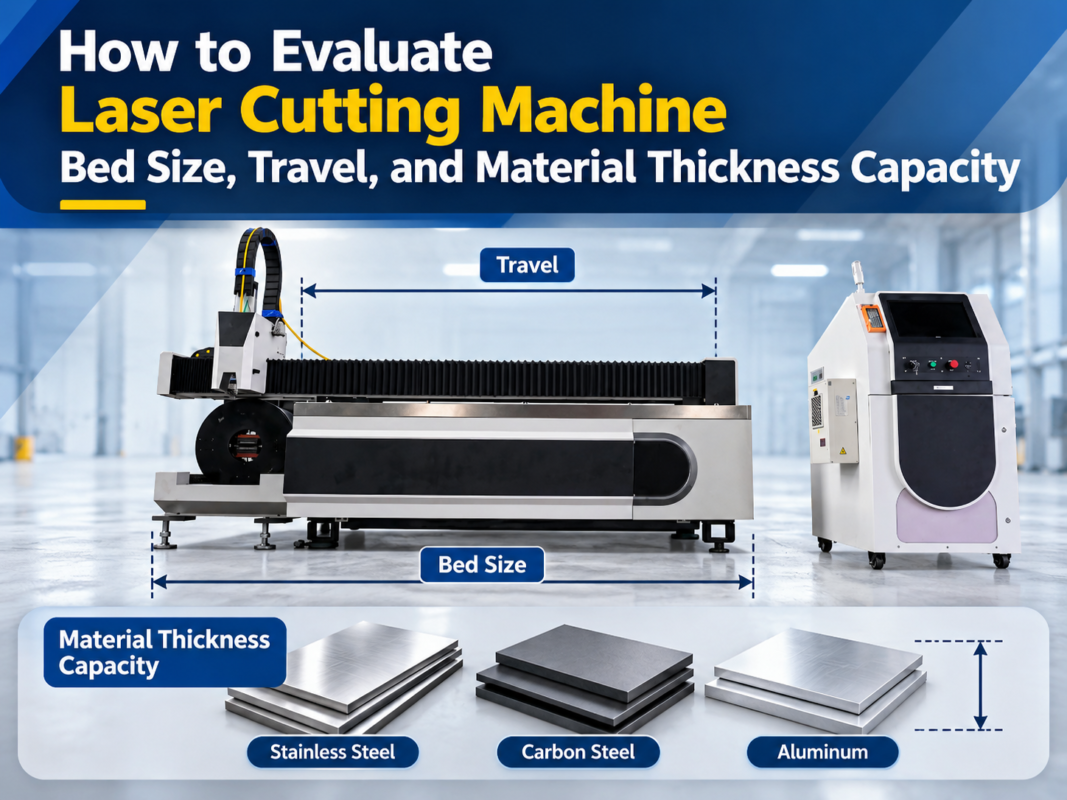
This refers to the maximum width of the sheet metal the machine can process. Industrial fabricators must consider not only the longest part they currently produce but also potential future projects. It is also important to note the distance between the side housings (frames), as this determines the maximum length of a part that can pass through the machine for deep box bending or complex flange work.
3. Throat Depth and Stroke
Throat depth is the distance from the center of the tools to the back of the machine frame. A deeper throat allows for larger flanges to be bent. The stroke is the total travel distance of the ram. A longer stroke, combined with a high open height (the distance between the ram and the bed when fully retracted), is essential for bending deep boxes or using tall specialized tooling.
4. Backgauge Axes
The backgauge is what ensures the part is positioned correctly before the bend. A basic machine might have a 2-axis backgauge (X and R), while high-end industrial models feature 4, 6, or even 8 axes. For complex geometries, independent Z1 and Z2 axes (lateral movement) and Delta-X axes are vital for precision and speed.
Calculation Method: Determining Tonnage and Tooling
To make an informed decision during the Press Brake Machine Buying Industrial Metal Fabricators process, one must master the basic tonnage calculation. While most modern CNC controllers have built-in calculators, understanding the manual formula is essential for planning and safety.
The standard formula for air bending mild steel (with a tensile strength of approximately 450 MPa) is:
P = (650 x S² x L) / V
- P: Tonnage required (in kN)
- S: Material thickness (mm)
- L: Bending length (m)
- V: V-opening of the bottom die (mm)
The V-Opening Rule: Generally, for materials up to 6mm thick, the V-opening should be 8 times the material thickness (V=8S). For thicker materials (6mm to 12mm), V=10S is common. Using a smaller V-opening increases the required tonnage exponentially and can lead to tool breakage or “coining” the material, which is often undesirable in precision CNC work.
Furthermore, fabricators must apply a multiplier for different materials. For instance, stainless steel typically requires 1.5 to 2 times the tonnage of mild steel. Aluminum may require only 50-60% of the tonnage. Always include a 20% safety margin in your calculations to account for variations in material hardness and thickness tolerances.
Parameter Table: Typical Industrial Press Brake Specifications
The following table provides a reference for common industrial configurations. These specs serve as a baseline for fabricators to compare different models.
| Model Category | Tonnage (Tons) | Bending Length (mm) | Distance Between Uprights (mm) | Throat Depth (mm) | Typical Applications |
|---|---|---|---|---|---|
| Light Industrial | 40 – 63 | 1600 – 2500 | 1200 – 2000 | 250 | Small brackets, electronics enclosures |
| Standard Production | 100 – 160 | 3200 – 4000 | 2600 – 3200 | 320 | General cabinetry, HVAC, automotive parts |
| Heavy Duty | 200 – 400 | 4000 – 6000 | 3200 – 5000 | 400 | Construction machinery, large panels |
| Extra Heavy/Tandem | 500 – 2000+ | 6000 – 12000+ | Custom | 500+ | Shipbuilding, pole manufacturing, infrastructure |
Common Engineering Mistakes in Press Brake Selection
Even experienced industrial metal fabricators can fall into traps when purchasing new equipment. Avoiding these common mistakes can save thousands in operational costs and downtime.
1. Ignoring the Crowning System
When a press brake applies pressure, the ram and the bed naturally deflect or “bow.” Without compensation, the angle in the middle of the bend will be wider than at the ends. This is known as the “canoe effect.” Industrial buyers often overlook the importance of a high-quality crowning system. Mechanical crowning (using a series of wedges) is generally more precise and consistent than hydraulic crowning for high-precision work. Ensure your machine has an automatic CNC-controlled crowning system if you are bending lengths over 2 meters.
2. Underestimating the Importance of the Controller
The CNC controller is the brain of the machine. Choosing a cheap, non-graphical controller to save money is a common mistake. A high-end controller (like Delem, Cybelec, or ESA) allows for 3D visualization, offline programming, and automatic bend sequencing. This drastically reduces the skill level required for the operator and speeds up the transition from drawing to finished part.
3. Neglecting Tooling Compatibility
A press brake is only as good as its tooling. Many fabricators buy a machine without considering the clamping system (Amada/Promecam, Wila/Trumpf, etc.). If you already have a significant investment in one type of tooling, ensure your new machine is compatible or comes with the appropriate adapters. Furthermore, using worn or improper tooling is a leading cause of inaccurate bends and machine wear.
4. Overlooking Maintenance and Support
Industrial environments are harsh. A press brake requires regular maintenance of its hydraulic oil, filters, and mechanical guides. Buying from a manufacturer without a local service footprint or readily available spare parts can lead to weeks of downtime. HARSLE recommends checking the availability of technical support and the ease of sourcing wear parts like seals and valves before finalizing a purchase.
Selection Checklist for Industrial Metal Fabricators
Use this checklist to ensure you have covered all bases in your Press Brake Machine Buying Industrial Metal Fabricators strategy:
- Material Analysis: What is the maximum thickness and tensile strength of the materials you will bend?
- Part Geometry: Do you need a high open height or deep throat for complex flanges?
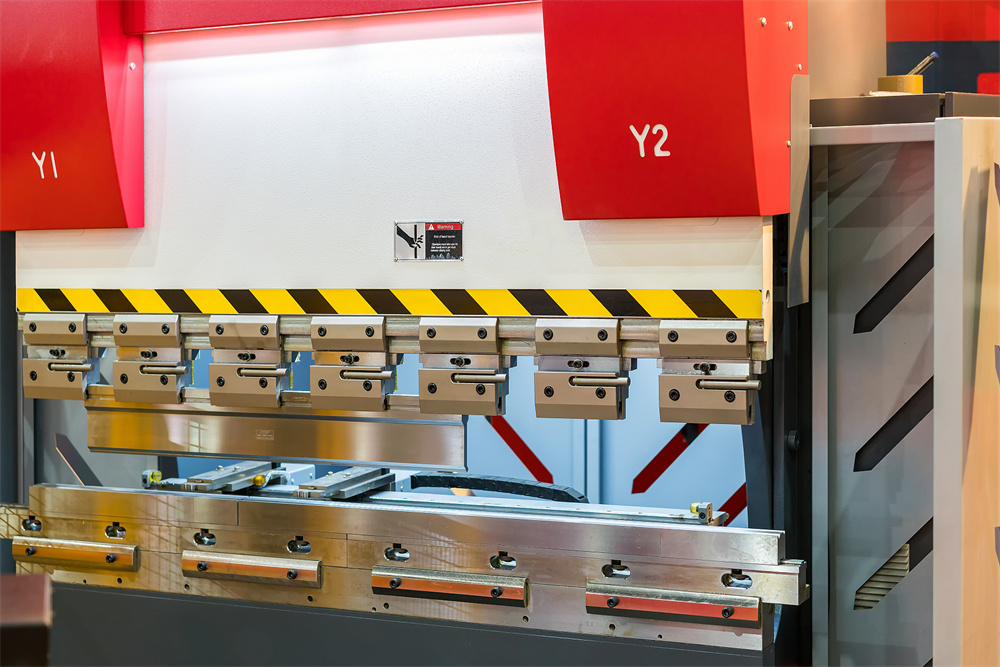
- Accuracy Requirements: Is +/- 0.5 degrees acceptable, or do you need +/- 0.1 degrees? (This determines the need for Y1/Y2 synchronization).
- Production Volume: Will the machine run 1 shift or 3? High-volume shops should consider servo-hybrid systems for speed and energy savings.
- Safety Features: Does the machine include laser guarding (e.g., DSP, Lazersafe) to protect operators without slowing down production?
- Software Integration: Can the machine import DXF or STEP files directly from your CAD department?
- Floor Space: Does the machine’s footprint, including the safety perimeter, fit your factory layout?
- Future Proofing: Is the controller and frame capable of being upgraded with robotic arms or sheet followers later?
FAQ: Frequently Asked Questions
Q: What is the difference between NC and CNC press brakes?
A: An NC (Numerical Control) press brake typically controls only the depth of the ram and the position of the backgauge with simple digital readouts. A CNC (Computer Numerical Control) press brake uses sophisticated software to manage multiple axes simultaneously, calculate bend sequences, and compensate for material springback and machine deflection automatically.
Q: How often should I change the hydraulic oil?
A: For most industrial press brakes, the hydraulic oil should be changed every 2,000 to 4,000 hours of operation, or at least once a year. Regular oil analysis can help extend this interval while ensuring the valves and pumps remain in peak condition.
Q: Can I bend small parts on a large tonnage machine?
A: Yes, but with caution. Bending a very small part in the center of a high-tonnage machine can cause “center loading,” which might lead to localized deformation of the bed or ram over time. It is better to use a machine sized appropriately for the work, or ensure you are using the correct tooling to distribute the load.
Q: Why is my bend angle inconsistent across the length of the sheet?
A: This is usually due to machine deflection. If your machine does not have a crowning system, or if the crowning system is not calibrated correctly, the center of the bend will be under-bent. Other factors include variations in material thickness or grain direction.
Q: What are the benefits of a Servo-Hybrid press brake?
A: Servo-hybrid systems use servo motors to drive hydraulic pumps only when the ram is moving. This results in up to 60% energy savings, quieter operation, less oil heating (which improves seal life), and faster approach/retraction speeds compared to traditional hydraulic systems.
In conclusion, the Press Brake Machine Buying Industrial Metal Fabricators process requires a deep dive into both current needs and future goals. By focusing on accurate tonnage calculations, robust CNC features, and avoiding common engineering pitfalls, fabricators can select a HARSLE machine that provides a competitive edge in the demanding world of metal fabrication.