How Press Brakes Are Used In Trailer, Truck, and Transportation Fabrication: A Comprehensive Industrial Guide


Introduction to Press Brakes in the Transportation Sector
In the modern industrial landscape, the transportation sector stands as the backbone of global commerce. From the massive trailers that haul goods across continents to the specialized delivery trucks navigating urban centers, the structural integrity and efficiency of these vehicles are paramount. Central to the manufacturing of these heavy-duty machines is the press brake. When we discuss how Press Brakes Are Used In Trailer, Truck, Transportation Fabrication, we are looking at a process that demands extreme precision, high tonnage, and the ability to handle exceptionally long workpieces.
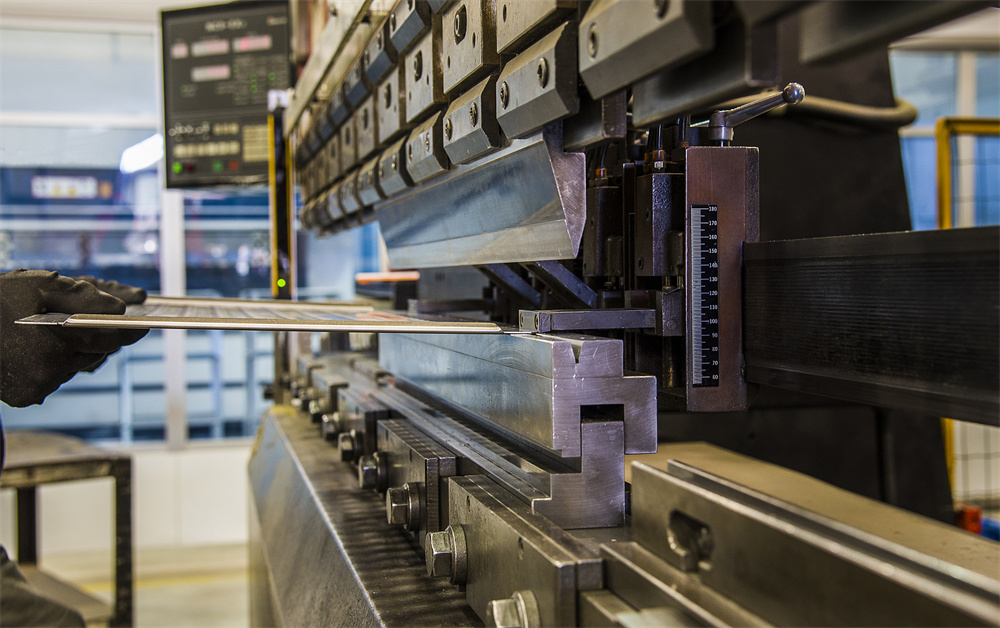
Press brakes are hydraulic or electric machines designed to bend sheet metal and plate material into specific profiles. In the context of trailer and truck manufacturing, these machines are responsible for creating the chassis, side panels, cross members, and floor plates. The evolution of CNC (Computer Numerical Control) technology has allowed manufacturers like HARSLE to provide solutions that meet the rigorous standards of the automotive and logistics industries, ensuring that every bend is accurate to the millimeter, which is crucial for vehicle safety and aerodynamics.
The demand for lighter yet stronger vehicles has led to the adoption of high-strength, low-alloy (HSLA) steels and aluminum alloys. These materials require specialized bending techniques to manage springback and maintain structural strength. Consequently, the role of the press brake has shifted from a simple bending tool to a sophisticated piece of industrial machinery capable of complex multi-stage forming. This guide explores the intricate ways these machines are utilized, the technical specifications required for heavy-duty fabrication, and how to select the right equipment for your production line.
Key Considerations for Transportation Fabrication
Material Selection and Bending Challenges
One of the primary considerations in trailer and truck fabrication is the material. Manufacturers are increasingly moving toward high-tensile materials to reduce the overall weight of the vehicle, which in turn improves fuel efficiency and increases payload capacity. However, bending these materials is significantly more challenging than bending standard mild steel. High-strength steel has a much higher yield point, meaning the press brake must exert more force (tonnage) to achieve the desired angle. Furthermore, these materials exhibit significant ‘springback’—the tendency of the metal to return to its original shape after the pressure is released.
To combat this, modern CNC press brakes used in this industry are equipped with advanced software that calculates the exact amount of over-bending required to achieve the final target angle. This ensures consistency across thousands of parts, which is essential for automated assembly lines where parts must fit together perfectly without manual adjustment.
Handling Large-Scale Components
Unlike general sheet metal shops that might work with small brackets, transportation fabrication involves massive components. Trailer side walls can reach lengths of 12 to 16 meters, and main longitudinal beams (chassis rails) are often equally long. This necessitates the use of large-format press brakes or tandem systems. A tandem press brake consists of two or more machines synchronized to work as one, providing the necessary bed length and tonnage to bend long, heavy plates in a single stroke.
The physical handling of these large plates also presents a challenge. Manufacturers often integrate front-sheet supports and robotic loading systems to assist operators. These supports move in synchronization with the bending beam, preventing the material from sagging or ‘kinking’ under its own weight during the bending process, which is a common issue when dealing with thin but long aluminum panels for trailer roofs.
Precision and Aerodynamics
In the modern era, the shape of a truck or trailer is not just about utility; it is about aerodynamics. Reducing wind resistance is a key goal for fleet operators looking to save on fuel costs. This has led to more complex, curved designs in truck fairings and trailer noses. Press brakes are used to create these multi-bend profiles that contribute to a streamlined vehicle shape. Achieving these complex geometries requires multi-axis backgauges (such as 6-axis systems) that can position the workpiece accurately for every individual bend in a sequence.
Technical Details of Press Brake Operations
The Role of CNC Crowning Systems
When a press brake applies hundreds of tons of pressure to a long piece of metal, the machine’s frame and bed naturally undergo a slight deflection. This deflection is most pronounced in the center of the machine, which can result in a ‘canoe effect’ where the bend angle is wider in the middle than at the ends. In the transportation industry, where a 13-meter beam must be perfectly straight, this is unacceptable.
To solve this, high-end press brakes utilize CNC crowning systems. These systems use hydraulic cylinders or mechanical wedges built into the lower bed to create a counter-curve that matches the deflection of the upper beam. By dynamically adjusting this crowning during the stroke, the machine ensures a uniform bend angle across the entire length of the workpiece. This is a critical technical feature for any shop involved in trailer chassis fabrication.
Tandem and Tridem Configurations
As mentioned, the length of transportation components often exceeds the capacity of a single machine. Tandem configurations involve two press brakes linked by a single CNC controller. They can operate independently for smaller parts or in sync for long parts. For even longer requirements, tridem (three machines) setups are used. The synchronization must be perfect; even a millisecond of lag between the machines could result in a twisted part or damage to the tooling. HARSLE’s tandem solutions utilize high-speed BUS communication to ensure that the Y1 and Y2 axes of all machines move in perfect harmony.
Tooling for Heavy-Duty Applications
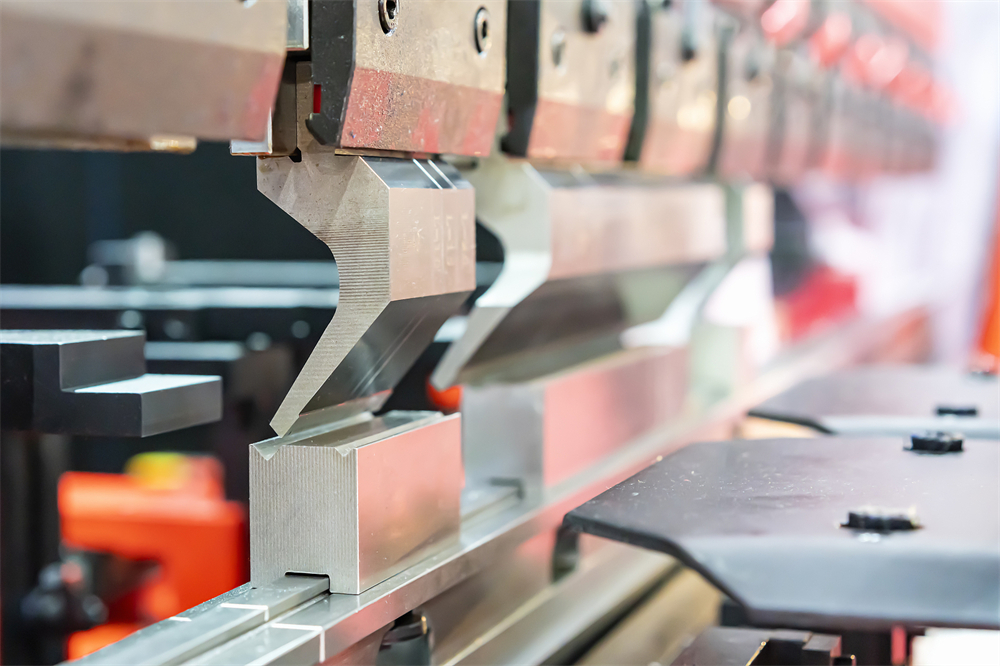
The tooling used in truck and trailer fabrication is vastly different from standard precision ground tooling. Because of the high tonnages involved, the dies must be made from high-strength, hardened tool steel capable of withstanding extreme pressure without deforming. Large V-openings are required to bend thick plates, and often, ‘Multi-V’ dies or adjustable dies are used to accommodate different material thicknesses without frequent tool changes. This versatility is vital for shops that switch between fabricating thin side panels and thick structural frames.
Advanced Backgauge Systems
Accuracy in bending is only as good as the positioning of the material. In transportation fabrication, parts often have multiple bends at different angles and orientations. A 4-axis or 6-axis backgauge (X, R, Z1, Z2, X1, X2) allows the machine to grip and position the plate with extreme flexibility. For example, when forming a tapered chassis rail, the backgauge fingers must move independently to align the plate at an angle relative to the bending line. This level of control reduces setup time and eliminates the need for manual marking of the metal.
Selection Advice for Transportation Fabricators
Calculating Tonnage Requirements
The first step in selecting a press brake for trailer or truck work is determining the maximum tonnage required. The formula for tonnage calculation is: P = (650 x S² x L) / V, where P is tonnage, S is material thickness, L is length, and V is the V-opening of the die. However, when working with high-strength steel, you must apply a multiplier (often 1.5x to 2x) to account for the material’s increased resistance. It is always advisable to choose a machine with 20% more capacity than your maximum calculated need to avoid running the hydraulic system at its limit, which extends the machine’s lifespan.
Bed Length and Throat Depth
In this industry, bed length is usually the deciding factor. While tandem machines offer the most flexibility, you must also consider the ‘throat depth’—the distance from the bending centerline to the back of the machine frame. If you are bending large, deep boxes or wide panels, a shallow throat will limit the size of the flange you can create. For truck body manufacturers, a deep throat (500mm to 1000mm) is often a necessity to allow for the rotation of large parts within the machine.
Automation and Industry 4.0
With labor shortages affecting the manufacturing sector, automation is no longer a luxury. When selecting a press brake, consider its compatibility with robotic arms. Automated bending cells can run 24/7, handling the repetitive task of bending hundreds of identical cross-members for trailers. Furthermore, look for machines that offer Industry 4.0 connectivity, allowing you to track production metrics, monitor machine health, and import 3D CAD files directly into the CNC controller to generate bending programs automatically.
Maintenance and Serviceability
A press brake in a high-volume trailer factory is a mission-critical asset. Downtime can halt the entire assembly line. When choosing a supplier like HARSLE, evaluate the ease of maintenance. Are the hydraulic components from reputable brands like Rexroth or Hoerbiger? Is the CNC system a standard like Delem or Cybelec that technicians are familiar with? Ensuring that spare parts are readily available and that the machine has a self-diagnostic system will save significant costs over the equipment’s lifecycle.
Frequently Asked Questions (FAQ)
What is the best type of press brake for trailer chassis?
For trailer chassis, a tandem hydraulic CNC press brake is generally the best choice. It provides the necessary length (often 8m to 12m) and the high tonnage (400T to 1000T+) required to bend long, thick structural steel beams while maintaining precision through CNC crowning.
How do you handle springback in high-strength steel?
Springback is managed through CNC controllers that have built-in material databases. The operator enters the material type and thickness, and the controller calculates the required over-bend. Advanced machines also use laser angle-measuring systems that measure the bend in real-time and adjust the stroke automatically to reach the exact angle.
Can one press brake handle both aluminum and steel?
Yes, but the tooling and settings must be adjusted. Aluminum is softer and prone to surface marking, so specialized ‘no-mar’ dies or urethane inserts might be used. The CNC program must also be changed to account for the different springback characteristics of aluminum compared to steel.
Why is crowning so important for long parts?
Without crowning, the center of a long bend will be under-bent because the machine frame deflects upward under pressure. This results in a part that is not straight, making it impossible to weld or bolt accurately into a larger assembly like a truck frame.
What safety features are required for large press brakes?
Safety is critical when handling large plates. Essential features include laser guards (like DSP or Fiessler) that stop the beam if an obstruction is detected, side and rear interlocked gates, and dual palm-button or foot-pedal controls. For large parts, specialized sheet followers also act as a safety feature by preventing the material from whipping upward toward the operator.
Conclusion: The Future of Transportation Fabrication
The role of the press brake in the transportation industry is more vital than ever. As the world moves toward more efficient, sustainable, and specialized vehicles, the demands on metal fabrication equipment continue to rise. Understanding how Press Brakes Are Used In Trailer, Truck, Transportation Fabrication is the first step for any manufacturer looking to upgrade their capabilities and stay competitive in a demanding market.
By investing in high-tonnage, CNC-controlled machinery with features like tandem synchronization and automated crowning, fabricators can ensure they produce components that meet the highest standards of safety and performance. HARSLE remains at the forefront of this technology, providing the robust and precise machinery needed to build the next generation of trucks and trailers. Whether you are forming simple U-channels or complex aerodynamic fairings, the right press brake is the foundation of your production success. As materials science evolves, so too will the press brake, continuing its legacy as the indispensable tool of the transportation fabrication industry.