
Press Brake Applications Explained: From Simple Bends to Complex Forming


Introduction to Press Brake Applications in Modern Fabrication
In the world of metal fabrication, the press brake stands as a cornerstone of production efficiency and versatility. Whether you are operating a small job shop or a large-scale industrial manufacturing facility, understanding the full spectrum of press brake applications is essential for staying competitive. From the simplest 90-degree angle to the most intricate multi-stage forming processes, the press brake is the primary tool used to transform flat sheet metal into functional, three-dimensional components. At HARSLE, we recognize that the evolution of press brake technology—from manual mechanical systems to high-precision CNC hydraulic machines—has fundamentally changed how engineers approach design and production.
The core function of a press brake is to bend sheet metal by clamping it between a matching punch and die. While the concept sounds straightforward, the execution requires a deep understanding of physics, material science, and mechanical engineering. Modern press brakes are capable of handling a vast array of materials, including mild steel, stainless steel, aluminum, and even high-strength alloys. As industries demand tighter tolerances and more complex geometries, the role of the press brake has expanded beyond simple bending into the realm of advanced forming, where precision is measured in microns and repeatability is paramount.
This guide, titled Press Brake Applications Explained: From Simple Bends Complex Forming, aims to provide a comprehensive overview of what these machines can achieve. We will delve into the technical nuances of different bending methods, the critical factors that influence bend quality, and the diverse applications across various industrial sectors. By the end of this article, you will have a clearer understanding of how to leverage press brake technology to optimize your fabrication workflows and achieve superior results in your metalworking projects.
Key Considerations for Successful Press Brake Operations
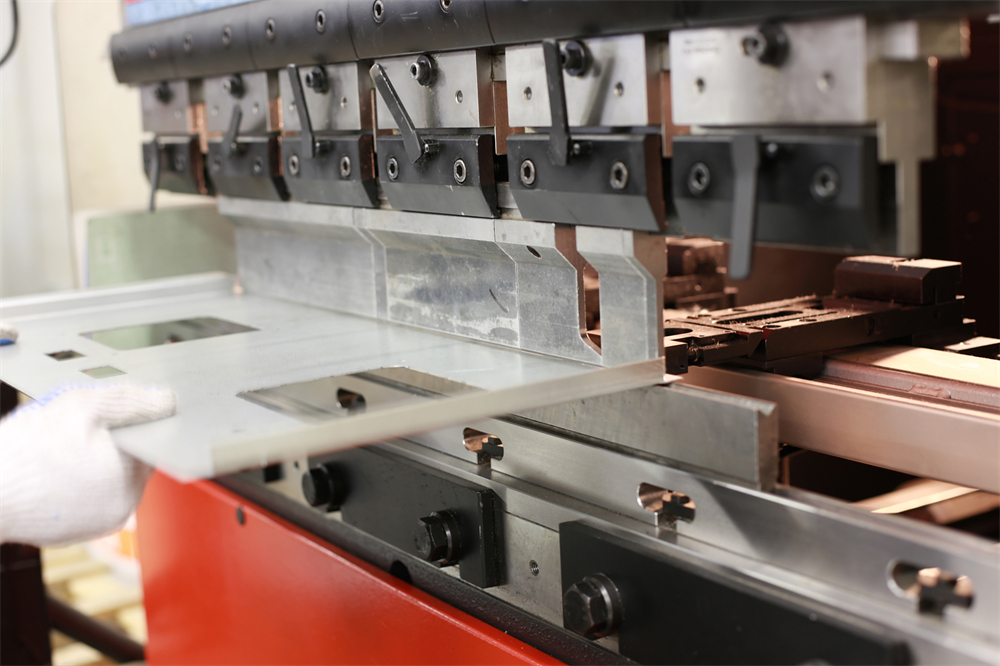
Before diving into specific applications, it is crucial to understand the variables that dictate the success of any bending operation. The first and perhaps most important consideration is material property. Every metal reacts differently under pressure. For instance, stainless steel has a higher tensile strength and greater springback compared to mild steel, requiring more tonnage and precise over-bending to achieve the desired angle. Aluminum, while easier to bend, is prone to cracking if the internal bend radius is too tight. Understanding the K-factor—the ratio of the neutral axis to the material thickness—is vital for calculating accurate bend allowances and ensuring the final part dimensions are correct.
Tooling selection is another critical factor. The punch (the upper tool) and the die (the lower tool) must be matched to the material thickness and the desired bend radius. Using a V-die that is too narrow for a thick plate can lead to excessive tonnage requirements and potential damage to the machine or the tooling itself. Conversely, a die that is too wide may result in inaccurate bends. Modern press brakes often utilize quick-change tooling systems, allowing operators to switch between different setups rapidly, which is essential for high-mix, low-volume production environments where multiple Press Brake Applications Explained From Simple Bends To Complex Forming are performed in a single shift.
Safety and machine calibration cannot be overlooked. A press brake is a powerful machine capable of exerting hundreds of tons of force. Ensuring that the machine is properly leveled, the hydraulic fluid is clean, and the safety light curtains are functional is non-negotiable. Furthermore, the accuracy of the backgauge system determines the precision of the bend location. A multi-axis backgauge (X, R, Z1, Z2) allows for the positioning of complex parts that require multiple bends at different angles and orientations. Without a reliable backgauge, achieving consistency across a production run becomes nearly impossible.
Technical Details: Bending Methods and CNC Control
The technical execution of a bend generally falls into three categories: air bending, bottoming, and coining. Air bending is the most common method used in modern CNC press brakes. In this process, the punch presses the material into the die, but the material does not touch the bottom of the V-groove. The angle is determined by the depth of the punch stroke. This method is highly versatile because a single set of tools can produce a wide range of angles simply by adjusting the CNC settings. It also requires less tonnage than other methods, though it is more susceptible to springback variations.
Bottoming, or bottom-pressing, involves pressing the material against the bottom of the V-die. This forces the material to take the exact shape of the tooling, resulting in higher accuracy and less springback than air bending. However, it requires specific tooling for each angle and significantly more tonnage. Coining is the most extreme form of bending, where the punch and die actually compress the metal at the bend point to eliminate springback entirely. While coining offers the highest precision, it is rarely used today due to the immense pressure required and the wear it causes on the machinery.
The brain of the modern press brake is the CNC controller. Advanced controllers, such as those found on HARSLE machines, offer 3D visualization, automatic bend sequencing, and collision detection. These systems allow operators to import CAD files directly, reducing setup time and minimizing the risk of human error. The controller also manages the crowning system—a mechanism that compensates for the natural deflection of the machine’s bed under load. By adjusting the bed’s profile, the crowning system ensures that the bend angle remains consistent across the entire length of the workpiece, a feature that is indispensable for long parts.
From Simple Bends to Complex Forming: Application Scenarios
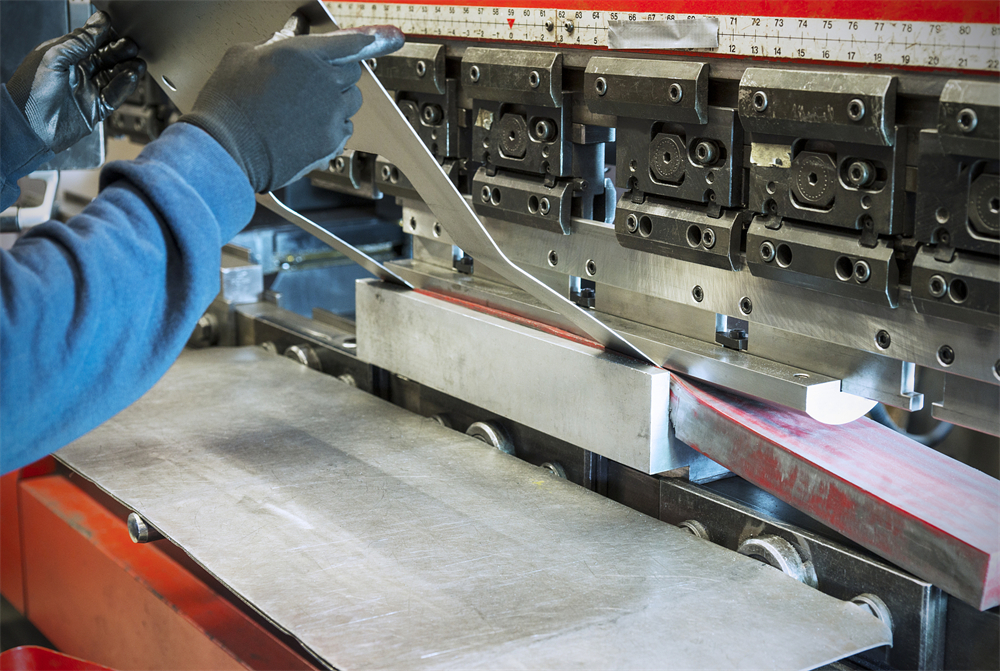
The versatility of the press brake is best demonstrated through its wide range of applications. Simple bends, such as 90-degree L-profiles or U-channels, are the bread and butter of many fabrication shops. These are used in everything from simple brackets and supports to structural components for buildings. Even in these “simple” applications, the press brake provides a level of speed and consistency that manual folding methods cannot match. For instance, in the production of electrical enclosures, a press brake can quickly form the main body and the door panels with perfect alignment for hinges and locks.
As we move toward complex forming, the capabilities of the press brake truly shine. Hemming is a common technique used to create a safe, rounded edge on sheet metal parts, such as those found in kitchen appliances or automotive body panels. This involves a two-stage process: first, a sharp acute bend is made, and then the flange is flattened against the main sheet. Another advanced application is offset bending (or joggle bending), which creates two opposite bends in close proximity to allow for overlapping parts. This is frequently used in the aerospace industry to create aerodynamic seams in fuselage sections.
Large radius bending, often called “bumping,” is used to create curved surfaces using a standard V-die. The press brake makes a series of small, incremental bends along a curve, resulting in a smooth, rounded profile. This is essential for manufacturing tanks, pressure vessels, and decorative architectural elements. Furthermore, multi-stage forming allows for the creation of complex geometries in a single handling. By using a segmented tool setup, an operator can perform several different bends—such as a box fold followed by a return flange—without having to change the machine configuration, significantly boosting throughput for intricate parts like medical equipment chassis or high-end furniture components.
Selection Advice: Choosing the Right Press Brake for Your Needs
Selecting the right press brake is a strategic decision that impacts your shop’s capability for years. The first step is to determine the maximum tonnage required. This is calculated based on the material type, thickness, and the shortest V-opening you plan to use. A common mistake is underestimating the tonnage needed for high-strength materials like Hardox or thick stainless steel. HARSLE provides detailed tonnage charts to help customers match the machine capacity to their specific production requirements. Additionally, the length of the bed should be chosen based on the longest part you intend to bend, keeping in mind that the distance between the side frames is usually slightly less than the total bed length.
Another critical factor is the level of automation and control. For shops producing a high volume of standard parts, a basic NC controller might suffice. However, for complex forming and high-precision work, a full CNC system with graphical interface and multi-axis backgauging is a worthwhile investment. Consider the “open height” and “stroke length” as well; these dimensions determine how much room you have for deep boxes or specialized tall tooling. If your work involves frequent tool changes, look for machines equipped with hydraulic tool clamping systems, which can reduce downtime from minutes to seconds.
Finally, consider the long-term support and build quality. A press brake is a heavy-duty machine that should last decades. Look for a robust frame design—preferably a welded steel structure that has been stress-relieved to ensure long-term stability. The quality of the hydraulic components (valves, pumps, and cylinders) and the linear encoders for ram positioning are also vital for maintaining accuracy over time. At HARSLE, we emphasize the use of world-class components and rigorous testing to ensure that every machine we deliver can handle the rigors of Press Brake Applications Explained From Simple Bends Complex Forming with ease.
Frequently Asked Questions (FAQ)
What is the difference between a hydraulic and an electric press brake?
Hydraulic press brakes use fluid power to move the ram and are known for their high tonnage capacity and durability. Electric press brakes use servo motors and are generally faster, more energy-efficient, and offer higher precision for smaller, thinner parts. The choice depends on your specific application needs and budget.
How do I prevent cracking when bending aluminum?
To prevent cracking in aluminum, you should use a larger internal bend radius (usually 1 to 2 times the material thickness) and ensure you are bending across the grain of the metal rather than parallel to it. Using the correct alloy and temper (e.g., 5052-H32 is more formable than 6061-T6) also makes a significant difference.
What causes springback, and how can it be managed?
Springback occurs because all metals have a degree of elasticity; when the bending pressure is released, the material tries to return to its original shape. It is managed by “over-bending” the part by a few degrees. Modern CNC controllers have built-in databases to calculate the necessary over-bend based on the material type and thickness.
How often should I perform maintenance on my press brake?
Daily maintenance should include checking oil levels and cleaning the bed and tooling. Monthly tasks include lubricating the backgauge and checking for hydraulic leaks. A full professional inspection and oil change should typically occur once a year or every 2,000 operating hours to ensure the machine remains in peak condition.
Can a press brake be used for punching holes?
While primarily designed for bending, press brakes can be fitted with specialized punching tools for light-duty hole making. However, for high-volume punching, a dedicated turret punch press or laser cutting machine is much more efficient and prevents unnecessary wear on the press brake’s hydraulic system.
Conclusion: Mastering the Art of Metal Forming with HARSLE
The journey from understanding simple bends to mastering complex forming is what defines a top-tier fabrication professional. As we have explored in this guide, Press Brake Applications Explained: From Simple Bends Complex Forming, the press brake is far more than a simple folding machine. It is a sophisticated piece of industrial technology that, when used correctly, can produce incredibly intricate and precise components that form the backbone of modern infrastructure, transportation, and consumer goods.
At HARSLE, we are committed to providing the tools and expertise necessary for fabricators to push the boundaries of what is possible. Our range of CNC hydraulic press brakes is engineered for precision, reliability, and ease of use, ensuring that whether you are performing a basic 90-degree bend or a complex multi-stage forming operation, you have the power and control to succeed. By investing in the right machinery and continuously refining your technical knowledge, you can optimize your production processes, reduce waste, and deliver superior quality to your customers. We invite you to explore our latest models and discover how HARSLE can elevate your metal fabrication capabilities to the next level.


