How to Evaluate Laser Cutting Machine Cutting Capacity Before Purchase: A Comprehensive Guide


Introduction to Evaluating Laser Cutting Capacity
Investing in a fiber laser cutting machine is one of the most significant capital expenditures a metal fabrication shop will undertake. The ability to accurately evaluate laser cutting machine cutting capacity before purchase is the difference between a machine that drives profit and one that becomes a production bottleneck. Cutting capacity is not just a single number representing the maximum thickness a laser can pierce; it is a complex interplay of laser power, beam quality, motion dynamics, and gas management.
For manufacturers, understanding these nuances ensures that the equipment matches the specific needs of their production line. Whether you are cutting thin gauge electronics housings or thick structural steel plates, the capacity of the machine dictates your throughput, edge quality, and ultimately, your cost per part. In this guide, we will break down the technical and financial factors you must consider to make an informed decision.
Price Range Overview for Fiber Laser Machines
The price of a fiber laser cutting machine is primarily dictated by its power output and the quality of its core components. When you evaluate laser cutting machine cutting capacity before purchase, you must align your budget with the realistic capabilities of different power tiers. Generally, the market is divided into three main categories based on laser wattage.
Entry-Level Machines (1kW – 3kW)
These machines are typically priced between $30,000 and $60,000. They are ideal for shops focusing on thin sheet metal fabrication, such as HVAC ductwork, signage, and light electrical enclosures. While they can cut up to 20mm carbon steel in some cases, their efficient production speed is usually limited to materials under 10mm.
Mid-Range Production Machines (6kW – 12kW)
Priced from $80,000 to $180,000, these are the workhorses of the modern job shop. A 12kW machine offers a massive jump in productivity, allowing for high-speed nitrogen cutting of stainless steel and aluminum. At this level, the machine’s capacity allows for consistent production of 20mm to 30mm plates with excellent edge quality.
High-Power Industrial Machines (20kW – 60kW+)
These machines represent the cutting edge of technology, often costing upwards of $250,000. They are designed to replace traditional plasma cutting for thick plates (up to 50mm or more). The capacity here is less about ‘can it cut’ and more about ‘how fast can it cut thick material’ to maximize ROI in heavy industrial applications.
| Power Level | Typical Price Range (USD) | Optimal Material Thickness | Primary Application |
|---|---|---|---|
| 1.5kW – 3kW | $35,000 – $55,000 | 1mm – 8mm | Thin sheet metal, Signage |
| 6kW – 12kW | $85,000 – $160,000 | 10mm – 25mm | General Job Shops, Automotive |
| 20kW – 40kW | $220,000+ | 25mm – 50mm+ | Shipbuilding, Heavy Machinery |
Main Cost Drivers in Laser Cutting Capacity
When you evaluate laser cutting machine cutting capacity before purchase, you will notice that two machines with the same wattage can have vastly different price tags. This is due to the internal components that support the laser’s capacity.
The Laser Source Brand
The laser source is the heart of the machine. Brands like IPG Photonics are considered the gold standard for stability and beam quality, but they come at a premium. Alternatives like Raycus or Maxphotonics offer excellent value and have significantly closed the gap in performance, making them popular choices for mid-range machines. The source’s ability to maintain a stable power output over long shifts directly impacts the machine’s cutting capacity consistency.
Motion System and Bed Construction
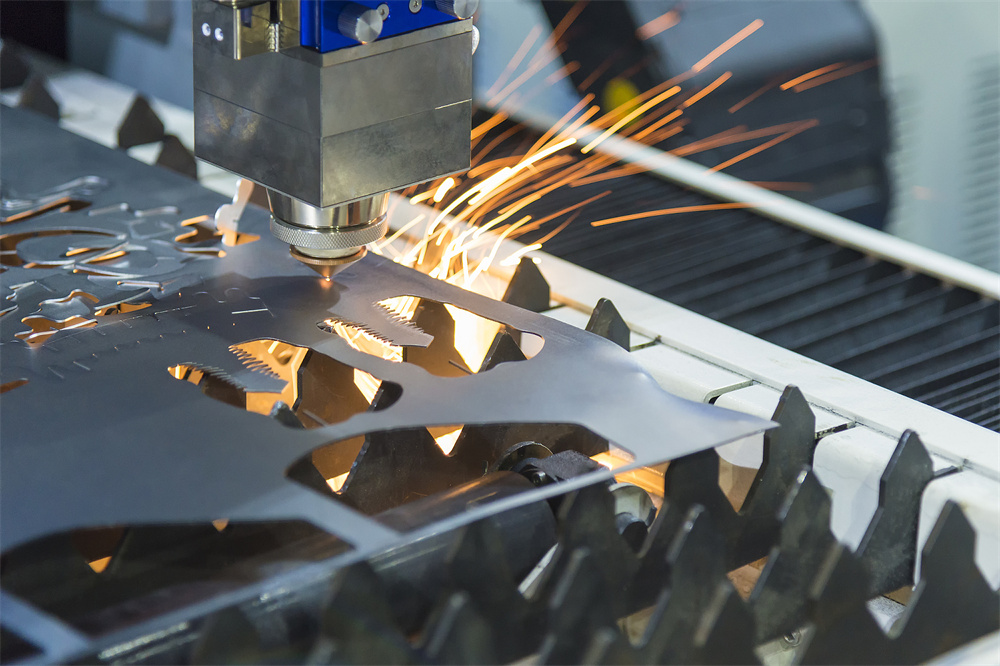
A high-power laser is useless if the machine frame cannot handle the acceleration and deceleration required for high-speed cutting. Heavy-duty, heat-treated frames prevent thermal deformation, ensuring accuracy over years of use. Furthermore, the choice between rack-and-pinion systems and linear motors affects the machine’s dynamic capacity—how well it handles complex geometries at high speeds.
Configuration Impact on Cutting Performance
The configuration of the machine determines its versatility. To properly evaluate laser cutting machine cutting capacity before purchase, you must look beyond the wattage and examine the cutting head and gas systems.
Autofocus Cutting Heads
Modern fiber lasers utilize autofocus cutting heads (like Precitec or Raytools). These heads automatically adjust the focal point based on the material thickness and type. This is crucial for capacity because the focal position for piercing thick carbon steel is vastly different from the focal position for high-speed cutting of thin stainless steel. Without a reliable autofocus system, your effective capacity is limited by operator skill and manual setup time.
Auxiliary Gas Management
Cutting capacity is heavily influenced by the gas used. Oxygen is typically used for carbon steel, relying on an exothermic reaction to help melt the metal. Nitrogen is used for stainless steel and aluminum to provide a clean, oxide-free edge. The machine’s ability to handle high-pressure nitrogen (up to 25 bar) is a key factor in its capacity to cut thick non-ferrous metals. Some modern machines also use compressed air cutting, which significantly reduces operating costs for materials under 10mm.
Hidden Costs of High-Capacity Machines
While a high-capacity machine can cut faster, it also incurs higher operational costs. Evaluating these hidden costs is essential for a true capacity assessment.
- Power Consumption: A 12kW laser doesn’t just draw 12kW of electricity. When you factor in the chiller, the CNC controller, the exhaust fans, and the servo motors, the total power draw can be 60kW or more.
- Gas Consumption: High-speed nitrogen cutting consumes a massive volume of gas. If you are evaluating a machine for high-capacity stainless steel cutting, you must factor in the cost of a bulk liquid nitrogen tank or a high-pressure nitrogen generator.
- Consumables: Higher power levels put more stress on protective windows, nozzles, and ceramic rings. A 20kW machine will go through consumables faster than a 3kW machine, increasing the hourly operating cost.
- Maintenance: High-end components require specialized technicians. Ensure that the manufacturer, like HARSLE, provides accessible support and spare parts to minimize downtime.
ROI Calculation: Capacity vs. Profitability
To evaluate laser cutting machine cutting capacity before purchase, you must perform a Return on Investment (ROI) calculation. A machine that is “too powerful” for your needs will have a longer payback period due to high initial costs and idle capacity. Conversely, an underpowered machine will cost you money in lost orders and slow production.
Consider the “Sweet Spot” of production. If 80% of your work is 6mm carbon steel, a 3kW or 6kW machine is likely your best ROI. While a 12kW machine could cut that 6mm plate much faster, the increased capital cost might not be justified by the time saved unless you have enough volume to keep the machine running 24/7. Use the following formula to estimate ROI:
ROI = (Total Annual Revenue from Machine – Annual Operating Costs) / Total Investment Cost
Operating costs should include labor, gas, electricity, consumables, and the lease payment. By comparing the throughput of different power levels against these costs, you can identify which capacity provides the fastest path to profitability.
Buying Advice: How to Test Capacity
Before signing a purchase agreement, you must verify the manufacturer’s claims. Here is a checklist for evaluating capacity during a live demo or factory visit:
- Request Sample Cuts: Bring your own files and materials. Don’t just watch the manufacturer’s “perfect” demo files. See how the machine handles your specific parts.
- Check Edge Quality: Look at the bottom of the cut for dross (slag). A machine might be able to cut 25mm steel, but if the edge requires hours of grinding, the “capacity” is not productive.
- Verify Piercing Time: For thick materials, the time it takes to pierce the start hole can be significant. High-power lasers with advanced software can perform “fly-piercing” or multi-stage piercing to save time.
- Test Continuous Running: Ask to see the machine run for at least an hour. This reveals if the cooling system is adequate for the laser’s capacity. If the beam quality drifts as the machine heats up, your capacity will drop during a real shift.
- Evaluate the Software: The CNC software (like CypCut or HypCut) is what translates power into capacity. Ensure the software has a robust library of “cutting parameters” for various materials and thicknesses.
Frequently Asked Questions (FAQ)
What is the difference between maximum thickness and production thickness?
Maximum thickness is the absolute limit the machine can pierce and cut, often at very slow speeds with lower edge quality. Production thickness is the range where the machine can cut quickly, reliably, and with a clean finish that requires no secondary processing. Always buy based on production thickness.
Does higher wattage always mean better cutting quality?
Not necessarily. While higher wattage allows for faster cutting and thicker materials, the quality of the cut also depends on the beam diameter, the focus stability, and the gas pressure. For very thin materials, a lower power laser with a smaller beam spot might actually produce a finer detail than a high-power laser.
Can a fiber laser cut reflective materials like copper and brass?
Yes, modern fiber lasers are designed to handle reflections that would have destroyed older CO2 lasers. However, cutting these materials requires higher power densities and specific beam characteristics. If you plan to cut a lot of copper, ensure the machine you are evaluating is equipped with a back-reflection protection system.
How long does a fiber laser source last?
Most reputable fiber laser sources are rated for 100,000 hours of operation. This means that even in a multi-shift environment, the source can last over 10 years. The capacity of the machine is more likely to be limited by the mechanical wear of the motion system or the obsolescence of the CNC controller before the laser source fails.
Is air cutting a viable way to increase capacity?
Air cutting (using high-pressure compressed air) is a fantastic way to increase speed and reduce costs on thin to medium-thickness materials (up to 10mm). It is faster than oxygen cutting and cheaper than nitrogen cutting, though the edge will have a slight oxide layer and a darker appearance.
Conclusion
To evaluate laser cutting machine cutting capacity before purchase, you must look beyond the marketing brochures. By understanding the relationship between power, material science, and operational costs, you can select a HARSLE machine that perfectly fits your production needs. Remember that the best machine is not the one with the highest wattage, but the one that delivers the lowest cost per part for your specific material mix. Take the time to test, calculate ROI, and consult with technical experts to ensure your investment drives your business forward for years to come.