Essential Technical Parameters to Compare Before Buying a Punching Machine


Technical Overview: The Foundation of Punching Machine Selection
In the competitive landscape of metal fabrication, selecting the right machinery is not merely a purchase; it is a strategic investment in production efficiency and long-term viability. When we discuss the Essential Technical Parameters Compare Before Buying A Punching Machine, we are looking at the DNA of the equipment. A punching machine, whether mechanical, pneumatic, or CNC-driven, operates on the principle of force application to deform or shear material. However, the nuances of how that force is delivered, the speed of the cycle, and the physical constraints of the machine frame determine whether the machine will meet your specific production requirements.
HARSLE has observed that many procurement errors stem from a superficial understanding of machine specifications. A machine might have the ‘rated tonnage’ required for a job, but if its stroke length or shut height is incompatible with the tooling, the machine becomes a bottleneck rather than an asset. Modern punching machines have evolved from simple flywheel-driven presses to sophisticated systems integrated with PLC controls and safety sensors. Understanding the technical overview requires looking beyond the surface-level marketing and diving into the engineering metrics that define performance.
Before committing to a purchase, it is vital to understand that these parameters are interconnected. For instance, increasing the strokes per minute (SPM) often requires a more robust frame to dampen vibrations, which in turn affects the machine’s footprint and foundation requirements. This guide aims to break down these complexities into actionable data points, ensuring that your next acquisition is backed by technical rigor and industrial foresight.
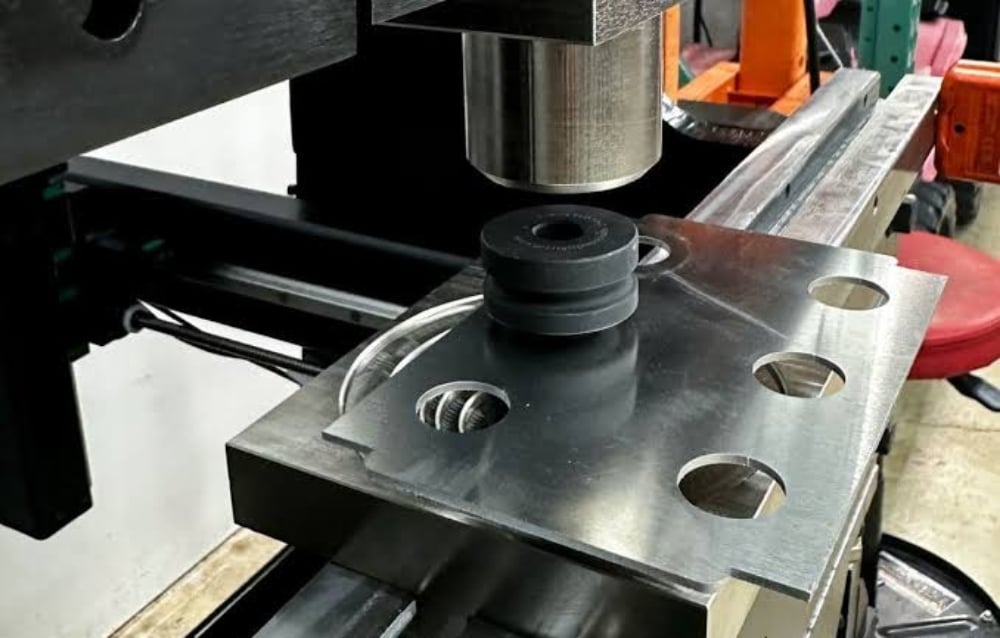
Core Parameters: The Metrics That Matter
1. Nominal Pressure (Tonnage)
The most critical of the Essential Technical Parameters Compare Before Buying A Punching Machine is the nominal pressure, commonly referred to as tonnage. This represents the maximum force the slide can exert on the workpiece. It is important to distinguish between the nominal pressure and the pressure available at different points of the stroke. In mechanical presses, the full tonnage is usually only available near the bottom dead center (BDC). If your application requires high force early in the stroke (such as deep drawing), you must ensure the machine’s torque capacity matches the requirement.
2. Stroke Length and Adjustment
Stroke length defines the distance the slide travels from its highest point to its lowest point. For simple blanking operations, a short stroke is often preferred to increase speed. However, for forming or deep drawing, a longer stroke is necessary to allow for part removal and tool clearance. Many modern HARSLE machines offer adjustable strokes, providing the versatility to handle various job types without switching machines. Comparing the range of adjustment is essential for shops that handle diverse contract manufacturing tasks.
3. Strokes Per Minute (SPM)
SPM is the primary indicator of production speed. However, a high SPM is not always better. For heavy-duty punching or materials prone to work hardening, a slower, more controlled stroke may be necessary to preserve tool life and part quality. When comparing machines, look for ‘Variable Speed’ options. This allows the operator to synchronize the machine speed with the feeding system and the material’s physical properties, optimizing the balance between throughput and precision.
4. Shut Height and Die Space
Shut height is the distance from the bolster plate to the slide when the stroke is at its lowest point and the adjustment is at its highest. This parameter dictates the maximum height of the tooling (die set) that can be installed. If the shut height is too small, you are limited to thin dies; if it is too large, you may need expensive spacers. Always compare the shut height against your existing tool library to ensure compatibility and minimize the need for new investments in tooling.
5. Bolster and Slide Dimensions
The physical size of the work area—the bolster plate and the slide face—determines the maximum size of the die set and, consequently, the maximum size of the workpiece. A common mistake is choosing a machine with enough tonnage but insufficient bed area for large-format progressive dies. Ensure there is enough room for die clamps, scrap chutes, and material guides. The rigidity of the slide and bolster also plays a role in maintaining parallelism under load, which is vital for high-precision electronics or automotive components.
Calculation Method: Determining Your Requirements
To accurately Essential Technical Parameters Compare Before Buying A Punching Machine, you must first calculate the actual force required for your specific parts. The standard formula for calculating punching force (P) in kilonewtons (kN) is:
P = L × t × τ / 1000
- L: The total perimeter of the punched shape (mm). For a round hole, L = π × diameter.
- t: The thickness of the material (mm).
- τ: The shear strength of the material (N/mm²). For mild steel, this is typically around 350-450 N/mm².
Once you have calculated the theoretical force, it is industry standard to add a safety factor of 20-30%. This accounts for tool wear (dull tools require more force), material thickness variations, and the inherent resistance of the machine’s moving parts. For example, if your calculation results in 80 tons of force, you should look for a machine with at least 100 tons of nominal pressure.
Furthermore, consider the ‘Point of Tonnage.’ In mechanical presses, the rated tonnage is usually achieved about 3mm to 6mm above the bottom dead center. If your material is 10mm thick, the machine may not be able to deliver its full rated force at the moment of impact. In such cases, a hydraulic press or a mechanical press with a higher rating and specific torque characteristics would be required. Calculating the energy requirements (measured in Joules) is also necessary for high-speed operations where the flywheel must have enough stored energy to complete the stroke without significant slowdown.
Parameter Table: Comparing Machine Types
When you Essential Technical Parameters Compare Before Buying A Punching Machine, it helps to see how different technologies stack up. Below is a comparison of typical specifications for three common types of punching machines.
| Parameter | Mechanical (C-Frame) | Pneumatic Press | CNC Turret Punch |
|---|---|---|---|
| Tonnage Range | 15 – 400 Tons | 1 – 50 Tons | 20 – 50 Tons |
| Max Speed (SPM) | 40 – 150 | 20 – 80 | 300 – 1000+ |
| Stroke Adjustment | Manual/Motorized | Fixed/Limited | Programmable |
| Precision | High | Moderate | Ultra-High |
| Best Use Case | Mass Production | Light Assembly | Complex Prototypes |
| Maintenance Level | Moderate | Low | High (Electronic) |
Common Engineering Mistakes in Selection
One of the most frequent mistakes when users Essential Technical Parameters Compare Before Buying A Punching Machine is ignoring the ‘Off-Center Loading’ limit. If your die is not centered under the slide, it creates a tilting moment that can cause premature wear on the gibs (the guides that keep the slide straight). Over time, this leads to poor part quality and potential frame cracking. Always check if the machine’s frame is designed to handle off-center loads, especially for multi-stage progressive dies.
Another common error is neglecting the ‘Breakthrough Shock.’ When the punch finally shears through the material, the stored energy in the frame is suddenly released. This creates a massive vibration shock. If you are punching high-strength materials or thick plates, you must ensure the machine has adequate dampening or is built with a heavy-duty cast iron frame rather than a light steel weldment. HARSLE machines often utilize high-rigidity frames to mitigate this specific issue, extending both machine and tool life.
Finally, many buyers fail to consider the ‘Total Cost of Ownership’ (TCO) relative to technical parameters. A machine with a slightly higher price tag but a more efficient motor (lower kW for the same tonnage) or a more advanced lubrication system can save thousands of dollars in operational costs over its lifespan. Don’t just compare the purchase price; compare the efficiency ratings and the availability of technical support for the control systems.
Selection Checklist: Step-by-Step Procurement
- Define Material Specifications: List the maximum thickness, tensile strength, and shear strength of all materials you plan to process.
- Calculate Maximum Force: Use the formula provided above and add a 30% safety margin.
- Determine Die Dimensions: Measure your largest die set (length, width, and height) to ensure it fits the bolster and shut height.
- Evaluate Production Volume: Calculate the required SPM to meet your daily production targets. Factor in downtime for tool changes.
- Check Power Requirements: Ensure your facility’s electrical grid can handle the motor’s peak load and that you have the necessary air pressure for pneumatic clutches.
- Assess Automation Needs: Does the machine have the necessary ports and PLC capabilities to integrate with decoilers, levelers, and feeders?
- Safety Compliance: Verify that the machine includes light curtains, two-hand start buttons, and emergency stop circuits that meet local industrial safety standards.
- Review Maintenance Access: Check how easy it is to access lubrication points, the flywheel brake, and the motor for routine servicing.
FAQ: Essential Technical Parameters
What is the difference between a mechanical and a hydraulic punching machine?
Mechanical machines use a flywheel and crankshaft to deliver a fast, high-energy stroke, making them ideal for high-volume blanking. Hydraulic machines use fluid pressure, allowing for full tonnage at any point in the stroke and better control over the speed, which is preferable for deep drawing or complex forming.
How does throat depth affect my choice?
Throat depth is the distance from the center of the slide to the back of the machine frame. It determines the maximum width of the sheet metal you can process if you are punching holes far from the edge. For large panels, a deep throat or a bridge-style CNC machine is necessary.
Why is the frame type (C-frame vs. H-frame) important?
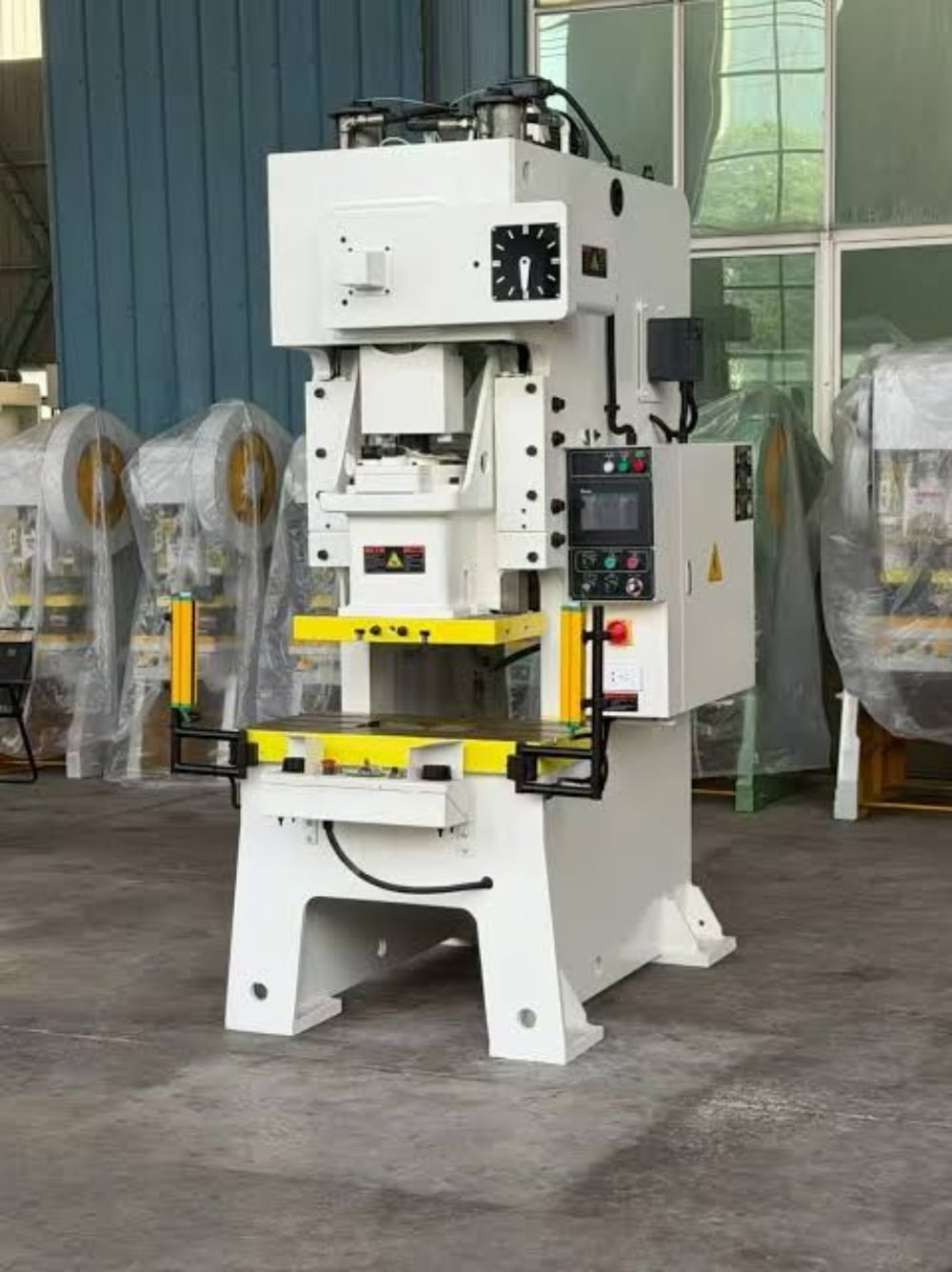
C-frames (Gap frames) offer three-sided access to the die area, which is great for manual feeding and large parts. However, they are prone to ‘angular deflection’ under high loads. H-frames (Straight-side) are much more rigid and eliminate deflection, making them the standard for high-precision and high-tonnage applications.
Can I punch material thicker than the machine’s rated capacity if I use shear-angled tools?
While shear-angled tools (roof-top or double-shear) reduce the peak force required, it is dangerous to rely on this to exceed the machine’s nominal rating. The machine’s frame and drive components are still subjected to the stresses of the operation. It is always safer to use a machine rated for the task.
What role does the clutch and brake system play?
The clutch engages the flywheel to the crankshaft, and the brake stops the slide. Pneumatic friction clutches are the industry standard for their reliability and ability to stop the machine quickly in an emergency. Comparing the response time and heat dissipation of these systems is vital for high-speed operations.
Conclusion
Choosing the right equipment requires a deep dive into the Essential Technical Parameters Compare Before Buying A Punching Machine. By understanding tonnage, stroke, speed, and the physical constraints of the machine, you can ensure that your HARSLE punching machine provides years of reliable service. Remember that the best machine is not the one with the highest specs on paper, but the one whose parameters most closely align with your specific production challenges and material requirements. Technical diligence today prevents operational headaches tomorrow.