Press Brake Sheet Metal Bending Basics: Parameters Every Operator Should Know


Technical Overview of Press Brake Bending
Press brake sheet metal bending is a fundamental process in the metal fabrication industry, involving the deformation of a metal workpiece along a straight axis. This is achieved through the use of a press brake machine, which utilizes a punch (upper tool) and a die (lower tool) to apply force and create specific angles. Understanding the Press Brake Sheet Metal Bending Basics: Parameters Every Operator Should Know is crucial for ensuring accuracy, safety, and efficiency in the workshop. Modern press brakes have evolved from simple mechanical levers to highly sophisticated CNC-synchronized hydraulic systems capable of micron-level precision.
The physics of bending involves stretching the outer fibers of the metal while compressing the inner fibers. Between these two zones lies the neutral axis, which remains relatively unchanged in length. Operators must understand that different materials react differently to this stress. For instance, stainless steel requires significantly more force than aluminum due to its higher yield strength. Furthermore, the method of bending—whether it is air bending, bottoming, or coining—drastically changes how parameters are calculated and applied. Air bending is the most common method today, where the punch presses the sheet into the die cavity without touching the bottom of the V-opening, allowing for a wide range of angles with a single tool set.
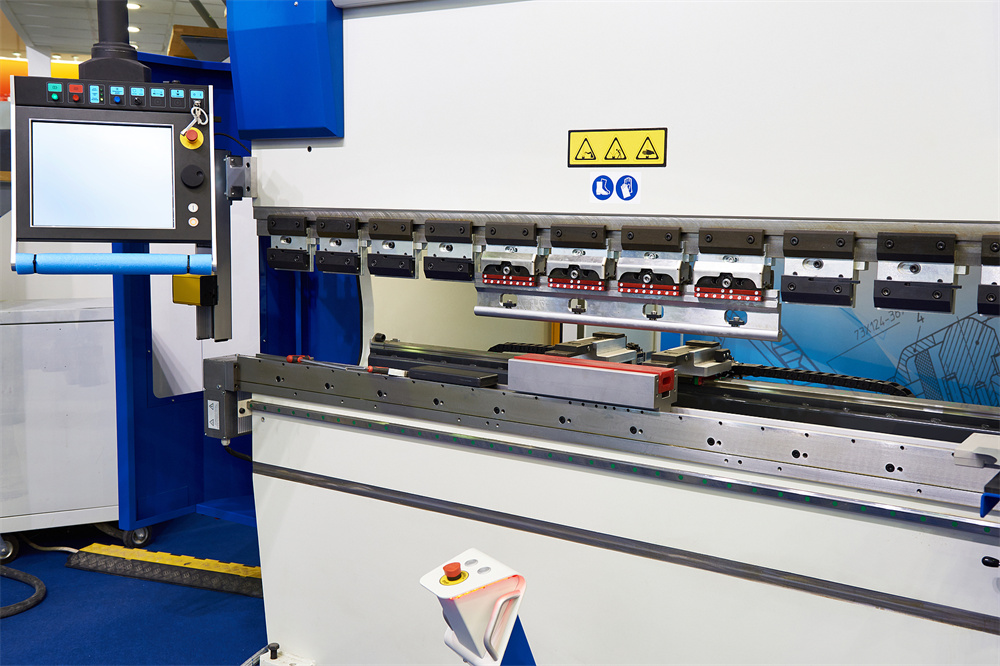
In a professional setting, the operator’s role has shifted from manual adjustment to digital oversight. However, the reliance on CNC systems does not negate the need for a deep understanding of physical parameters. A CNC controller is only as good as the data it receives. If an operator inputs the wrong material thickness or V-die width, the machine will produce scrap or, worse, sustain damage. Therefore, mastering the technical basics is the first step toward becoming a proficient fabrication specialist.
Core Parameters Every Operator Must Master
1. Tonnage (Bending Force)
Tonnage is perhaps the most critical parameter in press brake operation. It refers to the amount of pressure the press brake must exert to perform a bend. Calculating the required tonnage is essential to prevent overloading the machine or the tooling. Tonnage is influenced by the material type, thickness, length of the bend, and the V-opening of the die. If the tonnage exceeds the machine’s capacity, it can lead to structural failure or “ram upset,” where the ram permanently deforms.
2. V-Opening (Die Width)
The V-opening is the width of the bottom die cavity. A general rule of thumb in the industry is the “8x Rule,” which suggests that the V-opening should be approximately eight times the material thickness (8T). Choosing the correct V-opening affects the internal bend radius and the required tonnage. A smaller V-opening increases the tonnage required but allows for smaller minimum flange lengths, while a larger V-opening reduces tonnage but increases the bend radius.
3. Bending Radius (Internal)
The internal bending radius is the radius of the curve on the inside surface of the bend. In air bending, this radius is not determined by the punch tip but rather by the V-opening width (usually about 15-20% of the V-width for steel). Understanding the relationship between the punch radius and the natural bend radius of the material is vital for achieving the desired part geometry without cracking the material.
4. Material Thickness and Yield Strength
Operators must measure the actual thickness of the sheet metal using calipers, as nominal thickness can vary between batches. Additionally, the yield strength—the point at which the metal permanently deforms—varies by material grade. High-strength steels require much higher tonnage and exhibit more springback than mild steel. Ignoring these variations is a leading cause of dimensional inaccuracies.

Calculation Methods for Precision Bending
To achieve precision, operators must use specific formulas to determine the behavior of the metal. The most common calculation is the Tonnage Formula. For mild steel with a tensile strength of approximately 450 MPa, the formula is: P = (650 x S² x L) / V, where P is tonnage, S is material thickness (mm), L is the length of the sheet (m), and V is the V-opening (mm). For stainless steel, this result is typically multiplied by 1.5 due to the higher resistance of the material.
Another essential calculation is the Bend Allowance (BA) and Bend Deduction (BD). When metal is bent, it stretches. To find the “flat length” of a part before bending, operators use the formula: Flat Length = Leg A + Leg B – Bend Deduction. The Bend Deduction is calculated based on the material thickness, the inside radius, and the K-factor (the ratio representing the location of the neutral axis). Most modern CNC controllers calculate this automatically, but an operator must verify the K-factor settings for different materials to ensure the final dimensions meet the blueprint specifications.
Springback compensation is another calculation-heavy aspect. Springback occurs when the metal tries to return to its original shape after the pressure is released. Operators must “over-bend” the part by a few degrees. The amount of springback depends on the material’s elasticity and the ratio of the bend radius to the material thickness. For example, air bending usually results in 2 to 4 degrees of springback for mild steel, while stainless steel can exhibit as much as 5 to 10 degrees.
Press Brake Parameter Reference Table
The following table provides a general reference for bending mild steel (Tensile Strength ~450N/mm²). Note that these values are for air bending and should be adjusted for different material types.
| Material Thickness (mm) | Recommended V-Opening (mm) | Min. Flange Length (mm) | Internal Radius (mm) | Tonnage per Meter (T/m) |
|---|---|---|---|---|
| 1.0 | 8 | 5.5 | 1.3 | 7 |
| 1.5 | 12 | 8.5 | 2.0 | 11 |
| 2.0 | 16 | 11.0 | 2.6 | 17 |
| 3.0 | 24 | 16.5 | 4.0 | 25 |
| 4.0 | 32 | 22.0 | 5.3 | 33 |
| 6.0 | 50 | 35.0 | 8.0 | 48 |
| 8.0 | 63 | 45.0 | 10.5 | 70 |
Common Engineering Mistakes in Bending Operations
One of the most frequent mistakes is using the wrong V-opening. Using a V-opening that is too small for the material thickness significantly spikes the tonnage, which can crack the die or the workpiece. Conversely, a V-opening that is too large makes it difficult to achieve small internal radii and can lead to inconsistent angles. Operators should always adhere to the 8x rule unless specific design requirements dictate otherwise.
Another common error is ignoring the grain direction of the metal. Sheet metal is rolled, creating a grain structure. Bending parallel to the grain is much more likely to cause cracking on the outer radius than bending perpendicular to the grain. If a part requires high structural integrity, the layout should ensure that the most critical bends are made across the grain. If bending with the grain is unavoidable, increasing the V-opening and the punch radius can help mitigate the risk of failure.
Poor maintenance of tooling also leads to significant errors. Worn-out punches or dies with indented V-grooves will produce inconsistent angles across the length of the bend. Operators often try to compensate for worn tools by increasing the pressure, which only accelerates the wear and risks damaging the machine’s hydraulic system. Regular inspection of tool surfaces and proper lubrication are essential for maintaining precision over long production runs.
Selection Checklist for Press Brake Setup
- Material Verification: Confirm the material type, actual thickness, and grain direction before starting the job.
- Tooling Compatibility: Ensure the punch and die are rated for the calculated tonnage. Check for any chips or wear on the tool edges.
- Machine Capacity: Verify that the total tonnage required for the bend length does not exceed 80% of the machine’s rated capacity for long-term health.
- Backgauge Calibration: Check that the backgauge fingers are correctly positioned and calibrated to the center of the V-die.
- Safety Clearance: Ensure there is enough clearance for the part to swing up during the bend without hitting the machine frame or the operator.
- CNC Program Review: Double-check the input values for bend angle, flange length, and material constants in the controller.
- First Article Inspection: Always perform a test bend on a scrap piece of the same material to verify the angle and dimensions before proceeding with the full batch.
Frequently Asked Questions (FAQ)
What is the difference between air bending and bottoming?
Air bending only touches the material at three points: the punch tip and the two edges of the V-die. The angle is determined by how deep the punch descends. Bottoming involves pressing the sheet metal fully into the V-die so it takes the shape of the tool. Air bending is more versatile and requires less tonnage, while bottoming offers higher repeatability for specific angles.
How do I calculate the minimum flange length?
The minimum flange length is the shortest distance from the edge of the sheet to the bend line that can be safely supported by the V-die. A common formula is Min Flange = (V-opening / 2) + 2mm. If the flange is too short, it will slip into the V-opening during the bend, resulting in an inaccurate angle and potential safety hazards.
Why does my bend angle vary across the length of the part?
This is often caused by “deflection.” When the machine applies pressure, the ram and the bed can bow slightly in the center. To fix this, modern press brakes use a “crowning” system (either hydraulic or mechanical) to compensate for the deflection and ensure a consistent angle from end to end. If your machine lacks crowning, you may need to use shims under the die.
Can I bend stainless steel using the same parameters as mild steel?
No. Stainless steel has a higher yield strength and work-hardens quickly. You generally need about 50% more tonnage than mild steel for the same thickness. Additionally, you should use a larger V-opening and be prepared for significantly more springback. Using dedicated stainless steel tooling can also prevent carbon contamination of the workpiece.
How often should I lubricate the press brake?
Lubrication schedules depend on usage, but generally, the guide rails and backgauge screws should be lubricated daily or weekly. The hydraulic oil should be checked for contamination and replaced according to the manufacturer’s manual, typically every 2,000 to 4,000 hours of operation. Proper lubrication reduces friction, prevents heat buildup, and extends the life of the machine components.