How to Read Press Brake Specifications Before You Buy a Machine


Technical Overview: Understanding the Foundation of Press Brake Selection
In the world of metal fabrication, the press brake is the cornerstone of precision bending. However, for many shop owners and procurement managers, looking at a specification sheet can feel like deciphering a foreign language. To Read Press Brake Specifications Before You Buy A Machine is not just about looking at the highest numbers; it is about understanding how those numbers translate to your daily production capabilities, long-term durability, and the complexity of parts you can produce.
Modern press brakes have evolved from simple mechanical levers to highly sophisticated CNC-controlled hydraulic and electric systems. Whether you are considering a torsion bar synchronous machine or a high-end electro-hydraulic servo-controlled machine, the specifications define the physical limits of what the machine can handle. A misunderstanding of these specs often leads to purchasing a machine that is either underpowered for the job or unnecessarily expensive for the intended application. At HARSLE, we emphasize that the ‘best’ machine is the one whose specifications align perfectly with your material types, thicknesses, and production volumes.
Before diving into the numbers, it is essential to recognize the three primary types of press brakes available today: Hydraulic, Electric, and Hybrid. Hydraulic machines are the industry workhorses, offering high tonnage at a lower initial cost. Electric press brakes offer incredible speed and precision for smaller, thinner parts, while Hybrid systems combine the power of hydraulics with the energy efficiency of electric motors. Knowing which category you are looking at is the first step in reading the spec sheet correctly.
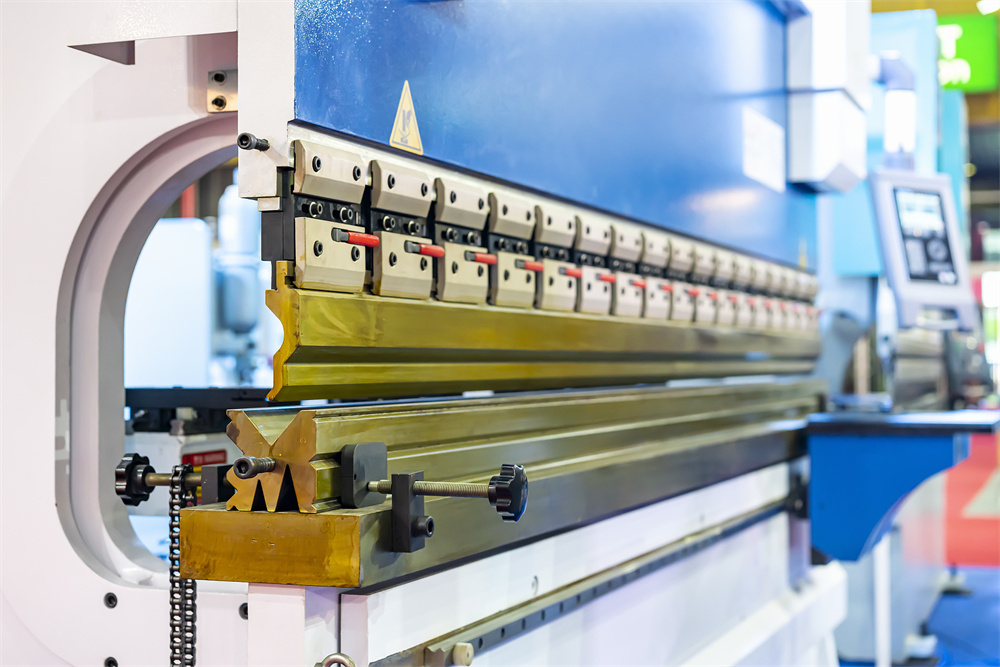
Core Parameters: Decoding the Specification Sheet
1. Nominal Pressure (Tonnage)
The nominal pressure, or tonnage, is perhaps the most critical specification. It represents the maximum force the machine can exert on the workpiece. When you Read Press Brake Specifications Before You Buy A Machine, you must ensure the tonnage is sufficient for your thickest material and shortest V-die opening. It is a common industry standard to calculate the required tonnage and then add a 20% safety margin to prevent the machine from constantly running at its absolute limit, which can lead to premature wear of the hydraulic seals and frame fatigue.
2. Bending Length and Distance Between Uprights
The bending length refers to the total length of the worktable and the ram. However, a crucial sub-specification is the ‘distance between uprights’ or ‘distance between side frames.’ If you are bending a long piece of metal that needs to pass through the machine, the distance between the uprights determines the maximum width of the plate that can fit between the side housings. If your part is 3100mm long but the distance between uprights is only 2600mm, you will not be able to perform deep bends that require the material to sit behind the ram.
3. Throat Depth
Throat depth is the distance from the center of the tools to the back of the side frames. This parameter is vital for ‘box bending’ or creating parts with deep flanges. If your flange length exceeds the throat depth, the material will hit the machine frame before the bend is completed. High-performance machines often offer ‘deep throats’ as an optional or standard feature to provide more versatility for complex geometries.
4. Stroke Length and Open Height
The stroke is the maximum distance the ram can move. The open height (or daylight) is the distance between the upper beam and the lower table when the ram is fully retracted. These two specs determine the height of the tools you can use and the height of the boxes you can bend. If you plan on using tall gooseneck punches for deep box bending, you must ensure the open height is sufficient to accommodate both the tool and the finished part removal.
5. Backgauge Axes (X, R, Z1, Z2)
The backgauge is the heart of CNC precision. A basic machine might only have an X-axis (forward and backward). However, to handle complex parts efficiently, you should look for additional axes. The R-axis moves the backgauge fingers up and down, which is essential for parts with flanges of different heights. Z1 and Z2 axes allow the fingers to move left and right, accommodating different widths of material without manual adjustment.
Calculation Method: Determining Your Real-World Needs
To accurately Read Press Brake Specifications Before You Buy A Machine, you must be able to calculate the tonnage required for your specific jobs. The standard formula for air bending mild steel (with a tensile strength of approximately 450 MPa) is: P = (650 x S² x L) / V.
- P: Pressure (Tonnage)
- S: Material thickness (mm)
- L: Length of the material (m)
- V: V-die opening (usually 8 times the material thickness)
For example, if you are bending 4mm thick mild steel over a 1-meter length using a 32mm V-die, the calculation would be: (650 x 16 x 1) / 32 = 325 kN, which is approximately 33 tons. If you are working with stainless steel, you generally need to increase this tonnage by 50% due to the higher tensile strength of the material. Aluminum, conversely, requires less tonnage. Understanding this calculation allows you to look at a 100-ton machine spec and know exactly what its limits are for your specific material mix.
Another calculation to consider is the ‘minimum flange’ length. This is typically determined by the V-die opening. A general rule is that the minimum flange must be at least 1.5 to 2 times the V-die opening to ensure the material doesn’t fall into the die during the bend. If your specifications require very small flanges, you will need smaller V-dies, which in turn increases the tonnage required to make the bend. This interplay between specs is why a technical guide is essential before purchase.
Standard Parameter Table for Reference
Below is a representative table of specifications for a standard HARSLE CNC Synchronized Press Brake. Use this as a template when comparing different models.
| Model Parameter | HARSLE WE67K-100T/3200 | HARSLE WE67K-160T/4000 | HARSLE WE67K-250T/6000 |
|---|---|---|---|
| Nominal Pressure (kN) | 1000 | 1600 | 2500 |
| Bending Length (mm) | 3200 | 4000 | 6000 |
| Distance Between Uprights (mm) | 2600 | 3100 | 5100 |
| Throat Depth (mm) | 400 | 400 | 450 |
| Ram Stroke (mm) | 200 | 200 | 250 |
| Max Open Height (mm) | 480 | 520 | 580 |
| Main Motor (kW) | 7.5 | 11 | 18.5 |
| Approach Speed (mm/s) | 120 | 100 | 80 |
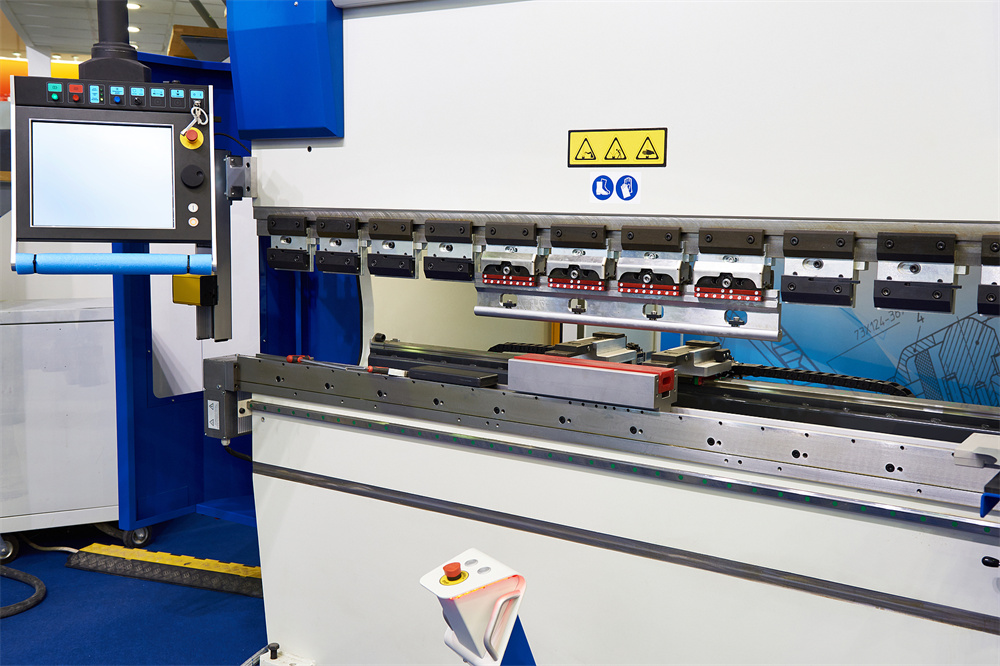
Common Engineering Mistakes When Reading Specs
One of the most frequent mistakes is ignoring the ‘Deflection’ or ‘Crowning’ requirements. When a press brake applies pressure, the ram and the bed naturally deflect or bow slightly. On a long machine (over 2.5 meters), this results in a ‘canoe effect’ where the angle in the middle of the bend is different from the ends. If you are buying a long machine, look for ‘Mechanical Crowning’ or ‘Hydraulic Crowning’ in the specifications. Ignoring this will lead to inconsistent parts and high scrap rates.
Another mistake is underestimating the importance of ‘Approach’ and ‘Return’ speeds. While the ‘Bending Speed’ is often limited by safety regulations (usually 10mm/s), the speed at which the ram moves to the work and returns to the top can significantly impact your cycle time. If you are in a high-volume production environment, a machine with a 200mm/s approach speed will be much more profitable than one with 100mm/s, even if the bending force is the same.
Finally, many buyers fail to check the ‘Controller’ specifications. A machine might have the physical capacity to bend your part, but if the CNC controller (like Delem, Cybelec, or ESA) doesn’t support 3D visualization or offline programming, your setup times will be much longer. Ensure the software capabilities match the complexity of your engineering drawings.
Selection Checklist: Read Press Brake Specifications Before You Buy A Machine
To ensure you choose the right equipment, follow this step-by-step checklist during your evaluation process:
- Material Analysis: Identify your thickest material, longest part, and highest tensile strength material (e.g., Stainless 304 vs. Mild Steel).
- Tonnage Verification: Use the tonnage formula and add a 20% safety buffer. Does the machine meet this?
- Part Geometry Check: Will your deepest flange fit within the throat depth? Will your tallest box fit within the open height?
- Precision Requirements: Do you need a synchronized (CNC) machine for high precision, or is a torsion bar (NC) machine sufficient for simple bends?
- Backgauge Complexity: How many axes do you really need? (X and R are usually the minimum for professional shops).
- Crowning System: Is there a compensation system for bed deflection? (Essential for lengths > 2500mm).
- Tooling Compatibility: Does the machine use standard European/Amada style clamping, or a proprietary system?
- Speed and Efficiency: Check the approach and return speeds to calculate potential ROI.
- After-Sales Support: Does the manufacturer provide technical specs for maintenance, such as oil type, seal kits, and electrical diagrams?
Frequently Asked Questions
What is the difference between NC and CNC press brakes?
NC (Numerical Control) machines typically use a torsion bar to keep the ram level and are best for simple, repetitive bends. CNC (Computer Numerical Control) machines use electro-hydraulic servo valves to monitor and adjust the ram position hundreds of times per second, allowing for much higher precision, complex multi-step bending, and automatic crowning adjustment.
Why is the distance between uprights smaller than the bending length?
The bending length is the total width of the table, but the uprights are the structural ‘legs’ of the machine frame. The distance between them is smaller because the frame must be thick enough to handle the massive hydraulic pressure. If you need to bend a long part that passes through the machine, this is the dimension that limits your width.
Can I bend stainless steel on a machine rated for mild steel?
Yes, but you must reduce the thickness or length. Stainless steel is roughly 50% harder to bend than mild steel. If a machine is rated for 6mm mild steel, it can likely only handle 3-4mm stainless steel over the same length. Always check the tonnage calculation before attempting to bend harder materials.
How does throat depth affect my production?
Throat depth limits how far you can slide a piece of metal into the machine before it hits the back of the frame. If you are making a large U-channel or a deep box, a shallow throat will prevent you from completing the final bends. Always choose a throat depth that is at least 50mm deeper than your deepest planned flange.
What is the importance of the R-axis in a backgauge?
The R-axis allows the backgauge fingers to move up and down. This is critical when you have a part with a pre-bent flange that would otherwise hit the backgauge fingers if they were at a fixed height. It allows for much more complex part sequences without manual intervention.