
Preventive Maintenance for CNC Press Brakes: What Every Operator Should Know


The Critical Importance of Preventive Maintenance for CNC Press Brakes
In the high-stakes world of metal fabrication, the CNC press brake stands as a cornerstone of production. Whether you are bending complex aerospace components or simple brackets, the precision and reliability of your machine directly impact your bottom line. Preventive Maintenance CNC Press Brakes: Every Operator Should Know that a well-maintained machine is not just about longevity; it is about safety, accuracy, and cost-efficiency. Neglecting routine care leads to catastrophic failures, expensive emergency repairs, and significant downtime that can derail production schedules for weeks.
Preventive maintenance is a proactive approach. Instead of waiting for a component to fail, operators and maintenance teams perform scheduled tasks to ensure every system—hydraulic, mechanical, and electrical—functions at peak performance. For a CNC press brake, where tolerances are often measured in microns, even a slight misalignment or a contaminated hydraulic valve can result in scrapped parts. By implementing a rigorous maintenance protocol, shops can extend the lifespan of their HARSLE equipment by years, ensuring a much higher return on investment.
Furthermore, the safety aspect cannot be overstated. A press brake exerts tons of force. Any mechanical failure in the ram, the hydraulic cylinders, or the safety light curtains poses a severe risk to the operator. Preventive maintenance ensures that all safety protocols and physical barriers are in perfect working order, creating a secure environment for the workforce. In this guide, we will delve into the specific steps every operator must take to keep their CNC press brake running smoothly.
Daily Inspection: The Operator’s First Line of Defense
The daily inspection is perhaps the most vital part of any maintenance program. It requires no specialized tools—only a keen eye and a disciplined routine. Before the first bend of the day, the operator should perform a comprehensive walk-around of the machine. This starts with cleanliness. Dust, metal shavings, and scale from laser-cut parts can accumulate on the bed and the tooling. If left unchecked, this debris can get trapped between the workpiece and the die, causing inaccuracies or even damaging the polished surfaces of the tools.
Next, the operator must check for visible signs of trouble. This includes looking for oil leaks around the hydraulic cylinders, hoses, and manifolds. Even a small drip can indicate a failing seal or a loose fitting that could lead to a loss of pressure during a critical bend. The condition of the tooling should also be inspected daily. Look for chips, cracks, or excessive wear on the punch and die. Using damaged tooling not only ruins the workpiece but also puts uneven stress on the machine’s ram and bed.
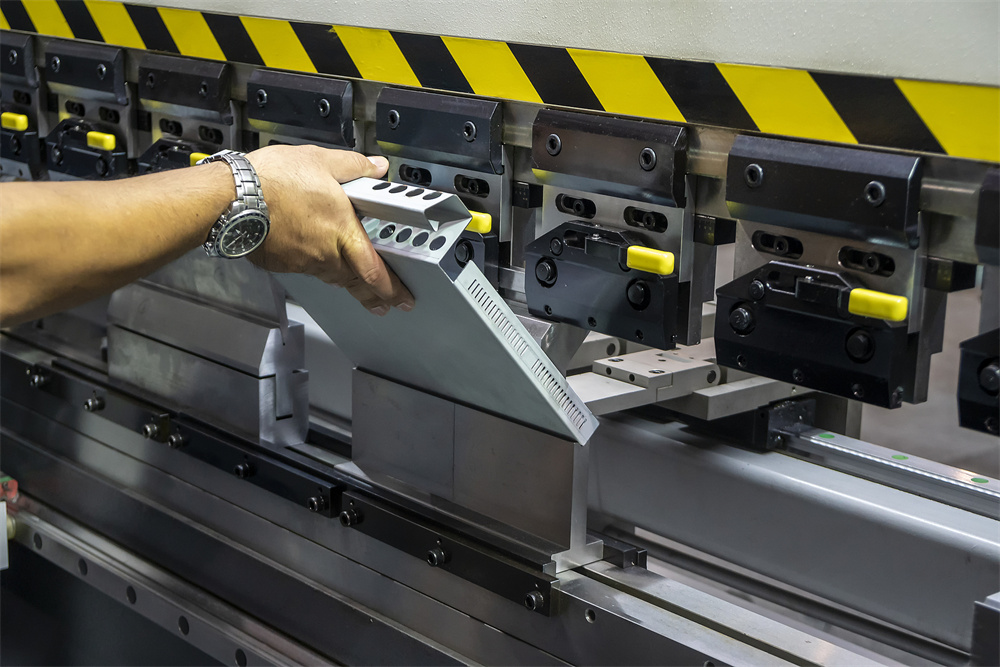
Safety systems must be tested every single day. This includes the emergency stop buttons, the foot pedal, and the light curtains or laser guards. The operator should verify that the machine stops instantly when the safety field is interrupted. Additionally, check the CNC controller for any error messages or warnings that may have appeared during the previous shift’s shutdown. Addressing these minor alerts immediately prevents them from escalating into major system failures.
Hydraulic System Maintenance: The Heart of the Machine
The hydraulic system is the powerhouse of the CNC press brake. It converts fluid power into the massive mechanical force required to bend thick steel plates. Maintaining the health of this system is paramount. The first step is monitoring the hydraulic oil level and quality. Oil should be clear and amber-colored. If it appears milky, it indicates water contamination; if it looks dark or smells burnt, it has likely overheated and lost its lubricating properties. Preventive Maintenance CNC Press Brakes: Every Operator Should Know that changing the oil according to the manufacturer’s schedule—usually every 2,000 to 4,000 hours—is non-negotiable.
Filters play a critical role in protecting sensitive hydraulic valves. CNC press brakes use sophisticated proportional valves that can be jammed by particles as small as a few microns. Operators should regularly check the filter clogging indicators. Replacing filters before they bypass is essential to prevent contaminants from circulating through the pumps and cylinders. Additionally, the hydraulic tank’s air breather should be cleaned or replaced to prevent dust from being sucked into the reservoir as the oil level fluctuates during operation.
Temperature control is another vital aspect of hydraulic maintenance. Most modern CNC press brakes, like those from HARSLE, include oil cooling systems. Ensure that the cooling fans are operational and that the heat exchanger fins are not clogged with shop dust. If the hydraulic oil exceeds 60°C (140°F), its viscosity drops, leading to inconsistent bending speeds, seal degradation, and premature wear of the hydraulic pump. Consistent temperature monitoring ensures that the ram moves with the precision required for complex multi-bend sequences.
Electrical and Control System Checks
The “CNC” in CNC press brake stands for Computer Numerical Control, and the electrical cabinet is the brain of the operation. Industrial environments are often dusty and hot, both of which are enemies of electronic components. Once a month, the electrical cabinet should be opened (with the power safely locked out) and inspected. Use a vacuum or low-pressure compressed air to remove dust from cooling fans, heat sinks, and circuit boards. Accumulated dust can cause overheating and short circuits, leading to expensive controller failures.
Operators should also check the integrity of the wiring. Vibration from the machine’s operation can, over time, loosen terminal screws. A loose wire can cause intermittent signals, leading to erratic backgauge movement or ram positioning errors. Inspect the cables leading to the foot pedal and the pendant station for any signs of fraying or kinking. These cables are frequently moved and are susceptible to mechanical damage.
Software and calibration are equally important. Ensure that the CNC software is updated to the latest version provided by the manufacturer. Periodically, the machine’s axes (Y1, Y2, X, R, Z1, Z2) should be checked for calibration. If the backgauge is off by even half a millimeter, the entire batch of parts will be out of tolerance. Modern controllers often have built-in diagnostic tools that allow operators to run a self-calibration routine to ensure the encoders and motors are synchronized perfectly.
Mechanical Components and Tooling Integrity
The mechanical structure of the press brake, including the ram, the bed, and the backgauge system, requires regular attention. The ram guides (the gibs) are critical for maintaining the vertical alignment of the punch. These should be inspected for proper clearance and lubrication. If the gibs are too tight, they cause excessive friction and heat; if they are too loose, the ram can tilt, leading to inaccurate bend angles and potential damage to the machine frame.
The backgauge is a high-precision robotic system that moves constantly throughout the day. The ball screws and linear rails that drive the backgauge must be kept clean and lightly lubricated. Any buildup of grime on the ball screws will lead to premature wear and loss of positioning accuracy. Operators should also check the “fingers” of the backgauge for wear or damage. Since these fingers are the reference point for the workpiece, any deformation will result in inconsistent flange lengths.
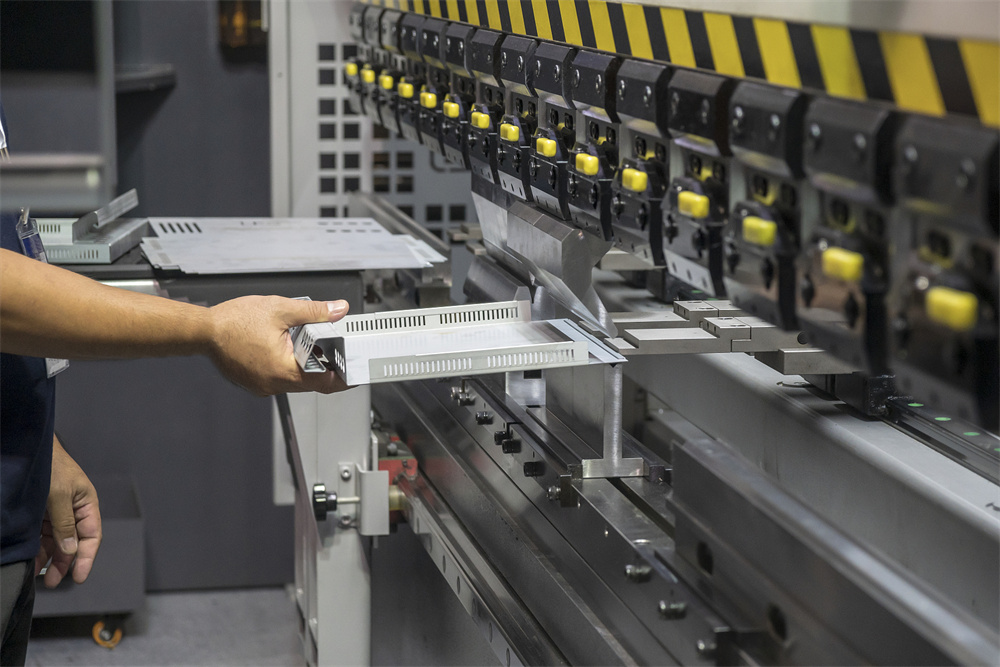
Tooling maintenance is often overlooked but is vital for quality. Punches and dies should be cleaned after use and stored properly to prevent rust. When changing tools, always wipe down the clamping surfaces. A small piece of grit trapped between the punch and the ram can cause a localized high-pressure point, potentially denting the ram’s mounting surface. Using the correct tool for the material thickness and type is also a form of preventive maintenance, as it prevents overloading the machine’s tonnage capacity.
Comprehensive Lubrication Plan
Lubrication is the simplest yet most effective way to prevent mechanical wear. A CNC press brake has numerous moving parts that require different types of lubricants. The main guide ways, ball screws, and pivot points all need regular greasing. Most HARSLE machines come equipped with a centralized lubrication system, which can be manual or automatic. If it is manual, the operator must follow a strict schedule—usually once per shift or once per week, depending on the component.
The choice of lubricant is critical. Always use the grease or oil specified in the machine’s manual. Typically, a high-quality lithium-based grease with EP (Extreme Pressure) additives is used for heavy-load areas like the ram guides. For the high-speed ball screws of the backgauge, a lighter grease or specialized oil may be required to prevent “gumming up” at high velocities. Over-lubrication can be just as harmful as under-lubrication, as excess grease attracts metal dust, creating an abrasive paste that accelerates wear.
Operators should also pay attention to the lubrication of the hydraulic cylinder pivots and the crowning system. The crowning system, which compensates for the deflection of the bed under load, involves moving wedges or hydraulic cylinders that must move freely to function correctly. A dry crowning system can lead to “stick-slip” motion, resulting in inconsistent bends across the length of the machine. A well-documented lubrication log helps ensure that no point is missed and provides a history of maintenance for future troubleshooting.
Troubleshooting Signals: Listening to Your Machine
An experienced operator knows the “sound” of their machine. Any change in the acoustic profile of a CNC press brake is often the first sign of an impending problem. For example, a high-pitched squeal from the hydraulic pump usually indicates cavitation, which occurs when air enters the system or the suction filter is clogged. If left unaddressed, cavitation will destroy the pump in a matter of hours. Similarly, a clunking sound during the ram’s transition from fast approach to slow bend might indicate worn bushings or loose mounting bolts.
Vibration is another key indicator. While some vibration is normal during a heavy bend, excessive shaking in the backgauge or the hydraulic lines suggests a problem. It could be a sign of a failing motor bearing, an unbalanced cooling fan, or air trapped in the hydraulic cylinders. Operators should also be sensitive to heat. If a specific motor or a section of the hydraulic manifold feels unusually hot to the touch, it is a clear signal of internal friction or electrical overload.
Finally, watch the CNC screen for subtle performance changes. If the machine is taking longer to reach its target pressure, or if the backgauge is hunting for its position (moving back and forth slightly before stopping), these are signs that the system’s responsiveness is degrading. Preventive Maintenance CNC Press Brakes: Every Operator Should Know that reporting these “soft” signals to the maintenance department immediately can prevent a total machine breakdown during a high-priority job.
Maintenance Schedule Table
To simplify the maintenance process, use the following table as a baseline for your HARSLE CNC press brake. Note that high-volume shops may need to increase the frequency of these tasks.
| Frequency | Component | Action Required |
|---|---|---|
| Daily | Tooling & Bed | Clean debris, check for chips/cracks, and wipe down surfaces. |
| Daily | Safety Systems | Test light curtains, E-stops, and foot pedal functionality. |
| Daily | Hydraulics | Check oil level and look for leaks in hoses and cylinders. |
| Weekly | Backgauge | Clean and lubricate ball screws and linear rails. |
| Weekly | Ram Guides | Check lubrication and wipe away excess grease/dust. |
| Monthly | Electrical Cabinet | Vacuum dust from fans and check for loose wire terminals. |
| Monthly | Air Filters | Clean or replace hydraulic breather and cabinet filters. |
| 6 Months | Hydraulic Oil | Perform oil analysis or replace if hours exceed 2,000. |
| Yearly | Full Calibration | Verify all axes (Y, X, R, Z) against physical measurements. |
| Yearly | Structure | Inspect frame bolts and foundation for any signs of movement. |
Frequently Asked Questions (FAQ)
How often should I change the hydraulic oil in my CNC press brake?
Generally, hydraulic oil should be changed every 2,000 to 4,000 hours of operation, or at least once every two years. However, if the machine operates in a very hot or dusty environment, more frequent changes or annual oil analysis is recommended to ensure the additives haven’t broken down.
What happens if I don’t lubricate the backgauge ball screws?
Failure to lubricate the ball screws leads to increased friction, which causes the drive motors to work harder and eventually overheat. Over time, the precision of the backgauge will degrade, leading to inaccurate flange lengths. In extreme cases, the ball screw can seize, requiring an expensive replacement.
Why is my press brake losing pressure during a bend?
A loss of pressure can be caused by several factors: a leaking seal in the hydraulic cylinder, a malfunctioning proportional valve, or air trapped in the hydraulic lines. It can also be a sign that the hydraulic oil has overheated and lost its viscosity. Check for leaks first, then inspect the oil temperature and valve diagnostics on the CNC controller.
Can I use any type of grease for the ram guides?
No. You should always use the specific grease recommended by the manufacturer, typically a lithium-based EP2 grease. Using the wrong grease can lead to poor adhesion to the guides or chemical reactions with the seals, which can cause the ram to move unevenly or “chatter.”
How do I know if my light curtains are working correctly?
You should perform a “trip test” daily. While the ram is in motion (during a safe part of the cycle), break the light beam with a test object. The ram should stop immediately. If there is any delay or if the machine continues to move, the safety system must be repaired before the machine is used again.
Is it necessary to warm up the machine in the morning?
Yes, especially in colder climates. Running the hydraulic pump for 10-15 minutes without performing bends allows the oil to reach its optimal operating temperature. This ensures consistent viscosity and protects the pump and valves from the stress of moving cold, thick oil.


