Comprehensive Guide: How to Solve Press Brake Material Slippage During Bending Operations


Introduction to Material Slippage in Press Brake Operations
In the world of precision metal fabrication, accuracy is the cornerstone of quality. One of the most frustrating challenges faced by operators is material slippage during the bending process. When a workpiece shifts even a fraction of a millimeter during the stroke, the resulting bend angle and flange length will deviate from the design specifications. This leads to increased scrap rates, wasted material, and costly downtime. To Solve Press Brake Material Slippage During Bending Operations, one must understand the complex interplay between the machine’s mechanics, the tooling’s geometry, and the material’s physical properties.
HARSLE, a leader in metal fabrication machinery, recognizes that high-performance equipment like CNC press brakes requires meticulous setup to maintain peak efficiency. Material slippage is rarely the result of a single factor; rather, it is often a combination of surface conditions, improper tooling selection, and machine calibration issues. By addressing these variables systematically, fabricators can ensure consistent, high-quality results across every production run. This guide provides an in-depth look at the technical causes of slippage and offers actionable solutions to eliminate this issue in your workshop.
Whether you are working with thin-gauge aluminum or heavy-duty structural steel, the principles of friction and clamping remain the same. A stable workpiece is the foundation of a perfect bend. In the following sections, we will explore the key considerations, technical details, and selection advice necessary to master material stability on your press brake.
Key Considerations for Preventing Material Movement
1. Material Surface Condition and Friction
The interface between the sheet metal and the die is where slippage begins. The coefficient of friction plays a vital role in holding the material in place. Materials that are heavily oiled, galvanized, or have a polished finish (like stainless steel) are naturally more prone to sliding. Conversely, hot-rolled steel with mill scale provides more natural grip but can introduce inconsistencies if the scale flakes off during the bend. To solve press brake material slippage during bending operations, operators must ensure the material surface is clean and appropriate for the chosen tooling.
2. Tooling Condition and V-Die Selection
Worn tooling is a primary culprit for slippage. Over time, the shoulders of the V-die become rounded and polished, reducing their ability to ‘bite’ into the material and hold it steady. Furthermore, selecting a V-opening that is too wide for the material thickness reduces the concentrated pressure required to keep the part stationary. Proper tooling maintenance and the use of hardened, precision-ground dies are essential for maintaining the necessary friction levels during the high-pressure phase of the bend.
3. Backgauge Stability and Positioning
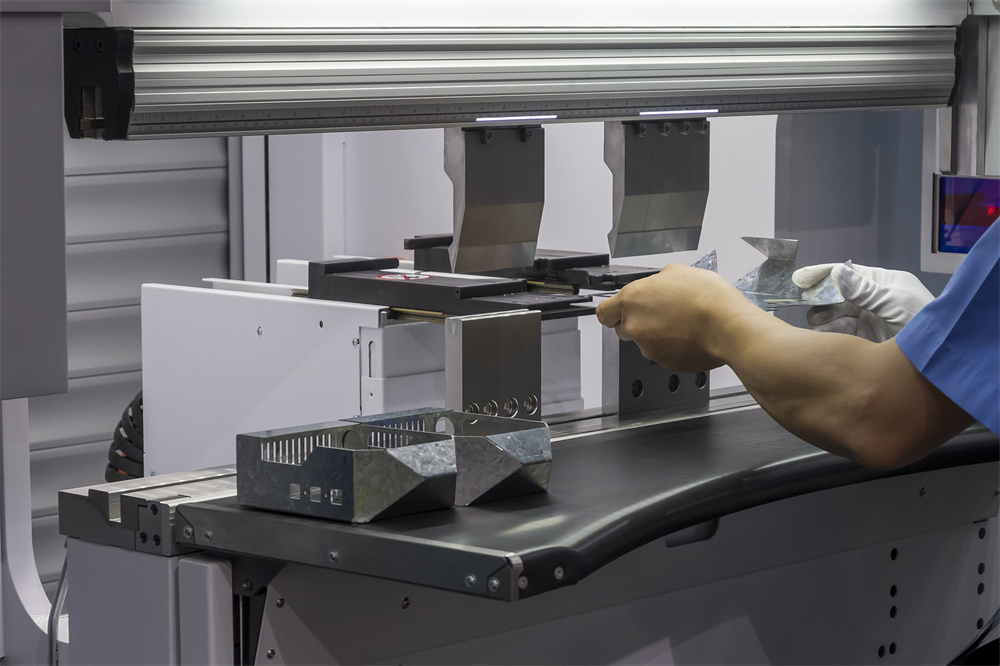
The backgauge is not just a stop; it is a reference point that must remain rigid throughout the bending cycle. If the backgauge fingers are worn, loose, or improperly calibrated, the material may push back or shift laterally as the punch makes contact. In high-speed CNC operations, the vibration of the machine can also cause the backgauge to drift if not properly maintained. Ensuring that the backgauge system is robust and that the fingers provide adequate support surface is a critical step in preventing slippage.
4. Clamping Force and Tonnage Distribution
Insufficient clamping force, often caused by improper hydraulic pressure settings or a lack of crowning compensation, can lead to uneven pressure across the length of the workpiece. If the center of the beam bows upward (deflection), the material in the middle of the machine may not be held as securely as the ends, leading to a ‘bowing’ effect or slippage. Utilizing a high-quality crowning system, such as those found on HARSLE WE67K series machines, ensures that pressure is distributed evenly, locking the material in place from end to end.
Technical Details: The Physics of the Bend
Understanding the ‘Pinch Point’
The most critical moment in a bending operation is the ‘pinch point’—the instant the punch contacts the material and begins to force it into the V-die. At this stage, the material is subjected to both compressive and tensile stresses. If the punch does not engage the material squarely, or if the material is not perfectly flat, the initial force will cause the sheet to pivot or slide rather than deform. To solve press brake material slippage during bending operations, the punch tip radius must be compatible with the material thickness to ensure a clean, immediate engagement.
The Role of V-Die Shoulder Radius
The radius of the V-die shoulders significantly impacts how the material flows into the die. A larger shoulder radius reduces marking on the material but also reduces the localized friction that prevents slippage. In contrast, a sharper shoulder provides better grip but may leave visible lines on the workpiece. For sensitive materials, fabricators often use specialized ‘no-mar’ inserts or urethane pads, which increase the contact surface area and friction without damaging the finish. Balancing the need for surface quality with the need for stability is a technical challenge that requires careful die selection.
| Material Type | Slippage Risk | Recommended Solution |
|---|---|---|
| Cold Rolled Steel | Low | Standard hardened V-dies; ensure clean surfaces. |
| Stainless Steel (Polished) | High | Use anti-slip film or acute angle dies with tight V-openings. |
| Aluminum (Anodized) | Medium | Urethane die inserts to increase friction and prevent marking. |
| Galvanized Steel | Medium | Frequent cleaning of dies to remove zinc buildup. |
Hydraulic System Calibration and Response Time
In modern CNC press brakes, the synchronization of the dual hydraulic cylinders (Y1 and Y2) is managed by high-speed proportional valves. If there is a lag in one cylinder, the beam will descend unevenly, applying asymmetrical force to the workpiece. This imbalance is a common cause of material shifting. Regular calibration of the CNC system and ensuring the hydraulic fluid is at the correct temperature and viscosity are technical necessities for preventing slippage. HARSLE machines utilize advanced Bosch-Rexroth or Hoerbiger hydraulic systems to ensure millisecond-level synchronization.
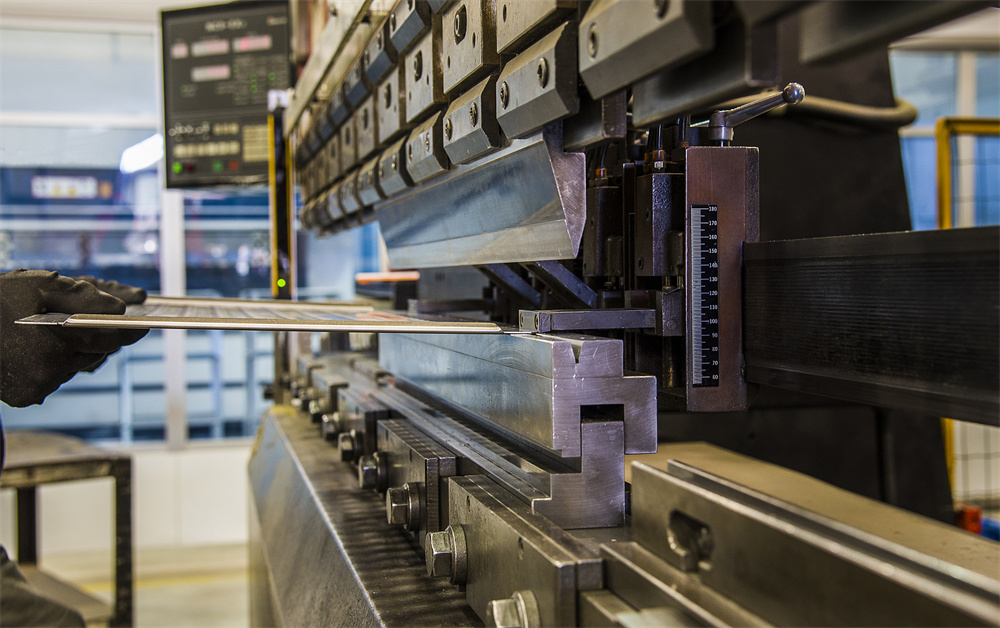
Selection Advice for High-Precision Bending
Choosing the Right Press Brake for Your Application
When purchasing a new machine, consider the complexity of your parts. If you frequently work with small, intricate components or materials with varying surface finishes, a CNC press brake with a multi-axis backgauge (4-axis or 6-axis) is highly recommended. The ability to adjust the height (R-axis) and the lateral position (Z-axis) of the backgauge fingers allows for better support of the workpiece, significantly reducing the chance of slippage. HARSLE offers a range of models from the economical Genuo series to the high-precision WE67K series, catering to different levels of production needs.
Tooling Upgrades and Accessories
Investing in high-quality tooling is often more cost-effective than dealing with the fallout of material slippage. Consider the following upgrades:
- Hardened Tooling: Resists wear and maintains sharp shoulder profiles for better grip.
- Anti-Slip Tapes and Films: Applied to the die, these provide a high-friction surface that grips the material without scratching.
- Pneumatic Clamping Systems: Allow for faster tool changes and ensure that the punch is always perfectly centered and secured.
- Front Support Arms: For large sheets, front supports prevent the material from sagging, which can cause it to pull away from the backgauge during the stroke.
Implementation of CNC Software Features
Modern CNC controllers, such as Delem or Cybelec, include features designed to compensate for material variables. Using the ‘dwell time’ setting allows the punch to hold the material at the bottom of the stroke for a fraction of a second, ensuring the bend is fully set and reducing springback-related shifting. Additionally, the ‘bend allowance’ and ‘deduction’ calculations in the software help in positioning the backgauge accurately, ensuring that the material is held in the optimal position for the specific geometry of the part.
Frequently Asked Questions (FAQ)
Why does my material slip only on long bends?
On long bends, machine deflection (the bowing of the bed and beam) is more pronounced. If your press brake does not have an effective crowning system, the pressure in the center of the bend will be lower than at the ends, allowing the material to shift in the middle. Checking your crowning settings or upgrading to a mechanical crowning table can solve this.
Can I use magnets to hold the material in place?
While magnetic backgauge attachments can help hold ferrous materials against the fingers, they do not prevent the material from sliding once the punch starts to apply downward force. Magnets are a good aid for positioning but are not a substitute for proper clamping and friction.
How does the V-die width affect slippage?
A V-die that is too wide (e.g., more than 8 times the material thickness for mild steel) reduces the ‘pinch’ force at the start of the bend. This makes it easier for the material to slide. Conversely, a V-die that is too narrow increases the required tonnage and can cause the material to crack. Always follow the standard V-die selection charts provided by HARSLE.
Does the speed of the bending stroke matter?
Yes. If the ‘approach speed’ is too high when the punch hits the material, the impact can jar the workpiece out of position. Modern CNC brakes allow you to program a ‘mute point’ where the machine slows down to a ‘pressing speed’ just before contact, ensuring a smooth and stable engagement.
How often should I clean my press brake dies?
For galvanized or oiled materials, dies should be cleaned every shift. Zinc buildup or oil residue acts as a lubricant, significantly increasing the risk of slippage. Use a non-abrasive cleaner and a soft cloth to maintain the integrity of the die surface.
Conclusion: Achieving Stability and Precision
To Solve Press Brake Material Slippage During Bending Operations, a holistic approach is required. It begins with the selection of a high-quality machine like those manufactured by HARSLE, which provides the structural rigidity and hydraulic precision necessary for demanding tasks. However, the machine is only part of the equation. Operators must be diligent in selecting the correct tooling, maintaining clean work surfaces, and utilizing the advanced features of CNC controllers to manage the physics of the bend.
By implementing the strategies discussed—such as optimizing V-die selection, ensuring proper crowning, and maintaining backgauge accuracy—fabricators can virtually eliminate material slippage. This not only improves the accuracy of the final product but also enhances the safety of the operation and the longevity of the equipment. In the competitive landscape of metal fabrication, the ability to produce perfect parts on the first hit is a significant advantage. Trust in HARSLE’s engineering and your own technical expertise to master the art of the perfect bend, free from the frustrations of material movement.
For more information on optimizing your bending processes or to explore our latest range of CNC press brakes, contact the HARSLE technical team today. We are committed to providing the tools and knowledge you need to succeed in the modern industrial environment.