Press Brake Budget Guide: Pricing Tips for First-Time Buyers


Price Range Overview
Entering the world of metal fabrication requires a significant capital investment, and for many, the press brake is the centerpiece of the workshop. Understanding the Press Brake Budget Guide: Pricing Tips for First-Time Buyers is essential to ensure you don’t overspend on features you don’t need or underspend on quality that will cost you in downtime. Generally, entry-level hydraulic press brakes can start anywhere from $15,000 to $30,000 for smaller, manual-heavy machines. These are often suitable for small job shops or light-gauge fabrication.
Moving into the mid-range category, which is the sweet spot for most growing fabrication businesses, you can expect to pay between $40,000 and $100,000. These machines typically feature CNC controllers, multi-axis backgauges, and higher tonnage capacities. This price bracket offers the best balance of automation and reliability for shops handling diverse materials and complex bend profiles on a daily basis.
For high-production environments or heavy-duty industrial applications, the budget can quickly exceed $150,000 to $300,000+. These machines are engineered for extreme precision, high-speed operation, and integration into automated robotic cells. When setting your initial budget, it is vital to look beyond the sticker price and consider the total cost of ownership, including installation, tooling, and training.
First-time buyers should also consider the secondary market. While used machines can save 30-50% off the price of a new unit, they often lack modern safety features, energy-efficient drives, and the latest software compatibility. If you choose the used route, ensure you have a clear budget for potential repairs and retrofitting to bring the machine up to current safety standards.
Ultimately, your budget should be dictated by your current production volume and your projected growth over the next five years. Buying a machine that is too small for your future needs will result in a premature upgrade, while buying a machine that is too large will tie up capital that could be better spent on other fabrication equipment like laser cutters or welding stations.
Main Cost Drivers
The primary factor influencing the cost of a press brake is its tonnage capacity. Tonnage refers to the amount of pressure the machine can exert to bend metal. Higher tonnage requires a more robust frame, larger hydraulic cylinders, and more powerful motors, all of which drive up the manufacturing cost. It is a common mistake for first-time buyers to overestimate their tonnage needs; calculate your maximum material thickness and bend length accurately to avoid paying for excess capacity.
Bending length is the second major cost driver. A machine designed to bend 10-foot sheets will naturally cost more than one designed for 4-foot sheets due to the sheer size of the bed and the structural reinforcement required to prevent deflection. If your typical parts are small, don’t pay for a 12-foot bed just in case you might need it once a year; it is often more cost-effective to outsource those rare, oversized jobs.
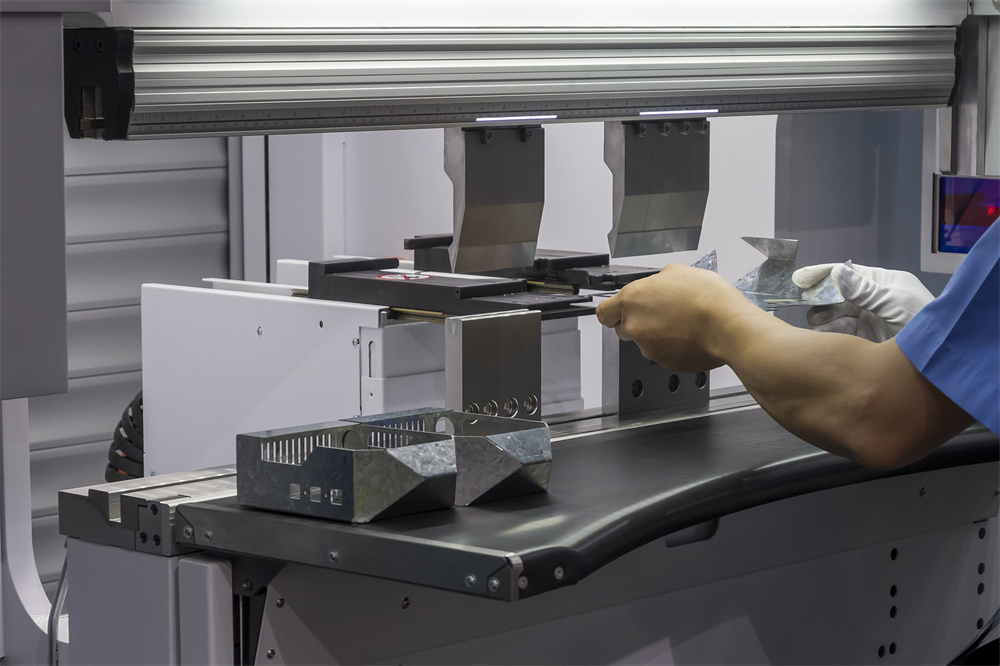
The level of CNC integration significantly impacts the price. A simple NC controller that manages the backgauge position is significantly cheaper than a full-featured 3D graphical CNC controller that simulates bends, manages tool libraries, and integrates with offline programming software. While the advanced controllers are more expensive, they drastically reduce setup time and operator error, which often justifies the higher initial investment.
The number of axes is another critical cost driver. A standard machine might come with a 2-axis backgauge (X and R), but adding more axes (Z1, Z2, X1, X2, etc.) allows for more complex part geometries and faster production. Each additional axis requires its own motor, drive, and control integration, which adds to the complexity and the final price tag of the machine.
Finally, the build quality and brand reputation play a role. Premium manufacturers invest heavily in R&D, high-quality hydraulic components, and precision-ground frames. While you might find cheaper alternatives, these often come with higher maintenance costs, shorter lifespans, and less responsive technical support, which can be devastating for a first-time buyer relying on a single machine.
Configuration Impact
When configuring your press brake, the choice of tooling is often overlooked in the initial budget. High-quality, precision-ground tooling is essential for consistent bending results. Depending on the complexity of your parts, you might need specialized punches and dies for hemming, radius bending, or offset bends. Budgeting for a comprehensive starter tool kit is a smart move for any first-time buyer.
Safety configurations are non-negotiable. Modern press brakes come with various safety systems, including laser light curtains, physical guards, and safety PLCs. While these add to the cost, they are vital for protecting your operators and ensuring compliance with local safety regulations. Never compromise on safety to save money; the cost of a workplace accident far outweighs the price of a premium safety system.
Energy efficiency is an increasingly important configuration factor. Servo-hydraulic systems, which only consume power when the ram is moving, are more expensive upfront than traditional constant-running hydraulic systems. However, the long-term energy savings can be substantial, especially in high-production environments where the machine runs for multiple shifts per day.
Consider the material handling requirements. If you are bending large, heavy sheets, you may need to budget for sheet followers or front support arms. These accessories prevent the material from sagging during the bend, ensuring accuracy and reducing operator fatigue. While they add to the initial cost, they significantly improve productivity and part quality.
Lastly, think about software integration. If you are using CAD/CAM software for your other fabrication processes, ensure your press brake controller is compatible. Offline programming software allows you to simulate bends and create programs without taking the machine out of production. This is a powerful tool for maximizing machine uptime and should be factored into your total budget.
Hidden Costs
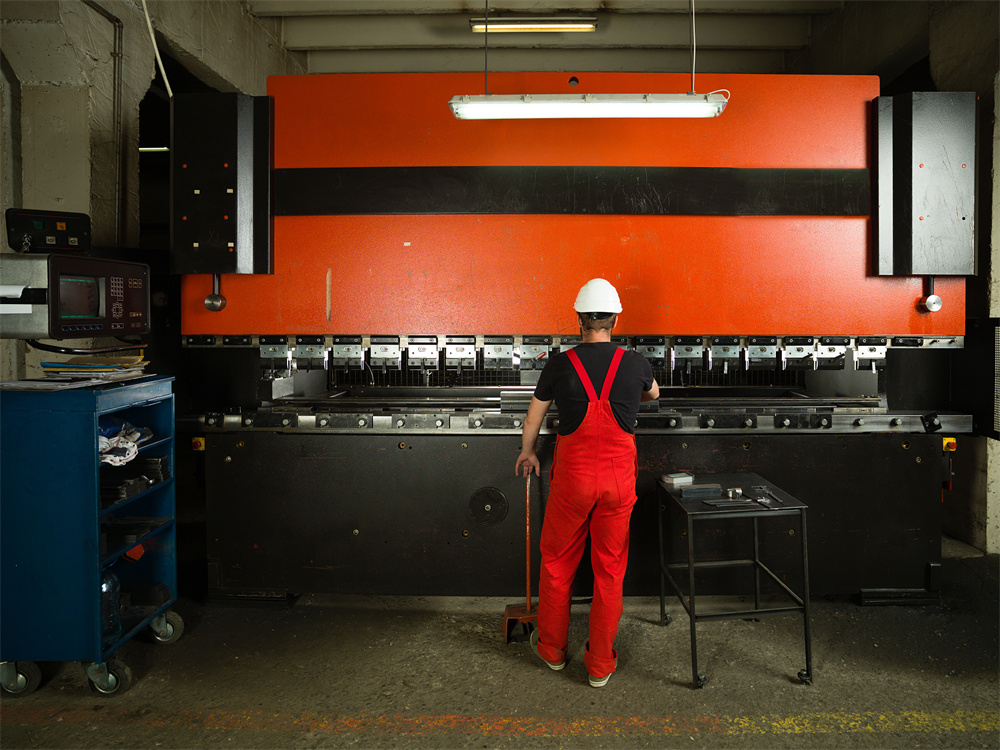
First-time buyers often focus solely on the machine price, forgetting the hidden costs associated with installation and commissioning. You will need to account for rigging and transportation, which can be significant depending on the size and weight of the machine. Additionally, the floor must be prepared to support the weight of the press brake, which may require specialized concrete foundations or reinforced flooring.
Electrical and hydraulic requirements are another hidden expense. You may need to upgrade your facility’s power supply to accommodate the machine’s voltage and amperage requirements. Furthermore, high-quality hydraulic oil and regular maintenance supplies are ongoing costs that should be factored into your annual operating budget. Don’t forget the cost of compressed air if your machine requires it for pneumatic clamping or other functions.
Training is a critical, often overlooked cost. Even the most advanced machine is useless if your operators don’t know how to use it efficiently. Budget for professional training sessions provided by the manufacturer or a certified dealer. This investment will pay for itself in reduced scrap rates, faster setup times, and improved operator safety.
Maintenance contracts and spare parts inventory should also be part of your budget. Having a stock of critical spare parts—such as fuses, seals, and common electronic components—can save you days of downtime in the event of a minor failure. A preventative maintenance contract ensures that your machine is serviced regularly by professionals, extending its lifespan and maintaining its resale value.
Finally, consider the cost of waste. As a first-time buyer, you will likely experience a learning curve. Budget for extra material for testing and training purposes. It is better to have a surplus of scrap metal for practice than to waste expensive production materials while your team is getting up to speed on the new equipment.
ROI Calculation
Calculating the Return on Investment (ROI) for a press brake involves more than just looking at the purchase price. Start by estimating the increase in production capacity. If your new machine allows you to produce parts 30% faster than your current method, calculate the value of that additional output over the next few years. This is the primary driver of your ROI.
Factor in the reduction in labor costs. A more automated machine requires less manual intervention, allowing your operators to focus on other tasks or handle more machines simultaneously. If you can reduce the time spent on setup and programming, you are effectively increasing your labor efficiency and reducing the cost per part.
Consider the improvement in part quality. A high-precision press brake reduces the need for rework and scrap. Calculate the current cost of your scrap and rework, and estimate how much of that will be eliminated with the new machine. This is often a significant, yet hidden, source of savings that directly impacts your bottom line.
Don’t forget the potential for new business. A more capable press brake allows you to take on more complex projects that you previously had to turn away. Estimate the potential revenue from these new capabilities and include it in your ROI projections. This is often the most exciting part of the investment, as it represents growth rather than just efficiency.
Finally, consider the tax benefits. Depending on your location, you may be eligible for tax incentives, accelerated depreciation, or grants for investing in new manufacturing technology. Consult with your accountant to understand how these financial benefits can offset the initial cost and improve your overall ROI calculation.
Buying Advice
When selecting a supplier, prioritize those who offer strong local support. A machine is only as good as the service behind it. Ask for references from other shops in your area and inquire about their experience with the manufacturer’s technical support and spare parts availability. You want a partner, not just a vendor.
Take the time to visit the manufacturer’s showroom or a trade show to see the machine in action. Don’t just look at the specs; ask to run a test bend on your own material. This will give you a real-world sense of the machine’s ease of use, speed, and precision. Pay attention to how the controller feels and how intuitive the programming process is.
Be wary of “too good to be true” pricing. If a machine is significantly cheaper than its competitors, there is usually a reason. It might be built with lower-quality components, lack essential safety features, or have poor support. As a first-time buyer, reliability should be your top priority. It is better to pay a bit more for a machine that you know will work consistently than to save money on a machine that is constantly down for repairs.
Consider the future-proofing of your purchase. Can the machine be upgraded with additional axes or software features later? Is the controller compatible with modern industry standards? Choosing a machine with a modular design can allow you to grow your capabilities as your business expands, protecting your initial investment.
Finally, trust your gut. You will be spending a lot of time with this machine. Does the manufacturer seem knowledgeable and helpful? Do they answer your questions thoroughly? A good relationship with your supplier will make the entire process, from purchase to installation and beyond, much smoother and more successful.
FAQ
- What is the most important factor when choosing a press brake? The most important factor is matching the machine’s tonnage and bed length to your specific material thickness and part size requirements.
- How much should I budget for tooling? A good rule of thumb is to set aside 10-15% of the machine’s purchase price for a comprehensive initial tooling package.
- Is it better to buy new or used? For first-time buyers, new machines are generally recommended due to warranties, modern safety features, and technical support. Used machines are only advisable if you have the expertise to evaluate their condition.
- How often does a press brake need maintenance? Regular maintenance should be performed at least every 6 to 12 months, depending on usage intensity.
- Can I use offline programming software with any press brake? Not necessarily. Ensure the machine’s controller is compatible with the software you intend to use before making a purchase.
- What are the hidden costs of buying a press brake? Hidden costs include rigging, installation, facility upgrades, training, spare parts, and initial scrap material for testing.