Shearing Machine Price 2026: Affects Cost Compare Models – The Ultimate Buyer’s Guide


Price Range Overview: Understanding the 2026 Market Landscape
As we move into 2026, the metal fabrication industry is witnessing a significant shift in how shearing machines are priced and valued. The market is no longer just about the raw tonnage or cutting length; it is about the integration of smart technology, energy efficiency, and precision control. For procurement managers and shop owners, understanding the Shearing Machine Price 2026: Affects Cost Compare Models landscape is essential for making a sound capital investment.
Generally, entry-level mechanical shearing machines for light-gauge sheet metal can range from $8,000 to $15,000. These are typically used for smaller workshops or specialized tasks where high-volume precision is not the primary driver. Moving into the mid-range, hydraulic swing beam shearing machines—the workhorses of the industry—typically fall between $20,000 and $60,000. These models offer the versatility required for diverse material thicknesses and production speeds.
At the high end of the spectrum, CNC-controlled variable rake angle shearing machines can exceed $100,000. These machines are designed for high-precision, high-speed production environments where material waste must be minimized and throughput maximized. When comparing these price points, it is vital to look beyond the sticker price and consider the total cost of ownership over a five-to-ten-year horizon.
The 2026 market is also seeing a rise in hybrid systems that combine hydraulic power with electric servo drives. While these carry a premium price tag, the reduction in energy consumption and maintenance costs often justifies the initial expenditure. Buyers must evaluate their specific production requirements against these tiers to ensure they are not over-investing in features they won’t use or under-investing in equipment that will become a bottleneck.
Main Cost Drivers: What Really Influences the Price?
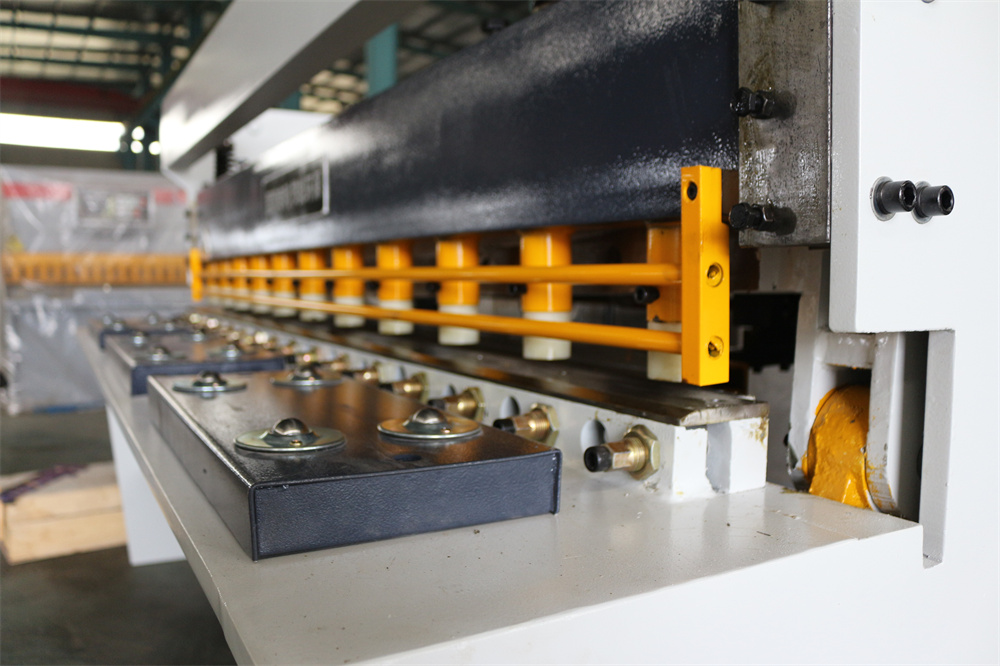
Several technical factors dictate the price of a shearing machine. The most obvious is the cutting capacity, defined by the maximum thickness and length of the material the machine can process. A machine capable of shearing 20mm thick steel plate requires a much more robust frame, larger hydraulic cylinders, and higher-grade blade materials than one designed for 6mm sheet metal. This structural integrity is the primary driver of the base cost.
The control system is another major variable. A simple manual backgauge system is significantly cheaper than a multi-axis CNC controller. In 2026, the demand for automation is driving up the cost of software integration. Advanced controllers that allow for automatic blade gap adjustment, rake angle optimization, and material database management add substantial value—and cost—to the machine. These features reduce setup time and operator error, which are critical for high-mix, low-volume production shops.
Blade quality and material composition also play a significant role. High-carbon, high-chrome tool steel blades are standard for most applications, but specialized coatings or alloys for cutting high-tensile materials or stainless steel increase the price. Furthermore, the brand reputation and the quality of the hydraulic and electrical components—such as valves from Bosch Rexroth or electrical systems from Schneider—directly impact the machine’s reliability and, consequently, its market price.
Finally, geographic manufacturing costs and logistics play a role. While global supply chains have stabilized, the cost of high-grade steel and specialized electronic components remains volatile. Manufacturers who invest in R&D for energy-efficient hydraulic systems often pass these costs on to the consumer, but they provide long-term savings through reduced electricity bills and lower environmental impact, which is increasingly important for compliance in 2026.
Configuration Impact: Customizing for Your Needs
When you compare models, you will find that the base configuration is often just the starting point. Customization is where the price can fluctuate significantly. For instance, adding a pneumatic sheet support system is a common upgrade for shops handling thin, large-format sheets. This prevents the material from sagging during the cut, ensuring precision and preventing damage to the sheet edges. While this adds to the initial investment, it significantly reduces scrap rates.
Another critical configuration choice is the backgauge design. A standard motorized backgauge is sufficient for basic cutting, but a high-speed, multi-axis backgauge with ball screws and linear guides is necessary for high-precision work. In 2026, many manufacturers are offering integrated software that syncs the backgauge position with the blade gap and rake angle, allowing for “one-touch” setup. This level of automation is a major cost driver but is essential for shops looking to reduce labor costs.
Safety configurations are non-negotiable but vary in sophistication. Basic light curtains are standard, but advanced laser safety systems that monitor the entire cutting zone and integrate with the machine’s PLC are becoming the industry standard. These systems not only protect operators but also reduce insurance premiums and downtime associated with safety incidents. When comparing models, ensure that the safety features meet the latest international standards, as retrofitting these later is often more expensive than including them at the point of purchase.
Lastly, consider the material handling integration. Does the machine need to be part of a larger automated cell? If you plan to integrate the shearing machine with an automatic loading and unloading system, the machine must be configured with the necessary communication protocols and physical mounting points. This level of integration requires a higher-spec machine with robust connectivity, which should be factored into your budget early in the planning phase.
Hidden Costs: Beyond the Sticker Price
Many buyers focus exclusively on the purchase price, but the total cost of ownership (TCO) is what truly matters. Installation and commissioning are often overlooked. Depending on the size of the machine, you may need to prepare a specialized concrete foundation, ensure adequate power supply, and potentially install a crane for unloading. These site preparation costs can easily add thousands of dollars to your project budget.
Maintenance and consumables are another hidden cost. Blades need to be sharpened or replaced periodically. Hydraulic fluid, filters, and seals require regular attention. When comparing models, ask the manufacturer for a list of recommended spare parts and their typical replacement intervals. A machine that is cheaper to buy but requires proprietary, expensive parts will quickly become more expensive than a slightly higher-priced machine that uses standard, off-the-shelf components.
Energy consumption is a major factor in 2026. Older hydraulic designs can be inefficient, running pumps at full capacity even when the machine is idle. Look for models with variable frequency drives (VFDs) or “eco-mode” features that throttle down the motor when the machine is not in active use. Over the course of a year, these energy savings can be substantial, especially in regions with high electricity costs.
Training and software licensing should also be considered. If your team needs to learn a new CNC interface, the cost of training—and the temporary drop in productivity during the learning curve—must be accounted for. Some manufacturers include training in the purchase price, while others charge for it separately. Always clarify what is included in the service package to avoid unexpected invoices after the machine is delivered.
ROI Calculation: Justifying the Investment
To calculate the Return on Investment (ROI) for a new shearing machine, you must look at the increase in throughput and the reduction in labor and material waste. Start by calculating the cost per cut on your current equipment. Include labor, energy, maintenance, and the cost of scrap caused by inaccuracies. Then, estimate these same costs for the new machine based on its technical specifications.
For example, if a new CNC shearing machine reduces setup time by 30 minutes per shift and reduces material scrap by 5%, calculate the annual savings based on your current production volume. If you process 10,000 sheets a year, a 5% reduction in scrap can represent a significant amount of raw material savings. When you add the labor savings from faster setup and the potential for higher-precision work that commands a premium price, the ROI often becomes clear.
Consider the “opportunity cost” of not upgrading. If your current machine is prone to breakdowns, the cost of downtime—missed deadlines, unhappy customers, and overtime pay to catch up—can be astronomical. A new, reliable machine acts as an insurance policy against these disruptions. In 2026, the ability to deliver high-quality parts quickly is a competitive advantage that can win you more business, which should be factored into your ROI projections.
Finally, look at the resale value. High-quality, well-maintained shearing machines from reputable brands like HARSLE retain their value much better than generic, low-cost alternatives. When calculating your TCO, subtract the estimated resale value at the end of your planned ownership period. This often makes the higher initial investment in a premium machine look much more attractive.
Buying Advice: How to Compare Models Effectively
When you are ready to compare models, create a standardized comparison matrix. List your requirements in the first column: cutting length, thickness capacity, material type, required precision, and budget. Then, create columns for each machine you are considering. Fill in the technical specifications for each, but also include qualitative factors like warranty terms, availability of local service, and the manufacturer’s reputation for support.
Don’t rely solely on brochures. Ask for a demonstration, preferably with your own material. Seeing how the machine handles your specific alloys and thicknesses will tell you more than any spec sheet. Pay attention to the ease of use—is the interface intuitive? Does the machine feel rigid and stable during the cut? These are indicators of build quality that are hard to quantify but easy to feel.
Talk to existing users. Ask the manufacturer for references in your industry. A quick phone call to another shop owner who has been using the machine for a year or two can provide invaluable insights into real-world reliability and the quality of the manufacturer’s after-sales support. If a manufacturer is hesitant to provide references, that should be a red flag.
Finally, consider the long-term partnership. You are not just buying a machine; you are entering into a relationship with a supplier. Ensure they have a strong local presence, a reliable supply of spare parts, and a team of technicians who can provide remote or on-site support when needed. In the fast-paced world of 2026 manufacturing, the ability to get your machine back up and running quickly is worth more than any discount on the purchase price.
FAQ: Frequently Asked Questions
- What is the average lifespan of a modern shearing machine? With proper maintenance, a high-quality hydraulic shearing machine can last 15 to 20 years or more.
- How often should I sharpen the blades? This depends on the material thickness and frequency of use. Generally, blades should be inspected every 500-1000 hours of operation.
- Is it worth buying a used shearing machine? It can be, provided you have a professional inspect the hydraulic system, frame integrity, and blade condition. However, you lose out on the latest energy-saving technology and warranty coverage.
- What is the difference between a swing beam and a guillotine shear? Swing beam shears are generally more cost-effective and versatile for general-purpose work, while guillotine shears offer higher precision and are better suited for heavy-duty, high-volume production.
- How do I choose the right cutting capacity? Always choose a machine with a capacity slightly higher than your maximum requirement to avoid running the machine at its limit, which increases wear and tear.
- Can I use the same blades for stainless steel and mild steel? While possible, it is not recommended. Stainless steel is harder and can dull blades faster; using the correct blade material and clearance settings is crucial for both material types.