How to Get the Best Press Brake Quote From Manufacturers: A Comprehensive Guide


Price Range Overview
When you set out to get the best press brake quote from manufacturers, the first hurdle is understanding the vast pricing spectrum of the market. Press brakes are not one-size-fits-all commodities; they are precision engineering tools that range from entry-level manual machines to fully automated, high-tonnage robotic cells. Generally, a small, entry-level hydraulic press brake might start in the lower five-figure range, while high-end, multi-axis CNC machines with advanced crowning systems can easily exceed six figures.
The price you see on a quote is rarely just the cost of the steel and hydraulics. It reflects the research and development, the quality of the control system, the precision of the backgauge, and the level of post-purchase support provided by the manufacturer. HARSLE, for instance, categorizes pricing based on the complexity of the bending requirements, the material thickness, and the level of automation required for your specific production environment.
To navigate this, you must first define your production volume. Are you a job shop handling high-mix, low-volume parts, or are you a high-volume manufacturer producing the same bracket thousands of times a day? The former requires flexibility and quick setup times, which increases the machine’s cost, while the latter prioritizes speed and repeatability. Understanding where you fall on this spectrum is the first step in ensuring the quote you receive is aligned with your actual needs.
Market volatility also plays a significant role in pricing. Steel prices, electronic component availability, and shipping logistics fluctuate, meaning that a quote valid today might not be valid in three months. When requesting a quote, always ask for the validity period and inquire about potential lead-time surcharges. By understanding the market landscape, you can better interpret whether a quote is competitive or if it reflects a premium for immediate availability.

Main Cost Drivers
The primary cost driver in any press brake quote is the tonnage and bending length. Tonnage refers to the force the machine can exert, which is determined by the material thickness, tensile strength, and the length of the bend. Overspecifying tonnage leads to unnecessary capital expenditure, while underspecifying leads to machine failure and poor part quality. Always calculate your maximum bending force requirements before requesting a quote.
The second major driver is the backgauge system. A simple, single-axis backgauge is significantly cheaper than a multi-axis (X, R, Z1, Z2) system. However, the backgauge is the heart of your bending accuracy. If your parts require complex geometries or multiple bends in a single cycle, investing in a high-end backgauge will save you thousands in labor and scrap costs over the life of the machine. Do not compromise on the backgauge if your work involves intricate parts.
The control system is another critical cost component. Modern CNC controllers, such as those used by HARSLE, offer offline programming, 3D simulation, and automatic tool selection. While these features increase the initial investment, they drastically reduce setup time and operator error. When comparing quotes, look closely at the software capabilities. A machine that is easy to program will always provide a better return on investment than a cheaper machine that requires hours of manual input for every new part.
Finally, the build quality and hydraulic components define the machine’s longevity. Premium manufacturers use high-quality valves, pumps, and structural steel that resist deflection under load. When you ask for a quote, ask for the brand of the hydraulic components and the structural weight of the machine. A heavier machine is generally more rigid, which translates to better bending precision and less maintenance over time.
Configuration Impact
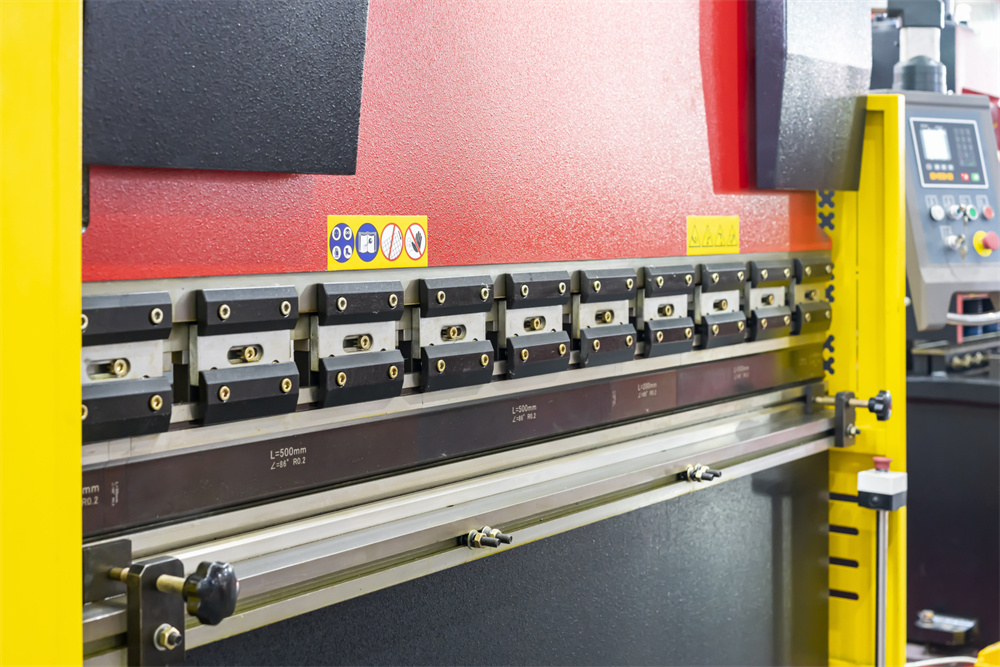
Configuration is where the “best” quote becomes the “right” quote. You need to consider the tool clamping system, which can be manual, pneumatic, or hydraulic. Hydraulic clamping allows for rapid tool changes, which is essential for job shops that switch between different bending profiles frequently. If your production is static, manual clamping might suffice, but it will cost you in downtime during every tool changeover.
Crowning systems are another configuration choice that impacts both price and part quality. A mechanical or hydraulic crowning system compensates for the deflection of the machine bed during the bending process. Without it, you will struggle to achieve consistent bend angles across the entire length of the part, especially when working with long, thin sheets. Ensure your quote includes a high-quality crowning system if you are doing precision work.
Safety features are non-negotiable, but they also impact the final price. Laser safety guards, light curtains, and interlocked side gates are standard on high-end machines. While these add to the cost, they are essential for operator safety and compliance with international standards. Never ask a manufacturer to remove safety features to lower a quote; instead, look for manufacturers who integrate these features efficiently into their standard design.
Consider the throat depth and open height. These dimensions determine the size of the parts you can manipulate. A deeper throat allows for larger parts to be passed through the machine, while a greater open height allows for taller tools and deeper boxes. If you are currently only bending flat plates but anticipate moving into box bending, ensure your machine configuration supports these future needs to avoid having to replace the machine prematurely.
Hidden Costs
When you get the best press brake quote from manufacturers, you must look beyond the machine price. Shipping and installation are often excluded from the base quote. Depending on the machine’s weight and your facility’s location, freight costs can be substantial. Furthermore, professional installation and commissioning are highly recommended to ensure the machine is leveled correctly and the software is calibrated to your specific power supply.
Training is another often-overlooked cost. A sophisticated CNC press brake is only as good as the operator using it. Does the quote include on-site training for your team? If not, you may face a steep learning curve that results in low productivity and potential machine damage. Always negotiate for comprehensive operator and maintenance training as part of the initial procurement package.
Tooling is a major hidden expense. Most machines come with a basic set of punches and dies, but these rarely cover the full range of your production needs. You will likely need to purchase specialized tooling for specific radii, hemmed edges, or complex profiles. Ask the manufacturer for a tooling package quote based on your sample parts to ensure you have everything you need to start production on day one.
Maintenance contracts and spare parts availability should also be factored in. A machine that is down for two weeks waiting for a proprietary sensor from overseas is a massive liability. Check the manufacturer’s local support network and the cost of an annual service contract. Investing in a preventative maintenance plan can prevent costly emergency repairs and extend the machine’s operational life significantly.
ROI Calculation
Calculating the Return on Investment (ROI) is the most effective way to justify the cost of a high-quality press brake. Start by calculating your current cost per part, including labor, scrap rates, and machine downtime. Then, estimate the improvements a new machine will bring. For example, if a new CNC press brake reduces setup time by 50% and scrap rates by 20%, you can quantify the annual savings in labor and material costs.
Consider the throughput increase. If your current machine is a bottleneck, a faster, more automated machine will allow you to take on more work without increasing your headcount. This is a direct contribution to your bottom line. Use the manufacturer’s production data to create a realistic model of how many parts per hour the new machine can produce compared to your current setup.
Don’t forget the tax benefits. Many regions offer capital expenditure incentives, such as accelerated depreciation or tax credits for industrial equipment upgrades. Consult with your accountant to see how these financial instruments can lower the effective cost of the machine. When you present the ROI to stakeholders, include these financial benefits to show a clearer picture of the investment’s value.
Finally, consider the resale value. A well-maintained, reputable brand like HARSLE retains its value much better than an unknown, budget-tier machine. When you eventually decide to upgrade or sell, the initial investment in quality will pay dividends. A high-quality machine is an asset that holds its worth, whereas a cheap machine is often a liability that becomes difficult to offload.
Buying Advice
To get the best press brake quote from manufacturers, you must be prepared. Start by creating a detailed specification sheet. Include the maximum material thickness, the longest bend length, the types of materials you work with (e.g., stainless steel, aluminum, mild steel), and the required precision tolerances. The more specific you are, the more accurate the quote will be.
Request quotes from at least three different manufacturers, but ensure you are comparing “apples to apples.” If one quote is significantly lower, investigate why. Is it missing the crowning system? Does it have a less capable controller? Is the warranty shorter? Often, the lowest price is a red flag for hidden compromises in quality or support.
Build a relationship with the sales representative. A good manufacturer wants to help you succeed, not just sell you a machine. Ask them for references from other customers in your industry. A reputable manufacturer will be happy to connect you with existing users who can vouch for the machine’s performance and the company’s after-sales support.
Finally, trust your gut regarding the manufacturer’s support. A press brake is a long-term investment. You want a partner who will be there for you five years down the road when you need a software update or a replacement part. Evaluate their responsiveness during the quoting process—if they are slow to answer your questions now, they will likely be slow to help you when you have a machine down in the future.
FAQ
- What is the most important factor when requesting a press brake quote? The most important factor is providing accurate technical requirements, including material type, thickness, and bend length, to ensure the machine is correctly sized.
- How can I compare quotes from different manufacturers? Create a comparison spreadsheet that lists the machine specifications, controller capabilities, included accessories, warranty terms, and total cost including shipping and installation.
- Is it better to buy a manual or CNC press brake? It depends on your production needs. CNC is better for high-mix, high-precision work, while manual machines are suitable for simple, repetitive tasks where budget is the primary constraint.
- What should I look for in a press brake warranty? Look for a comprehensive warranty that covers both parts and labor, and ensure there is a clear path for technical support and spare parts delivery.
- How often should I perform maintenance on my press brake? Regular maintenance should be performed according to the manufacturer’s schedule, typically involving daily checks, monthly lubrication, and annual professional inspections.