Affordable Press Brake Buying Guide for Metalworking Businesses: A Strategic Investment


Price Range Overview
Investing in metal fabrication equipment is a significant milestone for any growing workshop. When searching for an affordable press brake buying metalworking businesses often face a daunting array of options ranging from entry-level manual machines to high-end automated CNC systems. Understanding the price landscape is the first step toward making a sound financial decision. Generally, entry-level hydraulic press brakes start in the lower price bracket, suitable for small-batch production and light-gauge materials, while mid-range machines offer a balance of speed, precision, and automation for medium-sized job shops.
The market is segmented by tonnage, bending length, and control sophistication. For businesses just starting, a basic NC (Numerical Control) press brake provides essential functionality without the premium cost of full-scale CNC integration. As you move up the price ladder, you encounter machines with multi-axis backgauges, advanced crowning systems, and energy-efficient servo-hydraulic drives. It is crucial to define your production requirements clearly to avoid overspending on features that do not directly contribute to your bottom line.
HARSLE offers a diverse portfolio designed to cater to different budget tiers. By focusing on core structural integrity and reliable hydraulic components, we provide machines that deliver high performance at a competitive price point. When evaluating the price range, consider not just the sticker price, but the total cost of ownership, including power consumption, tooling compatibility, and expected maintenance intervals over the machine’s lifespan.
Ultimately, the goal is to find the ‘sweet spot’ where the machine’s capabilities align with your current and projected workload. Investing in a machine that is too small will lead to bottlenecks, while an oversized machine ties up capital that could be better spent on other areas of your business. Our guide aims to help you navigate these choices effectively, ensuring your investment supports long-term growth.
Main Cost Drivers
Several technical specifications dictate the price of a press brake. The most significant factor is tonnage, which refers to the machine’s bending force. Higher tonnage machines require heavier frames, more robust hydraulic cylinders, and more powerful motors, all of which drive up the manufacturing cost. Assessing the maximum thickness and tensile strength of the materials you intend to bend is essential to selecting the correct tonnage without paying for excess capacity.
Bending length is another primary cost driver. A machine designed to bend 4-meter sheets requires a longer bed and ram, which necessitates thicker steel plates to prevent deflection under load. If your typical projects involve smaller parts, opting for a shorter bed length can significantly reduce your initial investment. It is a common mistake to purchase a machine based on the largest possible part you might ever bend, rather than the parts you bend 90% of the time.
The control system is perhaps the most visible cost driver in modern fabrication. A basic NC controller allows for simple depth and backgauge positioning, which is sufficient for many standard operations. However, a full CNC controller with 3D visualization, offline programming software, and automatic bend sequencing adds substantial value and speed. While the upfront cost is higher, the reduction in setup time and operator error often justifies the investment for high-mix, low-volume production environments.
Finally, the quality of components—such as the hydraulic valves, seals, and electrical sensors—plays a major role in the long-term cost. Premium components reduce the frequency of breakdowns and ensure consistent bending accuracy over time. At HARSLE, we prioritize high-quality, globally sourced components to ensure our affordable press brakes maintain high precision throughout their operational life, minimizing the hidden costs of downtime and rework.
Configuration Impact
The configuration of your press brake determines how efficiently it integrates into your workflow. A standard 2-axis machine (Y-axis for ram depth and X-axis for backgauge) is the foundation of most affordable setups. However, adding axes can drastically improve productivity. For example, an R-axis (vertical backgauge movement) or Z-axis (lateral finger movement) allows for complex bending sequences that would otherwise require multiple setups or manual adjustments.
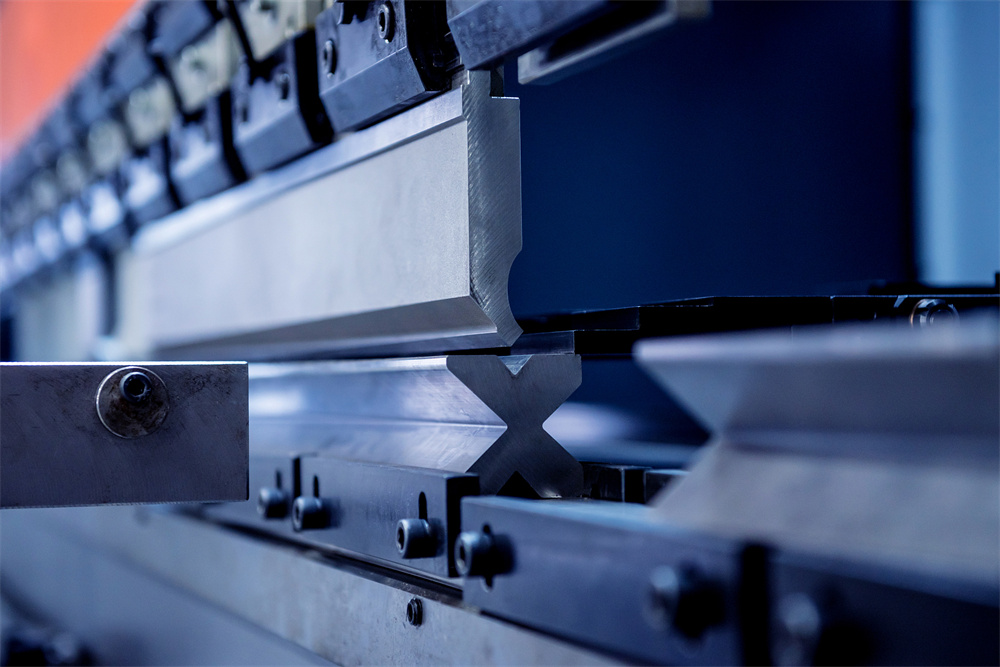
Tooling configuration is another critical aspect. The type of clamping system—whether manual, quick-release, or hydraulic—impacts how fast you can change jobs. For businesses that frequently switch between different part geometries, quick-change tooling systems are a game-changer. While they represent an additional cost, the time saved during tool changes can lead to a significant increase in daily output, effectively lowering the cost per part.
Crowning systems are essential for maintaining bend angle consistency across the entire length of the bend. Mechanical or hydraulic crowning compensates for the natural deflection of the machine bed, ensuring that the bend angle remains uniform. For businesses working with long, thin materials, a high-quality crowning system is non-negotiable. Skipping this feature to save money often leads to inconsistent parts and increased scrap rates, which quickly negate any initial savings.
Safety configurations also impact the final price. Modern safety light curtains, laser guards, and foot pedals are standard in many regions and are vital for operator protection. Investing in advanced safety features not only ensures compliance with local regulations but also boosts operator confidence and productivity. HARSLE integrates these safety systems seamlessly into our machine designs, ensuring that affordability does not come at the expense of operator well-being.
Hidden Costs
When budgeting for an affordable press brake, many business owners focus solely on the purchase price, overlooking the ‘hidden’ costs that arise during installation and operation. Shipping, rigging, and professional installation are often excluded from the base price. Depending on the machine’s weight and your facility’s location, these logistics can add a significant percentage to your total budget. Always request a comprehensive quote that includes delivery and commissioning.
Foundation requirements are another frequently overlooked expense. Larger press brakes require a reinforced concrete slab to handle the weight and vibration. If your current shop floor is not suitable, the cost of site preparation can be substantial. Before purchasing, consult with the manufacturer regarding the specific floor loading requirements and ensure your facility is prepared to accommodate the machine safely.
Tooling is perhaps the most significant ongoing cost. While a machine may come with a basic set of punches and dies, you will likely need specialized tooling for specific bends or materials. High-quality, hardened tooling lasts longer and provides better accuracy, but it is an investment. Factor in the cost of a starter tooling package and budget for future additions as your product range expands.
Maintenance and energy costs should also be considered. Older or less efficient hydraulic systems consume more power and require more frequent oil changes and seal replacements. Modern servo-hydraulic systems, while potentially higher in initial cost, offer significant energy savings and reduced maintenance requirements. By choosing a machine with high energy efficiency, you lower your monthly operating expenses, contributing to a faster return on investment.
ROI Calculation
Calculating the Return on Investment (ROI) for a press brake involves more than just looking at the purchase price. You must evaluate how the machine improves your overall production capacity. Start by calculating the current cost of outsourcing your bending needs versus the cost of doing it in-house. If you are currently sending parts out, the savings on shipping, lead times, and markup are immediate benefits that contribute to your ROI.
Next, consider the labor savings. A more efficient press brake with a user-friendly controller reduces the time required for setup and operation. If your operators can complete a job in half the time, you have effectively doubled your capacity without increasing your labor costs. This efficiency gain is a primary driver of ROI in high-volume environments.
Reduced scrap rates are another critical factor. A precise, reliable press brake produces fewer errors. Every piece of scrap represents wasted material, wasted labor, and lost time. By investing in a machine with high repeatability and advanced crowning, you minimize rework and scrap, directly improving your profit margins on every part produced.
Finally, consider the potential for new business. With an in-house press brake, you can offer faster turnaround times and take on more complex projects that were previously impossible. This increased capability allows you to bid on a wider range of contracts, driving revenue growth. When you combine these factors—outsourcing savings, labor efficiency, scrap reduction, and new revenue streams—the ROI of a well-chosen press brake becomes clear and compelling.
Buying Advice
When you are ready to purchase, start by creating a detailed list of your requirements. Include the maximum material thickness, length, and the types of bends you perform most frequently. This list will serve as your roadmap during discussions with suppliers. Do not be afraid to ask for demonstrations or to see the machine in operation. Seeing the machine in a real-world environment provides insights into its ease of use, noise levels, and overall build quality.
Research the manufacturer’s reputation for support. An affordable machine is only a good deal if it is backed by reliable technical support and readily available spare parts. Inquire about the warranty, the availability of remote diagnostics, and the proximity of service technicians. A manufacturer that provides comprehensive training for your operators will also help you get the most out of your investment from day one.
Consider the future-proofing of your purchase. While you may only need a 2-axis machine today, will your business grow to require 4 or 6 axes in the next three years? Some machines allow for modular upgrades, while others do not. Discussing your long-term growth plans with your HARSLE representative can help you select a machine that can evolve with your business, protecting your investment for years to come.
Finally, trust your instincts regarding the quality of the build. Look for clean welds, robust hydraulic lines, and a well-organized electrical cabinet. These details are often indicative of the care and precision put into the machine’s overall design. By following these steps and focusing on value rather than just the lowest price, you will find an affordable press brake that serves as a cornerstone of your metalworking business.
FAQ
- What is the most important factor when buying an affordable press brake? The most important factor is matching the machine’s tonnage and bending length to your specific material requirements. Over-specifying leads to unnecessary costs, while under-specifying leads to performance issues.
- How often should I perform maintenance on my press brake? Regular maintenance should be performed according to the manufacturer’s schedule, typically involving daily checks of hydraulic levels, weekly cleaning of the backgauge, and annual professional inspections of the hydraulic system and electrical components.
- Is it better to buy a new or used press brake? While used machines may have a lower upfront cost, they often come with hidden wear and tear and lack modern safety features. A new, affordable press brake from a reputable manufacturer like HARSLE offers the peace of mind of a warranty and the latest technology.
- Can I use standard tooling on any press brake? Most press brakes use standard tooling styles (such as European or American style), but it is essential to verify compatibility with the machine’s clamping system before purchasing.
- How does a CNC controller improve productivity? A CNC controller automates the bending sequence, stores job programs, and calculates bend allowances, significantly reducing setup time and the potential for human error compared to manual or simple NC controls.