
Back Gauge Types in Press Brake Machines: Comparison of Accuracy and Efficiency


Comparison Summary: The Evolution of Back Gauge Technology
In the realm of metal fabrication, the press brake is a cornerstone machine, but its performance is often dictated by a component that works behind the scenes: the back gauge. The back gauge is the positioning system that ensures the workpiece is correctly aligned before the punch descends into the die. Without a high-quality back gauge, even the most powerful hydraulic system cannot produce accurate parts. This article provides a deep dive into the Back Gauge Types In Press Brake Machines: Comparison Of Accuracy Efficiency, helping manufacturers understand which system best suits their production needs.
Historically, back gauges were simple manual stops that required operators to hand-crank scales into position. Today, the industry has shifted toward sophisticated CNC-controlled multi-axis systems. The primary difference between these types lies in their degrees of freedom (axes), the speed of their movement, and the precision of their positioning. While a 1-axis system might suffice for simple 90-degree bends in large batches, complex geometries with multiple flanges require 4-axis, 6-axis, or even specialized robotic back gauges to maintain efficiency and minimize scrap rates.
When comparing accuracy and efficiency, we must look at the mechanical drive systems—such as ball screws versus lead screws—and the control electronics. Modern systems from HARSLE utilize high-speed servo motors and precision linear guides to achieve repeatability within microns. This comparison will explore how different configurations, from basic X-axis setups to advanced independent X1-X2 systems, impact the bottom line of a fabrication shop by reducing setup times and increasing throughput.
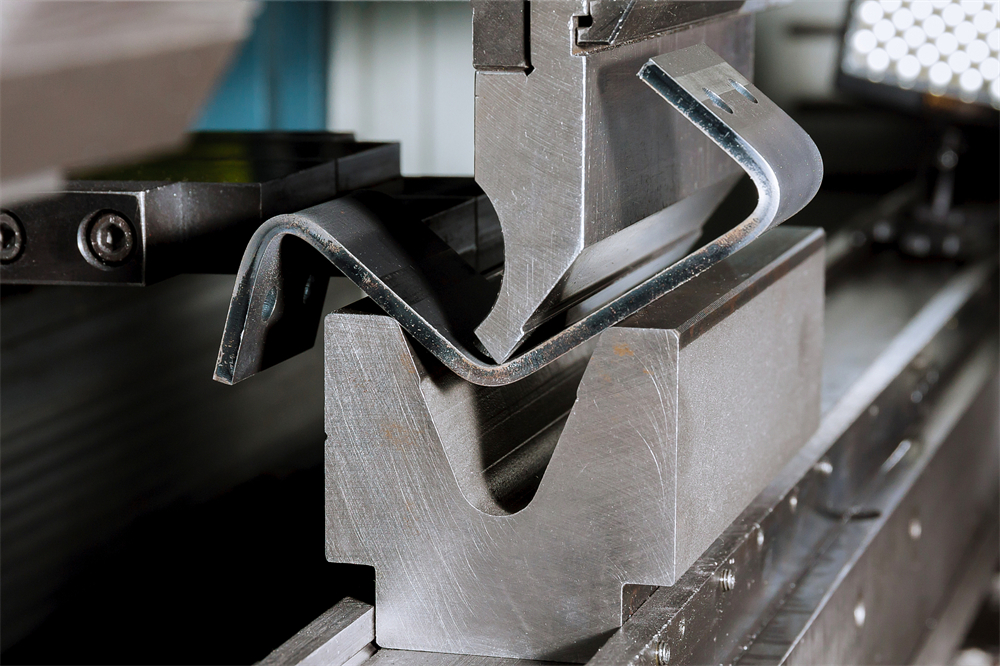
Machine A Overview: Standard CNC Back Gauges (2-Axis to 3-Axis)
Standard CNC back gauges are the workhorses of the general fabrication industry. Typically, these systems offer control over the X-axis (depth) and the R-axis (height). In some configurations, a manual or basic CNC Z-axis (lateral movement) is also included. These machines are designed for high-volume production of parts with consistent bend lines. The X-axis is the most critical, as it determines the length of the flange. In a standard HARSLE CNC press brake, the X-axis is driven by a high-precision ball screw, ensuring that the gauge fingers move rapidly and stop exactly where programmed.
The R-axis is equally important when dealing with parts that have pre-bent flanges. If a part already has a downward-facing flange, the back gauge must be able to move up or down to clear that flange or to support the part at the correct height. Efficiency in these machines is gained through the CNC controller, which allows operators to store hundreds of programs. Instead of manual measurements, the operator simply selects the program, and the back gauge moves into position in seconds. This significantly reduces the “art” required in bending and turns it into a repeatable science.
However, the limitation of standard 2-axis or 3-axis systems becomes apparent when dealing with tapered parts or complex shapes where the bend line is not parallel to the back of the machine. Because the gauge fingers move together on a single beam, they cannot accommodate asymmetrical positioning. For shops focusing on brackets, simple enclosures, and standard profiles, these machines offer the best balance of cost and performance, providing an accuracy range of ±0.02mm to ±0.05mm, which is more than sufficient for most industrial applications.
Machine B Overview: Advanced Multi-Axis Systems (4-Axis to 6-Axis and Beyond)
For manufacturers tackling complex aerospace components, intricate electronics housings, or heavy-duty tapered sections, advanced multi-axis back gauges are essential. These systems, often referred to as 4-axis (X, R, Z1, Z2) or 6-axis (X1, X2, R1, R2, Z1, Z2) systems, provide independent movement for each gauge finger. In a 6-axis configuration, each finger can move forward and backward, up and down, and left to right independently of the other. This allows for the bending of parts with non-parallel sides or complex step-bends where the workpiece must be supported at different depths simultaneously.
The efficiency of a 6-axis system is unmatched in high-complexity environments. In a traditional setup, a tapered bend might require custom jigs or multiple manual adjustments, leading to significant downtime. With an independent X1-X2 system, the CNC controller calculates the exact angle and positions the fingers accordingly. This “intelligent” positioning eliminates the need for trial and error. Furthermore, the Z1 and Z2 axes allow the fingers to automatically spread apart or move closer together based on the width of the part, which is vital for maintaining stability during the bending process.
Accuracy in these high-end systems is maintained through the use of premium components like Panasonic or Yaskawa servo motors and THK linear guides. The integration with advanced software, such as Delem DA66T or DA69T, allows for 3D visualization of the bending process. The software can simulate the back gauge movement to ensure there are no collisions with the tools or the workpiece. While the initial investment is higher, the reduction in setup time—sometimes by as much as 80% for complex parts—provides a rapid return on investment for high-mix, low-volume manufacturers.
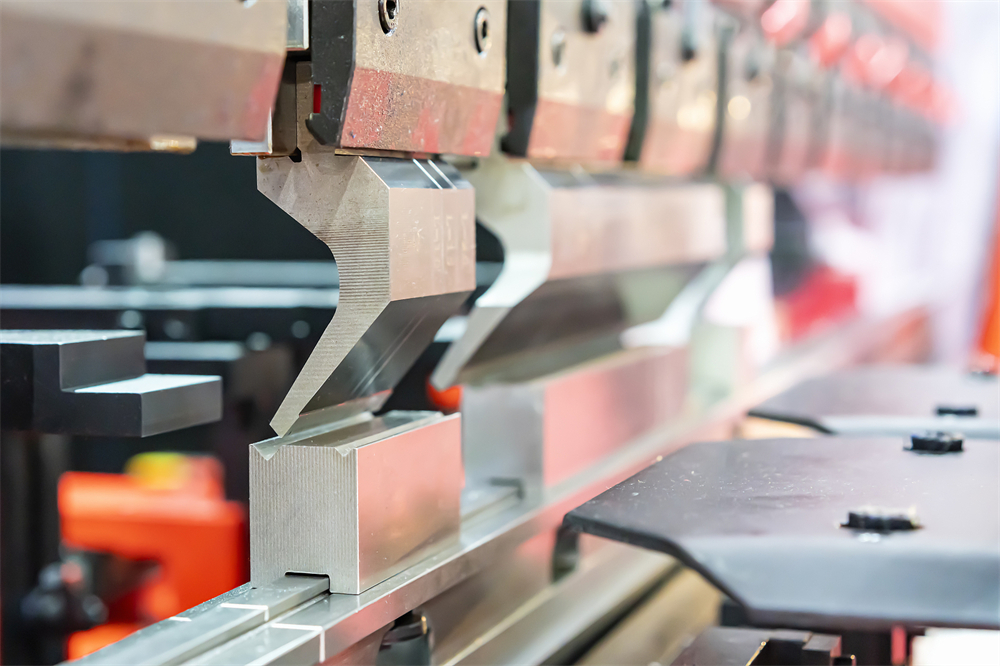
Specification Comparison Table
To better understand the Back Gauge Types In Press Brake Machines: Comparison Of Accuracy Efficiency, the following table outlines the technical differences between common configurations found in the industry.
| Feature | Standard 2-Axis (X, R) | Advanced 4-Axis (X, R, Z1, Z2) | High-End 6-Axis (X1, X2, R1, R2, Z1, Z2) |
|---|---|---|---|
| Positioning Accuracy | ±0.03 mm | ±0.02 mm | ±0.01 mm |
| Repeatability | ±0.02 mm | ±0.01 mm | ±0.005 mm |
| Max Speed (X-axis) | 300 mm/s | 450 mm/s | 600+ mm/s |
| Tapered Bending | Not Possible (Manual Adjustment) | Limited | Fully Automated |
| Setup Time | Moderate | Low | Minimal |
| Drive System | Ball Screw / Servo | Precision Ball Screw / Servo | High-Speed Linear / Servo |
| Typical Application | General Fabrication, Brackets | Enclosures, Complex Brackets | Aerospace, Automotive, Tapered Parts |
Best-fit Applications for Different Back Gauge Types
Choosing the right back gauge is a matter of matching the machine’s capabilities to your product portfolio. For a job shop that primarily handles structural steel, thick plates, and simple 90-degree folds, a heavy-duty 2-axis back gauge is often the most cost-effective choice. These systems are robust and can handle the impact of heavy plates being pushed against the fingers without losing calibration. The focus here is on durability and consistent depth control for long production runs.
In contrast, the electronics and medical device industries often require small, intricate parts with multiple bends in different directions. Here, a 4-axis system is the minimum requirement. The ability to automatically adjust the Z-axis (lateral position) is crucial when the operator needs to move the part across the bed to different tool stations. This is known as “stage bending,” where multiple die sets are mounted on the press brake simultaneously. The back gauge must move laterally to follow the part from one station to the next, ensuring that each bend is perfectly aligned with the previous one.
The 6-axis back gauge finds its home in industries where precision is non-negotiable and geometries are highly irregular. Tapered poles, conical sections, and complex automotive chassis components require the independent X1-X2 functionality. If your production involves high-value materials like titanium or specialized stainless steel, the cost of a single scrapped part can be enormous. In these scenarios, the high accuracy and collision-avoidance features of a 6-axis system act as an insurance policy, ensuring that every part is right the first time.
Cost and Maintenance Comparison
The total cost of ownership for a press brake back gauge includes the initial purchase price, energy consumption, and ongoing maintenance. A 2-axis system is significantly cheaper upfront and has fewer moving parts, which generally translates to lower maintenance costs. Maintenance typically involves regular lubrication of the ball screws and linear rails, as well as checking the tension of the drive belts. Because the system is simpler, troubleshooting can often be done by the in-house maintenance team.
Advanced multi-axis systems carry a higher price tag due to the additional servo motors, drives, and complex mechanical linkages. However, they are often more energy-efficient per part produced because they reduce the total machine runtime through faster setups. Maintenance for these systems is more specialized. It requires periodic calibration of all axes to ensure they remain synchronized. Modern HARSLE machines often include self-diagnostic software that alerts the operator to potential issues before they cause downtime, such as motor overloads or positioning deviations.
Another factor to consider is the wear and tear on the gauge fingers themselves. In high-volume environments, the contact points of the fingers can wear down, affecting accuracy. High-end systems often feature replaceable hardened finger tips or “flip-up” finger designs that prevent damage if the part accidentally strikes the gauge during the bending cycle. Investing in a system with robust mechanical protection can save thousands of dollars in repair costs over the life of the machine.
Recommendation: Selecting the Right System for Your Shop
When deciding on Back Gauge Types In Press Brake Machines: Comparison Of Accuracy Efficiency, HARSLE recommends a three-step evaluation process. First, analyze your current and future part complexity. If more than 20% of your work involves non-parallel bends or multiple tool setups, a multi-axis system (at least 4-axis) is a necessity for staying competitive. The labor savings alone will likely pay for the upgrade within the first year of operation.
Second, consider the skill level of your operators. A highly sophisticated 6-axis back gauge paired with a 3D graphical controller can actually make it easier for less experienced operators to produce complex parts. The software guides them through the sequence, and the back gauge does the heavy lifting of positioning. If you are facing a shortage of skilled brake operators, investing in a more capable back gauge system is a strategic move to maintain quality levels.
Finally, don’t overlook the importance of the control system. A high-speed back gauge is only as good as the CNC that drives it. Ensure that the controller has the processing power to handle multi-axis movements simultaneously without lag. For most professional fabrication environments, a 4-axis (X, R, Z1, Z2) system provides the best return on investment, offering the flexibility to handle 90% of common fabrication tasks with high precision and rapid changeover times.
Frequently Asked Questions (FAQ)
1. What is the difference between X-axis and R-axis in a back gauge?
The X-axis controls the horizontal depth of the back gauge, determining the length of the flange being bent. The R-axis controls the vertical height of the gauge fingers, allowing them to move up or down to accommodate pre-bent flanges or different die heights.
2. Why would I need a 6-axis back gauge instead of a 4-axis?
A 6-axis back gauge (X1, X2, R1, R2, Z1, Z2) allows each finger to move independently in all three dimensions. This is essential for tapered bends where one side of the part is deeper than the other, or for complex parts where the bend line is not parallel to the back of the machine.
3. How does back gauge accuracy affect the final product?
Back gauge accuracy directly impacts the flange length and the parallelism of the bend. If the back gauge is off by 0.1mm, the flange will be off by the same amount. In precision assembly, these errors accumulate, leading to parts that don’t fit together correctly.
4. Can I upgrade my existing press brake back gauge?
While some mechanical upgrades are possible, it is often more cost-effective to purchase a new machine with the desired axis configuration. Upgrading a manual or 1-axis machine to a 6-axis system requires significant changes to the CNC controller, electrical cabinet, and mechanical frame.
5. How often should a CNC back gauge be calibrated?
For high-precision work, calibration should be checked monthly. However, most modern CNC systems have homing routines that the machine performs every time it is powered on to ensure the axes are at their correct zero points. A full mechanical inspection should be performed annually.
6. What role does the Z-axis play in efficiency?
The Z-axis (Z1 and Z2) controls the lateral distance between the gauge fingers. Automated Z-axes allow the machine to quickly adjust for different part widths and move between different tool stations in a single setup, significantly reducing the time the operator spends manually moving the fingers.












