
What Causes Press Brake Crowning Failure and How to Correct It: A Comprehensive Guide


Introduction to Press Brake Crowning and Its Critical Role
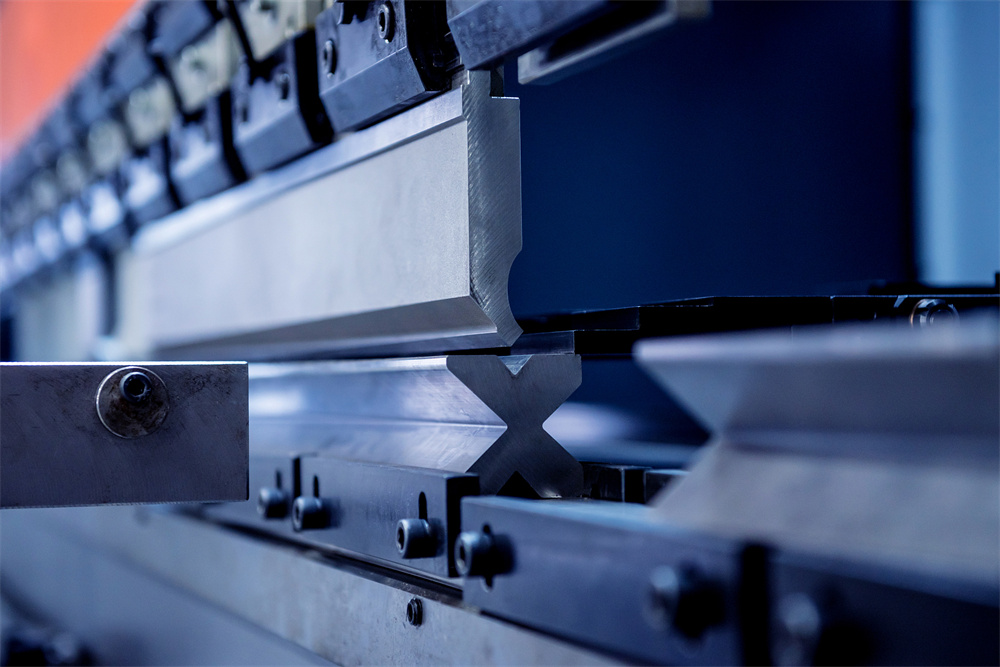
In the world of precision metal fabrication, the press brake is the workhorse of the shop floor. However, even the most advanced CNC press brakes face a fundamental physical challenge: deflection. When a press brake applies force to bend a piece of sheet metal, the natural reaction of the machine’s frame is to deflect. The upper ram bows upward in the center, and the lower bed bows downward. This phenomenon, often referred to as the ‘canoe effect,’ results in a bend angle that is accurate at the ends of the machine but wider (under-bent) in the middle. To counteract this, manufacturers utilize crowning systems.
Crowning is the process of intentionally introducing a compensating curve into the machine’s bed or ram to ensure that the punch and die remain parallel under load. When this system fails, the result is inconsistent parts, wasted material, and increased production costs. Understanding the Causes Press Brake Crowning Failure Correct It is essential for any operator or maintenance manager looking to maintain high-quality standards. This guide explores the technical nuances of crowning systems, why they fail, and how to restore them to peak performance.
Key Considerations: Why Crowning Fails
Before diving into the technical repairs, it is vital to understand the factors that contribute to crowning failure. Crowning systems are complex, involving mechanical, hydraulic, and electronic components working in perfect synchronization. A failure in any one of these areas can lead to inaccurate bends.
1. Material Variability and Overloading
One of the most common causes of perceived crowning failure is not a mechanical fault but an operational one. If an operator attempts to bend material that exceeds the machine’s rated tonnage or uses a material with significantly higher tensile strength than the crowning system was calibrated for, the deflection will exceed the system’s ability to compensate. Overloading the machine can also lead to permanent deformation of the bed or ram, making standard crowning adjustments ineffective.
2. Mechanical Wear and Tear
In mechanical crowning systems, which typically use a series of wedges or ‘waves’ to adjust the bed’s profile, friction is the enemy. Over years of operation, these wedges can wear down, or the lubrication between them can dry out. This leads to ‘stick-slip’ motion where the crowning adjustment doesn’t move smoothly or fails to reach the commanded position. In extreme cases, the drive motor or the linkage connecting the CNC controller to the crowning bed can fail entirely.
3. Hydraulic System Degradation
For machines equipped with hydraulic crowning, the system relies on a series of cylinders embedded in the lower beam. These cylinders are pressurized to push the center of the bed upward. Failure in this system often stems from hydraulic leaks, worn seals, or contaminated oil. If the proportional valves responsible for regulating the pressure to these cylinders become clogged or fail electrically, the crowning response will be sluggish or non-existent.
4. Sensor and Feedback Errors
Modern CNC press brakes use linear encoders or pressure sensors to monitor the crowning position. If these sensors provide inaccurate data to the controller, the machine may ‘think’ it has applied the correct amount of compensation when it actually hasn’t. This is often caused by vibration, loose mounting brackets, or electrical interference in the feedback loop.
Technical Details: Diagnosing and Correcting Crowning Issues
Correcting a crowning failure requires a systematic approach to diagnosis. You must determine whether the issue is mechanical, hydraulic, or related to the machine’s control software. Here is a detailed breakdown of how to address these failures.
Step 1: The Test Bend and Measurement
The first step in correcting a crowning issue is to quantify the error. Perform a test bend on a long piece of material (at least 60-70% of the bed length). Measure the angle at both ends and at the center. If the ends are 90 degrees but the center is 92 degrees, you have an under-compensation issue. If the center is 88 degrees, you have an over-compensation issue. This data is critical for recalibrating the CNC parameters.
Step 2: Inspecting Mechanical Wedge Systems
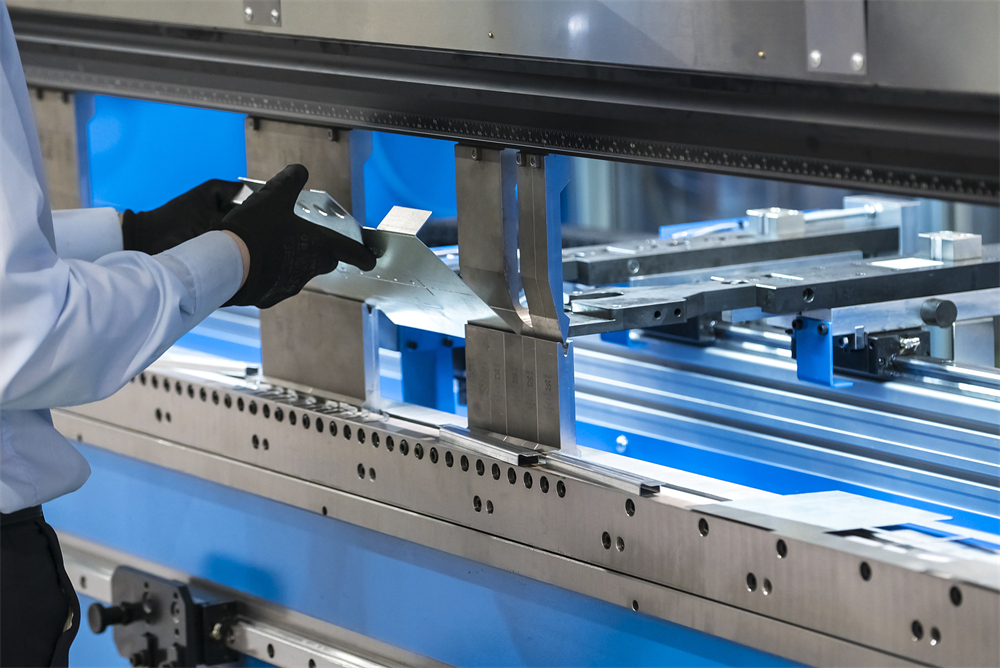
If your machine uses a mechanical crowning bed (like those from Wila or HARSLE’s mechanical options), inspect the drive mechanism. Ensure the motor is turning the adjustment shaft and that the wedges are moving freely. Clean out any metal dust or debris that may have accumulated in the crowning bed. Apply high-pressure grease to the sliding surfaces. If the wedges are physically scarred or deformed, they may need to be replaced or reground by the manufacturer.
Step 3: Troubleshooting Hydraulic Crowning Circuits
For hydraulic systems, check the pressure gauges during a bend cycle. If the pressure in the crowning cylinders does not match the value specified by the CNC controller, investigate the proportional valve. Check for leaks around the crowning cylinders located under the bed. Even a small internal leak across a seal can prevent the system from maintaining the necessary force to counteract ram deflection. Replacing seals and flushing the hydraulic fluid are standard corrective measures.
Step 4: CNC Parameter Calibration
Often, the hardware is fine, but the software calibration has drifted. Most CNC controllers (such as Delem, Cybelec, or ESA) have a ‘Crowning Constant’ or ‘Deflection Table.’ By entering the measured error from your test bends into the controller’s service menu, you can offset the crowning curve. This tells the machine to apply slightly more or less force/movement at specific tonnage levels to achieve a straight bend.
Selection Advice: Choosing the Right Crowning System
When purchasing a new press brake or upgrading an existing one, selecting the right crowning system can prevent future failures. Not all crowning systems are created equal, and your choice should depend on your typical production mix.
Manual vs. CNC Crowning
Manual crowning involves the operator turning a hand crank to adjust the bed. While reliable and simple, it is prone to human error and is not suitable for high-volume shops where material thickness and length change frequently. CNC crowning is integrated into the bend program, automatically adjusting for every stroke. For precision work, CNC crowning is highly recommended as it reduces the risk of ‘forgetting’ to adjust the crown.
Hydraulic vs. Mechanical Crowning
Hydraulic crowning is excellent for its speed and ability to adjust dynamically during the stroke. However, it requires more maintenance regarding seals and oil quality. Mechanical crowning (wedge-based) is often considered more stable over long periods and is less affected by temperature fluctuations in the hydraulic oil. Many high-end HARSLE machines offer mechanical crowning for its long-term repeatability and precision.
Table: Comparison of Crowning Systems
| Feature | Manual Mechanical | CNC Hydraulic | CNC Mechanical (Wedge) |
|---|---|---|---|
| Adjustment Speed | Slow (Manual) | Very Fast | Fast |
| Accuracy | Moderate | High | Very High |
| Maintenance Needs | Low (Lubrication) | High (Seals/Oil) | Moderate (Cleaning) |
| Best For | Job shops, thick plate | High-speed production | Precision sheet metal |
| Cost | Lowest | Moderate | Highest |
Maintenance Checklist to Prevent Crowning Failure
To avoid the need for major corrections, implement a preventative maintenance schedule focused on the crowning system. Consistency is the key to longevity in metal fabrication equipment.
- Weekly: Clean the area between the lower bed and the machine frame to prevent debris buildup.
- Monthly: Check hydraulic fluid levels and inspect for any visible leaks near the crowning cylinders.
- Quarterly: Lubricate mechanical crowning wedges with the manufacturer-recommended grease.
- Bi-Annually: Perform a full-length test bend and compare results to the machine’s original calibration certificate.
- Annually: Inspect electrical connections to crowning motors and sensors to ensure no wires have frayed due to machine vibration.
FAQ: Common Questions About Press Brake Crowning
Q: Can I add a crowning system to an old press brake?
A: Yes, there are aftermarket mechanical crowning beds (often called ‘crowning tables’) that can be bolted onto the existing bed of an older press brake. These can be manual or motorized. However, integrating them into an old CNC controller can be complex and may require a separate control box.
Q: Why is my bend angle inconsistent even after adjusting the crowning?
A: If crowning is adjusted but the angle remains inconsistent, check your tooling. Worn dies or a punch that is not perfectly straight will mimic crowning failure. Also, ensure your material has consistent tensile strength; ‘hot-rolled’ steel can have hard spots that resist bending differently than the rest of the sheet.
Q: How do I know if my crowning cylinders are leaking internally?
A: A common sign is ‘drift.’ If the bed starts at the correct crown position but slowly loses its curve during a long dwell time under pressure, oil is likely bypassing the seals in the crowning cylinders.
Q: Does the width of the V-die affect crowning?
A: Absolutely. A wider V-die requires less tonnage to bend the same material, which results in less frame deflection. If you change V-widths, the CNC crowning system must be programmed to recognize the change in required force to calculate the correct compensation.
Conclusion: Maintaining the Edge in Precision Bending
Understanding what Causes Press Brake Crowning Failure Correct It is a fundamental skill for modern fabricators. Whether the issue stems from mechanical wear, hydraulic degradation, or simple software misalignment, the ability to diagnose and fix these problems ensures that your shop remains productive and your parts remain within tolerance. Crowning is not just a feature; it is the bridge between a ‘good enough’ bend and a perfect one.
At HARSLE, we prioritize the engineering of robust crowning systems in all our press brakes, from our entry-level hydraulic models to our high-end multi-axis CNC machines. By following the maintenance and calibration steps outlined in this guide, you can extend the life of your equipment and maintain the competitive edge that precision fabrication requires. Remember, a well-maintained crowning system is the key to eliminating the ‘canoe effect’ and delivering excellence to your customers every time.


