
Hydraulic Press vs Mechanical Press: Which Is Better for Your Fabrication Line?


Comparison Summary: Navigating the Press Selection Dilemma
In the world of metal fabrication, the choice between a hydraulic press and a mechanical press is one of the most critical decisions a facility manager or business owner will make. Both machines are designed to deform metal into specific shapes using immense pressure, but the physics behind how they deliver that pressure differs significantly. This fundamental difference influences everything from production speed and part quality to maintenance costs and floor space requirements.
A mechanical press utilizes a flywheel to store energy, which is then transferred to a ram via a crankshaft or eccentric gear. This results in a very fast, consistent stroke that is ideal for high-volume stamping. Conversely, a hydraulic press uses pressurized fluid and pistons to move the ram. This allows for full tonnage throughout the entire stroke and greater flexibility in terms of stroke length and pressure control. Choosing the right one requires a deep understanding of your specific production goals, material thickness, and the complexity of the parts you intend to manufacture.
While mechanical presses have traditionally dominated high-speed, high-volume industries like automotive stamping, hydraulic presses have gained significant ground due to advancements in CNC technology and hydraulic efficiency. Today, the gap between the two is narrowing, with servo-mechanical presses offering some hydraulic-like flexibility and high-end hydraulic presses reaching speeds that were once thought impossible. However, for most fabrication lines, the distinction remains clear based on the nature of the work: speed versus versatility.
This guide provides an exhaustive comparison of Hydraulic Press Vs Mechanical Press: Which Is Better Fabrication Line? We will analyze the mechanics, costs, and applications of each to help you determine which investment will yield the highest ROI for your specific operation. Whether you are setting up a new line or upgrading an existing one, understanding these nuances is essential for long-term success in the competitive metalworking industry.
Understanding the Hydraulic Press: Versatility and Power
The hydraulic press operates on Pascal’s Principle, which states that pressure exerted anywhere in a confined incompressible fluid is transmitted equally in all directions throughout the fluid. In practical terms, this means a hydraulic press uses a pump to push oil into a cylinder, which then drives a piston (the ram) downward. This mechanism allows the operator to control the speed, direction, and force of the ram with extreme precision throughout the entire cycle.
One of the primary advantages of a hydraulic press is its ability to deliver full rated tonnage at any point in the stroke. Unlike a mechanical press, which only reaches its maximum force near the bottom of the stroke, a hydraulic press can apply 500 tons of pressure at the very top, the middle, or the bottom. This makes it the undisputed king of deep drawing applications, where consistent pressure is required as the metal is pulled into a die over a long distance. Without this consistent force, the material might wrinkle or tear.
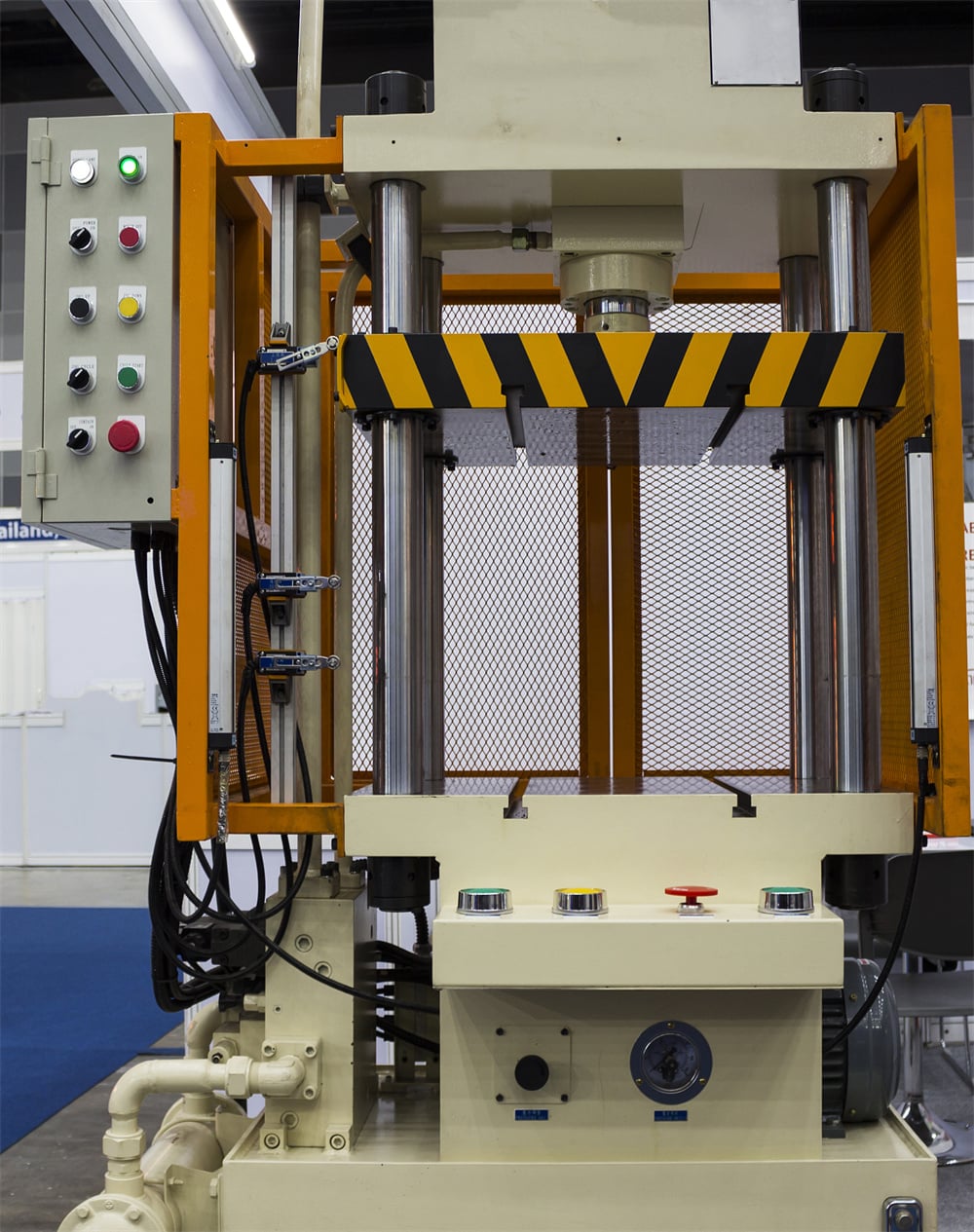
Furthermore, hydraulic presses offer incredible flexibility in stroke length. Since the ram is moved by fluid, the stroke can be adjusted to be as short or as long as the cylinder allows. This versatility means a single machine can handle a wide variety of jobs, from shallow blanking to deep vessel forming. Additionally, hydraulic presses are inherently safer in terms of overload protection. If the press encounters more resistance than it is rated for, a relief valve opens, preventing the machine from damaging itself or the tooling. This is a stark contrast to mechanical presses, which can “stick” or break if they encounter an unexpected obstruction at the bottom of the stroke.
Modern hydraulic presses, such as those manufactured by HARSLE, incorporate advanced PLC (Programmable Logic Controller) systems. these systems allow for multi-stage pressing cycles where the ram can move quickly to the work, slow down for the actual forming process, dwell at the bottom to allow the metal to set, and then retract rapidly. This level of control is essential for working with exotic alloys or complex geometries that require specific “soak times” under pressure to prevent springback.
Understanding the Mechanical Press: Speed and Precision
The mechanical press is the workhorse of high-speed production. Its operation is relatively straightforward: an electric motor spins a heavy flywheel, which stores kinetic energy. When the clutch is engaged, that energy is transferred through a series of gears and a crankshaft to move the ram up and down. Because the movement is tied to the rotation of a shaft, the stroke is fixed and follows a predictable, sinusoidal path.
The defining characteristic of a mechanical press is its speed. Because the flywheel is constantly spinning, the cycle time is incredibly short. High-speed mechanical presses can reach hundreds, or even thousands, of strokes per minute. This makes them the ideal choice for mass-producing simple parts like washers, brackets, or automotive body panels where the goal is to minimize the cost per part through sheer volume. If your fabrication line requires producing 50,000 parts a day, a mechanical press is almost certainly the better option.
However, the mechanical press has a significant limitation: tonnage is only fully realized at the very bottom of the stroke (Bottom Dead Center or BDC). As the crankshaft rotates, the mechanical advantage increases as the ram reaches the bottom. If you attempt to perform a heavy forming operation halfway through the stroke, the press may not have enough force to complete the move, or worse, the flywheel’s momentum could cause a catastrophic failure of the frame or gears. This “tonnage curve” means that mechanical presses are best suited for shallow forming, blanking, and piercing where the work is done in the final fraction of an inch of the stroke.
Precision is another area where mechanical presses excel. Because the stroke is mechanically fixed, the repeatability of the bottom position is extremely high. This ensures that every part produced is identical to the last, with very little deviation. While they lack the flexibility of hydraulic systems, their rigidity and consistency make them perfect for progressive die work, where a strip of metal is fed through multiple stations within the same press to produce a finished part in a single continuous process.
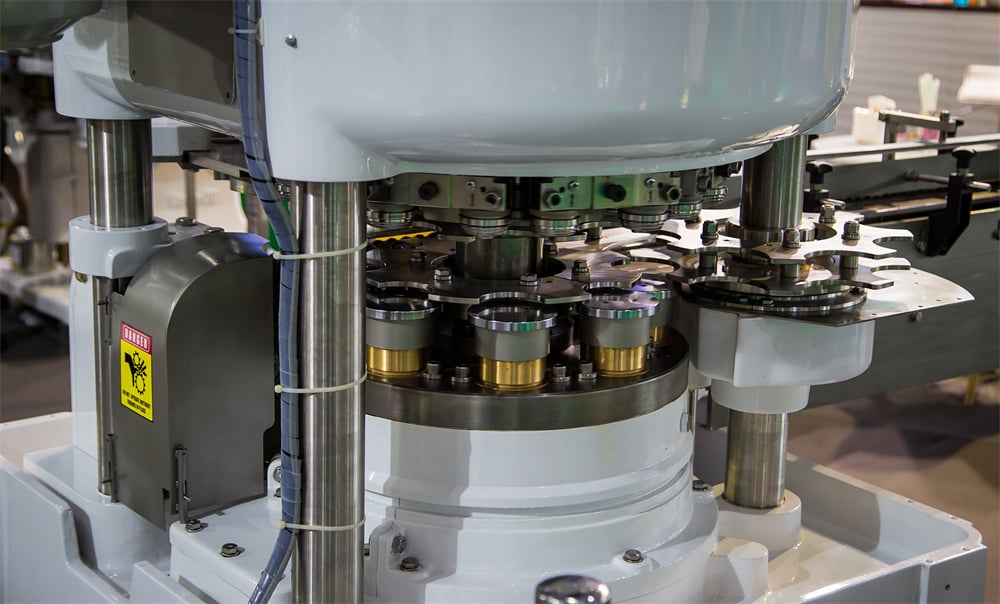
Specification Comparison Table
To better visualize the differences between these two powerhouses, the following table compares the key technical specifications that influence the Hydraulic Press Vs Mechanical Press: Which Is Better Fabrication Line? decision.
| Feature | Hydraulic Press | Mechanical Press |
|---|---|---|
| Force Delivery | Full tonnage throughout the entire stroke. | Full tonnage only at the bottom of the stroke. |
| Stroke Length | Fully adjustable and variable. | Fixed (determined by the crankshaft). |
| Production Speed | Slower (limited by fluid flow rates). | Very Fast (limited by flywheel RPM). |
| Overload Protection | Built-in hydraulic relief valves (Safe). | Mechanical shear pins or monitors (Risk of sticking). |
| Setup Time | Fast (digital adjustments). | Longer (requires mechanical timing). |
| Versatility | High (can do deep draw, punch, form). | Low (specialized for stamping/blanking). |
| Maintenance | Focus on seals, oil, and pumps. | Focus on clutch, brake, and bearings. |
| Initial Cost | Generally lower for high-tonnage units. | Higher for high-speed, high-precision units. |
Best-fit Applications: Where Each Machine Shines
Choosing the right press often comes down to the specific geometry and material of the parts you are making. Let’s look at the applications where each machine provides a distinct competitive advantage.
When to Choose a Hydraulic Press
- Deep Drawing: This is the most common application for hydraulic presses. Because the metal needs to be drawn into a deep cavity (like a kitchen sink or a fire extinguisher body), the press must maintain constant pressure over several inches of travel. A mechanical press would lose its force too early in the stroke.
- Heavy Forging: Forging requires massive amounts of pressure to move thick, often heated, metal. Hydraulic presses can provide the sustained “squeeze” necessary to ensure the metal fills the die completely without the shock loading associated with mechanical impacts.
- Powder Compaction: Creating parts from powdered metal requires a slow, steady compression to ensure uniform density. The controllable speed of a hydraulic press is perfect for this.
- Low to Medium Volume Production: If your shop switches between different parts frequently, the easy setup and adjustable stroke of a hydraulic press will save you hours of downtime during changeovers.
When to Choose a Mechanical Press
- High-Volume Stamping: If you are producing millions of small parts, the speed of a mechanical press is unbeatable. The cost per part drops significantly as the strokes per minute increase.
- Blanking and Piercing: These operations happen almost instantaneously at the bottom of the stroke. The high-impact energy of a mechanical press is ideal for shearing through metal sheets cleanly.
- Progressive Die Operations: Mechanical presses are designed to work in sync with automatic coil feeders. The consistent, rhythmic stroke allows for complex parts to be formed in a series of steps as the metal strip moves through the die.
- Shallow Forming: For parts like automotive panels or appliance skins where the depth of the form is minimal, the mechanical press provides the necessary speed and repeatability.
Cost and Maintenance Comparison
The total cost of ownership (TCO) is a vital metric for any fabrication line. While the initial purchase price is important, maintenance and operational costs often outweigh the sticker price over the machine’s lifespan.
Initial Investment: Generally speaking, for a given tonnage, a hydraulic press is often less expensive to purchase than a mechanical press. This is because the components of a hydraulic system (pumps, valves, cylinders) are more standardized than the massive, precision-machined flywheels and crankshafts required for mechanical presses. However, if you require extreme speed from a hydraulic press, the cost of high-flow servo-valves can quickly close that gap.
Maintenance Requirements: Hydraulic presses are relatively simple in terms of mechanical parts, but they are susceptible to fluid-related issues. You must regularly monitor oil quality, change filters, and check for leaks in seals and hoses. Heat is the enemy of hydraulic systems; if the oil gets too hot, it loses viscosity and can damage the pump. Therefore, cooling systems are a necessary maintenance point.
Mechanical presses, on the other hand, have many moving parts that are under high stress. The clutch and brake systems are the most common failure points and require regular adjustment and eventual replacement. Bearings and bushings must be kept perfectly lubricated to prevent friction-induced wear. While a mechanical press might go longer between minor service intervals, a major overhaul (like regrinding a crankshaft) is significantly more expensive and time-consuming than replacing a hydraulic cylinder.
Energy Consumption: Mechanical presses are generally more energy-efficient for continuous, high-speed running because the flywheel acts as a battery, storing energy. Hydraulic presses require the pump to be running to maintain pressure, though modern “power-on-demand” systems and variable frequency drives (VFDs) have made hydraulic presses much more efficient than they were a decade ago.
Recommendation: How to Decide for Your Line
So, Hydraulic Press Vs Mechanical Press: Which Is Better Fabrication Line? The answer depends on your specific business model. To make the final decision, ask yourself the following four questions:
- What is my production volume? If you need to produce more than 20-30 parts per minute, a mechanical press is likely your only viable option. If your volume is lower, or if you prioritize quality over quantity, a hydraulic press is better.
- How deep is the draw? If your part depth exceeds 4-5 inches, a mechanical press will struggle to provide the necessary force at the beginning of the draw. A hydraulic press is the standard for deep drawing.
- How much variety is in my product line? If you run the same die for three months straight, the fixed stroke of a mechanical press isn’t a problem. If you change dies three times a day, the adjustable stroke and easy setup of a hydraulic press will significantly increase your uptime.
- What is my budget for maintenance? Do you have a team comfortable with fluid power and electronics (Hydraulic), or do you have traditional millwrights who excel at mechanical timing and gear repair (Mechanical)?
For most modern job shops that require versatility to handle various customer contracts, the Hydraulic Press is often the better all-around investment. However, for dedicated production lines focused on a single high-volume product, the Mechanical Press remains the king of efficiency.
Frequently Asked Questions
1. Can a hydraulic press be as fast as a mechanical press?
Generally, no. While high-speed hydraulic presses exist, they use massive amounts of energy to move fluid quickly. A mechanical press uses the physics of a flywheel to achieve speeds that are difficult and expensive to replicate with hydraulics.
2. Which press is safer for the operator?
Both machines are dangerous if safety protocols are ignored. However, hydraulic presses are easier to stop mid-stroke and have built-in overload protection. Mechanical presses have more “stored energy” in the flywheel, which makes them harder to stop instantly unless they are equipped with modern high-performance braking systems.
3. Is a servo press a third option?
Yes. A servo-mechanical press uses a high-torque motor instead of a flywheel. This allows you to control the stroke like a hydraulic press while maintaining much of the speed of a mechanical press. They are, however, significantly more expensive than both traditional options.
4. Can I use a hydraulic press for blanking?
Yes, but it is harder on the machine. The “breakthrough shock” that occurs when the metal snaps can cause hydraulic shockwaves that damage valves and seals over time. If you do a lot of blanking on a hydraulic press, ensure it is equipped with shock dampers.
5. How long do these machines last?
With proper maintenance, both types of presses can last 30 to 50 years. It is common to see 40-year-old HARSLE or similar high-quality presses still in operation today after receiving control system upgrades.












