Hydraulic vs Electric Press Brake: Which Technology Fits Your Workshop Best


Technical Overview: The Evolution of Bending Technology
In the modern metal fabrication landscape, the debate between hydraulic and electric press brakes has become a central focus for workshop owners looking to optimize their production lines. For decades, the hydraulic press brake has been the undisputed workhorse of the industry. These machines utilize high-pressure hydraulic fluid to drive pistons, which in turn move the ram to perform the bending operation. HARSLE has refined this technology over years, ensuring that hydraulic systems offer the massive force required for heavy-duty plate fabrication. The core of a hydraulic system involves a motor driving a pump, which circulates oil through valves to cylinders. This setup is robust, reliable, and capable of generating immense tonnage, making it the go-to for materials exceeding 6mm in thickness.
On the other hand, the electric press brake represents the pinnacle of precision and energy efficiency. Instead of fluid power, these machines use high-torque servo motors coupled with heavy-duty ball screws or belt-and-pulley systems to drive the ram. This “direct-drive” or “belt-drive” mechanism allows for incredibly fast acceleration and deceleration, as well as micron-level positioning accuracy. Because there is no hydraulic oil to heat up or leak, the electric press brake offers a cleaner, quieter, and more thermally stable environment. For workshops focusing on high-speed production of small, intricate parts, the electric alternative has rapidly gained market share.
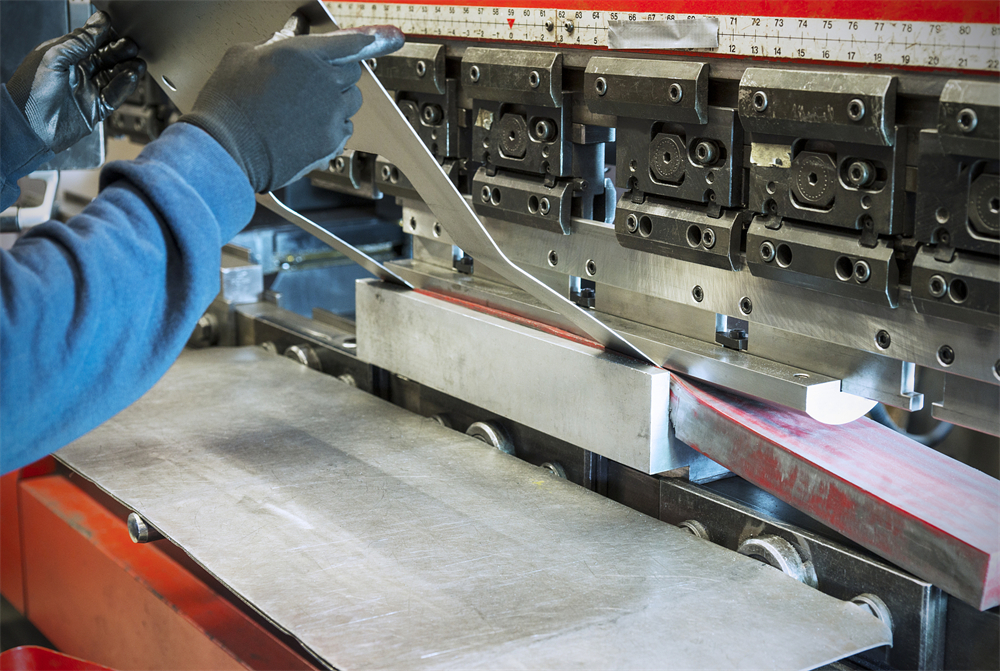
Understanding the fundamental difference in power transmission is crucial. Hydraulic systems are “constant power” machines; they can maintain high pressure throughout the entire stroke, which is essential for deep box bending or heavy plate work. Electric systems are “dynamic response” machines; they excel in rapid cycling and precise depth control. As HARSLE continues to innovate, we see a convergence where hydraulic machines are becoming more efficient through hybrid technology, while electric machines are pushing into higher tonnage ranges previously reserved for hydraulics.
Ultimately, the choice between these two technologies isn’t just about which is “better,” but which is more compatible with your specific workflow. A workshop producing structural steel components has vastly different needs than a facility manufacturing medical-grade stainless steel enclosures. By analyzing the mechanical advantages of each, we can determine the total cost of ownership and the potential return on investment for your business.
Core Parameters: Comparing Performance Metrics
When evaluating a press brake, several core parameters dictate its suitability for your workshop. The first and most obvious is Tonnage. Hydraulic press brakes are virtually unlimited in this regard, with HARSLE models reaching 1000 tons or more. Electric press brakes, while evolving, typically top out around 150 to 200 tons. If your work involves bending 12mm mild steel over long lengths, the hydraulic system is the only viable choice. However, for 1mm to 3mm materials, the electric brake’s speed becomes a significant advantage.
Approach and Return Speeds are where electric machines shine. A servo-driven ram can move at speeds up to 200mm/s or more, significantly reducing the non-productive time between bends. Hydraulic machines are traditionally slower due to the time required for fluid to move through valves and for the pump to build pressure. While modern high-speed hydraulic valves have narrowed this gap, the electric motor’s ability to reach peak RPM almost instantaneously gives it the edge in high-volume, light-gauge applications.
Accuracy and Repeatability are the hallmarks of electric technology. Because an electric press brake uses a mechanical drive (like a ball screw) controlled by a servo encoder, the ram position can be controlled within +/- 0.001mm. Hydraulic systems, while very accurate in CNC configurations, are subject to variables like oil temperature, viscosity changes, and seal friction. Over a long shift, a hydraulic machine might require slight adjustments as the oil warms up, whereas an electric machine remains consistent from the first bend to the last.
Energy Consumption is perhaps the most significant operational difference. A hydraulic press brake’s pump often runs continuously, even when the machine is idling, consuming power. In contrast, an electric press brake only consumes significant energy when the ram is actually moving. Studies have shown that electric machines can reduce energy costs by up to 50% or 60% compared to traditional hydraulic systems. For workshops in regions with high electricity costs, this parameter alone can justify the higher initial purchase price of an electric machine.
Calculation Method: Determining Your Required Bending Force
Before choosing between hydraulic and electric, you must accurately calculate the bending force (tonnage) required for your most common jobs. The standard formula for air bending is essential for any engineer or workshop manager. The formula is generally expressed as:
P = (650 x S² x L) / V
Where:
– P is the bending force in Kilonewtons (kN). To convert to Tons, divide by 9.8.
– S is the material thickness in millimeters (mm).
– L is the length of the sheet in meters (m).
– V is the V-opening width of the bottom die (usually 8 to 10 times the material thickness).
– 650 is a constant for mild steel with a tensile strength of approximately 450 MPa.
For example, if you are bending 3mm thick mild steel over a length of 2 meters using a 24mm V-die, the calculation would be: (650 x 3² x 2) / 24 = 487.5 kN. Dividing by 9.8 gives approximately 50 tons. In this scenario, both a 50-ton electric and a 50-ton hydraulic press brake would physically be able to do the job. However, if you were bending 6mm steel over 3 meters, the tonnage requirement would jump significantly, likely pushing you toward a hydraulic solution.
It is also vital to consider the Tensile Strength of the material. If you are working with Stainless Steel (which has a higher tensile strength, around 700 MPa), you must multiply the result by a factor of 1.5. Aluminum, being softer, might require a factor of 0.5 to 0.8. Miscalculating this can lead to machine overload, which is particularly damaging to the precision components of an electric press brake. Always include a 20% safety margin in your tonnage calculations to account for material variations and tool wear.
Parameter Table: Hydraulic vs. Electric Comparison
| Feature | Hydraulic Press Brake | Electric Press Brake |
|---|---|---|
| Tonnage Range | 30 Tons to 3000+ Tons | 20 Tons to 200 Tons (Typical) |
| Bending Speed | 8-12 mm/s | 15-25 mm/s |
| Positioning Accuracy | +/- 0.01 mm | +/- 0.001 mm |
| Energy Efficiency | Moderate (Continuous Pump) | High (On-Demand Power) |
| Maintenance | Oil changes, seal replacements | Greasing, belt/screw inspection |
| Noise Level | 70-85 dB | 55-65 dB |
| Initial Cost | Lower to Moderate | Higher |
Common Engineering Mistakes in Press Brake Selection
One of the most frequent mistakes engineers make is over-tonnage for small parts. Buying a 200-ton hydraulic press brake to bend 1mm electronics enclosures is inefficient. The large ram and heavy cylinders move slowly, and the precision at low pressure is often inferior to a dedicated 40-ton electric brake. This leads to slower cycle times and higher energy waste. Conversely, underestimating the tonnage for thick materials can lead to frame deflection or hydraulic relief valve triggering, preventing the bend from completing.
Another common error is ignoring the “Off-Center Loading” limitations. Hydraulic press brakes, especially older or basic models, can suffer from synchronization issues if a heavy bend is performed at one end of the machine rather than the center. This puts immense strain on the guide rails and cylinders. While modern HARSLE CNC hydraulic machines use dual-scale feedback to correct this, electric press brakes with dual-servo drives are inherently better at handling off-center loads because each side is independently and precisely driven by its own motor.
Neglecting Thermal Expansion is a mistake often seen in high-precision shops. In a hydraulic machine, as the oil heats up during a long shift, the viscosity changes, which can slightly alter the ram’s bottom-dead-center (BDC) position. If your tolerances are tight (+/- 0.2 degrees), you may find your parts drifting out of spec by the afternoon. Engineers must account for this by either choosing an electric machine (which has no oil) or ensuring their hydraulic machine has an oil cooling system and high-quality linear encoders for real-time compensation.
Finally, many buyers fail to consider the Total Cost of Ownership (TCO). They look only at the sticker price. While a hydraulic machine is cheaper upfront, the costs of hydraulic oil disposal, seal kits, filter changes, and higher electricity bills add up over 5-10 years. An electric machine might cost 30% more initially but can pay for itself through energy savings and increased throughput within 3 years in a high-production environment. Failing to run a 5-year ROI calculation is a major oversight in the procurement process.
Selection Checklist: Which Technology Fits Your Workshop?
- Material Thickness: Is the majority of your work over 6mm? If yes, choose Hydraulic. If under 4mm, consider Electric.
- Production Volume: Are you running 2-3 shifts with high-volume small parts? Electric will provide the speed and reliability needed.
- Precision Requirements: Do you work in aerospace or medical industries with extremely tight tolerances? Electric offers superior repeatability.
- Maintenance Capabilities: Does your team have experience with hydraulic systems? Hydraulics are easier for traditional mechanics to fix, while electrics require specialized electronic/servo knowledge.
- Workshop Environment: Is noise a concern? Electric machines are significantly quieter. Is the shop floor subject to extreme temperature swings? Electric is more thermally stable.
- Budget: Is capital expenditure (CAPEX) limited? Hydraulic machines offer more tonnage per dollar spent.
- Energy Goals: Is your company aiming for “Green” certification or carbon footprint reduction? Electric is the clear winner for sustainability.
- Tooling Compatibility: Ensure the machine you choose can accept the precision-ground tooling required for your specific bends.
Frequently Asked Questions
1. Can an electric press brake handle heavy plate bending?
Generally, no. Most electric press brakes are designed for light to medium gauge sheet metal. While some manufacturers are developing higher-tonnage electric models, the cost becomes prohibitive compared to hydraulic systems once you exceed 200 tons. For heavy plate, hydraulic remains the industry standard.
2. How often does hydraulic oil need to be changed?
For a HARSLE hydraulic press brake, we typically recommend a full oil change every 2,000 to 4,000 operating hours, depending on the environment and usage intensity. Regular filter changes and oil analysis can extend this interval, but it remains a necessary maintenance task that electric machines avoid entirely.
3. Is the software different between hydraulic and electric machines?
The user interface (HMI) is usually very similar, especially if both machines use controllers like Delem, ESA, or Cybelec. However, the underlying algorithms for ram control are different. Electric machines often have more advanced “active bend” features that can adjust for springback in real-time due to the high responsiveness of servo motors.
4. Are electric press brakes more expensive to repair?
While they have fewer moving parts and no leaks, the components they do have—such as high-torque servo motors and precision ball screws—can be expensive to replace if they fail. However, because these components are designed for millions of cycles, failures are relatively rare compared to hydraulic seal leaks or valve clogs.
5. What is a hybrid press brake?
A hybrid press brake combines both technologies. It uses a servo motor to drive a small, localized hydraulic pump for each cylinder. This offers the power of hydraulics with the energy efficiency and precision of electric drive. It is an excellent middle-ground solution for those who need more than 200 tons of force but want electric-like performance.