How to Improve Hydraulic Press Accuracy in Sheet Metal Forming Operations


Technical Overview of Hydraulic Press Accuracy
In the realm of modern industrial manufacturing, the demand for high-precision components has never been greater. Whether producing automotive body panels, aerospace components, or intricate electronic housings, the ability to Improve Hydraulic Press Accuracy In Sheet Metal Forming Operations is a critical factor in maintaining competitiveness and reducing waste. Accuracy in a hydraulic press is not a single metric but a combination of structural rigidity, hydraulic control precision, and environmental stability.
A hydraulic press operates on Pascal’s principle, utilizing fluid pressure to generate massive force. However, the transition from raw force to precision forming requires sophisticated engineering. The accuracy of the operation is primarily influenced by the slide’s movement relative to the bolster, the parallelism of the platens under load, and the repeatability of the stroke termination point. When these factors are compromised, manufacturers face issues such as uneven thickness, springback inconsistencies, and premature tool wear.
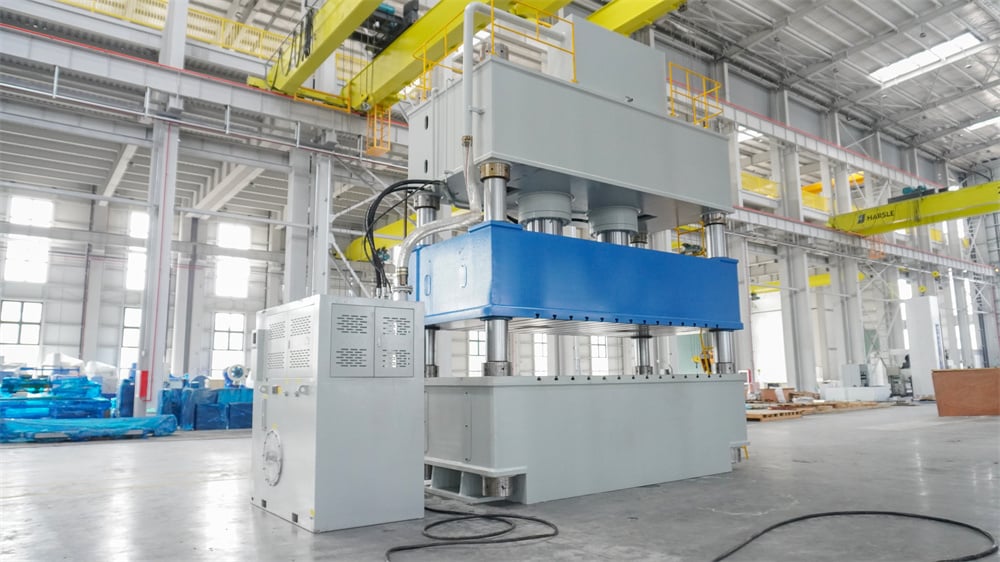
To achieve superior accuracy, one must understand the interplay between the machine’s mechanical frame and its hydraulic nervous system. Modern HARSLE hydraulic presses incorporate advanced feedback loops, using linear transducers and pressure sensors to adjust the flow of oil in real-time. This ensures that even as the metal resists deformation, the press maintains its programmed path within microns. Understanding these technical foundations is the first step toward optimizing your production line.
Core Parameters Influencing Press Precision
When looking to Improve Hydraulic Press Accuracy In Sheet Metal Forming Operations, several core parameters must be monitored and controlled. The first is Slide Parallelism. This refers to how level the moving platen remains relative to the fixed bed during the entire stroke. If the slide tilts even slightly, the pressure distribution across the die becomes uneven, leading to parts that are thicker on one side than the other.
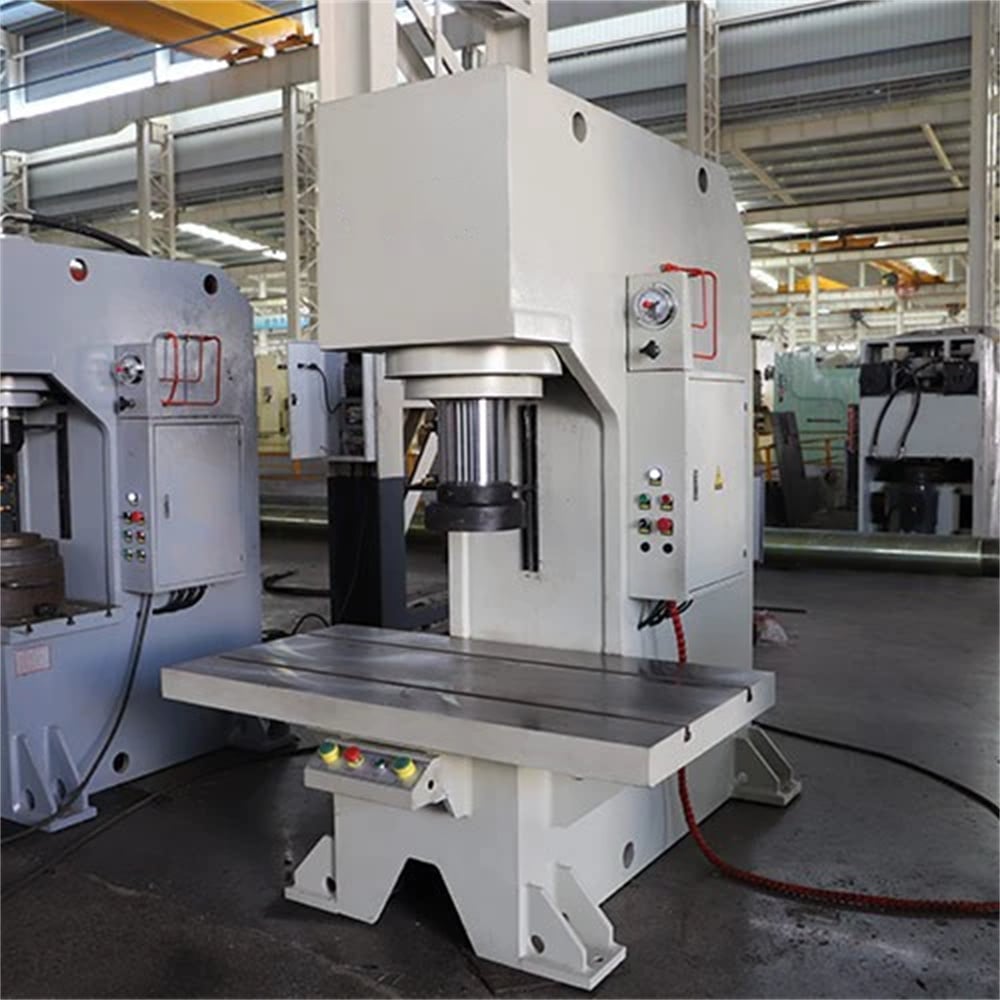
The second parameter is Deflection. Every machine frame, no matter how robust, will flex under load. The goal is to minimize this deflection through superior structural design, such as the use of finite element analysis (FEA) in the manufacturing of the press frame. A high-quality H-frame press typically offers better deflection resistance than a C-frame press due to its closed-loop structural integrity. Minimizing deflection ensures that the energy of the press is directed into the workpiece rather than into deforming the machine itself.
Thirdly, Stroke Repeatability is paramount. In deep drawing or precision stamping, the press must stop at the exact same point in every cycle. This is often managed by high-speed PLC systems and proportional valves that can throttle the hydraulic flow as the slide approaches the bottom dead center (BDC). Variations in oil temperature or viscosity can affect this repeatability, making thermal management a key secondary parameter for accuracy.
Finally, Ram Speed Control plays a significant role. If the ram moves too quickly during the initial contact with the sheet metal, it can cause a shockwave that disrupts the material flow. Controlled deceleration and constant pressing speeds allow the metal to flow into the die cavities naturally, reducing internal stresses and improving the dimensional accuracy of the finished part.
Calculation Method for Press Accuracy and Deflection
To scientifically Improve Hydraulic Press Accuracy In Sheet Metal Forming Operations, engineers must utilize specific calculation methods to predict and compensate for mechanical behavior. One of the most critical calculations involves determining the Bed Deflection. The standard formula for calculating the deflection (Y) of a beam supported at both ends (similar to a press bolster) is:
Y = (F * L³) / (48 * E * I)
Where:
F = Applied Force (Tonnage)
L = Distance between the uprights (Span)
E = Modulus of Elasticity of the material (usually steel)
I = Moment of Inertia of the bed cross-section
By calculating this, engineers can determine if the press bed is rigid enough for a specific high-precision job. If the calculated deflection exceeds the allowable tolerance of the part, shimming or hydraulic crowning systems must be employed. Crowning involves applying a counter-pressure to the center of the bed to neutralize the deflection caused by the main ram.
Another essential calculation is the Tonnage Requirement for the specific forming operation. Using the formula P = L * t * S (where P is pressure, L is the perimeter of the cut/form, t is material thickness, and S is shear or tensile strength), operators can ensure they are not over-tonnaging the press. Operating a press at its absolute maximum capacity frequently leads to increased frame stretching and reduced accuracy over time. Ideally, a press should operate at 70-80% of its rated capacity for maximum precision and longevity.
Parameter Table for Accuracy Standards
The following table outlines the typical accuracy standards and tolerances for high-quality hydraulic presses used in sheet metal forming. These values serve as a benchmark for maintenance and selection.
| Parameter | Standard Tolerance (General) | High-Precision Tolerance (HARSLE) | Impact on Forming |
|---|---|---|---|
| Slide Parallelism | 0.10 mm per meter | 0.05 mm per meter | Uniformity of part thickness |
| Stroke Repeatability | ± 0.05 mm | ± 0.01 mm | Consistency in deep drawing depth |
| Bed Deflection | 0.12 mm/m under full load | 0.08 mm/m under full load | Prevents center-thinning of parts |
| Perpendicularity | 0.08 mm per 100mm | 0.04 mm per 100mm | Ensures vertical walls in formed parts |
| Pressure Stability | ± 3% of set value | ± 1% of set value | Reduces springback variation |
Common Engineering Mistakes in Press Operations
One of the most frequent mistakes made when trying to Improve Hydraulic Press Accuracy In Sheet Metal Forming Operations is Off-Center Loading. Hydraulic presses are generally designed for central loading. When a die is placed off-center, it creates a moment arm that forces the slide to tilt. This not only ruins the accuracy of the part but also puts immense lateral stress on the gibs and seals, leading to rapid machine degradation. Always center the load or use a press equipped with an active leveling system.
Another common error is Neglecting Oil Temperature Management. Hydraulic oil changes its viscosity as it heats up. Thinner oil flows faster through valves, which can cause the ram to overshoot its target or change the timing of the pressure build-up. Without a stable cooling system or a control system that compensates for temperature changes, achieving consistent accuracy throughout an 8-hour shift is nearly impossible.
Furthermore, many operators fail to properly Maintain the Gibs and Guideways. The gibs are the mechanical components that guide the slide’s vertical movement. If they are too loose, the slide will wobble; if they are too tight, they will create excessive heat and friction. Regular lubrication and periodic adjustment of the gib clearance are essential for maintaining the “geometric accuracy” of the press. Ignoring the lubrication schedule is a surefire way to lose precision within months of operation.
Lastly, Inadequate Tooling Setup often masks itself as a machine problem. If the die sets are not perfectly aligned or if the bolsters are contaminated with debris, the press cannot compensate for these external inaccuracies. Precision forming requires a holistic approach where the machine, the tool, and the material are all held to the same rigorous standards.
Selection Checklist for High-Accuracy Hydraulic Presses
Choosing the right equipment is the foundation of precision. Use this checklist when evaluating a new press to ensure it meets the requirements to Improve Hydraulic Press Accuracy In Sheet Metal Forming Operations:
- Frame Construction: Is the frame stress-relieved after welding? A stress-relieved frame prevents warping over years of use.
- Control System: Does the press feature a closed-loop CNC system with linear scale feedback? This is vital for sub-millimeter stroke control.
- Hydraulic Components: Are the valves and pumps from reputable brands like Rexroth or Vickers? High-quality valves respond faster and more reliably.
- Guiding System: Does the press use 4-column or 8-point gib guiding? 8-point guiding offers superior resistance to lateral forces.
- Crowning System: For wide-bed presses, is there an integrated hydraulic or mechanical crowning system to compensate for bed deflection?
- Cooling System: Is there an industrial-grade oil cooler to maintain constant hydraulic fluid temperature?
- Safety and Monitoring: Does the system include tonnage monitors to detect overloads in real-time?
Frequently Asked Questions (FAQ)
How often should I calibrate my hydraulic press for maximum accuracy?
For high-precision sheet metal forming, a full geometric calibration should be performed annually. However, critical parameters like slide parallelism and stroke repeatability should be checked quarterly or whenever a major die change occurs. Regular monitoring of the hydraulic oil’s health is also recommended every six months.
Can I improve the accuracy of an older hydraulic press?
Yes, older presses can often be retrofitted with modern linear encoders, proportional valves, and updated PLC controllers. While this won’t fix a warped frame, it can significantly improve stroke repeatability and pressure control. Additionally, regrinding the bolster and slide surfaces can restore lost parallelism.
What role does the material play in forming accuracy?
Material consistency is vital. Variations in sheet thickness, yield strength, and grain direction all contribute to “springback,” which affects the final part’s accuracy. Using a press with a “dwell time” feature allows the material to set under pressure, which can help mitigate some of these material-related inaccuracies.
Why is my press losing accuracy during long production runs?
This is most likely due to thermal expansion. As the hydraulic oil and the machine frame heat up, components expand and oil viscosity drops. Ensure your cooling system is functioning correctly. If the problem persists, you may need a control system that includes thermal compensation software to adjust the stroke based on the current temperature.
Is a servo-hydraulic press more accurate than a standard one?
Generally, yes. Servo-hydraulic presses use servo motors to drive the hydraulic pumps, allowing for extremely precise control over flow and pressure. This results in superior energy efficiency and significantly higher accuracy in ram positioning compared to traditional induction motor systems.
Conclusion
To Improve Hydraulic Press Accuracy In Sheet Metal Forming Operations, one must adopt a comprehensive strategy that combines high-quality hardware with rigorous maintenance and scientific calculation. By focusing on frame rigidity, advanced control systems, and proper operational techniques, manufacturers can achieve the tight tolerances required by today’s high-tech industries. HARSLE remains committed to providing the metal fabrication industry with the tools and knowledge necessary to push the boundaries of precision and efficiency.