How to Match Press Brake Tonnage, Length, and Bed Size to Your Production Needs


Technical Overview: The Synergy of Force and Geometry
In the world of metal fabrication, selecting a press brake is not merely about buying a machine; it is about investing in a production solution that balances physical force with geometric constraints. To match press brake tonnage, length, and bed size to your production needs, one must understand that these three variables are inextricably linked. Tonnage represents the raw power required to deform metal, length dictates the maximum size of the workpiece, and bed size (including throat depth and open height) determines the complexity and shape of the parts you can produce.
HARSLE engineering emphasizes that an undersized machine leads to mechanical failure and poor part quality, while an oversized machine results in unnecessary capital expenditure and higher operational costs. The goal is to find the ‘Goldilocks zone’ where the machine operates at 60% to 80% of its maximum capacity for the majority of its service life. This ensures longevity of the hydraulic components and maintains the structural integrity of the frame over decades of use.
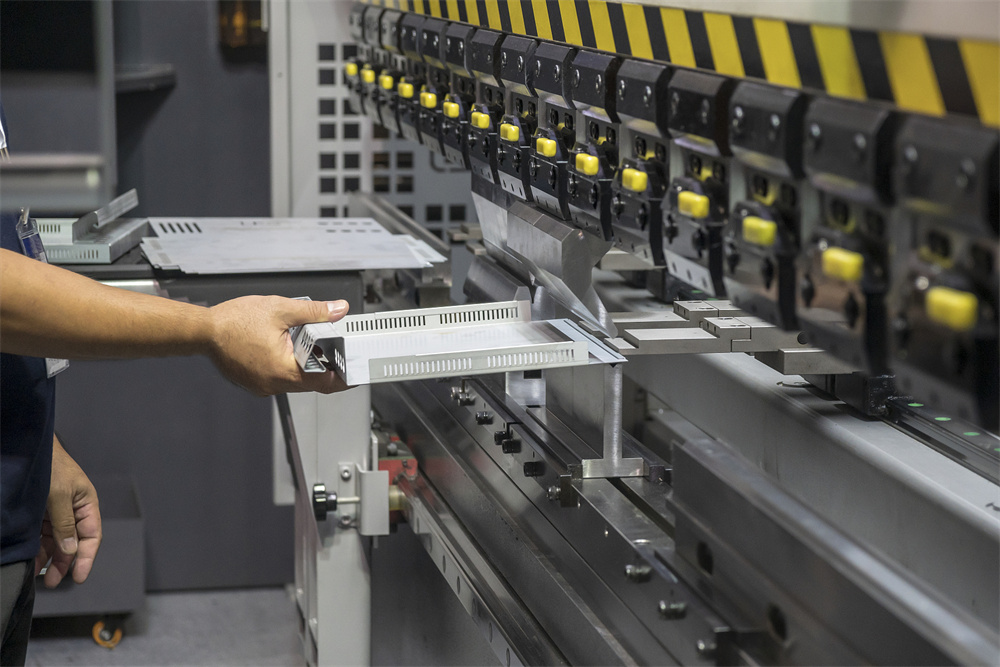
Modern CNC press brakes have evolved to handle complex calculations automatically, but the fundamental physics remains the same. Whether you are working with thin-gauge aluminum for electronics or heavy-duty structural steel for construction, the interaction between the punch, the die, and the material properties defines the success of the bend. This guide provides a deep dive into the technical specifications required to make an informed procurement decision.
Core Parameters: Tonnage, Length, and Bed Dimensions
1. Understanding Tonnage (Bending Force)
Tonnage is the vertical force exerted by the ram to perform a bend. It is influenced by material thickness, tensile strength, the width of the V-die opening, and the bending method (air bending, bottoming, or coining). For instance, stainless steel requires approximately 50% more tonnage than mild steel of the same thickness due to its higher yield strength. Air bending, the most common modern method, requires significantly less tonnage than coining, which involves stamping the material into the die.
When calculating tonnage, it is vital to account for the “concentrated load” factor. If you apply 100 tons of force over a very short length (e.g., 300mm), you risk damaging the bed or the ram. Always ensure your tonnage requirements are distributed across the machine’s length or that the machine is specifically designed for high-tonnage, short-length applications.
2. Bending Length and Distance Between Housings
The bending length refers to the total length of the table and ram. However, a critical sub-parameter is the “distance between housings.” If you are bending a long plate that needs to pass through the machine, the width of that plate is limited by the space between the side frames (housings). If your production involves long, narrow parts, the total length is your priority. If you are making large boxes or panels, the distance between housings becomes the bottleneck.
3. Bed Size and Machine Geometry
Bed size encompasses more than just the length. It includes the throat depth, open height, and stroke length. Throat depth is the distance from the center of the tools to the back of the frame; this determines how deep a flange can be before it hits the machine’s structure. Open height is the total vertical space available when the ram is fully retracted. If you are using tall tools or forming deep four-sided boxes, a standard open height may be insufficient, requiring a “high-stroke” or “extended open height” configuration.
Calculation Method: Determining Your Requirements
To accurately match press brake tonnage, length, and bed size to your production needs, you must use the standard bending formula. The most widely accepted formula for air bending mild steel (tensile strength approx. 450 MPa) is:
P = (650 x S² x L) / V
- P: Tonnage required (in metric tons)
- S: Material thickness (in mm)
- L: Length of the bend (in meters)
- V: V-die opening (usually 8 times the material thickness)
For example, if you are bending 6mm mild steel over a length of 3 meters using a 48mm V-die (8x thickness), the calculation would be: (650 x 36 x 3) / 48 = 1,462.5 kN, which is approximately 146 tons. In this scenario, a 160-ton or 200-ton machine would be the appropriate choice to provide a safety margin.
It is also essential to consider the “8-times rule” for the V-opening. Using a smaller V-opening increases the tonnage requirement exponentially. If you reduce the V-opening to 6 times the thickness to achieve a tighter internal radius, the tonnage requirement increases by roughly 33%. Conversely, a larger V-opening reduces tonnage but increases the minimum flange length and the internal bend radius.
Parameter Table: Tonnage Requirements for Mild Steel
The following table provides a quick reference for tonnage per meter (t/m) when air bending mild steel with a standard V-opening (V=8xS).
| Material Thickness (mm) | V-Die Opening (mm) | Internal Radius (mm) | Min. Flange Length (mm) | Tonnage per Meter (t/m) |
|---|---|---|---|---|
| 1.0 | 8 | 1.3 | 5.5 | 7 |
| 1.5 | 12 | 2.0 | 8.5 | 11 |
| 2.0 | 16 | 2.6 | 11.5 | 15 |
| 3.0 | 24 | 4.0 | 17.0 | 22 |
| 4.0 | 32 | 5.3 | 22.0 | 30 |
| 6.0 | 48 | 8.0 | 34.0 | 45 |
| 8.0 | 64 | 10.6 | 45.0 | 60 |
| 10.0 | 80 | 13.3 | 56.0 | 75 |
Note: For stainless steel, multiply the tonnage by 1.5. For aluminum, multiply by 0.5 to 0.8 depending on the alloy.
Common Engineering Mistakes in Selection
One of the most frequent errors in machine selection is ignoring the “Deflection” factor. When a press brake performs a bend, the bed and ram naturally deflect (bow) under pressure. If you are bending a 4-meter plate on a 4-meter machine, the center of the bend might be slightly more obtuse than the ends. To counter this, HARSLE machines often include a “crowning system” (mechanical or hydraulic). Failing to specify a crowning system for machines longer than 2.5 meters or for high-precision work is a critical oversight.
Another mistake is underestimating the “Springback” effect. Different materials return to a slightly more open angle after the pressure is released. While this is primarily a tooling and controller issue, it affects tonnage because you may need to “over-bend” the part, requiring more stroke and potentially more force if you are bottoming to achieve a precise angle.
Finally, many buyers forget to account for the weight of the tooling itself. Large, heavy-duty dies can weigh hundreds of kilograms. This weight must be supported by the machine’s hydraulic system and can affect the ram’s approach and return speeds. Always ensure the machine’s structural capacity accounts for both the workpiece and the necessary tooling.
Selection Checklist: Step-by-Step Guide
To ensure you match press brake tonnage, length, and bed size to your production needs, follow this systematic checklist before finalizing your purchase:
- Identify Maximum Material Thickness: What is the thickest material you will bend? Calculate tonnage based on this, plus a 20% safety margin.
- Determine Maximum Bend Length: Ensure the machine length exceeds your longest part. Check the distance between housings if parts must pass through.
- Analyze Flange Depths: Check the throat depth. Will your deep flanges hit the back of the machine frame?
- Evaluate Part Height: For box bending, calculate the required open height (Tool height + Box depth + Safety clearance).
- Material Variety: If you switch between stainless, mild steel, and aluminum, ensure your CNC controller can store multiple material profiles.
- Production Volume: High-volume shops should prioritize high-speed hydraulics and multi-axis backgauges (6-axis) to reduce setup time.
- Tooling Compatibility: Ensure the bed and ram clamping systems match your existing or intended tooling (e.g., Amada/Promecam, New Standard, or European style).
FAQ: Frequently Asked Questions
What happens if I exceed the machine’s tonnage?
Exceeding tonnage can lead to permanent deformation of the ram or bed, known as “ram upset.” It can also cause hydraulic seal failure or even catastrophic frame cracking. Most modern HARSLE machines have hydraulic relief valves to prevent this, but consistent overloading will shorten the machine’s life significantly.
How does the V-die opening affect my choice?
The V-die opening is the most significant variable you can control. A wider V-die reduces the tonnage required but increases the internal radius of the bend. If your part design requires a very small internal radius, you will be forced to use a narrow V-die, which necessitates a much higher tonnage machine.
Is a longer machine always better?
Not necessarily. A longer machine (e.g., 6 meters) will have more inherent deflection than a shorter machine (e.g., 2 meters) of the same tonnage. If 90% of your parts are under 1 meter, buying a 4-meter machine is inefficient due to the slower cycle times and higher energy consumption. Consider your average part size, not just the rare exception.
What is the difference between stroke and open height?
Open height is the maximum distance between the ram and the bed when the machine is fully open. Stroke is the maximum distance the ram can move downward. You need enough open height to fit your punch and die and still have room to remove the finished part.
Do I need a CNC crowning system?
If you are bending parts longer than 2 meters or require high angular precision (less than 0.5 degrees of variation), a crowning system is essential. It compensates for the natural deflection of the machine, ensuring the bend angle is consistent from one end of the plate to the other.
Can I bend small parts on a high-tonnage machine?
Yes, but you must be careful. Concentrating high tonnage on a small area can “sink” the tools into the bed or ram. Use a “tonnage per foot” limit guide provided by the manufacturer to ensure you don’t damage the machine surfaces when performing short, heavy bends.