Comprehensive Guide to Press Brake Applications in Cabinet Doors, Panels, and Sheet Metal Parts


Introduction to Press Brake Applications in Cabinet Doors, Panels, and Sheet Metal Parts
In the modern industrial landscape, the demand for high-precision, aesthetically pleasing, and structurally sound metal components has never been higher. From the sleek enclosures of high-end kitchen appliances to the robust electrical cabinets housing critical infrastructure, the role of the press brake is central to the manufacturing process. Press Brake Applications In Cabinet Doors, Panels, Sheet Metal Parts represent a sophisticated intersection of mechanical engineering and artistic design. As a leading manufacturer in the field, HARSLE has observed a significant shift toward automation and extreme precision in these sectors.
The press brake, a machine tool designed for bending sheet and plate material, most commonly sheet metal, utilizes a matching punch and die to form predetermined bends. When we discuss cabinet doors and panels, we are often dealing with thin-gauge materials that require delicate handling to avoid surface marring while maintaining tight tolerances. A cabinet door is not merely a flat piece of metal; it often involves complex returns, hems, and internal flanges that provide rigidity and a mounting surface for hinges and handles. Without the precision of a modern CNC press brake, achieving the consistency required for mass production would be impossible.
Furthermore, the broader category of sheet metal parts encompasses everything from simple brackets to complex multi-faceted housings. Each of these parts demands a specific approach to bending sequences, tooling selection, and machine calibration. This guide aims to delve deep into the technicalities of these applications, providing manufacturers with the insights needed to optimize their production lines using HARSLE’s advanced machinery. We will explore how the evolution of hydraulic and electric press brakes has revolutionized the way we think about cabinet and panel fabrication.
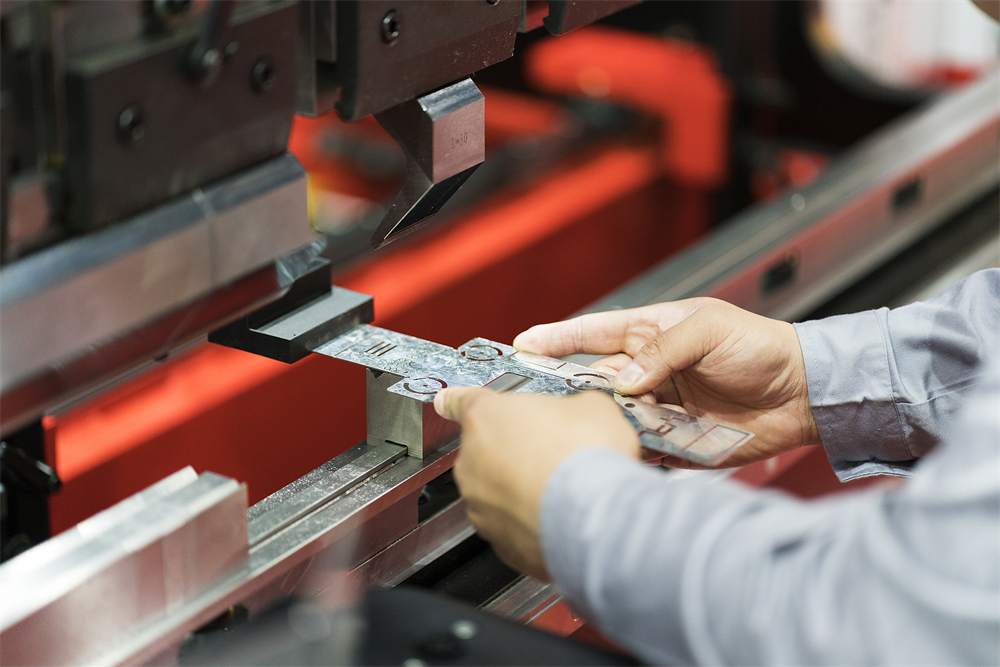
Key Considerations for Bending Cabinet Components
When approaching Press Brake Applications In Cabinet Doors, Panels, Sheet Metal Parts, several critical factors must be considered to ensure a high-quality finished product. The first and perhaps most important is material selection. Cabinetry is often fabricated from cold-rolled steel, stainless steel, or aluminum. Each of these materials reacts differently under pressure. Cold-rolled steel is favored for its cost-effectiveness and paintability, while stainless steel is chosen for its corrosion resistance and aesthetic appeal in medical or food-service environments. Aluminum, being lightweight, is common in aerospace and specialized transport cabinets.
Precision is the second pillar of successful cabinet fabrication. A cabinet door must fit perfectly within its frame. A deviation of even half a millimeter can lead to unsightly gaps or mechanical interference. This requires a press brake with an exceptionally accurate backgauge system. Modern CNC systems allow for multi-axis movement, enabling the machine to position the sheet metal with micron-level accuracy for every subsequent bend. This is particularly vital for “wrapper” panels that fold around a frame, where cumulative errors can quickly lead to a scrapped part.
Surface protection is another major consideration, especially for decorative panels or stainless steel components. Traditional steel tooling can leave “witness marks” or scratches on the material surface. To combat this, manufacturers often use specialized urethane inserts, cloth barriers, or highly polished dies. HARSLE’s press brakes are designed to accommodate these specialized tooling setups, ensuring that the final product requires minimal post-processing or polishing. This not only improves quality but also significantly reduces labor costs associated with finishing.
Finally, the complexity of the bend sequence cannot be overlooked. Cabinet doors often feature “hemming,” where the edge of the metal is folded back on itself to create a smooth, safe edge and increase structural stiffness. This requires a two-stage process: an initial acute bend followed by a flattening operation. Advanced CNC controllers can program these sequences automatically, adjusting the ram pressure and position to achieve a perfect hem every time without manual intervention.
Technical Details of Press Brake Operations for Panels
The Role of CNC Control and Software
The heart of modern Press Brake Applications In Cabinet Doors, Panels, Sheet Metal Parts is the CNC (Computer Numerical Control) system. Modern controllers, such as those found on HARSLE WE67K series machines, offer 3D visualization and offline programming capabilities. This allows engineers to simulate the bending process before a single piece of metal is touched. Simulation helps in identifying potential collisions between the workpiece and the machine frame or tooling, which is a common risk when folding large, deep cabinet panels.
Offline programming also means that the press brake remains productive while the next job is being prepared. The software calculates the exact developed length of the part, accounting for the “K-factor” or bend allowance of the specific material. This ensures that the flat blank, often cut by a fiber laser, is perfectly sized to result in the correct final dimensions after all bends are completed. For complex sheet metal parts with dozens of bends, this level of digital integration is indispensable.
Crowning Systems and Long-Length Accuracy
When bending long panels, such as the side walls of a tall electrical enclosure, a phenomenon known as “deflection” occurs. The center of the machine’s ram and bed tend to bow slightly under high pressure, resulting in a “canoe effect” where the bend angle is wider in the middle than at the ends. To solve this, high-quality press brakes utilize a crowning system. This can be mechanical or hydraulic, and it applies a counter-curve to the bed to ensure the bend angle remains consistent across the entire length of the part.
For cabinet manufacturers, consistent angles are non-negotiable. If the side panel of a cabinet is not perfectly 90 degrees along its entire 2-meter length, the top and bottom plates will not align, leading to structural weakness and assembly difficulties. HARSLE’s automatic hydraulic crowning systems sense the pressure required for each bend and adjust the compensation in real-time, providing a level of consistency that manual machines simply cannot match.
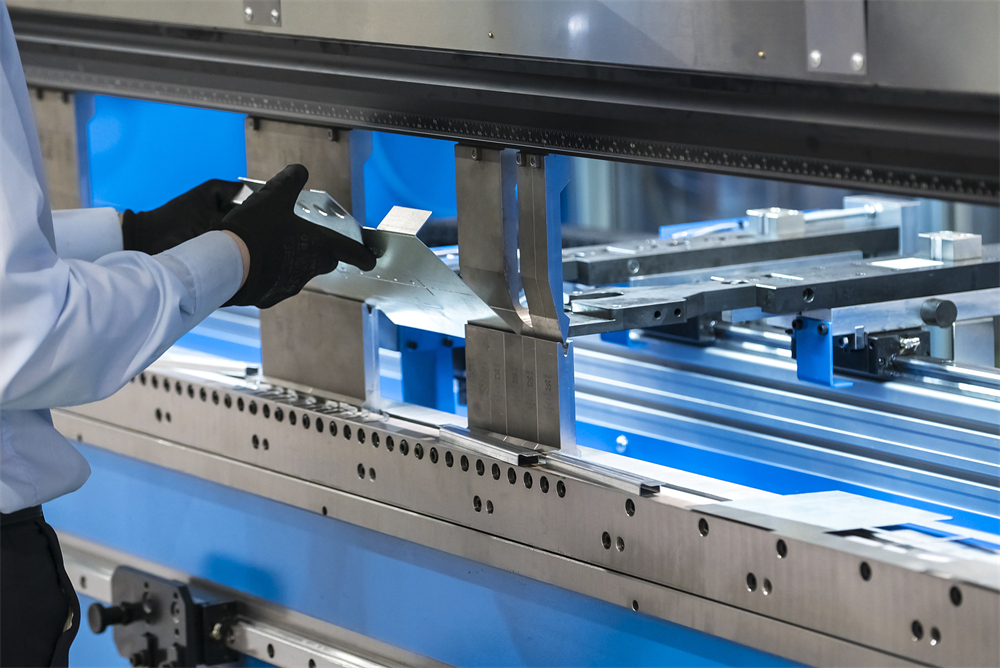
Tooling Strategies for Complex Folds
The choice of tooling is what defines the versatility of a press brake in cabinet applications. Gooseneck punches are frequently used for cabinet doors because their recessed shape allows for the clearance of previously formed flanges. Without a gooseneck punch, the return flange of a door would hit the body of the punch during the final bend, limiting the depth of the door profile.
Furthermore, multi-V dies allow operators to switch between different material thicknesses or bend radii without changing the entire tool setup. For high-volume sheet metal parts, “stage bending” is often employed. This involves setting up multiple sets of punches and dies along the length of the machine. The operator can move from one station to the next, completing all the bends for a complex part in a single handling cycle. This drastically reduces setup time and improves throughput.
Selection Advice: Choosing the Right Press Brake for Your Shop
Selecting the right machine for Press Brake Applications In Cabinet Doors, Panels, Sheet Metal Parts requires a thorough analysis of your current and future production needs. The first metric to evaluate is tonnage. For most cabinet work involving 1mm to 3mm steel, a machine in the 60 to 100-ton range is usually sufficient. However, if you are fabricating heavy-duty industrial enclosures or using thicker plates for structural panels, you may need 160 tons or more. It is always better to have a slight surplus of power to avoid running the machine at its absolute limit.
The length of the machine is equally important. Standard cabinet panels are often 600mm to 1200mm wide, but tall lockers or server racks can exceed 2000mm. A 2500mm or 3100mm bed length is a versatile choice for most shops. Additionally, consider the “throat depth”—the distance from the center of the tools to the back of the machine frame. A deeper throat allows you to form larger flanges without the material hitting the side frames of the press brake.
Another critical factor is the backgauge configuration. For simple parts, a 2-axis backgauge (X and R) is enough. However, for complex cabinet doors with offset bends or tapered panels, a 4-axis (X, R, Z1, Z2) or even a 6-axis backgauge is highly recommended. This allows the fingers to move independently, providing support for asymmetrical parts and significantly speeding up the positioning process. HARSLE offers various backgauge options tailored to the specific complexity of the user’s sheet metal parts.
Finally, consider the speed and energy efficiency of the machine. Hybrid press brakes, which combine hydraulic power with servo-motor control, offer significantly faster cycle times and lower energy consumption compared to traditional hydraulic systems. They also run much quieter and generate less heat, which can improve the longevity of the hydraulic oil and components. For a high-volume cabinet shop, the return on investment for a hybrid system can be realized in a relatively short period through energy savings and increased output.
Maintenance and Longevity of Press Brake Equipment
To maintain the precision required for Press Brake Applications In Cabinet Doors, Panels, Sheet Metal Parts, a rigorous maintenance schedule is essential. The hydraulic system is the lifeblood of the machine. Regular oil changes and filter replacements prevent contaminants from damaging the sensitive proportional valves that control the ram’s movement. Even microscopic particles can cause the valves to stick, leading to inconsistent bend angles and potential downtime.
The mechanical components, such as the ball screws and linear guides of the backgauge, must be kept clean and well-lubricated. In a metalworking environment, fine dust and metal shavings can accumulate on these surfaces, causing premature wear and loss of accuracy. A daily wipe-down and weekly lubrication routine can extend the life of these components by years. Furthermore, the parallelism of the ram and bed should be checked periodically using precision dial indicators to ensure that the machine has not drifted out of alignment due to heavy use or foundation settling.
Tooling maintenance is often overlooked but is equally vital. Punches and dies should be inspected for chips, cracks, or excessive wear. A worn die will change the effective V-opening, which in turn changes the bend angle. Using damaged tools not only produces poor-quality parts but can also pose a safety risk. HARSLE recommends storing tools in a dedicated rack to prevent them from knocking against each other and to keep them organized for quick changeovers.
Frequently Asked Questions (FAQ)
1. What is the best press brake for thin-gauge cabinet doors?
For thin-gauge materials (0.5mm to 1.5mm), a high-speed CNC electric or hybrid press brake is often the best choice. These machines offer the delicate control and high repeatability needed to avoid over-bending or marking the material. A machine with a high-precision backgauge is essential for the small flanges typically found on cabinet doors.
2. How do I prevent scratches on stainless steel panels during bending?
To prevent scratches, you can use several methods: 1) Use urethane or nylon dies. 2) Apply a protective plastic film to the sheet metal before bending. 3) Use “no-mar” bending tape or cloth over the die opening. 4) Ensure your steel dies are highly polished and free of debris.
3. Can I bend complex sheet metal parts with a manual press brake?
While it is possible to bend complex parts on a manual machine, it is highly inefficient and prone to human error. Each bend requires manual adjustment of the backgauge and ram depth. For parts with multiple bends, a CNC press brake is significantly faster and ensures that every part in a batch is identical.
4. What is the advantage of a 6-axis backgauge for panel fabrication?
A 6-axis backgauge (X1, X2, R1, R2, Z1, Z2) allows for the independent movement of each gauge finger. This is incredibly useful for bending parts that are not rectangular, have tapered edges, or require multiple setups across the bed. It provides the ultimate flexibility for complex sheet metal geometries.
5. How does crowning affect the quality of long cabinet panels?
Crowning compensates for the natural deflection of the machine under load. Without it, a long bend will be “under-bent” in the middle. Proper crowning ensures a uniform angle from one end of the panel to the other, which is critical for the structural integrity and assembly of large cabinets.
Conclusion
The world of Press Brake Applications In Cabinet Doors, Panels, Sheet Metal Parts is one of precision, efficiency, and constant innovation. As we have explored, the successful fabrication of these components relies on a deep understanding of material behavior, the strategic use of advanced CNC technology, and the selection of the right machinery and tooling. Whether you are producing simple utility cabinets or high-end architectural panels, the press brake remains the most versatile and essential tool in your workshop.
HARSLE continues to lead the industry by providing robust, high-precision press brakes designed to meet the rigorous demands of modern sheet metal fabrication. By investing in the right technology and maintaining a focus on technical excellence, manufacturers can achieve higher quality, lower waste, and a stronger competitive edge in the global market. As the industry moves toward further automation and smarter manufacturing, the role of the press brake will only become more central to the creation of the products that define our modern world.