
Comprehensive Guide to Press Brake Applications in Kitchen Equipment and Stainless Steel Fabrication


Introduction to Press Brake Applications in Kitchen Equipment and Stainless Steel Fabrication
In the modern industrial landscape, the demand for high-quality, durable, and aesthetically pleasing kitchen equipment has skyrocketed. From commercial-grade refrigerators and heavy-duty exhaust hoods to sleek residential countertops and cabinetry, the backbone of this production is stainless steel fabrication. Central to this process is the CNC press brake. Understanding the nuances of Press Brake Applications In Kitchen Equipment Stainless Steel Fabrication is essential for manufacturers aiming to achieve precision, efficiency, and hygiene standards required by the food service industry.
Stainless steel is the preferred material for kitchen environments due to its corrosion resistance, ease of cleaning, and structural integrity. However, fabricating stainless steel presents unique challenges compared to mild steel. It has a higher tensile strength, work-hardens rapidly, and requires significant force to bend. Furthermore, the surface finish of kitchen equipment is often a selling point, meaning that any marks or scratches during the bending process can lead to costly rework or scrapped parts. This is where advanced press brake technology, such as that offered by HARSLE, becomes indispensable.
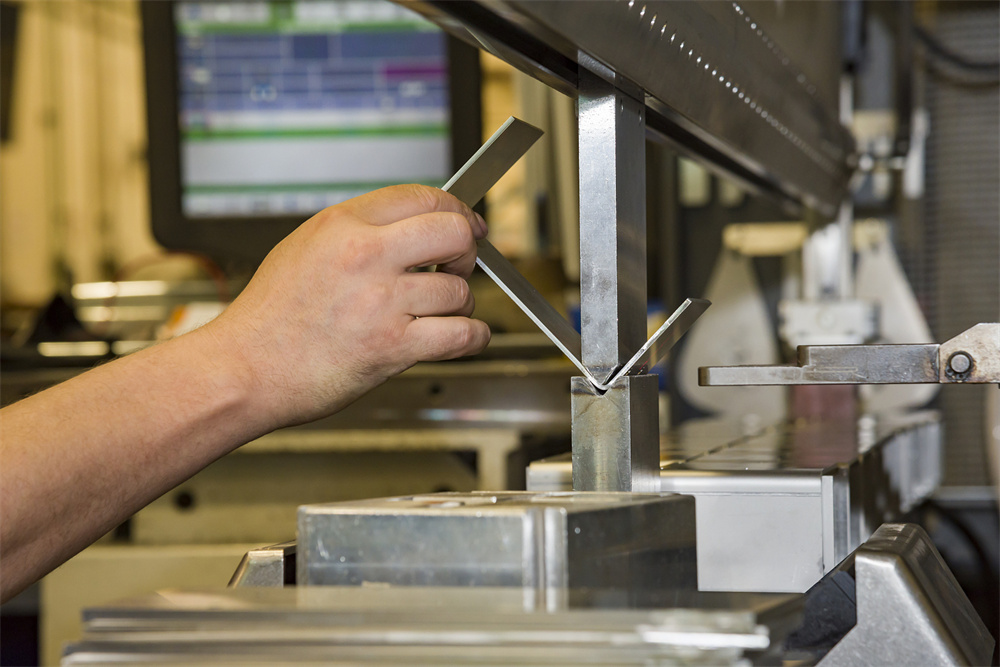
As we delve deeper into this guide, we will explore how press brakes are utilized to create complex geometries, the technical specifications required for stainless steel work, and how to select the right machinery to optimize your production line. Whether you are a small-scale custom fabricator or a large-scale industrial manufacturer, mastering these applications is the key to staying competitive in the global market.
Key Considerations for Stainless Steel Bending in Kitchen Fabrication
When discussing Press Brake Applications In Kitchen Equipment Stainless Steel Fabrication, the first consideration must be the material itself. Stainless steel, particularly grades 304 and 316, is ubiquitous in kitchens. These materials are known for their high springback rates. Springback occurs when the metal attempts to return to its original shape after the bending force is released. To counteract this, press brake operators must over-bend the material by a specific degree, a calculation that modern CNC controllers handle with high accuracy.
Another critical factor is the surface protection of the metal. Kitchen equipment often features a brushed (No. 4) or mirrored finish. To prevent the press brake dies from marring these surfaces, fabricators often use PVC-coated stainless steel or specialized non-marking tooling. The use of urethane pads or cloth inserts between the die and the workpiece is also a common practice to ensure the final product remains pristine and ready for installation without additional polishing.
Hygiene is the third pillar of kitchen equipment design. In food preparation areas, sharp corners are a liability as they can trap bacteria and are difficult to clean. Therefore, many press brake applications in this sector involve large-radius bends or “coved” corners. Achieving a consistent radius across a long piece of stainless steel requires a press brake with an excellent crowning system to compensate for machine deflection, ensuring the bend is uniform from one end to the other.
Finally, the thickness of the material varies significantly across kitchen products. While decorative panels might be as thin as 0.8mm, structural frames and heavy-duty sinks can reach 3mm or more. A versatile press brake must be able to handle this range with quick tool changes and adaptive pressure control. HARSLE’s WE67K series, for instance, provides the necessary rigidity and control to manage these fluctuating requirements without sacrificing speed.
Technical Details: Precision and Control Systems
The technical sophistication of a press brake determines its success in stainless steel fabrication. For kitchen equipment, where tolerances are often tight to ensure seamless assembly with other components (like plumbing or electrical systems), CNC control is non-negotiable. Modern systems like the Delem DA-66T or DA-69T offer 2D and 3D graphical interfaces that allow operators to visualize the bending sequence, preventing collisions and reducing setup time.
One of the most vital technical features for Press Brake Applications In Kitchen Equipment Stainless Steel Fabrication is the backgauge system. Kitchen components often involve multiple bends on a single sheet of metal. A multi-axis backgauge (X, R, Z1, Z2) allows for the complex positioning of the workpiece, enabling the fabrication of intricate shapes like tapered exhaust hoods or multi-tiered shelving units in a single handling cycle. This reduces labor costs and minimizes the risk of human error.
| Feature | Importance in Kitchen Fabrication | Technical Benefit |
|---|---|---|
| CNC Crowning | Ensures straightness over long bends | Compensates for bed deflection automatically |
| High-Speed Backgauge | Increases throughput for complex parts | Reduces cycle time for multi-bend components |
| Non-Marking Tooling | Maintains aesthetic finish | Eliminates secondary polishing processes |
| Laser Angle Measurement | Compensates for material variability | Real-time adjustment for perfect angles |
Tonnage calculation is another technical hurdle. Because stainless steel is roughly 50% harder to bend than mild steel, the press brake must be rated for higher tonnages. For example, a bend that requires 50 tons in mild steel might require 75 tons in stainless steel. Using an undersized machine leads to premature wear and inaccurate bends. HARSLE machines are engineered with a high safety factor and robust hydraulic systems to provide consistent force even during high-duty cycles.
Furthermore, the integration of offline programming software allows engineers to design parts in CAD and simulate the bending process before a single sheet of metal is cut. This is particularly useful for expensive stainless steel materials, where mistakes are costly. The software can calculate the exact flat pattern length, accounting for the K-factor of the specific stainless steel grade being used, ensuring that the final dimensions are perfect after all bends are completed.
Selection Advice: Choosing the Right Press Brake for Your Shop
Selecting the right machinery for Press Brake Applications In Kitchen Equipment Stainless Steel Fabrication requires a balance between current needs and future growth. The first step is to analyze your most common part lengths. Commercial kitchen countertops can often exceed 3 or 4 meters. In such cases, a large-format press brake or a tandem system (two machines working in sync) might be necessary to handle the long workpieces without seams.
Consider the complexity of your bends. If you are primarily making simple boxes and panels, a 3-axis machine might suffice. However, if your product line includes ergonomic handles, custom sinks, or complex ventilation systems, investing in a 6-axis or 8-axis backgauge will provide the flexibility needed to tackle any design. The ability to move backgauge fingers independently is a game-changer for asymmetrical parts.
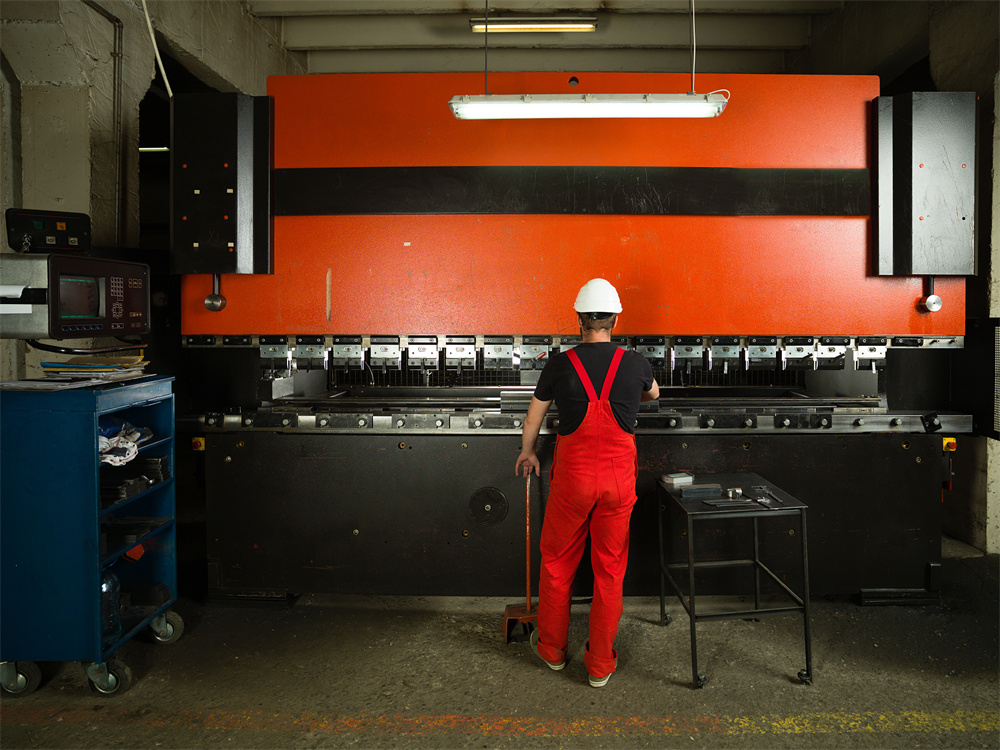
Energy efficiency is also becoming a major factor in machine selection. Hybrid press brakes, which combine hydraulic power with servo-motor control, are ideal for stainless steel work. They offer high approach and return speeds, which increases productivity, while consuming significantly less energy during the dwell and idle phases. For a busy kitchen equipment factory, the energy savings over several years can offset a significant portion of the machine’s initial cost.
Finally, do not overlook the importance of local support and spare parts availability. Stainless steel fabrication is a high-wear industry. Tooling will eventually wear down, and hydraulic seals will need replacement. Choosing a reputable manufacturer like HARSLE ensures that you have access to expert technicians and genuine parts, minimizing downtime. When evaluating a machine, ask about the training provided for your operators, as the transition from manual bending to high-end CNC systems requires a shift in skill sets.
Common Applications in the Kitchen Equipment Industry
To truly understand the impact of Press Brake Applications In Kitchen Equipment Stainless Steel Fabrication, one must look at the specific products being created. One of the most common applications is the fabrication of commercial sinks. These often require “V”-shaped or “envelope” bends in the bottom of the sink to facilitate drainage toward the center. Achieving these subtle angles across a large surface area requires precise control over the stroke depth of the press brake.
Exhaust hoods are another staple. These are often large, visible components that define the look of a professional kitchen. They involve long, sweeping bends and often incorporate hemmed edges for safety and structural rigidity. A press brake with a large throat depth is essential here, as it allows the operator to maneuver large sheets of metal deep into the machine without hitting the frame.
Refrigeration units and warming cabinets require high precision to ensure that doors seal perfectly. Any deviation in the bend angle of the frame can lead to air leaks, reducing the efficiency of the appliance. Press brakes used in this sector must maintain high repeatability, ensuring that the 1,000th part is identical to the first. This is achieved through high-quality linear encoders that monitor the position of the ram in real-time.
Lastly, custom cabinetry and shelving often utilize “Z” bends and offsets to create tracks for drawers or reinforced edges for heavy loads. These complex profiles are made much easier with specialized tooling, such as offset dies or gooseneck punches, which allow for deep returns without interfering with the machine’s upper beam. The versatility of the press brake makes it the most used tool in the stainless steel fabricator’s arsenal.
Frequently Asked Questions (FAQ)
1. Why is stainless steel harder to bend than other metals?
Stainless steel has a higher carbon content and alloying elements like chromium and nickel, which increase its tensile strength and yield strength. This means it requires more force (tonnage) to reach the point of permanent deformation. Additionally, its high work-hardening rate means the metal becomes tougher as it is being bent, requiring consistent and powerful pressure from the press brake.
2. How do I prevent scratches on stainless steel during bending?
To prevent marking, you can use several methods: 1) Use PVC-coated stainless steel and peel the plastic off after fabrication. 2) Utilize urethane die inserts or “no-mar” tape on the bottom die. 3) Ensure your tools are polished and free of debris. 4) Use specialized large-radius dies that distribute the pressure over a wider area.
3. What is the best CNC controller for kitchen equipment fabrication?
For most kitchen equipment applications, a controller that supports 2D or 3D visualization is best. The Delem DA-66T is highly recommended because it allows operators to see the part in 3D, helping them understand the orientation for complex multi-bend parts. It also features automatic bend sequence calculation, which is vital for efficiency.
4. How much tonnage do I need for 3mm stainless steel?
Tonnage depends on the length of the bend and the width of the “V” opening of the die. As a general rule of thumb, 3mm stainless steel requires approximately 30-40% more tonnage than mild steel of the same thickness. For a 1-meter bend with a standard die, you might need around 80-100 tons of force to ensure a clean, accurate bend.
5. Can I use standard tooling for stainless steel?
While you can use standard tooling, it is not recommended for high-volume stainless steel work. Stainless steel is abrasive and will wear out standard carbon steel tools quickly. It is better to invest in hardened, high-quality tool steel (like 42CrMo) that has been precision ground. This ensures the longevity of the tools and the accuracy of the bends over time.
Conclusion: The Future of Stainless Steel Fabrication
The role of Press Brake Applications In Kitchen Equipment Stainless Steel Fabrication continues to evolve with the integration of Industry 4.0 technologies. We are seeing a move toward fully automated bending cells where robots handle the loading and unloading of stainless steel sheets, further reducing the risk of surface damage and increasing production speeds to unprecedented levels. For manufacturers, the goal remains the same: producing high-quality, hygienic, and durable equipment that meets the rigorous demands of the culinary world.
By investing in high-quality machinery from HARSLE and staying informed about the latest bending techniques, fabricators can overcome the challenges of working with stainless steel. Precision, surface protection, and technical expertise are the three pillars that will define success in this industry. As kitchen designs become more complex and material costs fluctuate, the efficiency provided by a modern CNC press brake is not just an advantage—it is a necessity for survival and growth in the competitive metal fabrication landscape.

