
The Role Of Press Brakes In Construction Metal Component Production: A Comprehensive Guide


Introduction to the Role Of Press Brakes In Construction Metal Component Production
In the modern architectural landscape, the demand for precision-engineered metal components has never been higher. From the towering skeletons of skyscrapers to the intricate facades of contemporary residential buildings, metal is the backbone of the construction industry. Central to the fabrication of these essential elements is the press brake. The Role Of Press Brakes In Construction Metal Component Production is multifaceted, serving as the primary tool for transforming flat sheets of steel, aluminum, and copper into structural and decorative masterpieces.
As construction projects become more complex, the reliance on traditional welding and manual bending has diminished in favor of high-precision CNC (Computer Numerical Control) press brakes. These machines allow fabricators to create complex geometries with repeatable accuracy, ensuring that every bracket, beam, and panel fits perfectly on-site. This precision reduces waste, lowers labor costs, and significantly accelerates project timelines. For companies like HARSLE, providing the right machinery means empowering builders to push the boundaries of what is possible in structural design.
The versatility of the press brake allows it to handle a wide range of materials and thicknesses, which is crucial in construction where requirements can vary from thin decorative cladding to heavy-duty structural reinforcements. By understanding the mechanics and applications of these machines, industry professionals can better appreciate how the Role Of Press Brakes In Construction Metal Component Production influences the safety, durability, and aesthetics of our built environment.
In this comprehensive guide, we will delve into the technical nuances of press brake operation within the construction sector, explore key considerations for high-quality production, and provide expert advice on selecting the right equipment for your specific fabrication needs.
Key Considerations in Construction Metal Fabrication
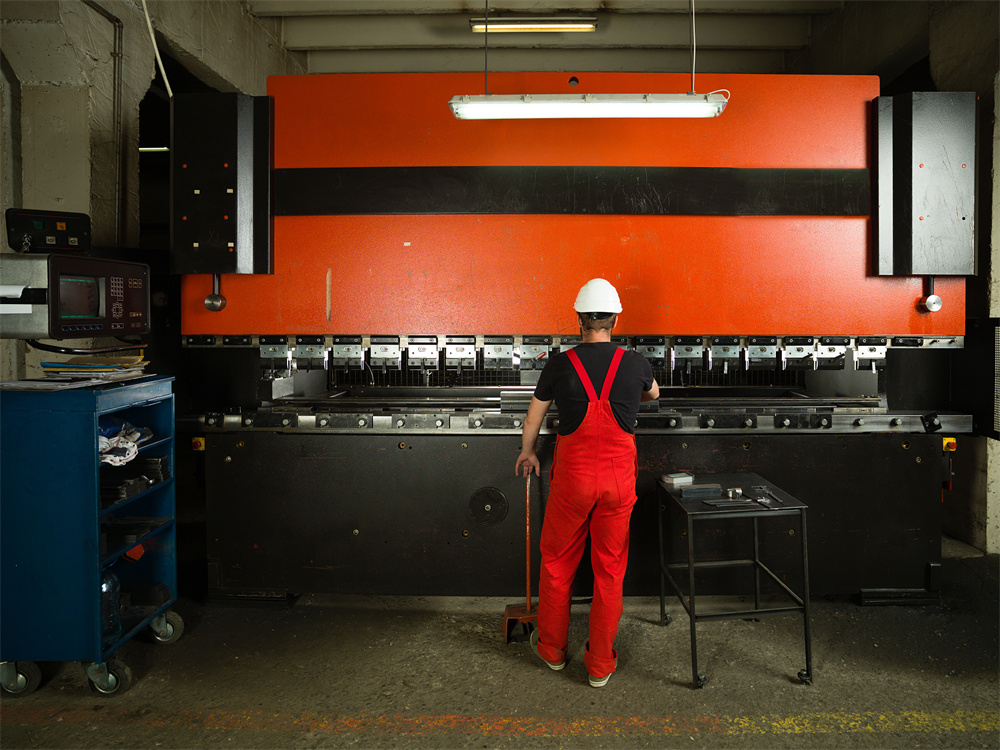
When discussing the Role Of Press Brakes In Construction Metal Component Production, one must first consider the unique challenges posed by the construction industry. Unlike automotive or electronics manufacturing, construction often requires large-scale components that must withstand extreme environmental stresses, including wind loads, seismic activity, and thermal expansion.
Material Selection and Behavior
The choice of material dictates the press brake settings and tooling required. In construction, stainless steel is often used for its corrosion resistance in exterior facades, while high-strength carbon steel is the standard for structural supports. Each material reacts differently under pressure; for instance, high-strength steels exhibit more ‘springback’—the tendency of the metal to return to its original shape after the bending force is removed. Advanced CNC press brakes account for this by over-bending the material based on sophisticated algorithms, ensuring the final angle is exact.
Precision and Tolerance Standards
In the construction world, a discrepancy of even a few millimeters can lead to significant issues during assembly. Components like curtain wall mullions or roofing panels must align perfectly over hundreds of feet. The Role Of Press Brakes In Construction Metal Component Production is to maintain these tight tolerances. Modern machines utilize laser-controlled angle measurement systems that provide real-time feedback to the controller, adjusting the ram depth mid-stroke to compensate for variations in material thickness or grain direction.
Structural Integrity and Bend Radius
The integrity of a bent component is heavily dependent on the bend radius. If a bend is too sharp, the material may develop micro-cracks, compromising its strength. In construction, where safety is paramount, adhering to specified minimum bend radii is non-negotiable. Press brakes equipped with the right V-dies and punches allow fabricators to achieve smooth, consistent bends that preserve the molecular structure of the metal, ensuring that the component can bear its intended load for decades.
Production Volume and Efficiency
While some construction components are bespoke, many projects require hundreds or thousands of identical parts, such as Z-purlins or C-channels. The Role Of Press Brakes In Construction Metal Component Production extends to high-volume efficiency. Automated backgauges and multi-axis control allow for rapid setup and transition between different bend sequences, making it possible to maintain high throughput without sacrificing quality.
Technical Details of Press Brake Technology
To fully grasp the Role Of Press Brakes In Construction Metal Component Production, it is essential to understand the technical components that make these machines so effective. From the hydraulic systems to the software interfaces, every element is designed for power and precision.
CNC Control Systems
The brain of the modern press brake is the CNC controller. Systems like the Delem DA-66T or DA-69T provide a 3D graphical interface where operators can simulate the bending process before the first piece of metal is even touched. This simulation identifies potential collisions with the tooling or the machine frame, which is particularly important when fabricating large, awkward construction components. The software also calculates the optimal bend sequence to minimize material handling.
Hydraulic vs. Electric Drive Systems
Traditionally, the Role Of Press Brakes In Construction Metal Component Production has been dominated by hydraulic machines due to their immense tonnage capabilities. Hydraulic press brakes use fluid power to drive the ram, providing the force necessary to bend thick structural plates. However, electric press brakes are gaining ground for thinner gauge components, such as HVAC ducting and interior trim, offering higher speeds and better energy efficiency. Hybrid systems, which combine the best of both worlds, are also becoming popular in construction fabrication shops.
Crowning Systems
When a long piece of metal is bent, the machine’s bed and ram can deflect slightly in the center, leading to an inconsistent angle across the length of the part (often called the ‘canoe effect’). To counter this, high-quality press brakes feature a crowning system. This can be mechanical (using wedges) or hydraulic (using cylinders in the lower bed) to apply a counter-curve, ensuring the bend is perfectly straight from end to end. This is critical for long construction elements like gutters, flashing, and structural beams.
Tooling and Versatility
The versatility of the press brake is largely due to its interchangeable tooling. In construction, fabricators use a variety of punches and dies to create different shapes. For example, gooseneck punches are used to create deep channels without the material hitting the ram, while large V-dies are used for heavy plate bending. The ability to quickly change tools via hydraulic clamping systems is a major factor in the Role Of Press Brakes In Construction Metal Component Production, allowing a single machine to produce a diverse array of parts.
Selection Advice: Choosing the Right Press Brake for Construction
Selecting a machine that fits the Role Of Press Brakes In Construction Metal Component Production requires a deep dive into your specific project requirements. Not all press brakes are created equal, and the wrong choice can lead to bottlenecks or sub-par component quality.
Determining Tonnage Requirements
The first step is calculating the maximum tonnage you will need. This is determined by the material type, thickness, and the length of the bend. For construction, where 10mm to 20mm steel plates are common, a high-tonnage machine (often 200 tons or more) is usually required. Using a tonnage chart or a software calculator is essential to ensure the machine can handle the load without straining the frame.
Bending Length and Throat Depth
Construction components are often long. A standard 3-meter or 4-meter press brake might suffice for many parts, but large-scale infrastructure projects may require tandem press brakes—two machines working in sync to bend parts up to 12 meters or longer. Additionally, consider the ‘throat depth’ (the space behind the tools). A deeper throat allows for larger flanges to be bent, which is often necessary for complex architectural shapes.
Backgauge Configuration
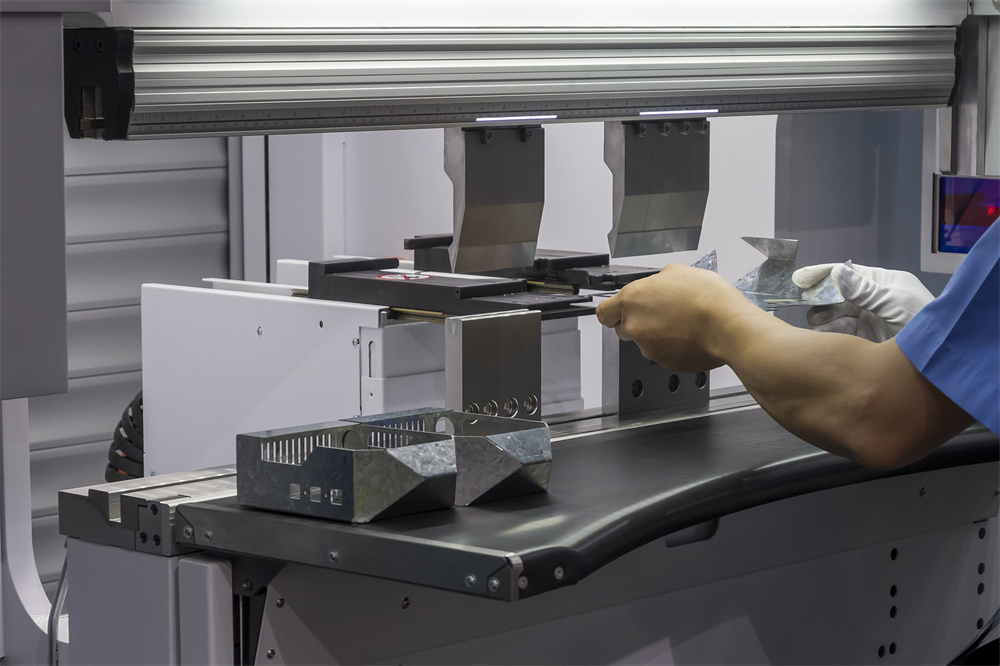
The backgauge is what positions the metal for the bend. In construction, where parts can be heavy and difficult to maneuver, a multi-axis backgauge (X, R, Z1, Z2, etc.) is a significant advantage. It allows for the precise positioning of asymmetrical parts and reduces the physical strain on the operator. For very large parts, sheet followers (robotic arms that support the material during the bend) are highly recommended to prevent ‘back-bending’ and improve safety.
Software Integration
In the era of Industry 4.0, the Role Of Press Brakes In Construction Metal Component Production is increasingly digital. Choose a machine that integrates with your CAD/CAM software. This allows for a seamless flow of data from the architect’s design to the shop floor, reducing the risk of manual data entry errors and ensuring that the final component matches the digital twin of the building.
Maintenance and Safety in Construction Fabrication
To maintain the Role Of Press Brakes In Construction Metal Component Production effectively, a rigorous maintenance schedule is required. Construction environments can be dusty and demanding, which can take a toll on hydraulic systems and precision components.
- Daily Inspections: Check oil levels, look for leaks in hydraulic lines, and ensure the safety light curtains are functioning correctly.
- Tooling Care: Inspect punches and dies for wear or chipping. Damaged tooling can lead to inaccurate bends and potential safety hazards.
- Calibration: Regularly calibrate the backgauge and the ram depth to ensure the machine maintains its precision over time.
- Lubrication: Keep the guideways and ball screws well-lubricated to prevent friction-related wear and ensure smooth movement.
Safety is the most critical aspect of operating heavy machinery. Modern press brakes are equipped with laser guarding systems that stop the ram instantly if an obstruction (like an operator’s hand) is detected. In the high-pressure environment of construction production, these safety features are indispensable.
FAQ: Press Brakes in Construction
What materials are most commonly bent for construction?
The most common materials include mild steel for structural components, stainless steel for facades and handrails, and aluminum for roofing and window frames. Each requires specific tooling and pressure settings on the press brake.
How does a press brake improve construction site efficiency?
By producing highly accurate components in the factory, the need for on-site adjustments, cutting, and welding is minimized. This leads to faster assembly and fewer errors during the construction phase.
Can a press brake handle very thick steel plates?
Yes, heavy-duty hydraulic press brakes are specifically designed for this. Machines with 400 to 1000 tons of pressure can easily bend thick plates used in bridge construction and heavy industrial frames.
What is the difference between a CNC and a NC press brake?
A CNC (Computer Numerical Control) press brake is fully automated and can handle complex, multi-bend sequences with high precision. An NC (Numerical Control) machine is simpler, usually controlling only the ram depth and a single-axis backgauge, making it better suited for simple, repetitive tasks.
Why is crowning important for construction parts?
Construction parts are often long. Without a crowning system, the machine’s natural deflection would cause the bend angle to vary across the length of the part, making it difficult to align during installation.
Conclusion: The Future of the Role Of Press Brakes In Construction Metal Component Production
The Role Of Press Brakes In Construction Metal Component Production is only set to grow as the industry moves toward more sustainable and modular building methods. Prefabricated metal components are at the heart of this shift, offering a way to build faster, safer, and with less environmental impact. As press brake technology continues to evolve—incorporating more AI-driven automation, better energy efficiency, and even greater precision—the possibilities for architectural innovation will expand.
For fabricators and construction firms, investing in high-quality press brake machinery is not just about buying a tool; it’s about investing in the ability to deliver excellence. Whether it’s a simple bracket or a complex geometric facade, the press brake ensures that the vision of the architect is realized with structural integrity and aesthetic perfection. As we look to the future, the synergy between advanced fabrication technology and construction needs will continue to shape the skylines of tomorrow.
At HARSLE, we are committed to providing the industry with the most advanced, reliable, and efficient press brakes on the market. By understanding the critical Role Of Press Brakes In Construction Metal Component Production, we continue to innovate and support our partners in building a stronger, more beautiful world.


